

Most people start their day reacting to emails, notifications, and demands from others. A quiet time routine changes that by giving you space to connect with God before the world pulls your attention in a hundred directions.
At Life Purpose Matters, we’ve seen how a consistent morning devotional transforms not just your spiritual life, but your entire day. This post gives you three ready-to-use routines, practical troubleshooting tips, and a checklist you can print and use tomorrow morning.
Why Your Morning Devotional Shapes Everything Else
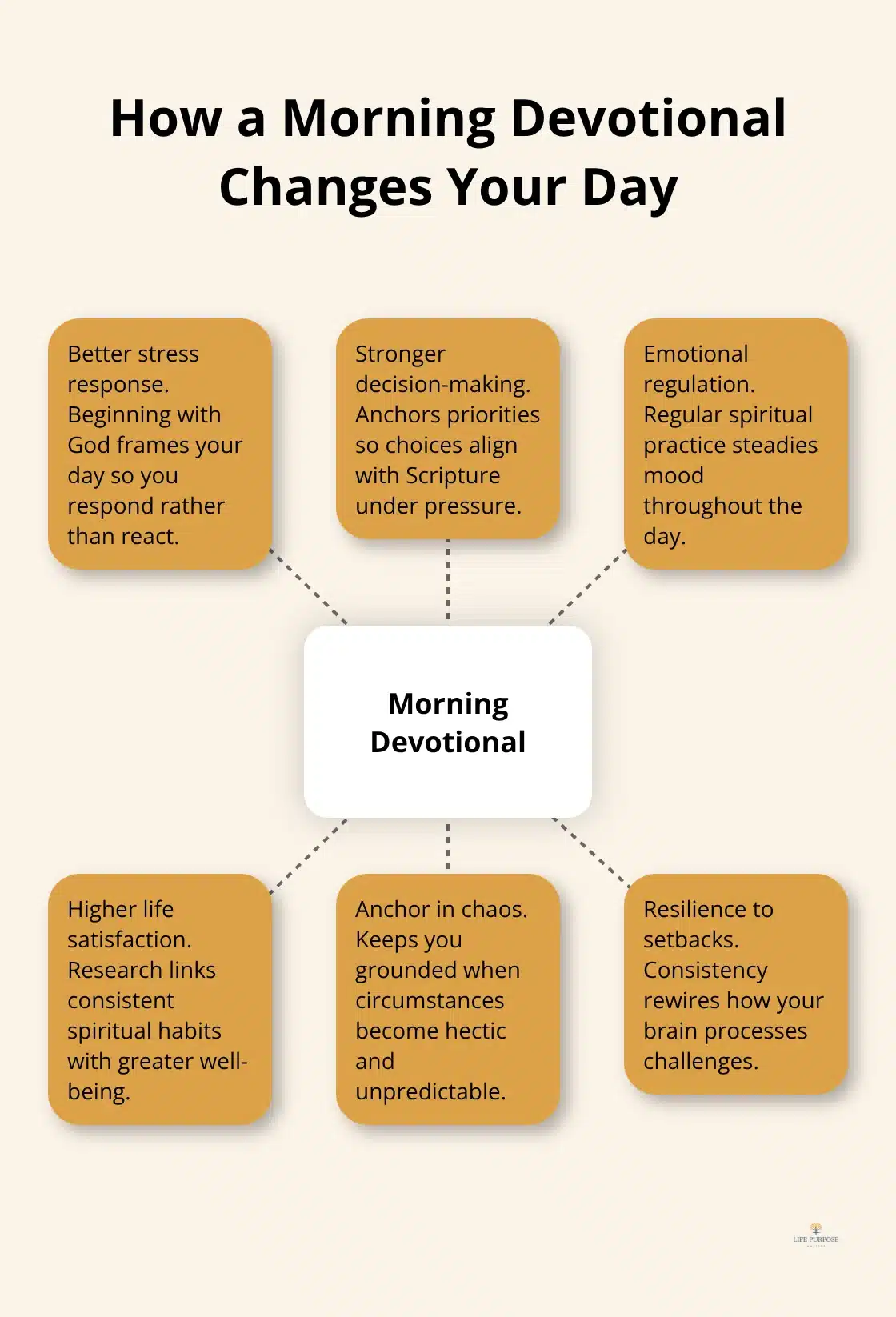
Starting your day with God before checking your phone fundamentally changes how you respond to stress, setbacks, and opportunities. Research indicates that people who engaged in spiritual practices reported higher life satisfaction and significantly better emotional regulation throughout the day. When you establish a quiet time routine, you rewire how your brain processes challenges. George Mueller, who managed an incredibly busy schedule in the 1800s, always began his day with extended Bible study and prayer before handling any business. He attributed his ability to make sound decisions under pressure directly to this non-negotiable morning priority. Your morning devotional acts as an anchor that keeps you grounded when the day becomes chaotic.
Your Spiritual Foundation Gets Built, Not Wished For
A consistent quiet time routine constructs genuine spiritual depth rather than relying on Sunday services alone. Without daily engagement with Scripture, your faith drifts-not dramatically, but incrementally. Lord Cairns maintained a strict morning routine, waking at the same early hour and dedicating the first two hours to Bible study and prayer. This fixed time block became the foundation for his spiritual authority and influence. When you study Scripture regularly, you internalise God’s promises and truths so thoroughly that they become your instinctive response to problems. Joshua 1:8 instructs believers to keep God’s word on their lips and meditate on it day and night, which requires dedicated time. The alternative-sporadic faith that depends on feeling motivated collapses the moment life gets difficult. Your morning devotional builds the mental and spiritual muscle you’ll need when real challenges arrive.
Consistency Compounds Into Measurable Spiritual Maturity
A 15-minute morning devotional might seem insignificant, but consistency compounds into measurable spiritual maturity. Bertha Smith’s pre-dawn devotion in extreme cold demonstrates that perseverance through discomfort becomes the foundation for an unshakeable faith. When you protect this time jealously (treating it as non-negotiable as a business meeting), you signal to yourself and to God that your relationship with Him ranks highest. People who maintain morning quiet times report greater peace during crises, clearer discernment when making decisions, and a stronger sense of God’s presence throughout their day. This isn’t motivation or emotion; it’s the direct result of feeding your spirit daily rather than letting it starve between Sundays.
Now that you understand why morning devotionals matter, the next section shows you exactly how to build three ready-to-use routines that fit your schedule-whether you have 15 minutes or a full hour.
Three Ready-to-Use Routines That Actually Work
The biggest mistake people make is designing a quiet time routine that looks good on paper but collapses within two weeks. Isobel Kuhn, a Moody Bible Institute student, solved this problem by finding a private space in a cleaning closet to spend time with God, proving that what matters isn’t perfection but the protection of the time itself. We recommend starting with whichever routine fits your current reality, then expanding later as the habit solidifies. A 15-minute routine that you maintain beats a 60-minute routine you abandon after three days. The key is choosing the timeframe that you can actually defend against interruptions, then building from there.
The 15-Minute Devotional for Busy Mornings
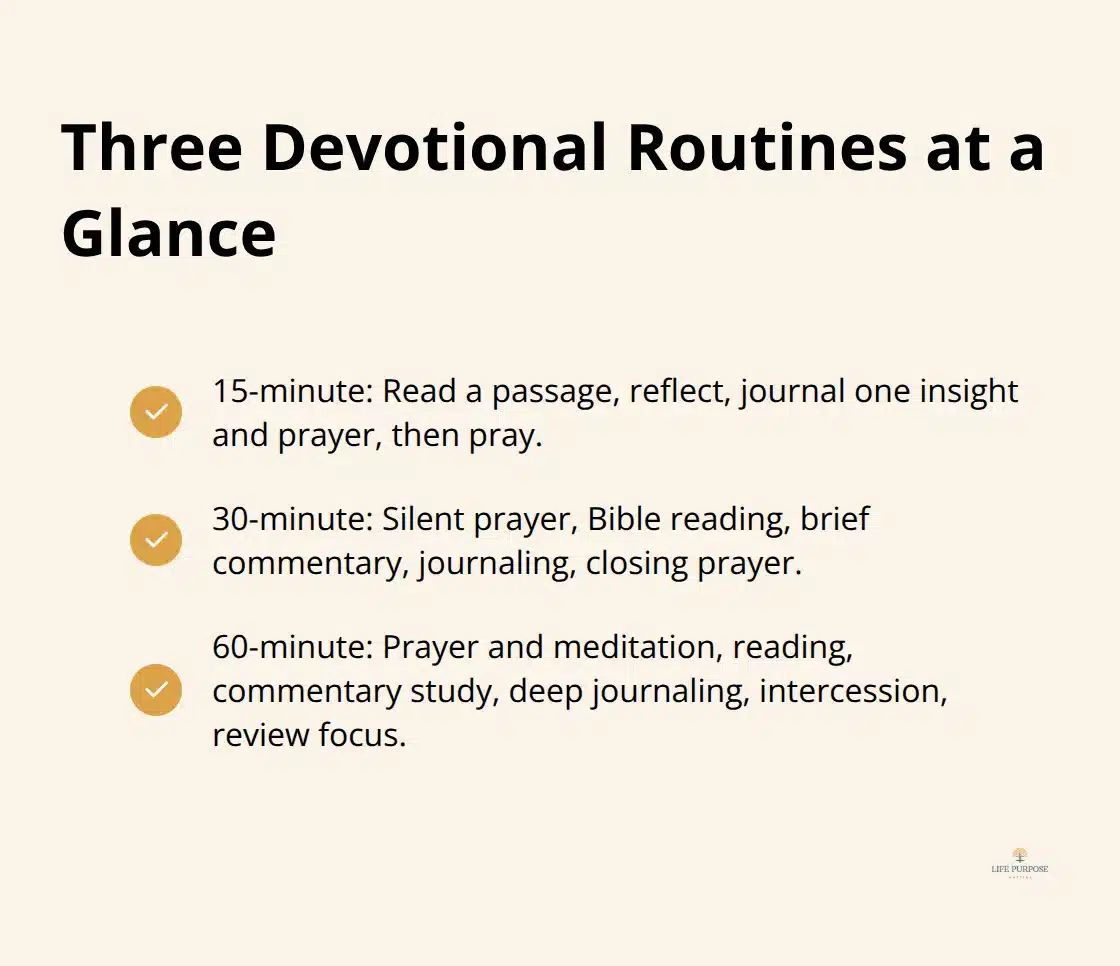
Set your alarm 15 minutes earlier than usual and prepare everything the night before: your Bible, a short devotional guide, water, and coffee. Wake up, drink water immediately to hydrate your brain, then brew your coffee while your mind transitions from sleep. Spend three minutes reading a single Bible passage from a structured Bible reading plan, which removes the decision fatigue of choosing what to read. Spend four minutes reflecting on how that passage applies to your day and any decisions you’re facing. Spend five minutes journaling one insight and one prayer request, then pray through both before checking your phone. This routine works because it combines Scripture reading, reflection, and prayer without demanding an hour you don’t have. William Carey adapted his devotional times around safety concerns, showing that consistency matters more than the perfect setup. Track your streak on a simple calendar to build momentum. Most people who maintain a 15-minute routine for four weeks naturally expand it because the benefit becomes undeniable.
The 30-Minute Devotional for Deeper Engagement
Start with the same night-before preparation: Bible, devotional, water, coffee, journal, and highlighters. Wake early, hydrate, and brew your beverage while lighting a candle or diffusing an essential oil to signal to your brain that this time is sacred. Spend five minutes in silent prayer, asking God to open your mind to what He wants to teach you that day. Read your Bible passage for seven minutes, highlighting phrases that stand out and noting questions in the margin. Spend eight minutes reading a short devotional commentary or study notes that explain the passage’s historical context and meaning. Spend seven minutes journaling what you learned, how it challenges you, and one specific way you’ll apply it. End with three minutes of prayer focused on the insights you discovered. This routine deepens your understanding because you study Scripture rather than simply read it. The commentary prevents surface-level reading and builds your theological foundation. A 30-minute routine creates noticeable shifts in how you handle stress by day three, according to people who’ve built this habit consistently.
The 60-Minute Devotional for Spiritual Depth
This is the Lord Cairns model: dedicate the first two hours of your day to Bible study and prayer, though starting with 60 minutes is the realistic entry point. Prepare the night before by setting out your Bible, multiple study tools like a concordance and commentary, journal, highlighters, pens, headphones, coffee, appropriate clothing, and a light source. Wake up, drink water, turn on the lights immediately, and brew your preferred beverage. Spend 10 minutes in silent prayer and meditation on a verse you’re studying, letting it settle into your thinking. Read your Bible passage for 10 minutes, marking observations and questions. Spend 15 minutes in commentary study, using tools like Bible commentaries or study Bible notes to understand the historical, cultural, and theological context. Spend 15 minutes in deeper journaling where you answer specific questions: What does this passage reveal about God’s character? How does it challenge my current thinking? What action does it call me to? Spend 10 minutes in focused prayer, interceding for others and praying through your own needs. The final 10 minutes involve reviewing what you learned and setting one spiritual focus for your day. This routine builds the unshakeable spiritual foundation that carries you through genuine crises. The time investment seems large until you realise it prevents dozens of poor decisions and emotional reactions throughout the year.
Solving the Problems That Stop Most People
The most common obstacle is inconsistency caused when you hit snooze or unexpected morning chaos strikes. Create a Plan B routine: if you oversleep, you still complete the 15-minute version rather than skip entirely. Consistency compounds more than perfection. The second obstacle is distraction from your phone, family, or external noise. Start with Scripture before your phone, use headphones with instrumental music if external noise is unavoidable, and wake 30 minutes before anyone else in your household needs you. The third obstacle is falling back asleep in a too-comfortable setup. Use a straight-backed chair rather than your bed, keep the room cool, and avoid dimmed lighting. The fourth obstacle is not knowing what to read or study. Choose a structured 90-day devotional plan or Bible reading plan before you start, which removes the daily decision.
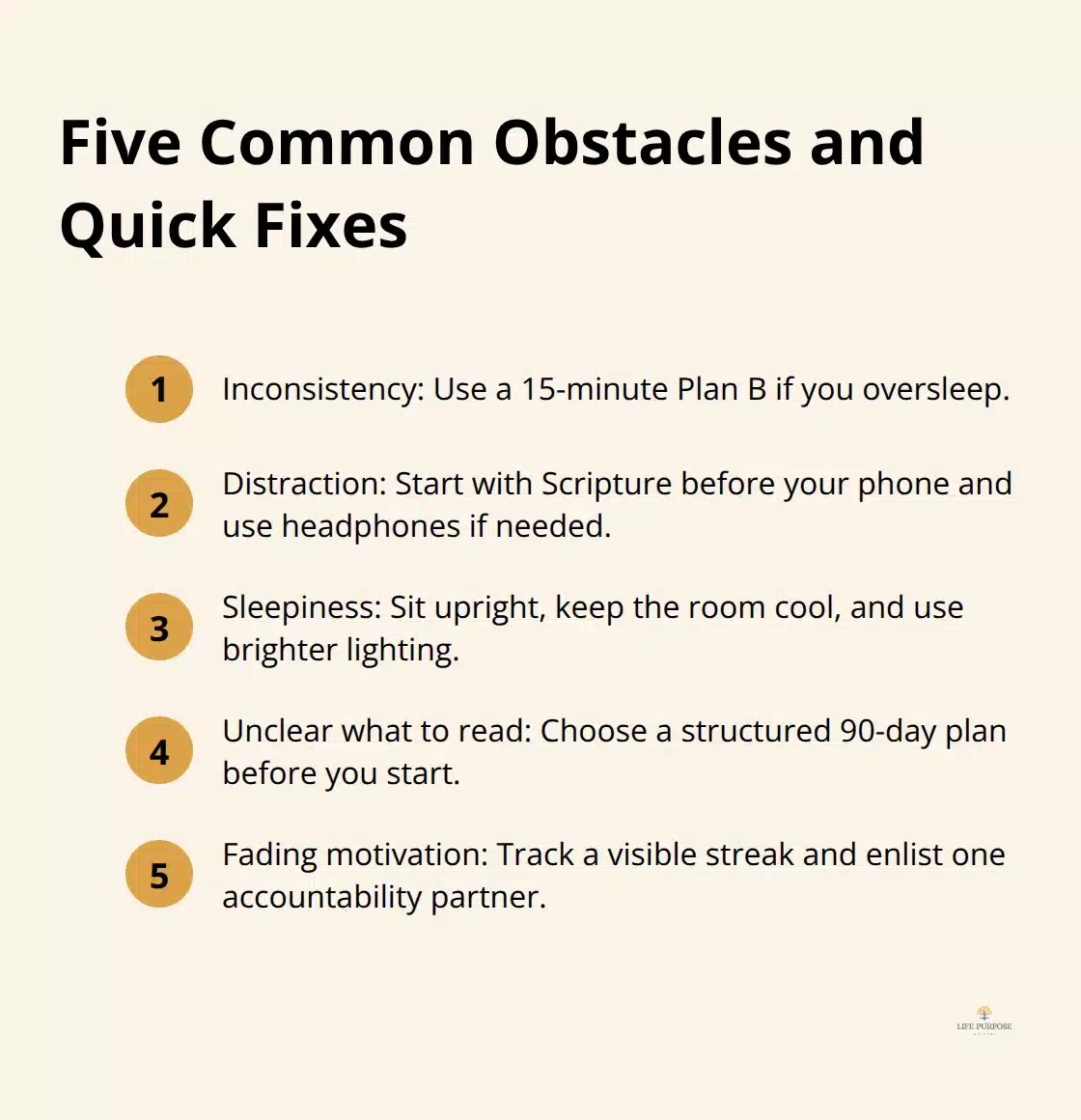
The fifth obstacle is losing motivation after the initial enthusiasm fades. Track your daily completion on a visible calendar, share your progress with one accountability partner, and notice the actual life changes that result from consistency.
Moving From Routine to Transformation
You now have three concrete routines that fit different schedules and commitment levels. The next section shows you how to create the physical and mental environment that makes these routines stick, plus how to choose resources that actually resonate with your learning style and spiritual needs.
Making Your Quiet Time Sustainable
Your environment either protects your devotional time or sabotages it. Start by designating a specific physical location that signals to your brain and family that this space is off-limits during your quiet time. A straight-backed chair near a window beats a comfortable bed where you’ll fall asleep, and a small table within arm’s reach means you won’t scramble for your Bible, journal, and pen. Temperature matters more than people realise: keep the room cool because warmth triggers drowsiness, and use a blanket you can adjust rather than relying on room heat. Lighting should be bright enough that you stay alert but not so harsh that you strain your eyes while reading Scripture. A desk lamp positioned to the side of your reading material works better than overhead lights. Prepare your space the night before by setting out everything you need: your Bible, devotional guide, journal, highlighters, water bottle, and your preferred beverage ready to brew. This removes the friction that causes you to skip devotional time when morning chaos hits. Remove your phone from the room entirely during your quiet time, not just on silent mode. Research shows that phone presence reduces focus and cognitive performance, even when you’re not actively using it. If you live with others, communicate your non-negotiable quiet time window and ask them to respect it as they would a business meeting. Most families respect clear boundaries when you explain that this time directly affects your emotional stability and decision-making throughout the day.
Selecting Resources That Match Your Learning Style
Your choice of resources determines whether you stick with your routine or abandon it after two weeks. Select a Bible translation that feels natural when you read it aloud, not one that sounds archaic or overly simplified. The New King James Version, English Standard Version, and New International Version each serve different reading preferences. Test your chosen translation by reading a passage you already know well, then pick whichever version feels most engaging. For your devotional guide, choose something specifically designed for your situation: if you struggle with worry, select a devotional focused on anxiety and trust; if you navigate a major life transition, find one addressing your specific season. A 90-day structured plan provides momentum and removes daily decision fatigue. Your journal doesn’t need to be fancy, but it should be something you enjoy writing in. A simple notebook works as well as an expensive leather journal, and the key is capturing one insight and one prayer request daily rather than writing lengthy reflections. Many people who abandon devotional routines blame themselves when the real problem is that they chose resources that didn’t match their learning style. If you’re a visual learner, a study Bible with maps and charts matters more than extensive commentary. If you learn through questions and reflection, choose a devotional that prompts you with specific questions rather than one that provides all the answers. Distractions multiply when your resources feel boring or mismatched to how your mind actually works. Consistency requires removing friction at every step, which means your Bible version, devotional guide, and journal must feel like tools you want to use rather than obligations you force yourself through. Building a Christ-centred approach to your devotional practice strengthens your commitment to these resources.
Track Progress and Build Accountability
Track your daily completion on a visible calendar where you mark each day you complete your quiet time, creating a visual streak you won’t want to break. People who track progress maintain consistency longer than those who don’t. Post this calendar somewhere you see it daily, not hidden in a drawer. Share your commitment with one specific accountability partner, someone who will ask you directly whether you completed your quiet time that morning. Generic accountability fails, but naming one person who will follow up creates real motivation. If you miss a day, don’t restart your streak and spiral into guilt; instead, complete your 15-minute Plan B routine the next morning and continue tracking. Perfectionism destroys more devotional habits than laziness does. Notice the actual changes in your life after two weeks of consistency: you’ll handle frustration more calmly, make clearer decisions under pressure, and feel less reactive to stress. These tangible results become your real motivation, far more powerful than willpower or discipline.
Final Thoughts
A quiet time routine transforms how you think, respond, and live over months and years, not overnight. The first month establishes the habit, the first year builds spiritual resilience that carries you through genuine crises, and the consistency compounds into an unshakeable foundation. Your morning devotional becomes so foundational to who you are that skipping it feels like trying to function without sleep.
The real impact shows up in moments you don’t expect: you respond to conflict with patience instead of defensiveness, you make difficult decisions with clarity instead of anxiety, and you handle disappointment without spiralling into despair. These aren’t coincidences but the direct result of feeding your spirit daily with Scripture, reflection, and prayer. Your brain rewires itself through consistent practice, and your spiritual foundation strengthens because you’ve built it deliberately rather than accidentally.
Start tomorrow morning with whichever routine fits your schedule, prepare your space tonight, and set your alarm 15 minutes earlier. The transformation doesn’t require perfection or a two-hour commitment, but rather consistency and protection of the time itself. At Life Purpose Matters, we’re committed to helping you discover and live out your God-given purpose, and a daily quiet time routine is where that discovery begins.