

Big decisions rarely announce themselves clearly. You weigh the pros and cons, ask everyone you trust for an opinion, and still end up no closer to an answer. Scripture points to a better way: quieting the noise long enough to listen for guidance that isn’t your own.
At Life Purpose Matters, we believe spirit guidance for choices isn’t some mystical concept reserved for monks in monasteries. It’s available to you right now, in the everyday decisions that shape your life.
How the Holy Spirit Actually Guides Your Decisions
The Holy Spirit operates through four distinct channels, and understanding each one transforms how you make decisions. The Bible serves as the first channel-God’s recorded wisdom that addresses nearly every decision type you’ll face. When you encounter a choice about integrity, relationships, or priorities, Scripture provides concrete guidance rather than vague spiritual platitudes. The second channel is other people. Proverbs 11:14 states that plans succeed with many advisers, and this isn’t optional advice for the indecisive. Trusted voices from godly counsellors, mentors, and wise friends convey truth and catch blind spots you can’t see alone. The third channel is your circumstances. Henry Blackaby’s Spiritual Leadership framework emphasizes that God speaks through daily experiences and what appear to be coincidences-a surprising email, an unexpected encounter, or a door that suddenly closes. Treat these moments as potential communications worth evaluating against prayer and Scripture rather than dismissing them as random. The fourth channel is fasting and prayer, which sharpens your spiritual sensitivity.
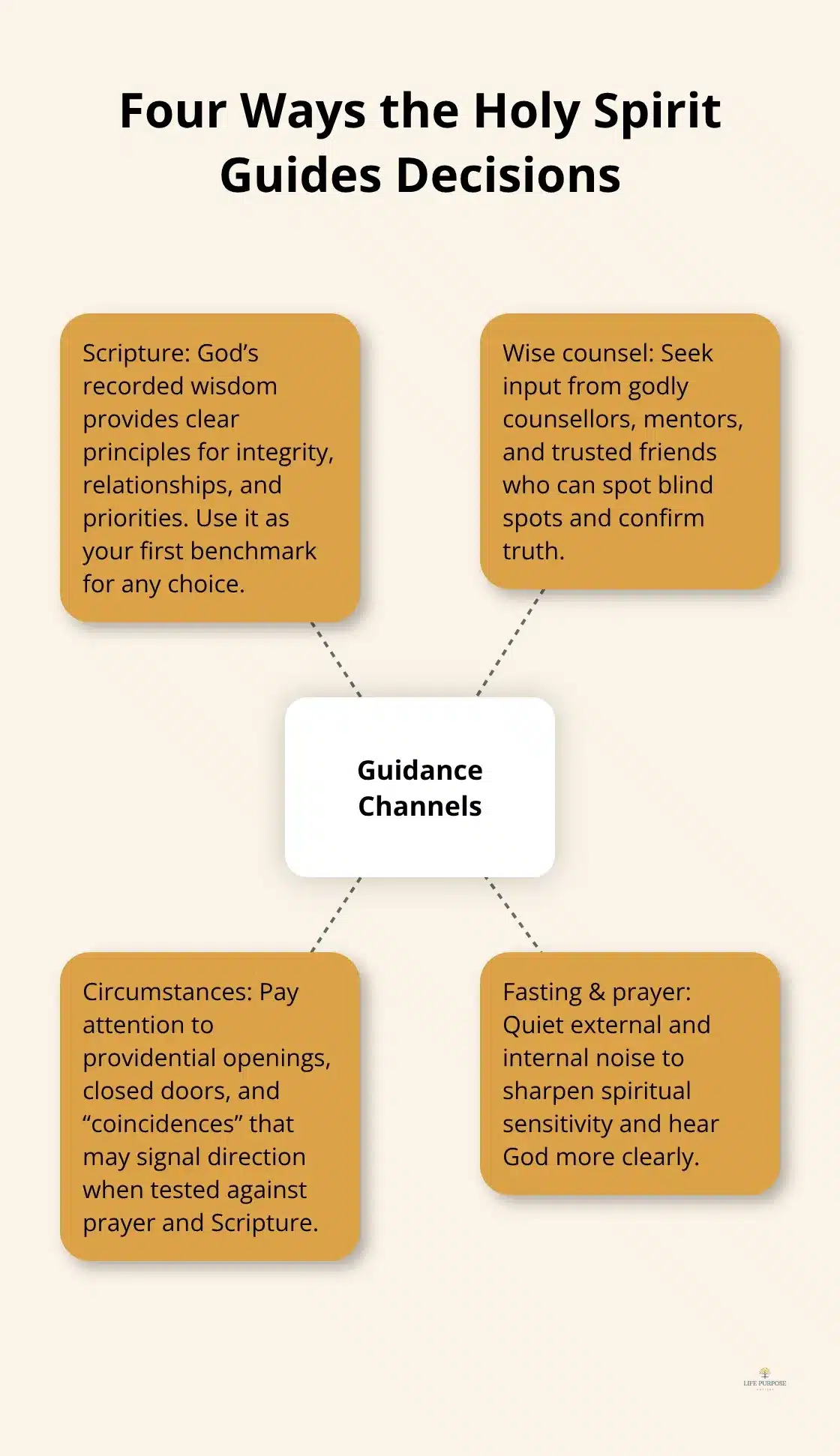
When you pair fasting with prayer, you hear God’s guidance more clearly because you’ve quieted the constant noise demanding your attention.
Recognising Peace as Your Compass
The Holy Spirit doesn’t shout. Instead, the Spirit communicates through interior movements that feel distinctly different from anxiety or excitement. Consolation-characterised by peace, hope, and calm-signals alignment with God’s will. Desolation-restlessness, doubt, and heaviness-signals misalignment. When you consider a job change, relationship commitment, or major life shift, pause and notice what you actually feel beneath the surface worry. Does the option generate sustained peace, or does it create persistent tension in your body and mind? This isn’t about positive thinking or wishful feeling. Deep relaxation helps your intuition surface by reducing cognitive overload. Set aside 30 minutes this week specifically to ask God to be your compass, using Psalm 25:4-5 as your focus. In that quiet space, you’ll notice what genuinely aligns with your deepest values and what merely looks good on paper.
Testing External Guidance Against Scripture
Not every adviser speaks for God, even when they’re well-meaning. This is why testing all counsel against biblical principles matters. When someone offers advice about a major decision, ask yourself whether it aligns with biblical principles or contradicts them. A mentor might suggest a financially lucrative path that requires compromising your integrity, or a friend might encourage a relationship that undermines your spiritual growth. James 1:5 assures that God generously gives wisdom to anyone who asks, so incorporate seeking divine wisdom as a practice before big decisions rather than as a last resort. The process isn’t about achieving absolute certainty-there rarely is one perfect answer. Instead, it’s about choosing a good path that honours your gifts, serves others, and aligns with Scripture, then moving forward with confidence rather than perpetual second-guessing.
Moving From Knowing to Doing
You now understand the four channels through which the Holy Spirit communicates and how to recognise peace as your internal compass. The real work begins when you actually apply this knowledge to the decisions facing you right now. What obstacles stand between you and hearing God’s voice clearly?
How to Actually Hear God’s Guidance
The gap between knowing the Holy Spirit speaks and actually hearing that voice clearly is where most people get stuck. Prayer and meditation are not passive activities where you sit quietly and hope for a message to arrive. Instead, they demand specific structure to cut through mental clutter.
Establish a Daily Prayer Practice
Start with a 15-minute daily practice at the same time each morning, before your phone, email, or anyone else’s demands reach you. Write down the specific decision you face in one clear sentence. Then spend five minutes in silence, not trying to think of anything, but noticing what surfaces without judgment. Write whatever comes next for five minutes without editing or analysing. This captures the quiet whispers beneath your conscious mind’s noise rather than polished reflections.
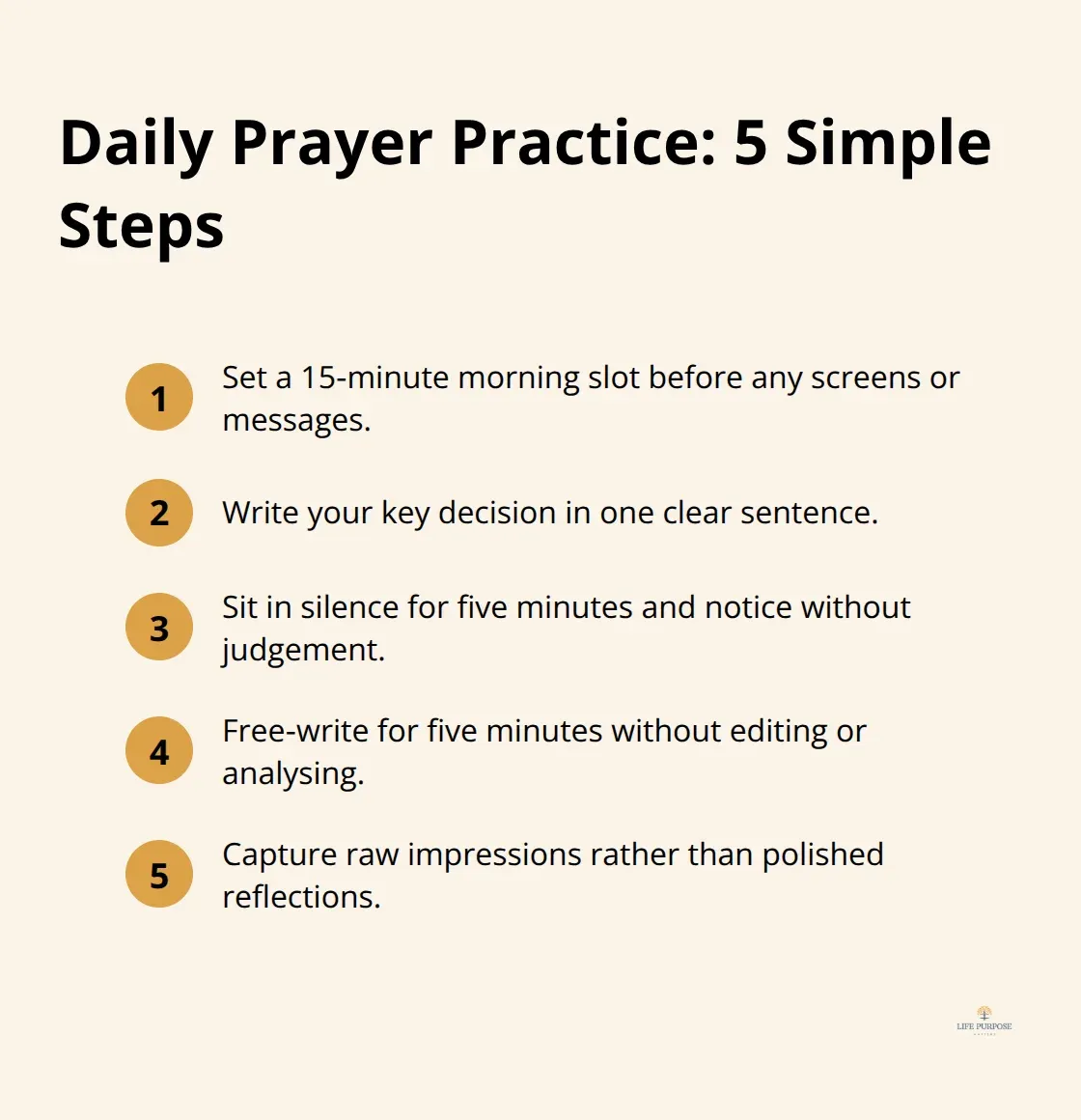
Daily prayer practice for spiritual discernment shows that meditation modulates brain activities associated with cognitive control, emotion regulation and empathy. Your brain learns to recognise the difference between anxious thoughts and genuine spiritual guidance. Anxious thoughts loop and repeat; spiritual guidance arrives once, quietly, and feels complete.
Search Scripture for Concrete Principles
Scripture works differently than meditation. Rather than waiting for guidance to emerge, you actively search Scripture for principles that speak directly to your situation. Open your Bible to passages addressing your specific choice, not vague spiritual concepts. If you decide whether to leave a job, read what Scripture says about work, calling, and stewardship. If you face a relationship decision, study what the Bible teaches about covenant and character.
Write down the principles you find, then ask yourself whether your options align with those teachings. This process takes 20 to 30 minutes per decision and grounds your discernment in something concrete rather than wishful thinking. The principles you uncover become your measuring stick against which every option must stand.
Listen to What Your Body Tells You
Your intuition is not mystical; it is your nervous system processing information faster than your conscious mind can articulate. When you imagine choosing option A, does your chest tighten or open? Do your shoulders relax or brace? These physical responses reveal whether your deepest self agrees with your surface reasoning.
Sit with each option for two minutes without talking yourself into or out of it. Notice what happens without judgment. That sustained peace (not excitement or relief) signals alignment with God’s will. Your body knows the truth before your mind catches up, and learning to trust those signals transforms how you make decisions.
What Actually Blocks Your Ability to Hear God
Your phone buzzes seventeen times before breakfast. Your email inbox contains 143 unread messages. Your mind replays last night’s argument while you focus on the present moment. This is not a spiritual weakness; this is modern life deliberately engineered to fragment your attention. The average person encounters approximately 5,000 to 10,000 advertisements daily, each one competing for the same mental real estate where God’s still small voice tries to reach you. But noise only scratches the surface. Beneath the external chaos lives a deeper obstacle: the fear that God’s guidance might actually require something uncomfortable from you. Many people claim they cannot hear God’s voice, but the honest truth is that they hear it perfectly well and actively ignore it because the message contradicts what they want. Your body tenses when you imagine following the guidance because you already know it demands sacrifice, change, or courage you’re not sure you possess. This fear creates a mental static that drowns out spiritual clarity. You convince yourself you need more information, more prayer, more confirmation when what you actually need is the willingness to act on what you already know.
The Comfort Zone Problem Masquerading as Uncertainty
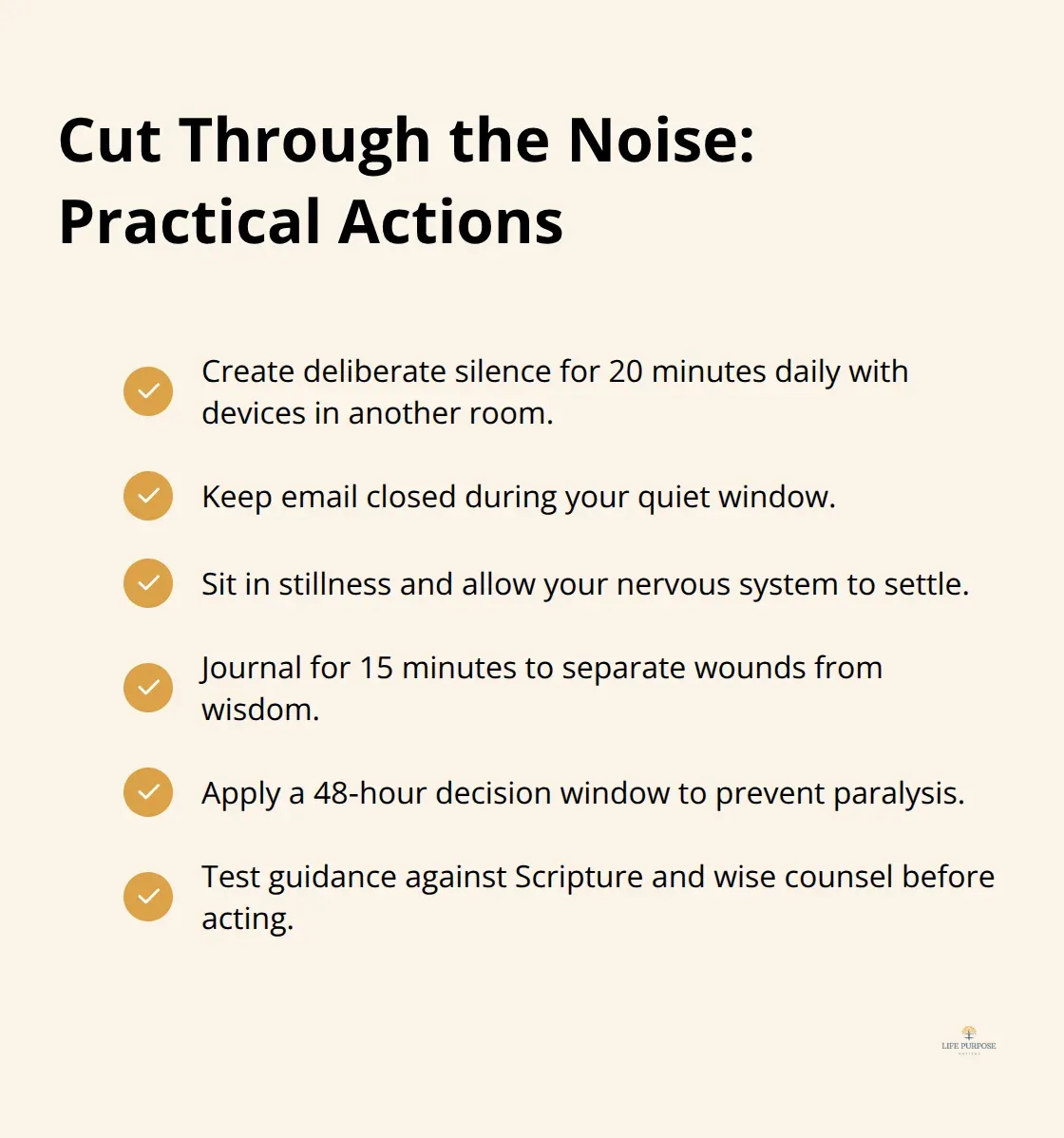
You don’t lack guidance; you lack the spine to follow it. When Jeremiah 33:3 promises that God will answer and reveal great and hidden things, that revelation comes with an assumption: you’re ready to do something with the answer. The obstacle isn’t that God remains silent; it’s that you remain stationary. Many people spend months in prayer about a decision when they’ve already received their answer weeks ago. They simply don’t like it. The Bible is filled with examples of people who heard God clearly and immediately wrestled with obedience. Abraham heard the call to leave his homeland and went. Peter heard Jesus call him from his fishing nets and left. These weren’t people who needed three more weeks of prayer; they needed courage. Your fear manifests as endless analysis. You create spreadsheets comparing options, consult additional advisers, and reread the same Scripture passages hoping for a different interpretation. This paralysis feels spiritual because you pray while you do it, but it’s actually procrastination wearing a religious costume. The antidote is brutal honesty: ask yourself whether you seek guidance or permission to do what you want. If you’re truly uncertain, you can make a decision within 48 hours using the practices already outlined. If you cannot decide within 48 hours, you’re not uncertain; you’re unwilling.
Distinguishing Your Wounds From God’s Wisdom
Childhood trauma, past rejection, and old betrayals create invisible filters through which you interpret guidance. When someone suggests a leadership opportunity, your first instinct might be to decline because your father criticised your abilities decades ago. That response feels like discernment, but it’s actually a wound speaking. God’s guidance never carries the energy of shame, self-punishment, or self-protection rooted in past pain. Interior peace from the Holy Spirit feels expansive, even when the path is difficult. A trauma response, by contrast, is chaotic and loud-you might feel panicked, dizzy, foggy, or flooded with urgency. The distinction matters enormously because one moves you toward your actual calling while the other keeps you imprisoned in patterns that stopped serving you years ago. Spend 15 minutes journaling about the specific decision you face, then write down your immediate emotional response without filtering. If that response includes language like “I’m not good enough,” “I’ll probably fail,” or “I don’t deserve this,” you’re likely hearing from your wounds rather than from God. Bring those responses to a trusted counsellor or spiritual director who can help you separate what’s true about God’s calling from what’s false about your worth. This isn’t optional inner work; it’s the foundation that allows genuine spiritual discernment to emerge. Without this clarity, you’ll spend years making decisions based on old programming rather than present guidance.
The Noise of Modern Life Demands Your Attention
External distractions assault your ability to hear anything subtle. Your devices send notifications designed by engineers specifically to interrupt your focus. Your workplace demands constant responsiveness. Your social media feeds flood your mind with comparison and anxiety. This relentless noise isn’t accidental; it’s profitable. Companies invest billions to keep your attention fragmented because fragmented attention cannot access the deep wisdom required for genuine discernment. You cannot hear a whisper in a stadium full of screaming crowds. The solution isn’t to eliminate all noise (impossible in modern life) but to create deliberate silence. Try setting aside 20 minutes daily where your phone stays in another room, your email stays closed, and your mind settles into stillness. This isn’t meditation in the spiritual sense; it’s simply removing the artificial stimulation that prevents your nervous system from accessing its own wisdom. Many people discover that when they finally quiet the external noise, they realise they’ve known their answer all along.
Final Thoughts
You’ve learned how the Holy Spirit communicates through Scripture, people, circumstances, and prayer. You’ve discovered how to recognise peace as your internal compass and how to distinguish genuine guidance from fear masquerading as wisdom. You understand the obstacles that silence God’s voice and how to remove them. Now you must act on what you know instead of cycling through another round of analysis.
Spirit guidance for choices only transforms your life when you apply it to real decisions in your real life. Pick one choice you face right now, no matter how small, and move through the process: spend 15 minutes in prayer, search Scripture for relevant principles, notice what your body tells you, and test your emerging sense of direction against wise counsel. Each time you follow the Holy Spirit’s guidance, you strengthen your ability to recognise that voice, and each time you act on what you know, you develop the courage to trust it more deeply.
The connection between you and God’s guidance requires consistent attention and regular prayer. Visit Life Purpose Matters to explore resources that deepen your spiritual practice and strengthen your relationship with God’s guidance. Your next decision awaits, and the Holy Spirit is already speaking.