
I’ve spent countless hours talking with people wrestling with one of life’s biggest questions: what happens when we die according to the Bible? It’s not morbid curiosity, it’s a genuine search for meaning and reassurance. At Life Purpose Matters, we believe understanding biblical teachings on the afterlife transforms how you live today. This post walks through what Scripture actually says about heaven, hell, resurrection, and eternity.
What the Bible Actually Says About Heaven, Hell, and What Happens in Between
The Immediate Afterlife: No Waiting Period
The moment someone dies, their spirit leaves the body and enters immediate conscious existence in either heaven or hell. This isn’t soul sleep or some vague spiritual limbo. According to 2 Corinthians 5:8, Paul writes that to be absent from the body means to be at home with the Lord for believers. For those who’ve rejected Christ, Luke 16:22-24 describes the rich man in Hades experiencing conscious torment while separated from God’s presence.
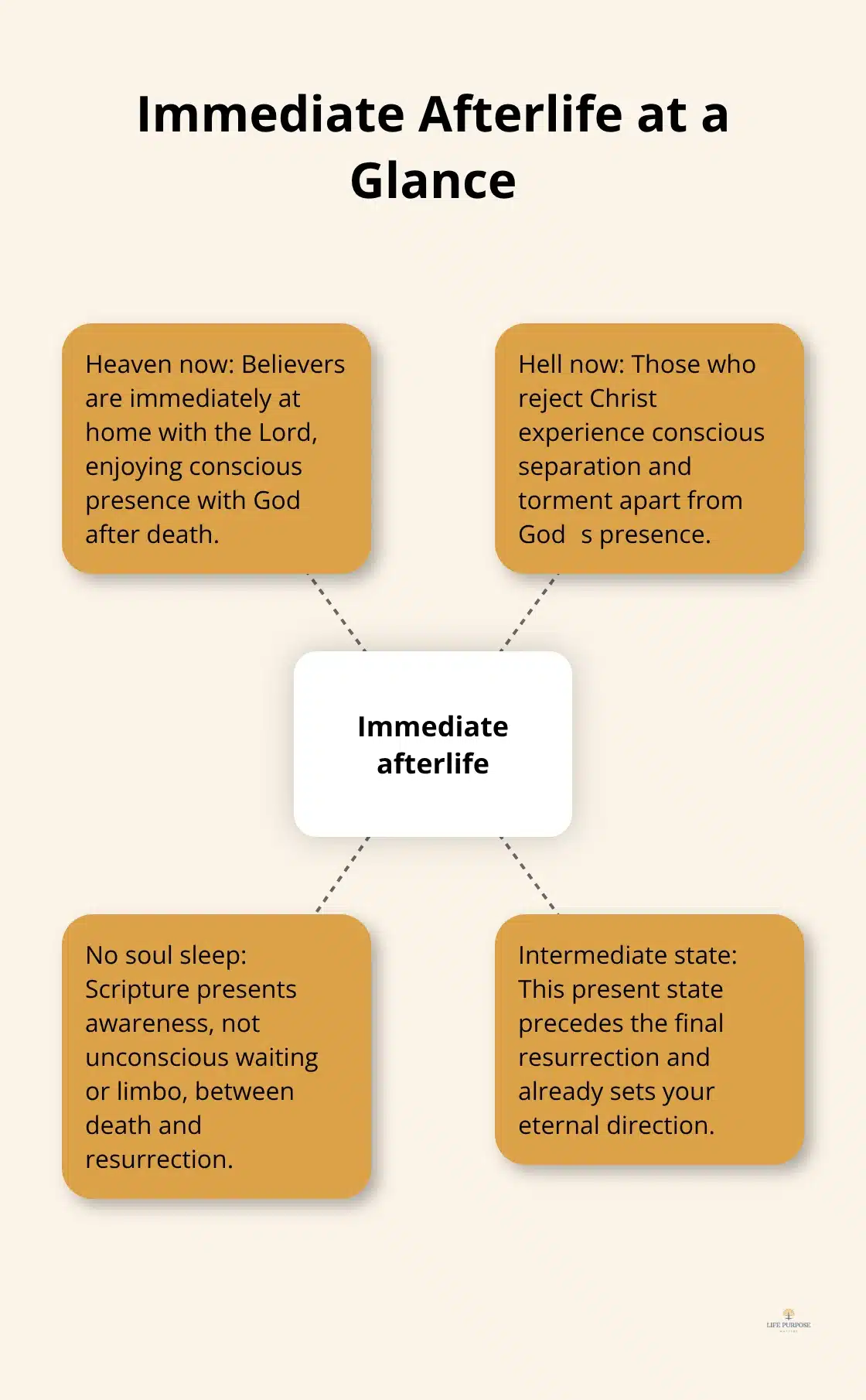
This intermediate state between death and the final resurrection determines where your eternal destiny begins the moment your heart stops beating.
Heaven: Direct access to God’s presence
Heaven for believers means direct access to God’s presence with no barriers, no sin, no separation. The Bible describes it as a literal place with precise dimensions in Revelation 21:16, not an ethereal concept. Believers in heaven experience fullness of joy in God’s presence, as Psalm 16:11 promises. You’ll be reunited with Christian loved ones who’ve gone before you, a comfort Paul addresses in 1 Thessalonians 4:14-18 to ease the grief of the living.
Hell: Separation from God’s goodness
Hell represents genuine separation from God’s goodness, presence, and mercy. It’s not primarily about torture devices or lakes of fire as punishment inflicted by God, but rather the natural consequence of rejecting the only source of life, love, and light. Those in hell experience this consciously and eternally. The intermediate heaven and hell exist right now, before the final resurrection and judgment day arrive. Your choices today determine which place you’ll occupy immediately after death.
Your Eternal Destination Is Settled Now
What makes this practical is understanding that your eternal destination is settled during your lifetime. John 3:16 states clearly: whoever believes in the Son has eternal life, but whoever rejects the Son will not see life. Salvation isn’t earned through good behaviour or church attendance. It’s a gift received through faith in Christ’s death and resurrection. This means the most important decision you’ll ever make isn’t about your career, your relationships, or your finances-it’s about whether you’ll trust Jesus for forgiveness and eternal life.
What Heaven Actually Involves
People often ask whether they’ll recognise loved ones in heaven or whether heaven will feel boring without earthly activities. Scripture addresses the second concern directly: in Revelation 22:3-5, believers will serve God and reign with Christ, receiving actual responsibilities and governance. You won’t be sitting on clouds playing harps. You’ll be actively engaged in meaningful work. As for recognising loved ones, while Scripture doesn’t explicitly address this, it promises that your identity and memories will remain intact in eternity. The transformation at resurrection glorifies your body but doesn’t erase who you are. These specifics matter because they show that death isn’t the end of existence but a transition to a completely different kind of existence determined entirely by your relationship with Christ, and that relationship shapes everything about what comes next.
Why Christ’s Resurrection Changes Everything About Death
The Foundation of Christian Hope
Christ’s resurrection on the third day isn’t just a historical event Christians commemorate once a year-it’s the foundation that makes the entire Christian hope of eternal life possible. The Apostle Paul was blunt about this in 1 Corinthians 15:12-14, arguing that if Christ hasn’t been raised, Christian faith is useless and believers remain dead in their sins. But Christ was raised, which means death itself has been defeated. This transforms everything about how you should think about your own death.
Your Resurrection Follows Christ’s Pattern
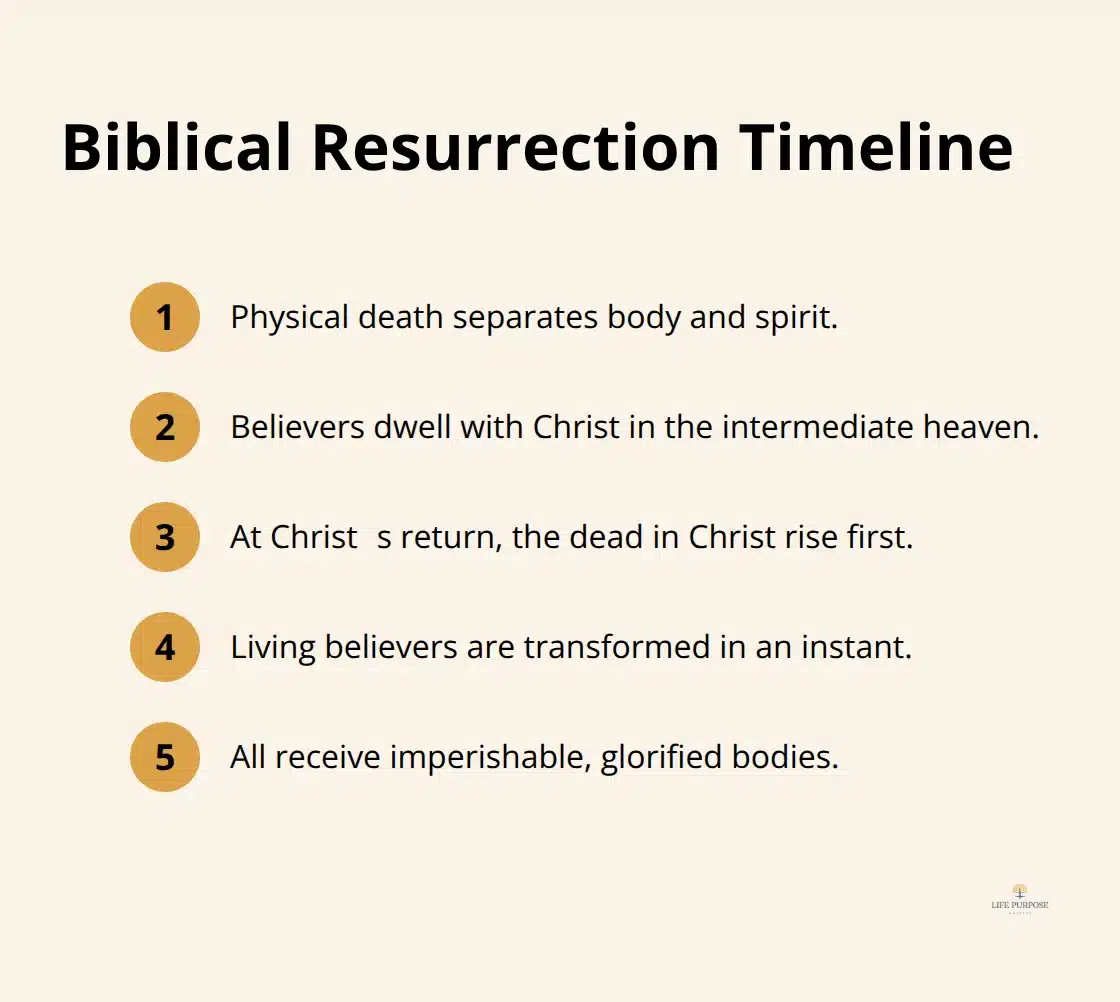
When you die as a believer, you don’t enter permanent darkness or nonexistence. You follow the same pattern Jesus established: physical death followed by resurrection into a glorified, imperishable body. First Corinthians 15:42-44 describes this resurrected body as imperishable, glorious, and powerful-fundamentally different from your current physical form, yet still recognisably you. The timeline matters here. At Christ’s return, those who’ve already died in faith rise first, then living believers transform in what Paul calls the twinkling of an eye in 1 Corinthians 15:51-57.
The Final Judgment Determines Your Eternal Experience
What happens at the final judgment determines your eternal experience, and this is where accountability becomes real. God will judge humanity according to how they’ve lived, examining whether their faith in Christ was genuine and how they responded to His grace during their earthly life. Your works matter here, though not for salvation-salvation comes through faith alone as a gift. Believers will receive rewards based on faithfulness, earning crowns like the crown of life for those who love God or the crown of righteousness for faithful servants, as 2 Timothy 4:7-8 and James 1:12 describe. These aren’t abstract concepts. They represent real recognition and responsibility in eternity.
The Weight of Eternal Consequences
Meanwhile, those whose names aren’t found in the book of life face the second death in the lake of fire according to Revelation 20:14-15. Your choices during this lifetime carry eternal weight. Whether you pursue meaningful work, maintain integrity, serve others, or grow in your faith, these actions accumulate. You build something that will follow you into eternity. The resurrection promise means death loses its power over you, but the judgment promise means your life choices retain their significance forever. This reality shapes how you should approach the next critical question: what does Scripture actually reveal about the nature of eternity itself, and how should that vision of forever influence the way you live right now?
What Eternity Actually Looks Like
Heaven as a Real Place with Real Substance
Heaven isn’t a vague spiritual concept or a reward for being generally nice. Scripture paints a remarkably concrete picture of eternal life that directly shapes how you should live today. Revelation 21:16 provides specific architectural dimensions for the heavenly city, describing it as a massive cube with walls and gates-an actual place rather than an abstract state of consciousness. The Bible consistently describes heaven as up in location, a dwelling place where God resides with His angels and where believers from earth live in His immediate presence after death. Psalm 16:11 promises fullness of joy in God’s presence, and this isn’t poetic exaggeration but the baseline reality of eternity for those who trust Christ.
Your Glorified Body in Eternity
What makes this practical is understanding that your eternal environment, your relationships, and your activities will be fundamentally shaped by whether you’re in God’s presence or separated from it. The intermediate heaven where believers go immediately after death already offers this presence, but the final resurrection brings your glorified body into union with your soul and spirit, creating complete personhood in eternity. This matters because some people assume heaven means floating around as disembodied spirits, but passages such as 1 Corinthians 15:50–54 and 1 Thessalonians 4:13–17 describe believers being resurrected and given glorified bodies-physical enough to work and reign with Christ according to Revelation 22:3-5. You won’t sit passively. You’ll actively govern and serve in meaningful roles throughout eternity.
Faith Determines Your Eternal Destination
Your faith in Christ determines everything about which eternity you experience, and this decision point is non-negotiable. John 3:36 states the reality plainly: whoever believes in the Son has eternal life, but whoever rejects the Son will not see life.
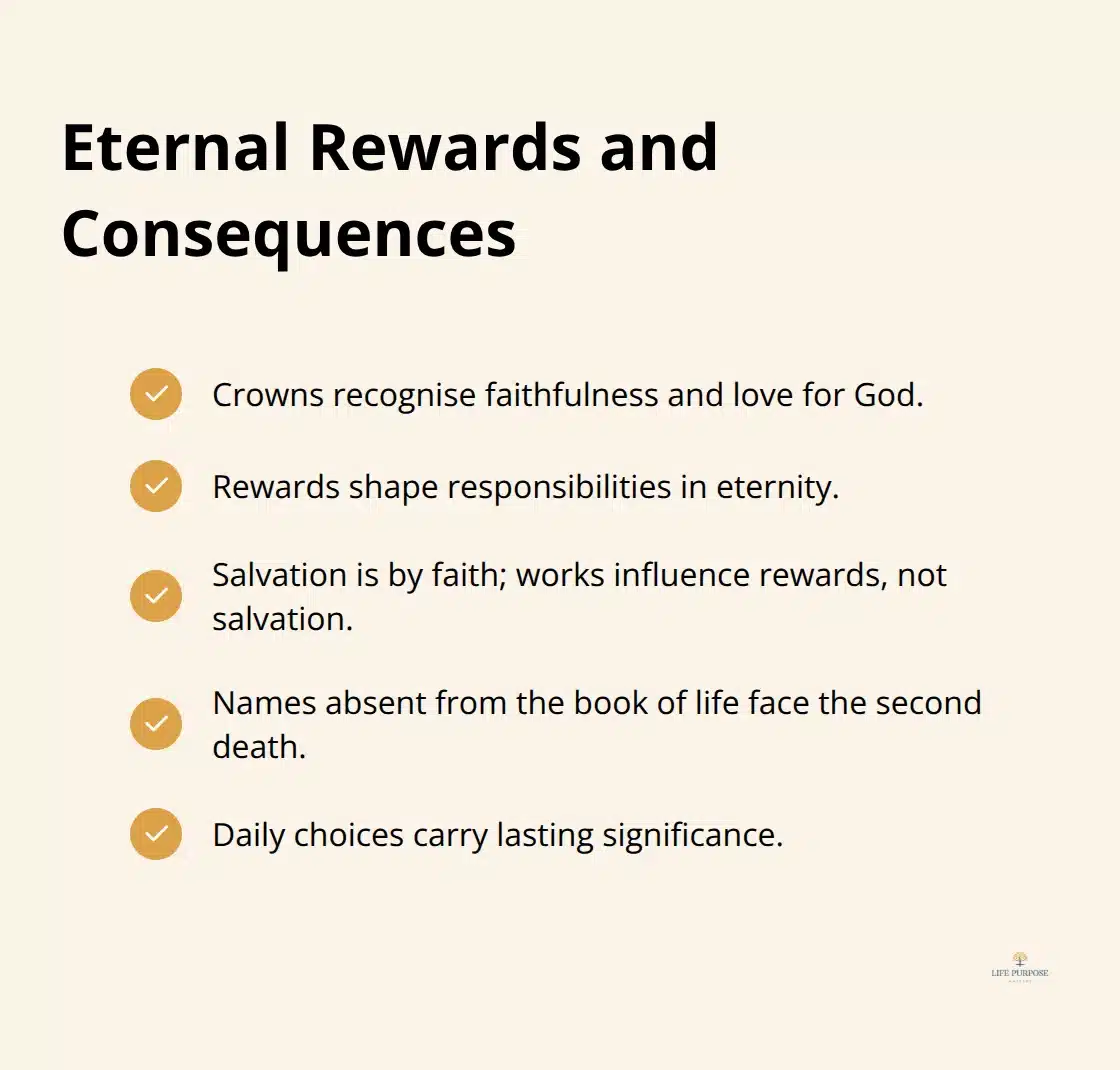
This isn’t about earning your way to heaven through good deeds or church attendance-salvation comes as a gift through faith in Christ’s death and resurrection, received the moment you genuinely trust Him. Your works matter immensely, but they matter for rewards and responsibility in eternity, not for earning salvation itself.
Rewards and Eternal Consequences
As 2 Timothy 4:7-8 and James 1:12 describe, faithful believers receive actual crowns recognising their faithfulness-the crown of life, the crown of righteousness-real recognition that shapes your role and experience in eternity. The inverse is equally serious: those not found in the book of life face the second death in the lake of fire, a consequence determined by rejecting Christ during your earthly life. The weight of this reality means your choices today-how you respond to grace, whether you pursue integrity, how you serve others, whether you grow spiritually-accumulate into your eternal destiny. This isn’t meant to frighten you, but to clarify that eternity isn’t predetermined by fate or luck. It’s determined by a single decision about Jesus that you make while still alive.
Final Thoughts
Understanding what happens when we die according to the Bible transforms how you live right now. Scripture presents a clear sequence: immediate conscious existence in heaven or hell after death, followed by resurrection into a glorified body, then final judgment determining your eternal role and experience. This clarity anchors your life in something that actually matters instead of leaving you adrift in uncertainty.
The comfort these teachings provide runs deep and is practical. If you’ve trusted Christ, you’re heading toward direct presence with God, reunion with loved ones, and meaningful work in eternity-your identity, relationships, and capacity to love remain intact but transformed and perfected. Your choices today carry eternal significance, so you stop measuring success by salary or status and start asking whether your decisions align with what will matter forever. You invest in relationships, pursue spiritual growth, serve others faithfully, and forgive more readily because you understand that God’s grace toward you models grace toward others.
This eternal perspective reshapes your daily decisions in ways that matter profoundly. Visit Life Purpose Matters to explore how these biblical truths translate into meaningful living and discover resources designed to support your spiritual journey as you live out your God-given purpose.