

I once met a woman who spent decades chasing earthly success, only to realise at fifty that none of it filled the void in her soul. She wasn’t alone; many believers wrestle with the tension between living fully today and longing for something eternal.
At Life Purpose Matters, we believe God’s promise of paradise isn’t just a distant hope. It’s meant to transform how you live right now, grounding your daily choices in something far greater than temporary circumstances.
What Scripture Actually Says About Paradise
Paradise as a Physical Reality
The Bible doesn’t paint paradise as a vague, abstract concept floating somewhere beyond the clouds. Scripture presents paradise as a physical reality with detailed descriptions, designed to anchor your faith in something real. In Revelation 21:1-4, John describes a new heaven and new earth where God dwells directly with His people, and He wipes away every tear. That’s not poetry meant to comfort the dying-it’s a blueprint for what believers actually inherit. The Old Testament prophets, such as Isaiah, spoke of this restoration repeatedly.
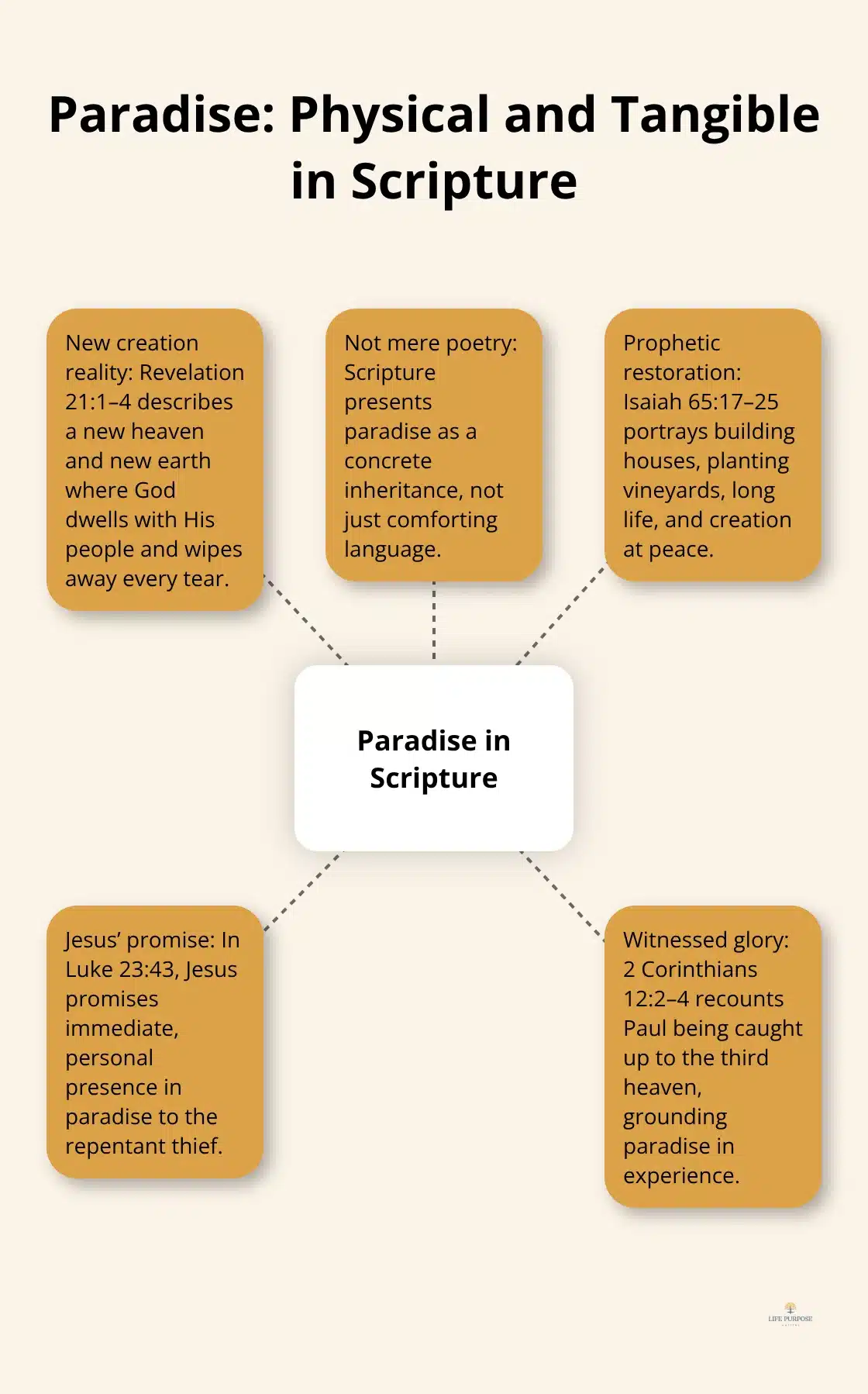
Isaiah 65:17-25 describes a renewed creation where people build houses and plant vineyards, where a child lives a hundred years, and where the wolf and lamb lie down together. These aren’t metaphors for spiritual concepts; they’re descriptions of a tangible, physical reality where God’s purposes in creation finally reach completion.
What the New Testament Reveals
The New Testament builds on this foundation relentlessly. Paul writes in 2 Corinthians 12:2-4 about being caught up to the third heaven and hearing inexpressible things, grounding paradise in experience rather than speculation. When Jesus told the thief on the cross in Luke 23:43, “Today you will be with me in paradise,” He wasn’t offering an abstract hope-He was promising immediate, personal presence. The consistent thread across Scripture shows that paradise involves both spiritual restoration and physical renewal, both divine presence and community with other believers.
Paradise Transforms Your Present Life
What makes this practical for your life right now is understanding that paradise isn’t meant to make you detached from today. The Apostle Paul explicitly connects that eternal hope should reshape present decisions and actions in Ephesians 2:10, saying believers are God’s workmanship created for good works. Your daily choices matter because they’re part of God’s larger restoration plan. When you serve others, speak truth, pursue justice, or build genuine relationships, you’re not just filling time until heaven arrives-you’re participating in what God is already doing to renew creation. First Peter 1:13-15 tells believers to prepare their minds for action and be holy in all conduct, grounding eternity in everyday behaviour.
Filtering Every Decision Through Eternity
The promise of paradise should reshape how you work, how you love, how you handle conflict, and how you steward resources. Colossians 3:1-4 makes this crystal clear: since you’ve been raised with Christ, set your minds on things above, not on earthly things. That doesn’t mean ignoring your job or family; it means filtering every decision through an eternal lens. When you face temptation to compromise integrity for a promotion, or to hold a grudge because it feels justified, paradise reminds you that temporary wins don’t matter against eternal consequences. The believers who actually experience transformation aren’t the ones who merely believe paradise exists-they’re the ones who let that belief change how they spend their time, money, and emotional energy today.
This eternal perspective isn’t meant to keep you stuck in spiritual contemplation. Instead, it equips you to live with intention right now. As you understand what God has promised, the next step involves examining how you can strengthen that faith through concrete, daily practices that anchor your hope in reality.
Living Paradise Today
The gap between believing paradise exists and actually experiencing God’s promise in your daily life is where most believers get stuck. You can intellectually accept that eternity with God is real, yet still live as though today doesn’t matter, as though your choices and relationships are just filler before the real story begins. That’s backwards. Scripture shows us that paradise isn’t something you wait passively for-it’s something you actively step into through specific, measurable practices that anchor your faith in the present moment.
Start Your Day with Intentional Prayer
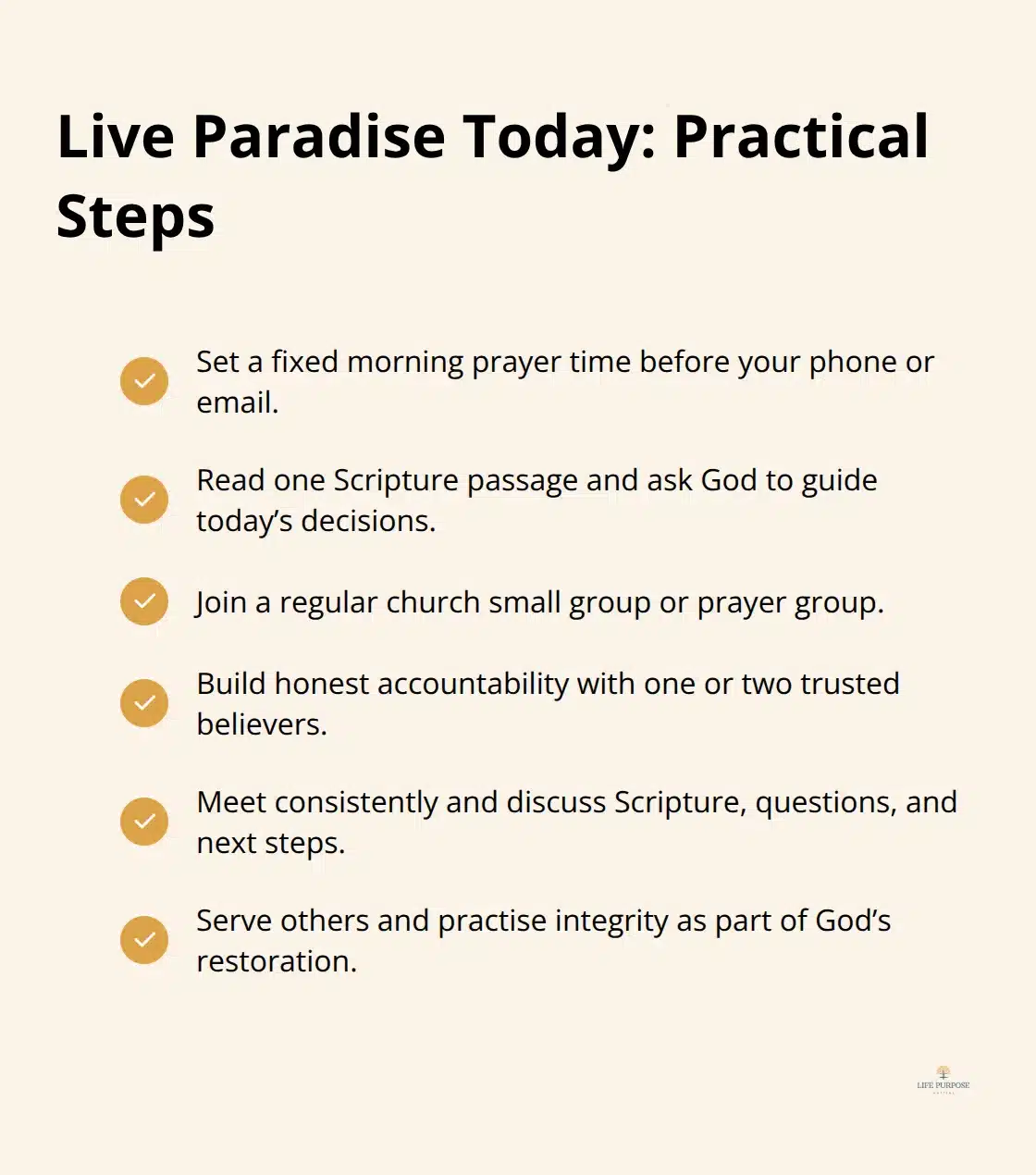
When you start your day with prayer, you’re not just checking a religious box. Research from the Journal of Psychology and Christianity found that believers who engage in morning prayer report higher life satisfaction and greater emotional resilience throughout their day. This isn’t a coincidence. You’re literally training your mind to recognise God’s presence before the chaos begins. Set a specific time, even ten minutes before checking your phone or email. Use that time to read one passage of Scripture, speak directly to God about what you’re facing, and ask Him to guide your decisions. This single habit reshapes how you respond to pressure at work, conflict in relationships, and temptation to compromise your values. The believers who actually live out their faith aren’t the ones with perfect circumstances; they’re the ones who’ve built non-negotiable spiritual practices into their routine.
Connect With Others in Community
Beyond personal discipline, you cannot experience God’s promise in isolation. The New Testament consistently describes the Christian life as communal. When Hebrews 10:24-25 warns against neglecting to gather together, it’s not about guilt or obligation-it’s about survival. Believers who participate in regular community study, prayer groups, or church accountability report higher retention of their faith commitments. This matters because when you face doubt, loneliness, or temptation, you need people who’ve already walked that path to remind you what’s true.
Build Real Accountability Relationships
Find a small group-whether through your church, a Bible study, or even a trusted friend-where you can speak honestly about your spiritual struggles without pretence. Meet regularly, not sporadically. Share what Scripture teaches you, ask hard questions, and let others challenge your thinking. This is where paradise becomes tangible. When you sit with believers wrestling through the same questions you are, when you pray together for real problems, when you see someone’s faith actually change their behaviour-that’s experiencing God’s promise today. The eternal perspective you’ve begun developing in your personal prayer life gets tested, refined, and deepened through community. You move from abstract belief to concrete faith lived out in relationship with others who are pursuing the same eternity you are.
As you anchor your faith in these daily practices and community connections, you’ll discover that paradise isn’t just a future destination-it’s a present reality that shapes how you respond to life’s deepest struggles. The next step involves preparing your heart to face the obstacles that stand between you and full confidence in God’s promise.
Facing What Blocks Your Faith
The brutal truth is that knowing paradise exists and actually trusting God with your future are two different things. You can attend church, pray daily, and read Scripture while still harbouring deep doubt about whether God’s promise applies to you. Fear whispers that you’ve messed up too badly, that your past disqualifies you, that eternity feels too distant to matter when you’re drowning in present pain. These aren’t character flaws-they’re the normal resistance every believer encounters when trying to move from intellectual assent to genuine trust. The gap between belief and confidence is where real spiritual growth happens, and it requires you to name what actually blocks you rather than pretending it doesn’t exist.
What Doubt Really Reveals
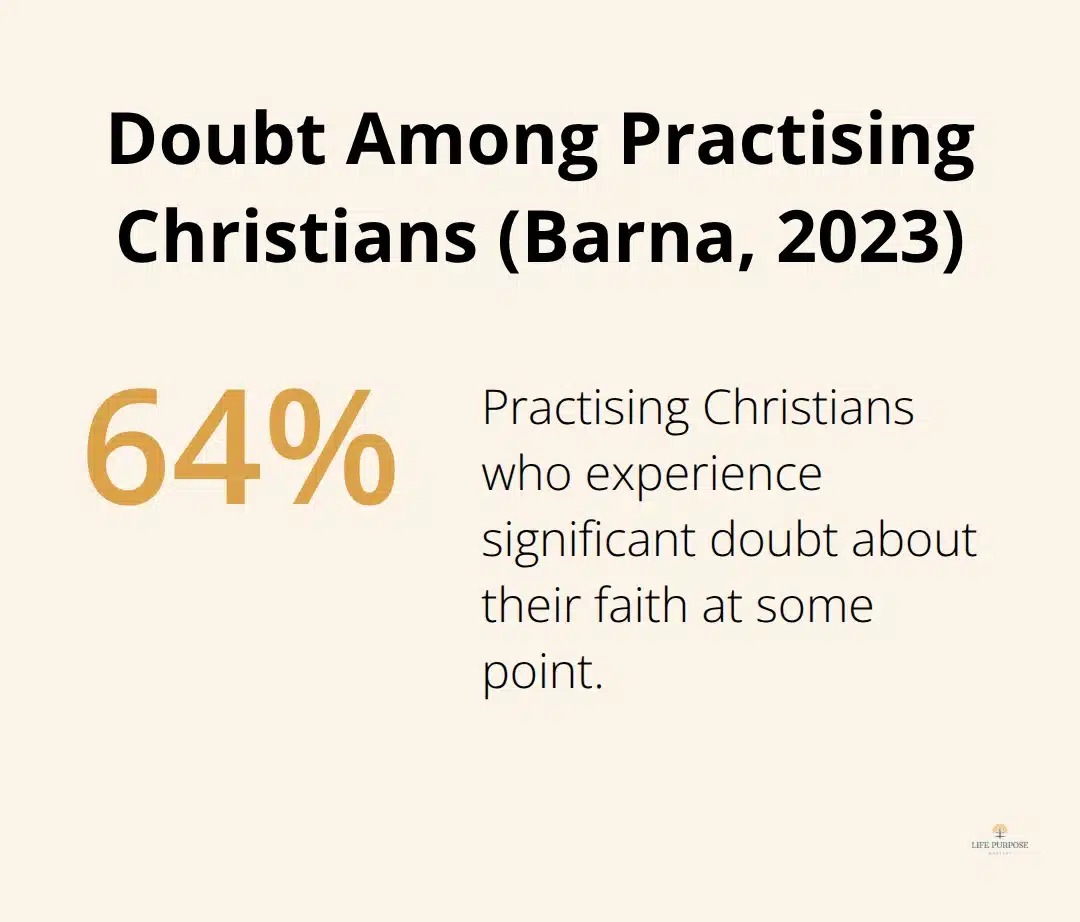
Doubt isn’t the opposite of faith-it’s often the sign that faith is developing. When you question whether God keeps His promises, you’re actually engaging with Scripture seriously enough to notice the tension between what you’re experiencing and what you’re told to expect. A 2023 study from Barna Research found that 64 per cent of practising Christians experience significant doubt about their faith at some point, yet those who work through that doubt rather than suppress it develop stronger, more resilient beliefs. The problem isn’t the doubt itself; it’s what you do with it.
Some believers use doubt as an excuse to retreat from their spiritual commitments. Others use it as fuel to dig deeper into Scripture, to ask harder questions, and to develop a faith that can actually withstand real life. The second group experiences God’s promise far more vividly because their confidence rests on evidence they’ve tested personally.
When you face a specific doubt, write it down. What exactly are you questioning? Is it God’s character, His power, His willingness to help you, or His timeline? Once you name it specifically, you can search Scripture for what God actually says about that exact issue rather than fighting a vague sense of unease.
Fear Masquerades as Wisdom
Fear often disguises itself as caution or realism. You tell yourself you can’t trust that God will provide, so you cling to control. You can’t believe He’ll forgive you, so you punish yourself. You can’t accept that He loves you unconditionally, so you perform endless spiritual disciplines hoping to earn His favour. Second Timothy 1:7 states directly that God gives a spirit of power, love, and a sound mind, not a spirit of fear. This means fear is not from God. When you feel paralysed by anxiety about your future, that’s not the Holy Spirit speaking; that’s your flesh responding to uncertainty the way it always has.
The shift happens when you consciously choose to replace that fearful voice with God’s actual promises. This requires deliberate mental discipline. When fear tells you that your mistakes are too great for forgiveness, immediately counter it with Romans 8:1-there is now no condemnation for those in Christ Jesus. When fear whispers that God won’t come through, speak Isaiah 41:10 aloud: God will strengthen you and help you. Speaking Scripture out loud rewires your brain’s response to fear. Research from cognitive behavioural therapy shows that verbal affirmation of truth creates stronger neural pathways than silent belief alone. You’re not being silly, or performative-you’re training your mind to recognise God’s voice over the voice of fear.
The Work of Becoming Who God Says You Are
Spiritual growth isn’t passive. It requires you to actively cooperate with the Holy Spirit’s transformation. Galatians 5:16 tells believers to walk by the Spirit, which means you make daily choices aligned with God’s character rather than your default patterns. This looks practical and specific. If you struggle with anger, you don’t just pray for patience-you identify the situations that trigger your anger and practise a different response. If you battle sexual temptation, you don’t just ask God to remove desire-you remove access to what tempts you and build accountability with someone who knows your struggle. If you tend toward anxiety, you don’t just hope it goes away-you establish a rhythm of prayer and Scripture meditation that interrupts the anxiety cycle before it escalates.
These aren’t legalistic rules; they’re the same strategies every human uses to build any skill or break any habit. Athletes train their bodies. Musicians train their hands. Believers train their spirits through intentional, repeated practice, the same way you’d train for a marathon or master an instrument. The believers who actually experience transformation aren’t waiting for God to zap them into holiness-they’re partnering with God through removing obstacles and creating space for the Holy Spirit to work. Understanding how spiritual warfare operates helps you recognise when fear and doubt are external attacks rather than personal failures. Your relationship with God deepens through this partnership, not through passive hoping that someday you’ll feel more connected.
Final Thoughts
You’ve spent time understanding what Scripture actually teaches about paradise, exploring how to anchor that belief in daily practices, and facing the doubts and fears that block genuine faith. The paradise promise isn’t meant to be a theological concept you defend in conversations or a distant hope you think about when life gets hard-it’s meant to reshape who you are right now, today, in the decisions you make and the relationships you build. When you grasp that paradise is real, physical, and prepared specifically for those who trust Christ, something shifts internally.
This shift transforms how you treat people, work with integrity, serve generously, and forgive readily because you’re not desperate for this life to complete you or afraid of scarcity. Your current season matters immensely-the way you treat your spouse, raise your children, serve your community, and steward your gifts right now participates in God’s larger restoration plan. You’re not just passing time; you’re living with the quiet confidence that comes from knowing your ultimate destination is secure.
The spiritual journey you’re on deepens as you return to Scripture, practise the disciplines that anchor your faith, and build community with others pursuing the same eternity. We at Life Purpose Matters exist to support you on this journey through resources and faith-based encouragement designed to help you integrate your faith more fully into your daily life. Visit Life Purpose Matters to explore how we can help you discover and live out your God-given purpose within a Christian framework.