

I’ve always found it fascinating how many Christians struggle to explain the Trinity, even though it’s central to their faith. The concept of God as Father, Son, and Holy Spirit can feel abstract until you see it woven throughout Scripture.
At Life Purpose Matters, we’ve compiled the top Bible verses about the Trinity to help you understand this foundational doctrine and how it shapes your relationship with God. These passages reveal how the three persons of the Godhead work together in creation, redemption, and your daily spiritual life.
What Exactly Is the Trinity?
The Core Definition
The Trinity isn’t a puzzle you solve through clever thinking or a mystery you eventually understand through study. It’s a foundational truth grounded in Scripture that shapes how Christians understand God’s nature and interact with Him daily. The Trinity means God exists as three distinct persons-Father, Son, and Holy Spirit-while remaining one God in essence and being. This isn’t three separate gods or God changing forms at different moments. It’s one divine being expressed through three eternal, coexisting persons.
How the Early Church Understood It
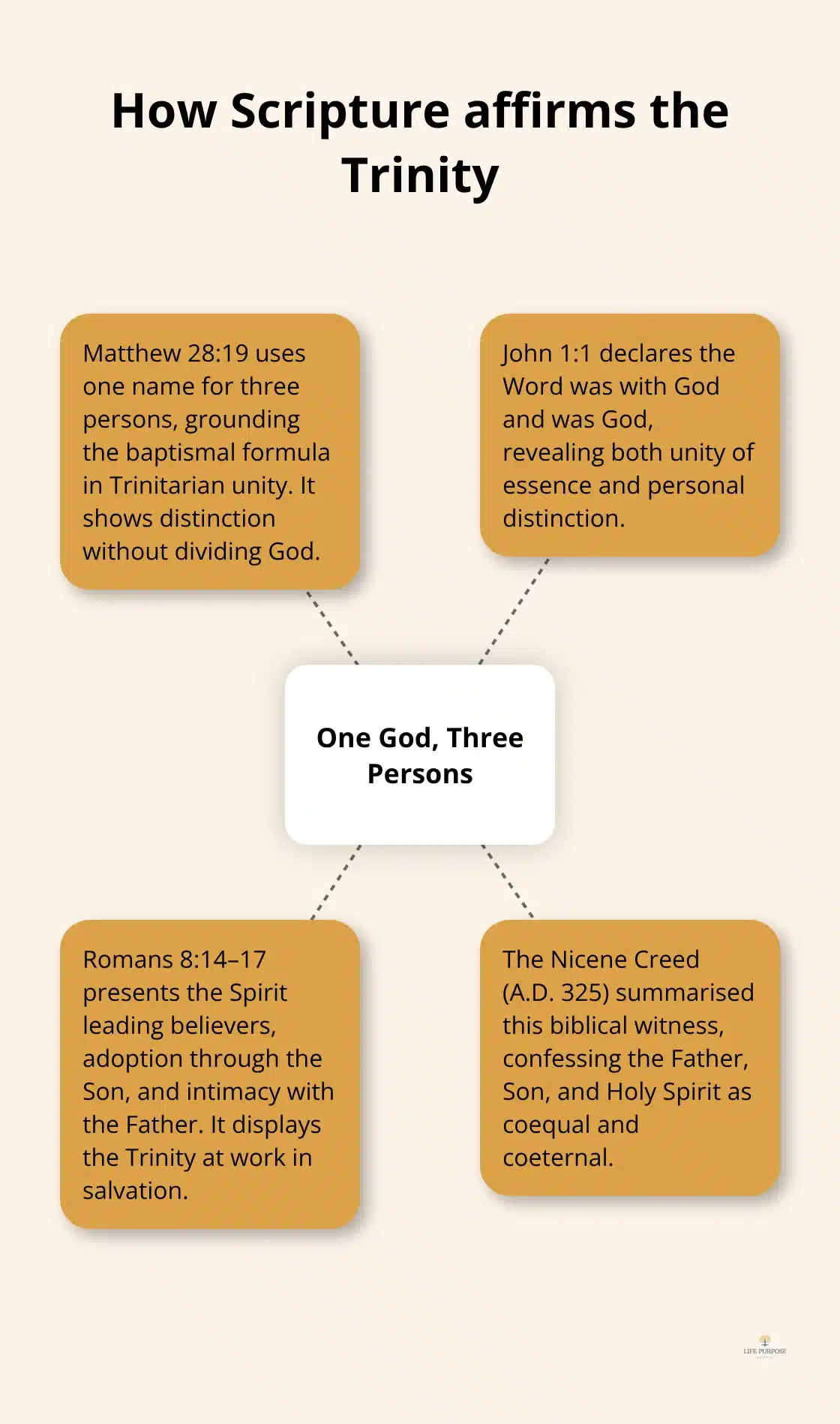
The Council of Nicaea in 325 AD formalised this understanding in the Nicene Creed, affirming that the Father, Son, and Holy Spirit share one divine nature and are coequal in power and glory. This doctrine emerged from early Christians wrestling with Scripture itself, not from philosophical speculation imposed on the Bible. Matthew 28:19 shows Jesus commanding baptism in the name of the Father, the Son, and the Holy Spirit, using a singular name to describe three persons. John 1:1 declares that the Word was God and was with God simultaneously. Romans 8:14–17 describes believers led by the Spirit, adopted as God’s children through Christ. These weren’t abstract theological ideas invented later; they’re what Scripture actually teaches about God’s identity.
Why the Trinity Transforms Your Faith
The Trinity fundamentally changes how you pray, worship, and understand salvation. When you grasp that God the Father created and sustains all things, God the Son became incarnate to redeem you, and God the Spirit indwells believers to transform them, your daily walk gains depth and direction. Denying the Trinity’s truth distorts everything-it changes who Jesus is, what the Holy Spirit can do in your life, and how salvation actually works. The Trinity isn’t a peripheral doctrine you can ignore; it appears in baptism, the Lord’s Supper, Christian worship, and prayer itself. When you pray to the Father through the Son in the power of the Spirit, you’re living out Trinitarian faith.
Moving From Theory to Practice
The practical reality is this: understanding the Trinity moves you from abstract religion toward an intimate relationship with the God who reveals Himself in three persons. This shift from intellectual assent to lived experience happens as you encounter each person of the Godhead in Scripture. The verses we’re about to examine show you exactly how the Father, Son, and Spirit work together-not as theological abstractions, but as the living God actively involved in creation, redemption, and your transformation.
Scripture Reveals the Trinity in Action
The Baptismal Formula: One Name, Three Persons
Jesus stands with His disciples after the resurrection and commands them to baptise people in the name of the Father, the Son, and the Holy Spirit. Notice the singular word: name, not names. One name covers three distinct persons. This wasn’t accidental phrasing. The early church understood this as the authoritative formula for Christian baptism, and it appears throughout the New Testament as the standard practice. When someone was baptised into the Christian faith, they were baptised into the identity of all three persons simultaneously.
This tells you something vital about how the first Christians experienced God: not as three separate divine beings, but as one God operating through three eternal, coexisting persons. The singular name in Matthew 28:19 reinforces the unity of the Triune Godhead in practice. Baptism wasn’t three separate rituals performed in sequence. It was one act invoking one God expressed through three persons.
Three Witnesses, One Truth
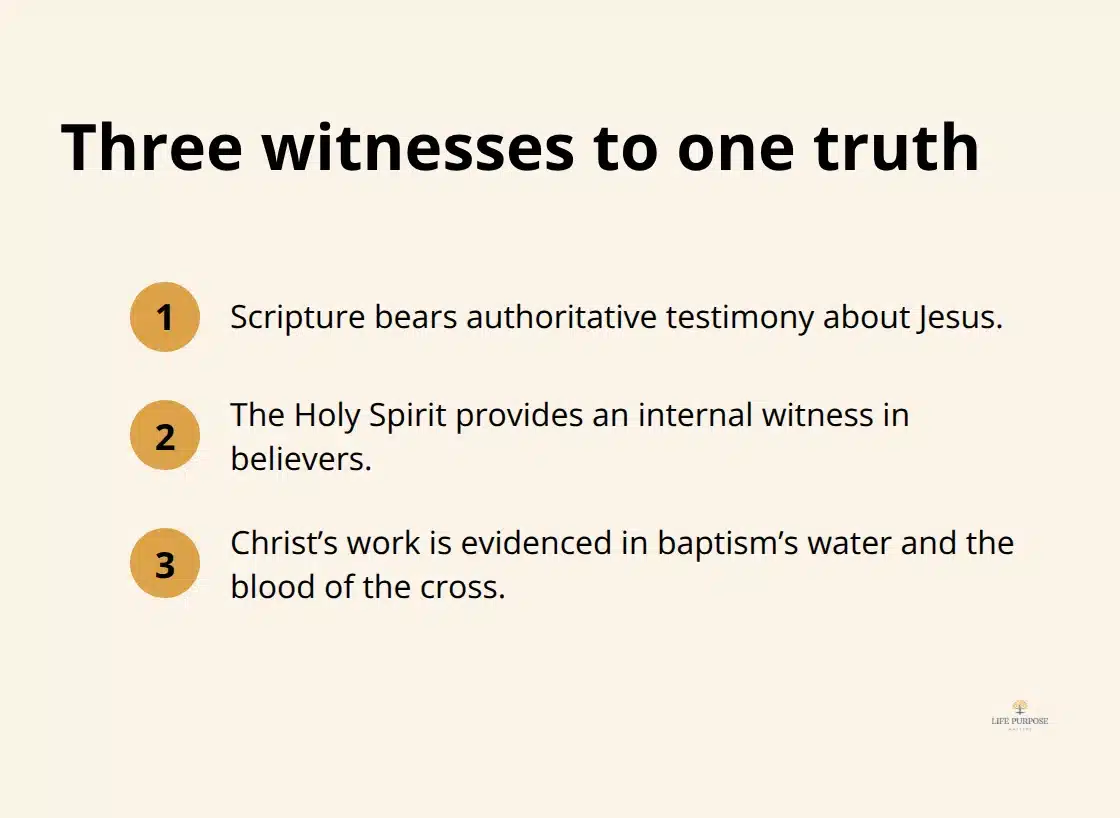
First John 5:7 presents another angle. God’s testimony to salvation comes through the Father, the Word, and the Holy Ghost, and these three are one. This verse emphasises the reality that God’s testimony comes through multiple channels that ultimately point to one truth. The Spirit testifies internally to believers about Jesus. The water of baptism symbolises the cleansing work of Christ. The blood speaks of Christ’s sacrifice.
Three distinct witnesses point to one unified message about redemption. This matters practically because when you’re uncertain about God’s will or doubting your faith, you don’t look for a single sign. You examine multiple sources of God’s testimony: Scripture, the Spirit’s internal witness, and the evidence of Christ’s work in your life. If all three align, you stand on solid ground.
The Apostolic Blessing: Grace, Love, and Fellowship
Paul closes his second letter to the Corinthians with a benediction that invokes all three persons of God. The grace of the Lord Jesus Christ, the love of God, and the fellowship of the Holy Spirit be with you all. This isn’t flowery language. Paul invokes the three persons of God as the source of specific spiritual realities in the reader’s life. Grace comes through Christ’s finished work. Love originates from the Father’s character. Fellowship flows from the Spirit’s presence.
When you pray this benediction over yourself or others, you’re not offering three separate blessings. You’re asking that the unified work of the triune God would shape every aspect of your spiritual experience. The practical application here is straightforward: use this structure when you intercede for others. Pray specifically for Christ’s grace to cover their sin, the Father’s love to sustain their hope, and the Spirit’s fellowship to guide their daily decisions. This aligns your prayers with how Scripture itself describes God’s work.
The Operating System of Biblical Faith
These three verses show the Trinity isn’t an abstract doctrine floating above Scripture. The Trinity functions as the operating system of biblical faith, embedded in baptism, in testimony, and in prayer itself. Each passage reveals how the Father, Son, and Spirit work together at the most significant moments of Christian life. As you move forward, you’ll see how this Trinitarian framework transforms not just your theology but your daily spiritual practices and your relationship with each person of the Godhead.
Living the Trinity Every Day
Prayer That Engages Each Person of the Godhead
The Trinity stops being abstract the moment you pray to the Father through Christ in the power of the Spirit. Most Christians recite these words without recognising that they practise Trinitarian theology. The shift from intellectual understanding to lived experience happens when you align your prayers, decisions, and actions with how each person of the Godhead actually works in your life.
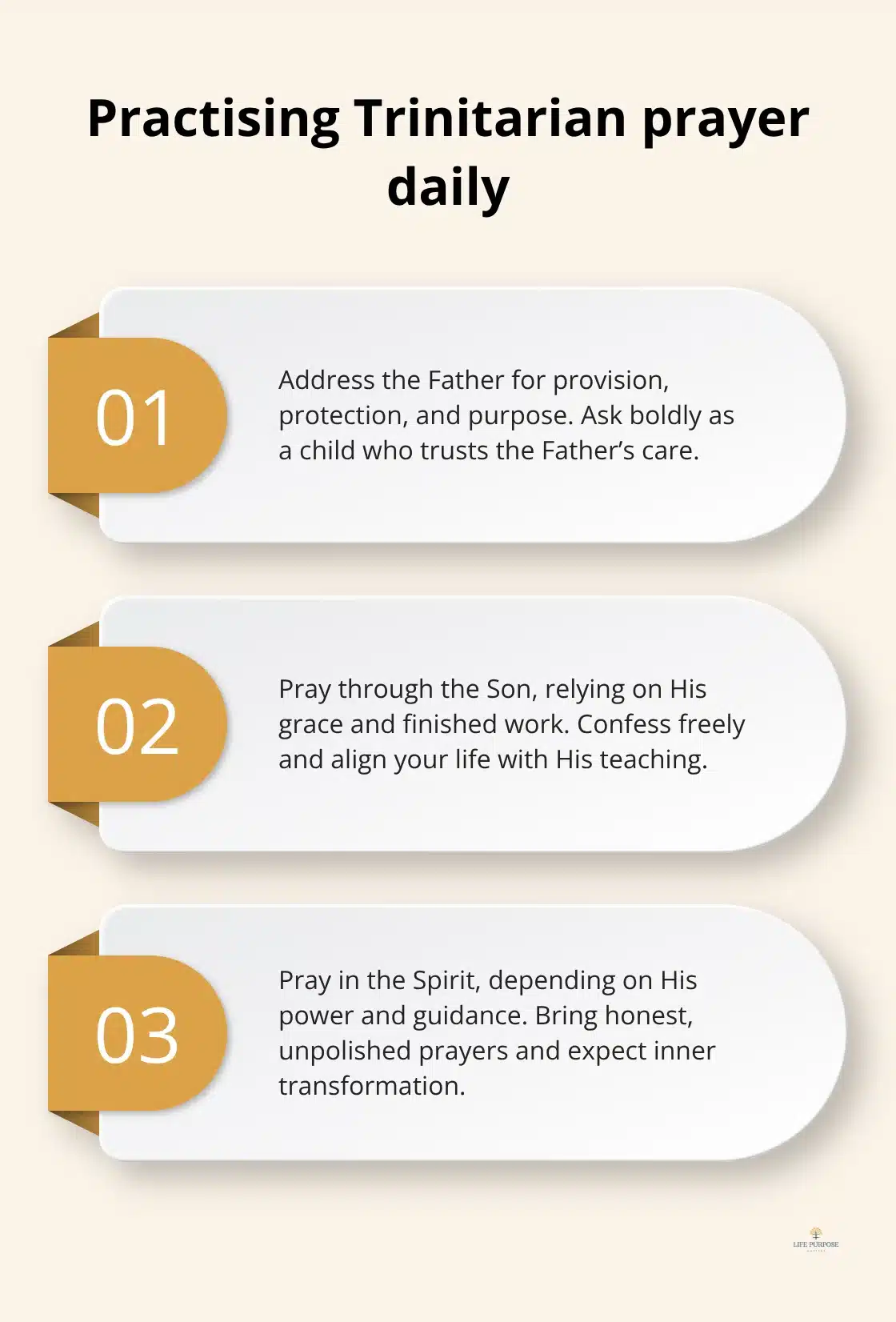
Start by addressing God the Father directly for provision, protection, and purpose. Bring your requests to Him, not as distant petitions but as a child approaching a parent who cares about the details. When you seek wisdom, acknowledge that the Father grants it freely to those who ask without doubt. When you face uncertainty about your direction, ask the Father to reveal your purpose because He sources all good gifts.
Following Christ’s Example in Your Relationships
Christ’s teachings reshape how you treat others and handle conflict. Jesus modelled radical forgiveness, confronted hypocrisy without shame, and prioritised time with people considered worthless by society. He did not hide His convictions or water down the truth to make people comfortable.
When you follow His teachings, you reject the cultural pressure to remain neutral on everything. You take clear stands on justice, defend the vulnerable, and speak truth even when it costs you socially. His example shows that authentic faith requires courage and conviction, not comfortable compromise. This means you align your actions with His values in concrete, visible ways-in how you spend money, how you speak about others, and how you respond to injustice.
Activating the Spirit’s Power Through Obedience
The Spirit’s power in your life is not something you wait to feel; it is something you activate through obedience and surrender. When you face a situation that requires courage, you do not ask the Spirit to give you feelings of boldness. You step forward in faith and trust the Spirit to strengthen you in the act itself.
Praying in the Spirit, as described in Ephesians 6:18, means you bring your deepest struggles and longings to God without pretence, letting the Spirit intercede where your words fail. This happens through honest prayer, not polished religious language. You speak to God about what actually troubles you, what actually tempts you, and what actually confuses you. The Spirit meets you in that raw honesty and transforms your perspective from within.
The Trinity in Your Actual Circumstances
The Trinity becomes alive when you stop treating it as doctrine and start treating each person as actively present in your specific circumstances. You pray to the Father for your actual needs. You follow Christ’s actual teachings in your actual relationships. You trust the Spirit’s actual power in your actual decisions. This is how faith moves from theory into transformation.
Final Thoughts
The Trinity isn’t meant to remain locked in theological textbooks or confined to Sunday morning sermons. The top Bible verses about the Trinity we’ve examined throughout this post reveal a God who actively works in your baptism, your testimony, your prayers, and your daily decisions. Matthew 28:19 shows the baptismal reality, First John 5:7 demonstrates how God’s testimony converges through multiple channels, and Second Corinthians 13:14 teaches you how to pray with Trinitarian awareness. These passages form the foundation of Christian faith, yet their power only emerges when you move from understanding them intellectually to living them practically.
Deepening your grasp of the Trinity happens through consistent Scripture study, not through occasional reading. Return to these verses regularly, read them in different translations, and ask yourself how each person of the Godhead works in your specific circumstances right now. Notice how the Father provides, how Christ teaches, and how the Spirit empowers. This isn’t an academic exercise but the pathway to genuine spiritual transformation. You integrate all three persons into every decision, every relationship, and every moment of your day, which separates religious routine from authentic faith.
We at Life Purpose Matters believe that understanding the Trinity deepens your connection with God and clarifies your purpose. When you grasp how the Father, Son, and Spirit work together in Scripture and in your life, your prayers become more specific, your obedience becomes more intentional, and your faith becomes more alive. Visit Life Purpose Matters for resources designed to help you live out your God-given calling with greater clarity and conviction.