

Last Tuesday, I caught myself washing dishes. I suddenly realised I was humming. genuinely happy, because I was thinking about how this simple act of caring for my home reflected what I actually value. That’s when it hit me: a life of purpose isn’t some distant destination we chase. It’s woven into the ordinary moments we live through every single day.
At Life Purpose Matters, we’ve found that most people overlook the life of purpose already humming, genuinely happy, because it is unfolding around them. Your daily routines, small choices, and quiet moments aren’t distractions from your calling-they’re where your calling actually lives.
Where Your Values Show Up in Routine Work
The dishes, the commute, the emails you answer at 8 AM-these aren’t filler between meaningful moments. They’re the actual substance of a purposeful life. Research from Sagiv and Schwartz shows that when your daily actions align with your deeply held values, your well-being and satisfaction improve measurably. This isn’t theory. Your morning routine, the way you speak to a colleague, how you handle frustration-these reveal what you actually care about, not what you think you should care about.
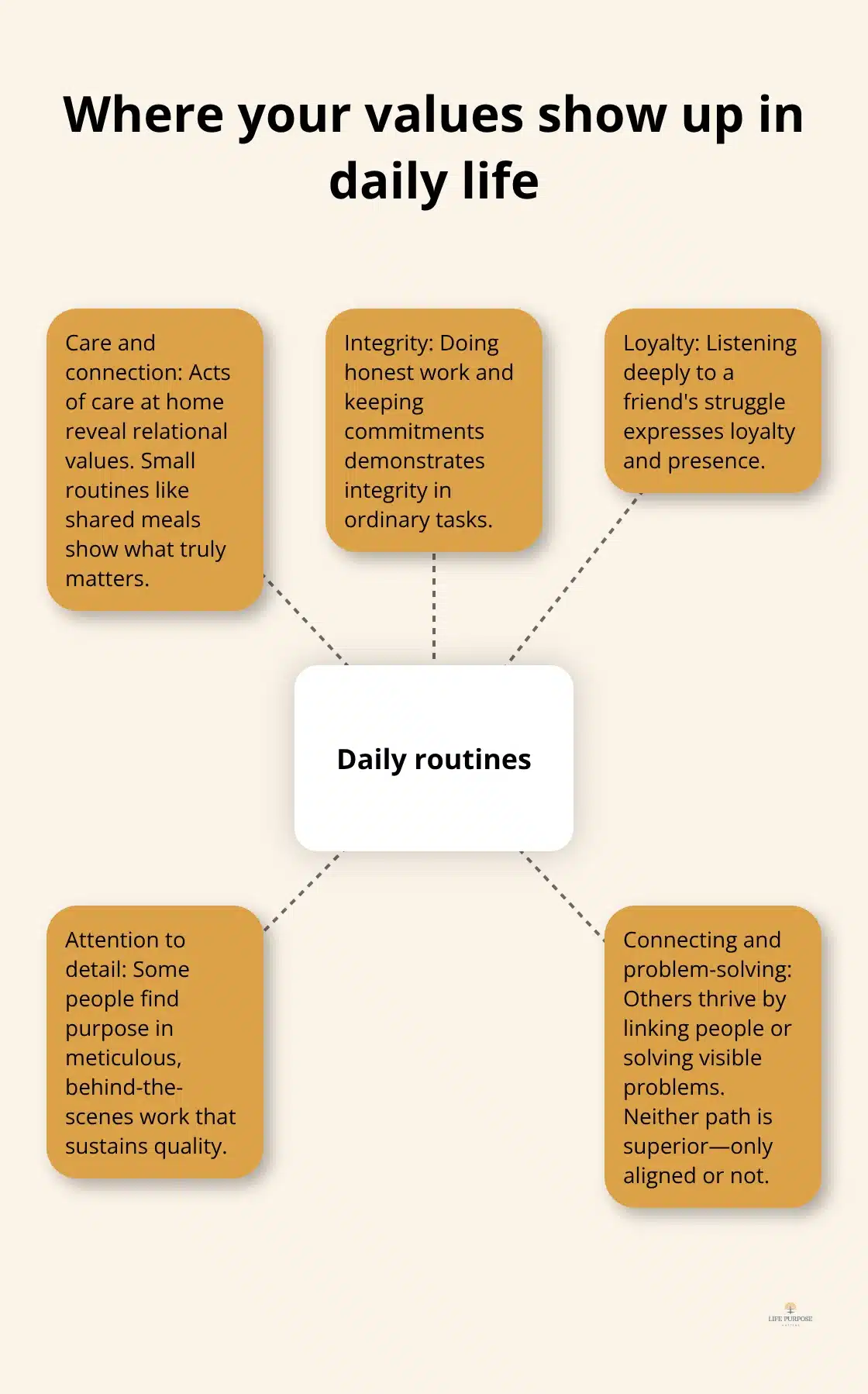
Most people spend decades chasing a grand life of purpose while missing the fact that their values already show up in what they do every single day. The problem is attention, not absence. You wake up and feed your family because you value care and connection. You show up to work and do honest work because you value integrity. You listen to a friend’s struggle because you value loyalty. These small, repeated actions aren’t stepping stones toward purpose-they are purpose, already active, already real.
What Your Daily Tasks Actually Reveal
Start noticing what tasks drain you versus what energise you. When you help someone solve a problem at work, do you feel more alive? When you organise your space, does it feel meaningful or like punishment? When you volunteer or support a cause, does time disappear because you’re absorbed, or do you watch the clock? These patterns tell you something concrete about alignment. A person who feels energised by teaching but dreads data entry isn’t confused about their calling-they’re receiving clear feedback.
The Greater Good Science Centre’s Purpose Challenge suggests asking yourself a simple question: What activities make you forget to eat? What pulls your attention so completely that hours pass without notice? Those moments reveal where your skills and values intersect with real contribution. Track this for two weeks. Note which routine tasks feel meaningful and which feel hollow. You’ll spot patterns. Some people find deep purpose in meticulous attention to detail. Others find it in connecting people or solving visible problems. Neither is superior. The work is recognising which one is actually yours, then structuring more of your life around it.
Building Bigger Impact From Small Choices
Your daily choices compound. A single conversation where you listen fully instead of half-present creates ripples. One meal prepared with care for someone you love strengthens your relationship and theirs. One task completed with integrity builds your reputation and your own sense of reliability. Research on value congruence shows that people who make daily choices aligned with their core values experience higher life satisfaction and better health outcomes.
The practical step is to identify one or two core values, not five or ten, just the ones that matter most. Then ask yourself: How do my current routines either support or contradict these values? If you value generosity but spend zero time helping others, that’s a mismatch. If you value creativity but work only in rigid systems, you’ll feel stuck.
The fix isn’t quitting your job or overhauling everything. Start small. One small change in your routine. If you value presence but rush through meals, eat one meal this week without your phone. If you value learning but never read, add fifteen minutes of reading three times a week. These aren’t grand gestures. They’re proof that your stated values can actually guide your time and attention right now, within the life you already have.
How Awareness Shifts Everything
Once you see the connection between your daily actions and your core values, you can’t unsee it. That shift in awareness transforms how you approach ordinary work. The commute becomes a chance to practise presence. The difficult conversation becomes an opportunity to live out your integrity.
The small kindness becomes an act of purpose, not an accident. This recognition doesn’t require you to change everything at once. It asks you to change how you see what you’re already doing. When you understand that your values are already showing up in your routine, you’re ready to build on that foundation with intention. The next step is learning to develop spiritual discernment and how your faith shapes the choices you make each day.
Building Awareness of Your Spiritual Calling
Your faith isn’t separate from your daily experience-it shapes the lens through which you interpret what matters. Most people wait for a dramatic spiritual moment to clarify their calling, when the real signal comes from what happens on ordinary Tuesday afternoons. Start tracking energy, not just emotions. When you pray or spend time in reflection, notice which topics pull your attention back repeatedly.
Which problems in your community make you angry enough to act? Which conversations with friends leave you energised rather than drained? Which tasks feel like service versus obligation? These patterns aren’t random preferences. They’re your spiritual calling speaking through your experience.
Paying Attention to What Energises You
Research on meaningful activity shows that people experience genuine well-being improvements when their daily engagement aligns with what they care about deeply. This week, write down three moments from the past month when you felt most alive or purposeful. What were you doing? Who were you with? What values were you expressing?
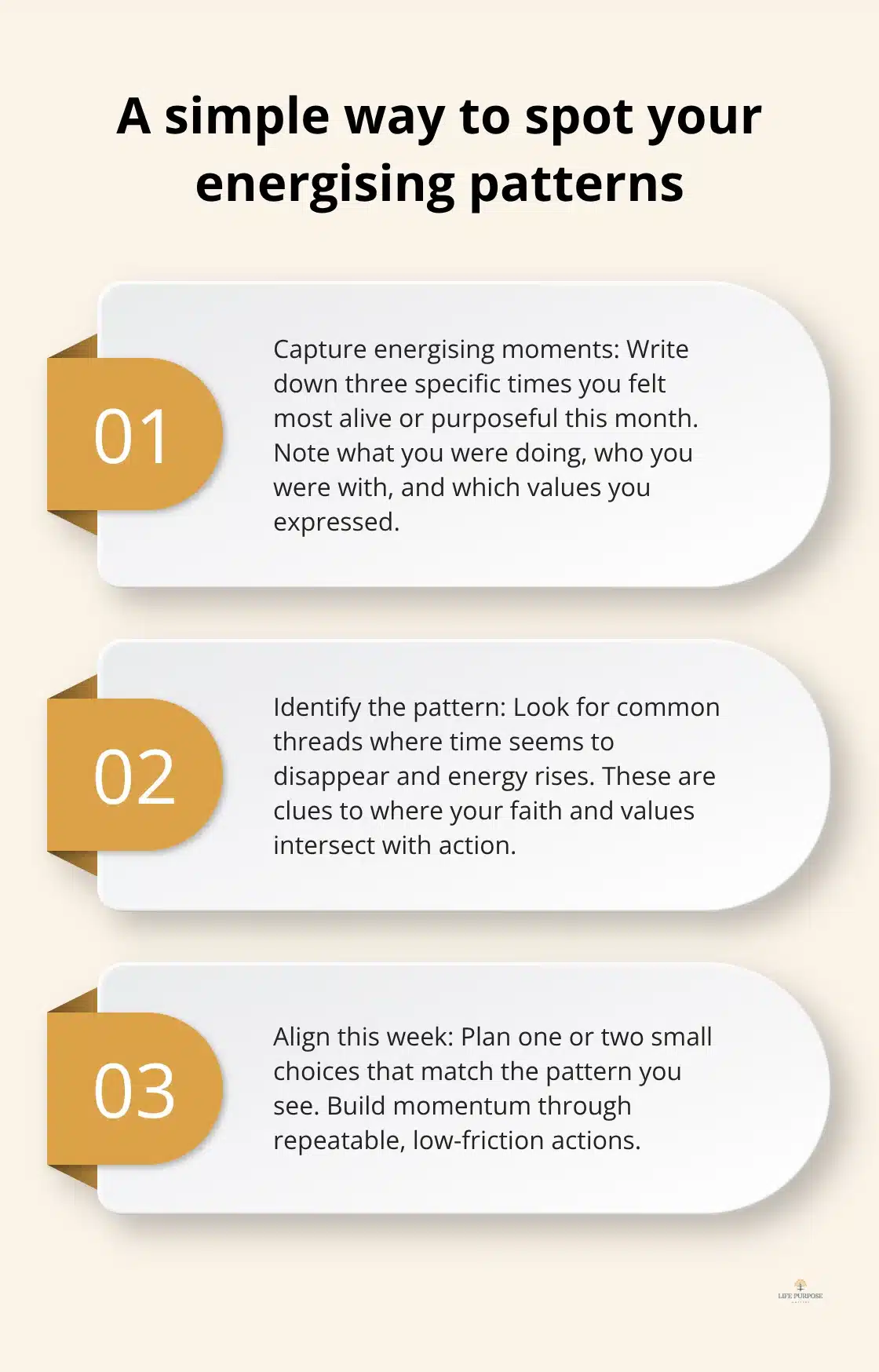
These moments reveal where your faith intersects with real action. Your calling isn’t hiding in some future moment; it’s already showing up in how you spend your attention right now.
Your nervous system knows when you’re living authentically. A parent who values stewardship experiences their parenting as a spiritual practise, not just a responsibility. Someone who feels purpose in advocating for fair treatment at work. Another person finds their spiritual calling expressed through hospitality, creative work, or mentoring. The mistake is thinking your calling should feel dramatic or separate from the work you already do.
Understanding How Faith Shapes Your Daily Choices
When you make a choice aligned with your deepest beliefs about God and goodness, your body responds. You feel peace or tension. Clarity or confusion. Assessment tools help people clarify whether their daily choices actually reflect their stated values, and most discover significant gaps. The fix isn’t guilt. It’s one small decision this week where you let your faith actually guide your choice instead of convenience or fear.
One conversation where you speak your truth creates momentum. One task you approach as service rather than a burden shifts how you see your work. These single acts of alignment show your mind and spirit that living out your calling is possible right now, within the constraints of your actual life, not in some imagined future where everything is perfect. Your faith shapes which daily choices feel aligned and which feel hollow (and your body registers the difference immediately).
Connecting Quiet Moments to Your Purpose
The moments when you sit in silence, pray, or reflect are when your calling becomes clearest. These quiet spaces aren’t escapes from real life-they’re where you process what your daily experience is actually telling you. One conversation where you speak your truth. One task you approach as a service rather than a burden. These acts of alignment create the foundation for what comes next: concrete steps you can take today to live out your purpose with intention and faith.
Practical Steps to Live Out Your Purpose Today
Start With One Small Change in Your Routine
The gap between knowing your values and actually living them closes through one decision at a time. Most people wait for perfect conditions or complete clarity before they act, which means they never act. Action precedes passion-you discover what matters by actually doing things outside your routine, not by waiting for inspiration to strike.
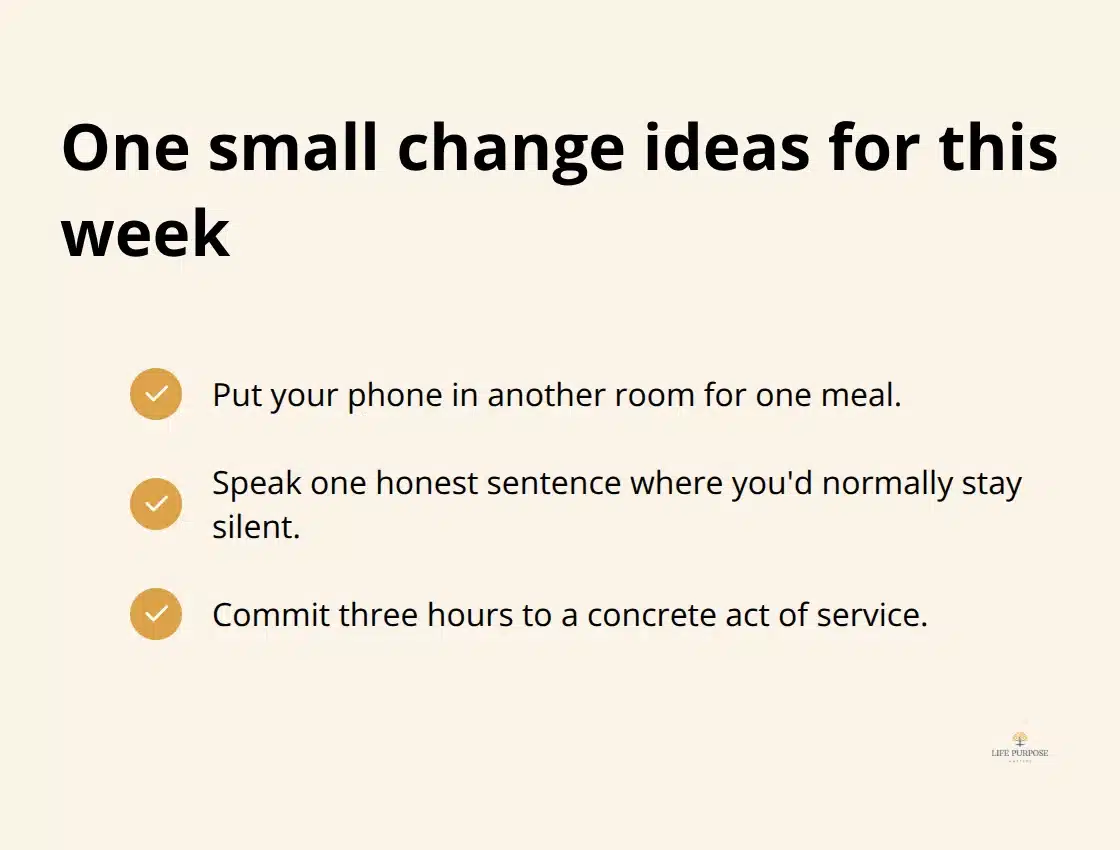
This week, identify one small routine you can shift to reflect your stated values. If you value presence but scroll through your phone during dinner, put the phone in another room for one meal. If you value integrity but stay quiet when you disagree, speak one honest sentence in your next conversation where you’d normally stay silent. If you value service but never help others, commit three hours to one concrete task that helps someone.
These aren’t grand transformations. They’re proof to yourself that living your values is possible right now, within the constraints of your actual life. Track what happens. Notice how you feel when you make one choice aligned with what you claim to believe. Your nervous system responds immediately-you’ll feel either peace or tension, clarity or confusion. This feedback is real data, not sentiment. One small act of alignment builds momentum for the next one.
Use Prayer and Reflection to Clarify Direction
Prayer and reflection work best when they’re specific, not vague. Instead of asking God for direction, ask what your daily experience is already revealing about your calling. What problems make you angry enough to act? Which conversations leave you energised? What tasks feel like service versus obligation?
Write down three specific moments from the past month when you felt purposeful, then identify the pattern. One person feels alive when mentoring younger colleagues. Another finds deep purpose in creating systems that help others work more efficiently. A third realises their calling emerges through hospitality and making people feel welcome. These aren’t interchangeable-they’re specific to who you are.
Share Your Gifts With People Around You
Once you know the pattern, share what you’ve discovered with people around you. Tell a trusted friend or family member what you’re learning about your calling. Ask them to notice when they see you come alive and to name it back to you. This external feedback helps you trust what you’re sensing internally.
Then take one action this week where you deliberately share your gifts. If your pattern is mentoring, have coffee with someone younger and ask about their challenges. If it’s creating systems, volunteer to organise something at your church or community. If it’s hospitality, invite someone to your home or meet them somewhere meaningful. You’ll know immediately whether this expression of your gifts feels aligned or forced. That clarity is exactly what you need to build your purposeful life forward.
Final Thoughts
You’ve spent weeks noticing which tasks energise you and which drain you. You’ve made one small change in your routine. You’ve shared your gifts with someone who needed them. Now comes the part that matters most: understanding that this isn’t a project with an endpoint. A life of purpose gets built through thousands of small choices, made consistently, aligned with what you actually believe.
When you show up to work with integrity, when you listen fully to someone struggling, when you approach your daily tasks as expressions of your values rather than obligations you’re enduring, something shifts internally. Research shows that people who live with this kind of intentionality report higher life satisfaction, better health outcomes, and deeper relationships (and your nervous system registers the difference immediately between living authentically and living on autopilot). Each time you choose alignment over convenience, you strengthen your ability to recognise your calling in the next moment.
Each time you act on what you believe, you build trust in yourself. Each time you share your gifts, you experience the reality that your life matters and your presence changes things. This compounds over months and years, transforming you into someone different from who started this journey. Visit Life Purpose Matters to explore resources and faith-based encouragement designed to help you discover and live out your God-given purpose within a Christian framework.