
Reading the entire Bible in one year is achievable with the right structure. Most people abandon Bible reading because they lack a clear plan, not because they lack motivation.
At Life Purpose Matters, we’ve created this guide to help you build a sustainable Bible reading plan for 2026. You’ll find multiple scheduling options, downloadable checklists, and practical strategies to keep you on track.
Why Structure Transforms Your Bible Reading from Intention to Reality
The Problem With Reading Without a Plan
Without a plan, Bible reading becomes another abandoned New Year’s resolution. The Bible contains 1,189 chapters spread across 66 books, and without a clear path forward, most readers hit Leviticus or Numbers and stop. A structured reading plan removes the daily decision of what to read next-a small change that matters enormously for consistency. Research on habit formation shows that removing friction from a behaviour increases completion rates significantly. When you know exactly which chapters to read each morning, you eliminate the paralysis that comes from staring at a 1,000-page book and wondering where to start.
The Math That Makes It Possible
The numbers work in your favour. Divide 1,189 chapters by 365 days and you get 3.25 chapters per day, which takes roughly 15 to 20 minutes depending on your Bible translation and reading pace. That’s less time than most people spend scrolling social media.
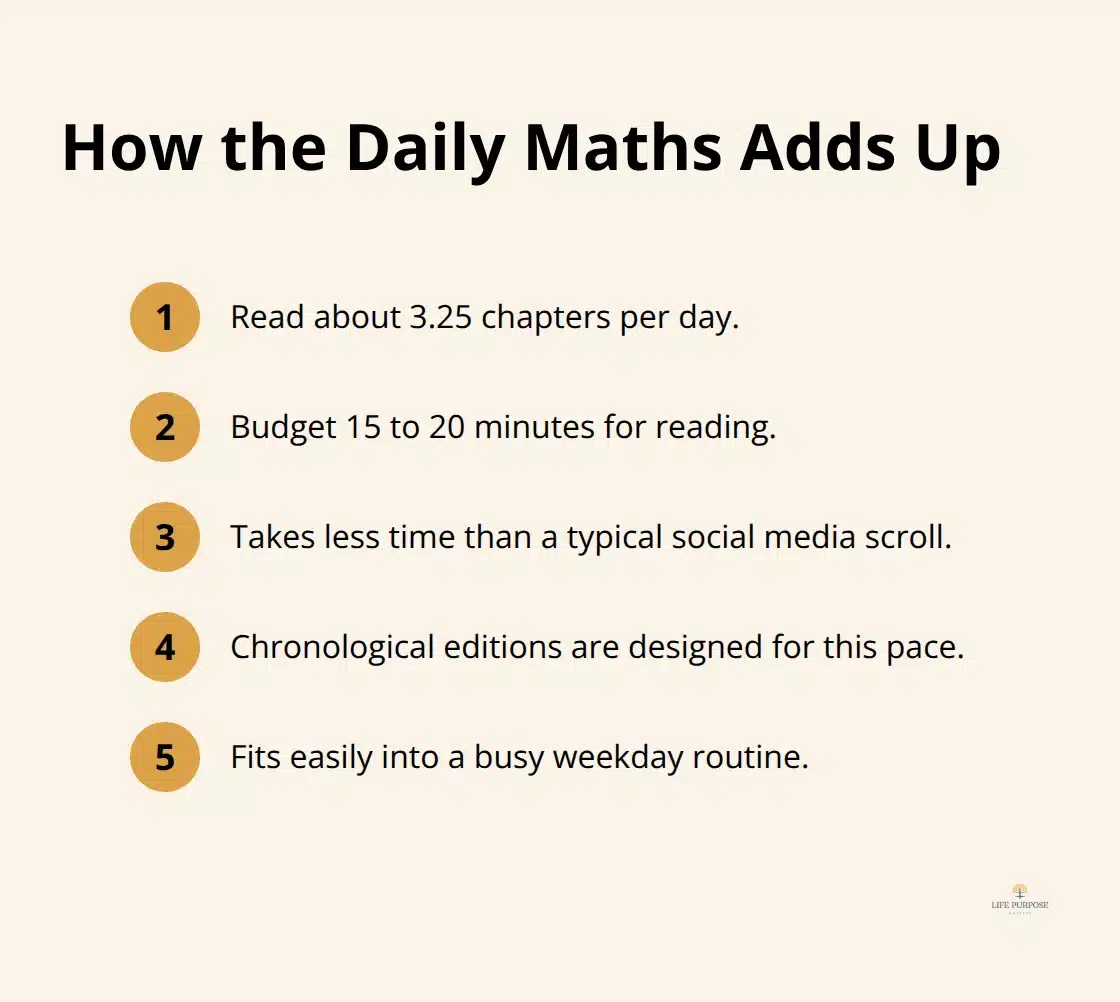
The One Year Chronological Bible from Tyndale House Publishers arranges the entire Bible text in the order the events actually happened, designed specifically for this pace and making it accessible for busy schedules. Some plans like the 52-Week Bible Reading Plan from Ligonier Ministries structure each day around a different genre, so you read epistles on one day, the law on another, and history on a third. This variety prevents the monotony that kills most reading streaks. The Five-Day Bible Reading Program from Ligonier lets you read Monday through Friday and take weekends for reflection, which works better for people who can’t maintain seven-day consistency.
Why 2026 Becomes Your Actual Deadline
Starting January 1, 2026 gives you a full calendar year with a concrete finish line. People who commit to specific dates rather than vague goals complete tasks at higher rates. A completion date of December 31, 2026 creates accountability that matters. You’re not just reading the Bible somewhere in the future; you’re reading it this year, in the specific months ahead. This clarity transforms Bible reading from a someday project into a 2026 priority. The Straight-Through-the-Bible Reading Plan takes you from Genesis to Revelation in exactly one year when you start on January 1, making the calendar alignment feel natural rather than forced.
Tracking Progress Builds Momentum
Downloadable checklists and progress trackers let you mark off completed days and watch momentum build. Seeing visual progress week after week strengthens your commitment far more than abstract intentions ever could. The act of checking off a box creates a small reward that your brain recognises, which reinforces the habit. Each marked day becomes evidence that you’re actually doing this-not planning to do it, but doing it right now in 2026.
Now that you understand why structure matters and how the daily commitment fits into your schedule, the next step is choosing which reading approach aligns with your learning style and life rhythm.
Your Chronological Reading Schedule for 2026
How Chronological Order Changes What You See in Scripture
The chronological approach arranges the Bible in the order events actually occurred rather than the order books appear in your Bible. The One Year Chronological Bible from Tyndale House Publishers follows this method, and it transforms how you experience Scripture because you see cause and effect unfold naturally. Instead of jumping from the end of Genesis straight to Matthew, you encounter Abraham’s story, then follow the patriarchs through Egypt, then the exodus, then the law, then conquest, all in sequence. This narrative flow prevents the confusion that kills most readers when they hit Leviticus or Numbers without understanding why these laws matter to the story.
Breaking Down Your 2026 Reading by Quarter
January through March focuses on Genesis through early Samuel, covering creation, the patriarchs, and Israel’s early kings. You’ll read approximately 3 to 4 chapters daily during these months, which takes 15 to 20 minutes depending on your translation. April and May move through the remaining historical books and into the wisdom literature, giving you variety after the narrative-heavy first quarter. June through August tackle the major and minor prophets alongside their historical context, so you understand what was happening when Isaiah or Jeremiah prophesied.
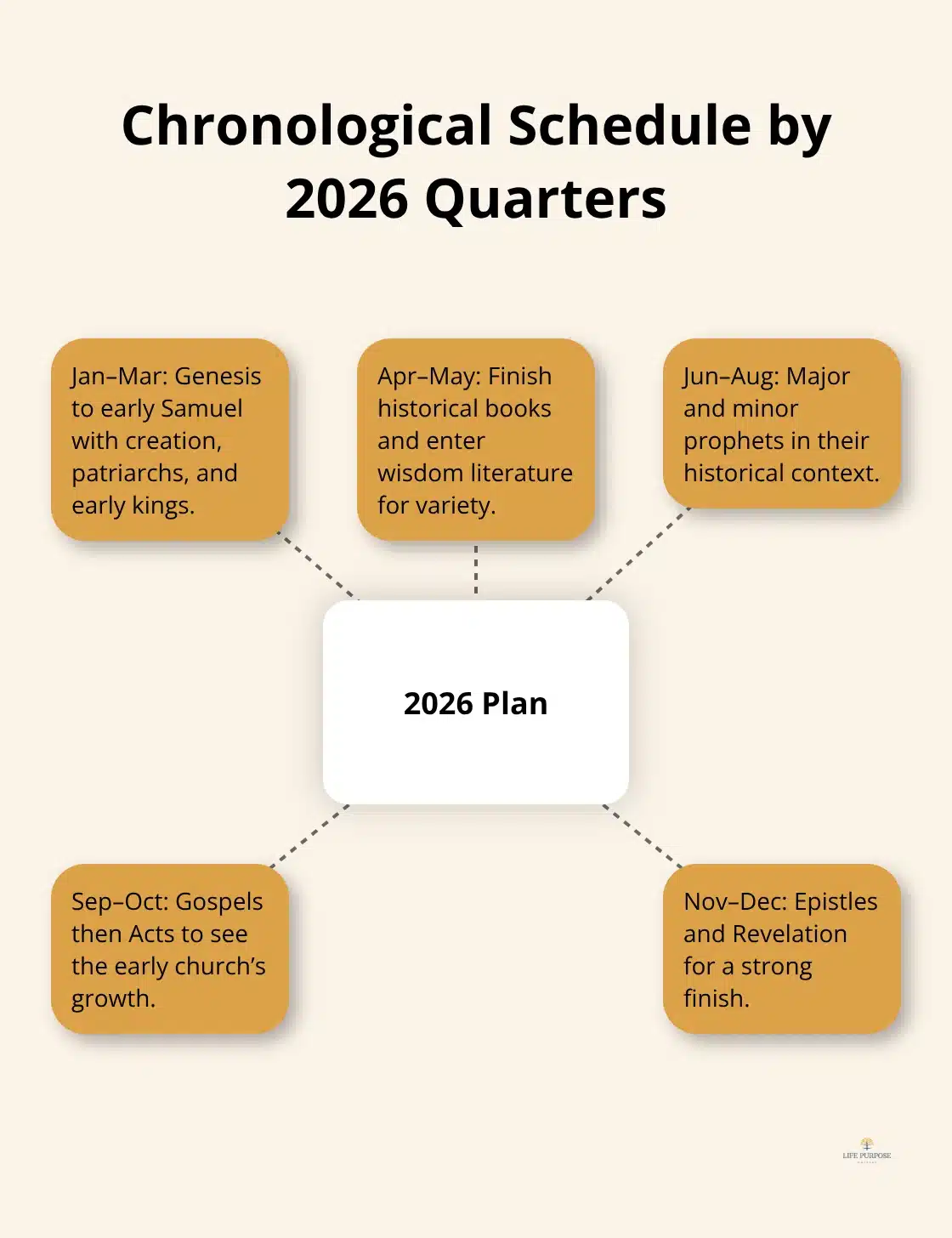
This prevents the prophets from feeling disconnected from real history. September and October shift to the New Testament, beginning with Matthew and moving through Mark, Luke, and John, then into Acts, which shows the early church’s explosive growth. November and December complete the epistles and Revelation, giving you a strong finish with Paul’s letters and the apocalyptic vision that bookends Scripture.
Making Progress Visible Week by Week
The real power of this schedule comes from tracking your actual progress week by week. Download a PDF checklist that lists every single day of 2026 with the specific chapters assigned to that date. Mark off each completed day immediately after you read, creating visible momentum that sustains motivation far better than abstract intentions. Most readers report that checking off a box triggers a small dopamine response that reinforces the reading habit, making it easier to return the next morning.
Staying Consistent When Life Interrupts
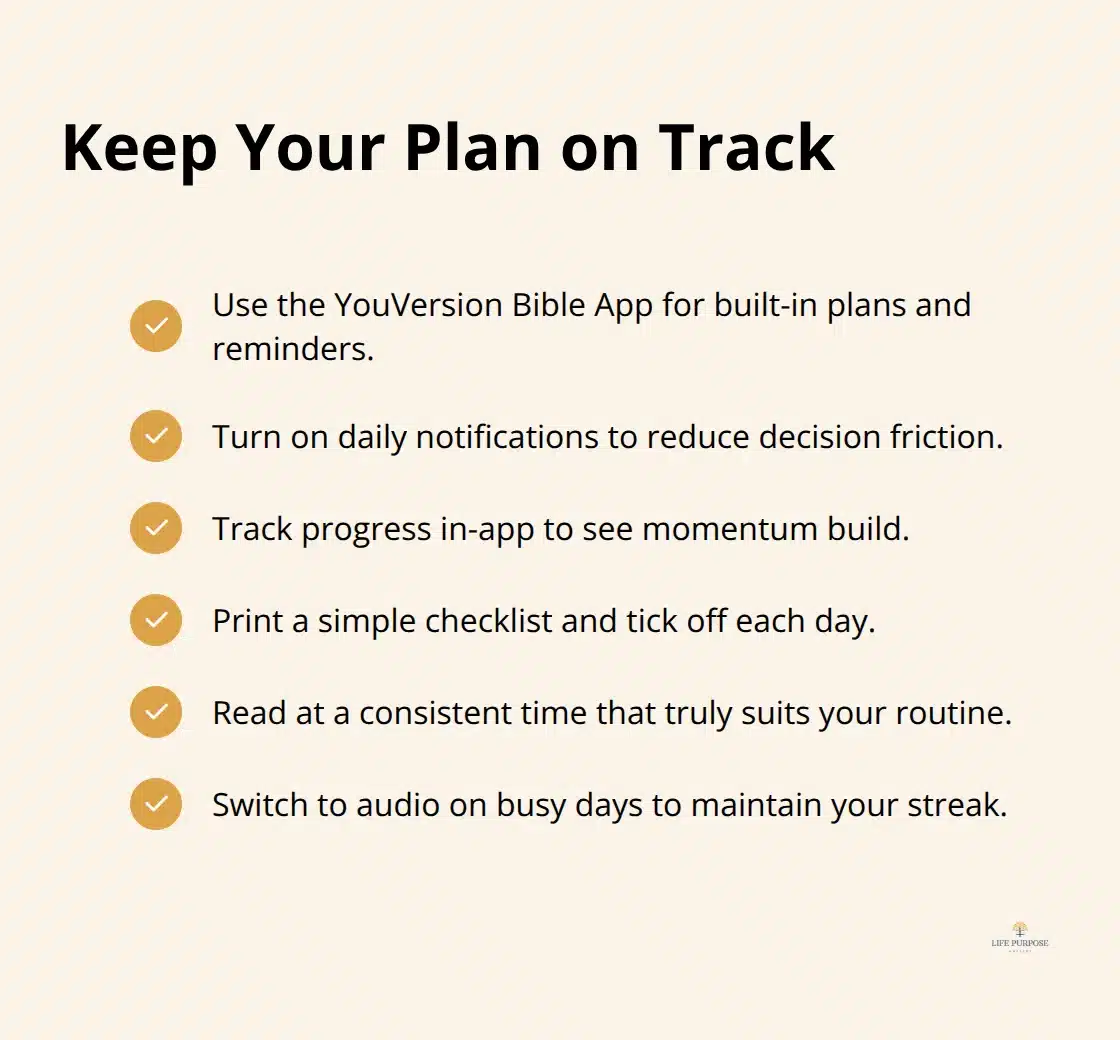
Try setting your reading time consistently, whether that’s 6 AM before work, during lunch, or 9 PM before bed. Consistency matters far more than the time itself. If you miss a day, add those chapters to the next day’s reading rather than abandoning the plan entirely. This flexibility prevents the all-or-nothing thinking that derails most Bible reading projects. The 15 to 20 minute daily commitment remains achievable even on hectic days if you use audio Bible options during your commute or while doing household tasks. The Bible App through YouVersion offers the chronological plan free, with audio narration included, letting you maintain your pace without sitting down to read.
Deepening Your Understanding Without Extra Time
Pair your daily reading with a single sentence reflection in a notebook, capturing one insight per day. This practice deepens comprehension without adding significant time to your routine. You’ll complete the entire Bible in chronological order, seeing Scripture as one continuous story rather than 66 disconnected books. With this foundation in place, you’re ready to explore alternative approaches that might fit your learning style even better.
Beyond Chronological Reading: Finding Your Natural Learning Style
Not everyone learns the same way, and forcing yourself through a chronological plan when your brain works differently guarantees failure by March. The 52-Week Bible Reading Plan from Ligonier Ministries structures readings by genre, placing epistles on Mondays, the law on Tuesdays, history on Wednesdays, Psalms on Thursdays, poetry on Fridays, prophecy on Saturdays, and Gospels on Sundays. This approach works exceptionally well for readers who feel overwhelmed by narrative-heavy sections like Numbers or who need variety to stay engaged. If you find yourself skimming through genealogies or losing focus during lengthy legal codes, a thematic structure prevents that mental fatigue.
Match Plans to How Your Brain Actually Works
The Navigators Bible Reading Plan prescribes four specific daily readings from Genesis, Psalms, Matthew, and Acts, rotating through these books systematically rather than reading them once and moving on. This method lets you see how the same themes repeat across different biblical writers and time periods, building deeper pattern recognition than a single straight-through approach. The Book-at-a-Time approach from the Navigators completes one entire Old Testament book before moving to the New Testament, then alternates between testaments. This works brilliantly for readers who struggle with constant context switching and need time to absorb a single author’s voice before shifting to another.
If you read Matthew completely, then finish an Old Testament book, your brain creates stronger connections than jumping between four different texts daily. The 5x5x5 New Testament Plan focuses exclusively on the New Testament with readings five days weekly, reserving weekends for reflection and journaling. This compressed approach takes roughly six months for the New Testament alone, giving you time to absorb Paul’s theology without rushing.
Explore Intensive and Flexible Approaches
Professor Grant Horner’s Bible Reading System prescribes approximately ten chapters daily, cycling through multiple sections simultaneously so you never read the same book twice in a row. This sounds intense, but it works for readers with longer commutes or those who listen via audio during exercise. The Robert Murray M’Cheyne Bible Reading Plan has you complete the New Testament and Psalms twice while reading the Old Testament once over one to two years, ideal for readers who want deeper familiarity with certain books.
The Redemptive-Historical Bible Reading Plan curates key chapters specifically to illustrate how God’s redemptive story unfolds, skipping less critical passages and focusing on narrative momentum. Choose this method if you want to understand Scripture’s overarching storyline without getting lost in supporting details.
Select the Plan You’ll Actually Complete
The ESV Daily Bible Reading Plan draws four daily readings from distinct lists: Psalms and wisdom literature, Pentateuch and history, Chronicles and prophets, and Gospels and epistles. This balanced approach prevents any single genre from dominating your reading experience. The Straight-Through-the-Bible Reading Plan moves from Genesis to Revelation in one year, but unlike the chronological version, it follows the Bible’s original book order, which some readers find more natural since they can reference their physical Bible without jumping around.
The key decision point isn’t which plan is objectively best but which one you’ll actually maintain through December. A plan you complete at 80 percent consistency beats a theoretically superior plan abandoned by April. Most readers succeed with plans requiring 15 to 20 minutes daily because that timeframe fits reality better than aspirational 45-minute study sessions. Download specific PDF schedules for each approach rather than trying to create your own daily assignments, which saves hours of planning work and prevents calculation errors that derail momentum.
The Bible App through YouVersion offers multiple reading plans built into its interface, providing daily reminders and progress tracking that reduce the friction of remembering what to read next. Pair whichever plan you choose with a simple printable checklist marking off completed days, creating the same visual momentum that sustained you through the chronological approach. Try setting your reading time consistently, whether that’s 6 AM before work, during lunch, or 9 PM before bed-consistency matters far more than the time itself (and flexibility prevents the all-or-nothing thinking that derails most Bible reading projects).
Final Thoughts
You now have everything needed to start your Bible reading plan in 2026. The structure exists, the schedules are available, and the daily commitment fits into any realistic schedule. What remains is your decision to actually begin on January 1 and maintain consistency through December 31.
Download a PDF checklist matching your chosen approach, whether chronological, genre-based, or book-by-book. Set a specific daily reading time and stick to it regardless of circumstances. Use the Bible App through YouVersion for reminders and audio options when sitting down to read isn’t possible, and mark off each completed day immediately after reading to create visible progress that sustains motivation far better than abstract goals.
We at Life Purpose Matters believe that reading Scripture daily integrates your faith more fully into your life and helps you understand your God-given purpose. Visit Life Purpose Matters for additional resources supporting your spiritual journey throughout 2026 and beyond.