

I still remember the Sunday morning I sat in the pew and realised I couldn’t remember the last time I’d felt certain about anything. My faith, which had always felt solid, suddenly felt shaky. At Life Purpose Matters, we know that everyday faith challenges like this are more common than you’d think.
The truth is, doubt doesn’t mean you’re failing at faith. It means you’re human, and you’re ready to build something stronger.
When Doubt Creeps Into Your Daily Life
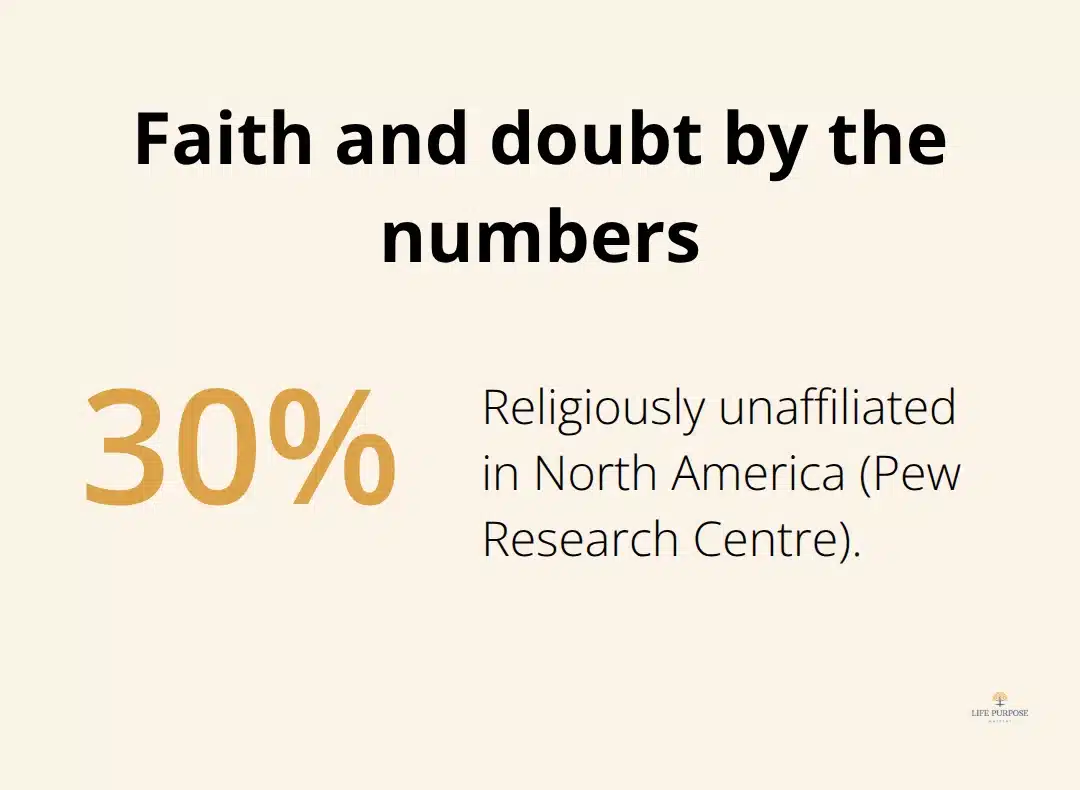
Doubt shows up differently for everyone, but most people recognise it the same way: a nagging gap between what you believe and what you actually feel. You might notice it when you pray but feel no connection, when a crisis hits, and your faith offers no comfort, or when you watch others’ certainty and wonder why yours has faded. Spiritual wavering isn’t always dramatic. Sometimes it’s the quiet realisation that you’ve stopped reading Scripture, that church feels routine rather than nourishing, or that you’re making major life decisions based on fear instead of faith. According to Pew Research Centre data, religiously unaffiliated people make up 30% of the population in North America, and among those still practising faith, nearly half report experiencing periods of serious doubt. That’s not failure. That’s the reality of being human in an uncertain world.
What Doubt Actually Costs You
The real damage from unaddressed doubt isn’t spiritual-it’s practical. When you’re uncertain about God’s character or His plans, you default to control. You overanalyse decisions, second-guess relationships, and exhaust yourself trying to predict outcomes you can’t possibly foresee. Research shows that people who rely primarily on personal control strategies report higher stress levels than those with a spiritual framework. Your relationships suffer too. Doubt makes you hesitant to trust others, more defensive, and less present with the people who matter most. At work, uncertainty paralyses you. You avoid opportunities because you can’t guarantee success. You stay in situations that drain you because the unknown feels more threatening than the familiar. The cost isn’t measured in one bad decision-it’s measured in months or years of diminished living.
Recognise Your Doubt Patterns
Start noticing your doubt patterns without judgment. When does doubt surface strongest? For some, it emerges when facing loss or disappointment. For others, it strikes in seasons of waiting. Some people experience doubt most intensely when they’re physically exhausted or socially isolated (and often, it’s a combination of these factors). Write these patterns down. Don’t analyse them yet-just observe. Then identify one small action you can take immediately. If doubt hits hardest when you’re alone, commit to one faith community connection this week. If it surfaces when you’re tired, prioritise seven hours of sleep. If it emerges during major decisions, spend ten minutes in prayer before you decide anything significant. These aren’t magical fixes. They’re interruption points. They break the cycle where doubt feeds anxiety, anxiety feeds more doubt, and suddenly you’re making life decisions from a place of fear rather than trust.
Move From Awareness to Action
The patterns you’ve identified now become your roadmap. You’ve spotted the conditions that weaken your faith, so you can interrupt them before they take hold. This shift from passive awareness to active intervention changes everything. You stop waiting for doubt to pass and start actively choosing trust instead. Small actions compound. One week of consistent prayer reshapes how you approach uncertainty. One month of community connection reminds you that doubt is universal, not a personal failing. One season of prioritising rest allows your mind and spirit to settle enough to hear God’s voice again. These aren’t grand gestures. They’re the practical moves that steady your faith when life feels uncertain, and they prepare you to move into the deeper work of reframing what uncertainty actually means.
Building Faith When Doubt Feels Louder
Knowing your doubt patterns is one thing. Acting on them consistently is another. The gap between awareness and action is where most people stumble. You recognise you need prayer, but life gets busy. You know community matters, but showing up feels awkward. You understand that faith-based tools could help, but you’re not sure where to start or what actually works.
The people who maintain steady faith don’t have more time or fewer obstacles than anyone else. They’ve simply removed the friction between intention and action. They’ve made their faith practices so specific and integrated into their actual schedule that skipping them feels harder than doing them.
Make Prayer Non-Negotiable
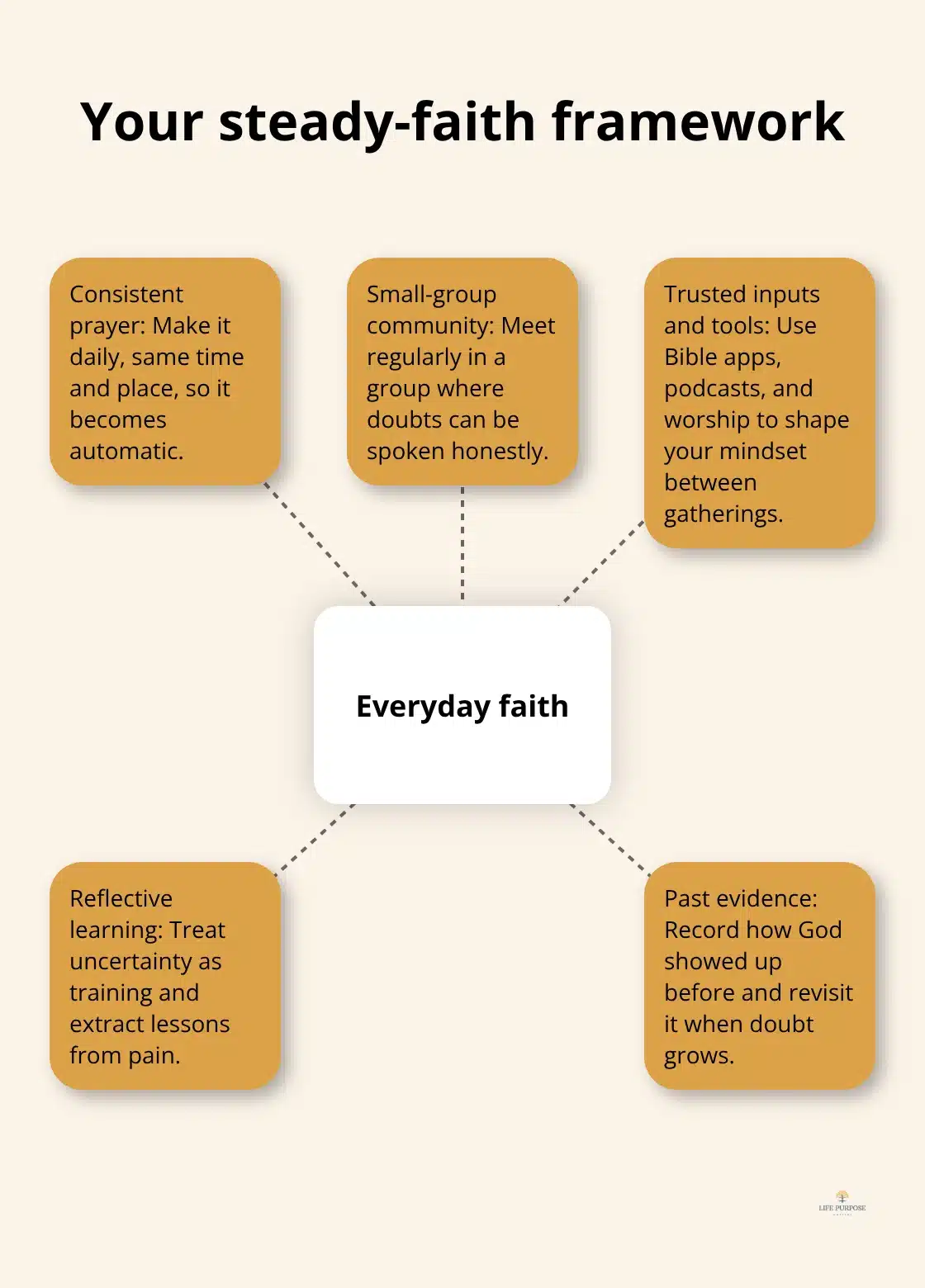
Your prayer routine can’t be vague. It can’t happen whenever you feel like it or when things get really bad. Research from the Journal of Religion and Health found that people who pray at the same time every day report 34% less anxiety than those who pray sporadically. At the same time. Same place. No negotiation.
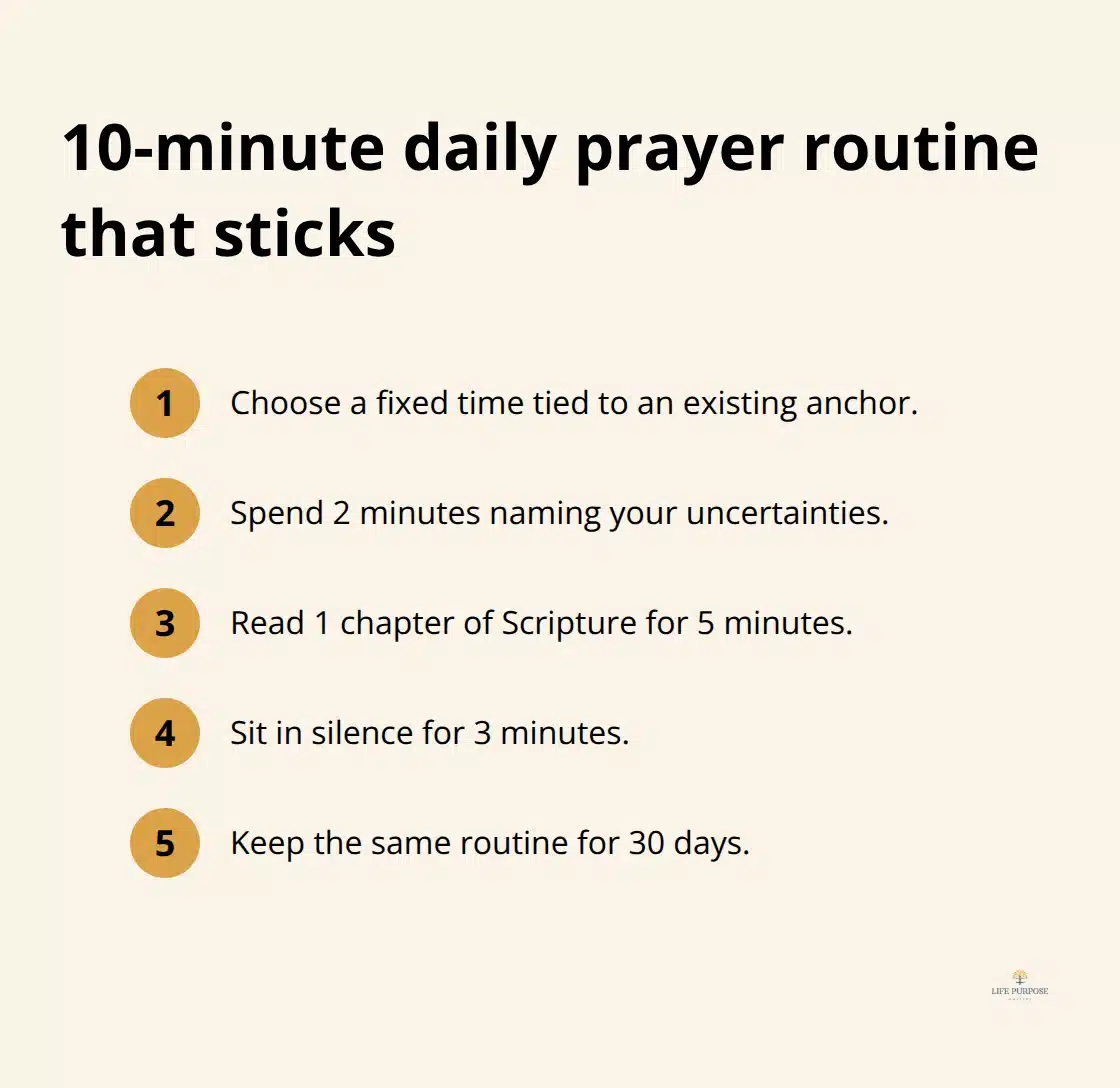
Pick a time that’s already anchored in your routine-right after your morning coffee, during your lunch break, or the first thing after you sit down at dinner. Start with ten minutes. Not thirty. Not an hour. Ten minutes, because you’ll actually do it. Spend the first two minutes naming what you’re uncertain about. Spend the next five minutes reading one chapter of Scripture (Psalms work well here because they’re honest about struggle and doubt). Spend the final three minutes sitting in silence. Do this for thirty days before you adjust anything. Your brain needs thirty days to form a habit, and consistency matters more than duration.
Find Your People
Community isn’t optional for steady faith-it’s foundational. Most infrequent churchgoers say church attendance matters for faith commitment. But here’s where people get it wrong: they show up to a large service, sit passively, and expect transformation.
You need a smaller group where people know your name and where you can speak your doubts without performing faith. A small group of six to twelve people meeting weekly or biweekly creates the safety net you need. If your church doesn’t have one, start one. Invite four or five people to meet in your home, choose a short Scripture passage or a faith-based resource, and commit to showing up for eight weeks. You don’t need a professional facilitator. You need people willing to be honest. When someone says they’re struggling with doubt, that’s the moment faith deepens-not when everyone pretends everything is fine.
Beyond weekly gatherings, find one person-a mentor, a pastor, or a mature believer-who you can text when doubt hits hard. Not someone who’ll lecture you. Someone who’ll listen and point you back to God’s character. This person should know your story and your specific struggles. When doubt surfaces at 2 a.m., you need someone you can actually reach out to.
Use Tools That Interrupt the Noise
Invest in tools that interrupt the noise around you. A quality Bible app with a structured reading plan removes the friction of deciding what to read. Podcasts from trusted Christian teachers during your commute or workout reshape your thinking. Worship music in your car or home creates an environment where faith feels natural rather than forced. These aren’t substitutes for prayer or community-they’re the scaffolding that holds you steady between those deeper practices.
The real power emerges when you stop treating faith as something you add to your life and start treating it as the foundation that shapes everything else. Your prayer routine, your community, and your tools work together to create an environment where doubt loses its grip. What happens next is where the transformation actually accelerates.
When Uncertainty Becomes Your Teacher
Uncertainty isn’t something to survive and move past. It’s the raw material where your faith actually gets built. The difference between someone whose faith crumbles under pressure and someone whose faith deepens is rarely about what happened to them. It’s about what they chose to do with what happened.
Extract the Spiritual Education in Your Pain
When you face a job loss, a relationship breakdown, or a health crisis, your immediate instinct is to fix it fast and get back to normal. That’s the control impulse talking, and it’s understandable. But the people who emerge from difficulty with a stronger faith aren’t the ones who escaped fastest. They’re the ones who sat with the discomfort long enough to notice something shifting in how they relate to God.
Research from Fuller Seminary found that Christians who actively reflected on their struggles reported 41% stronger faith confidence than those who tried to move past difficulties quickly. The reflection part matters. When you lose your job, don’t just job hunt. Ask yourself what this reveals about where you’ve placed your security. When a relationship ends, don’t just seek the next one. Examine what this teaches you about control and trust. When health fails, don’t only pursue treatment. Question what you’ve been avoiding by staying busy. This isn’t passive acceptance. It’s aggressive learning. You extract the spiritual education embedded in your pain.
Build Evidence From Your Past
Your past challenges already contain evidence that God showed up. Not in the way you expected, maybe. Not on the timeline you wanted. But He showed up. A financial crisis taught you that money isn’t your actual foundation. A betrayal reveals who your real friends are. An illness forced you to slow down and notice what you’d been missing. A failure stripped away false confidence and built real humility.
When doubt hits now, your past becomes your evidence. Not denial of the hard parts, but honest acknowledgement that you survived and changed. Write down three specific difficulties you’ve faced in the past three years. Next to each one, write one way you’re stronger, wiser, or more connected to God because of it. Not what you learned in theory, but what you actually live differently now. Do this exercise when doubt feels loudest, because your past is the antidote to present fear.
Transform your pain into purpose.
The uncertainty you’re walking through right now will become that same evidence for someone else someday. The pain has a purpose beyond just ending. It prepares you to help others navigate their own seasons of doubt. Sharing challenges and victories with others fosters mutual encouragement and keeps you motivated in your walk with Christ. You don’t find your purpose despite struggle. You find it through the specific struggles only you have faced. The particular pain you’ve endured (the specific loss, the unique betrayal, the distinct failure) positions you to speak into someone else’s life with authority and compassion that no one else can offer.
Final Thoughts
Everyday faith challenges aren’t obstacles you overcome, and forget-they’re invitations to build something real. You’ve learned to recognise your doubt patterns, establish consistent prayer, find community, and extract spiritual education from your pain. These moves address the actual mechanics of how faith either strengthens or weakens in your life, and they work because they’re practical, not theoretical.
You don’t need perfect faith to move forward. You need present faith-the willingness to show up to prayer even when you feel nothing, the courage to speak your doubts in a small group instead of hiding them, the humility to learn from what’s broken rather than rushing past it. Your past challenges have already proven something important about you: you survived, you learned, and you’re still here. That evidence becomes your foundation for trusting God through whatever comes next.
The journey ahead won’t be easier, but it will be different. You’ll face uncertainty with a framework instead of panic, with people around you instead of isolation, with practices that interrupt doubt before it takes hold. Visit Life Purpose Matters to explore resources and faith-based encouragement designed to help you integrate your faith more fully into your daily life. Pick one thing from what you’ve read-one prayer time, one community connection, one reflection on your past-and start there.