

Last Tuesday, I watched a parent confiscate their teenager’s phone during dinner, only to have the kid stare blankly at the wall instead of engaging with the family. That moment captures the tension many of us face: raising children with Christian values while navigating a world that constantly pulls them in different directions.
At Life Purpose Matters, we know Christian parenting today isn’t about rejecting the modern world-it’s about helping your kids thrive within it while staying grounded in faith. This guide walks you through the real challenges you’re facing right now.
How to Actually Control Screen Time Without Creating a Tech Battleground
The billion-dollar attention economy isn’t subtle. Platforms like TikTok, Instagram, and YouTube employ teams of engineers specifically to keep your kids scrolling. A 2024 analysis found that the average American teenager spends nearly seven hours daily on entertainment media alone, excluding schoolwork. That’s more time than they spend sleeping. The system grabs attention through instant gratification, and it works. But here’s what most parents get wrong: the issue isn’t the technology itself. It’s the absence of intentional boundaries. Your kids aren’t broken because they want their phones. They’re responding exactly as the algorithms designed them to respond. The real question is whether you’ll set limits before the damage compounds.
Model the Behaviour You Want to See
Your phone habits directly shape your children’s phone habits. Research from the American Psychological Association confirms that children whose parents model excessive screen time develop similar patterns, regardless of what those parents say about moderation. If you check your phone during conversations, your kids notice. If you scroll during family meals, they learn that screens matter more than people. The first move isn’t downloading parental control software. It’s examining your own device use.
Establish smartphone-free times for the entire household, not just the kids. Dinner without phones. The hour before bed without screens. One full day per week without social media.
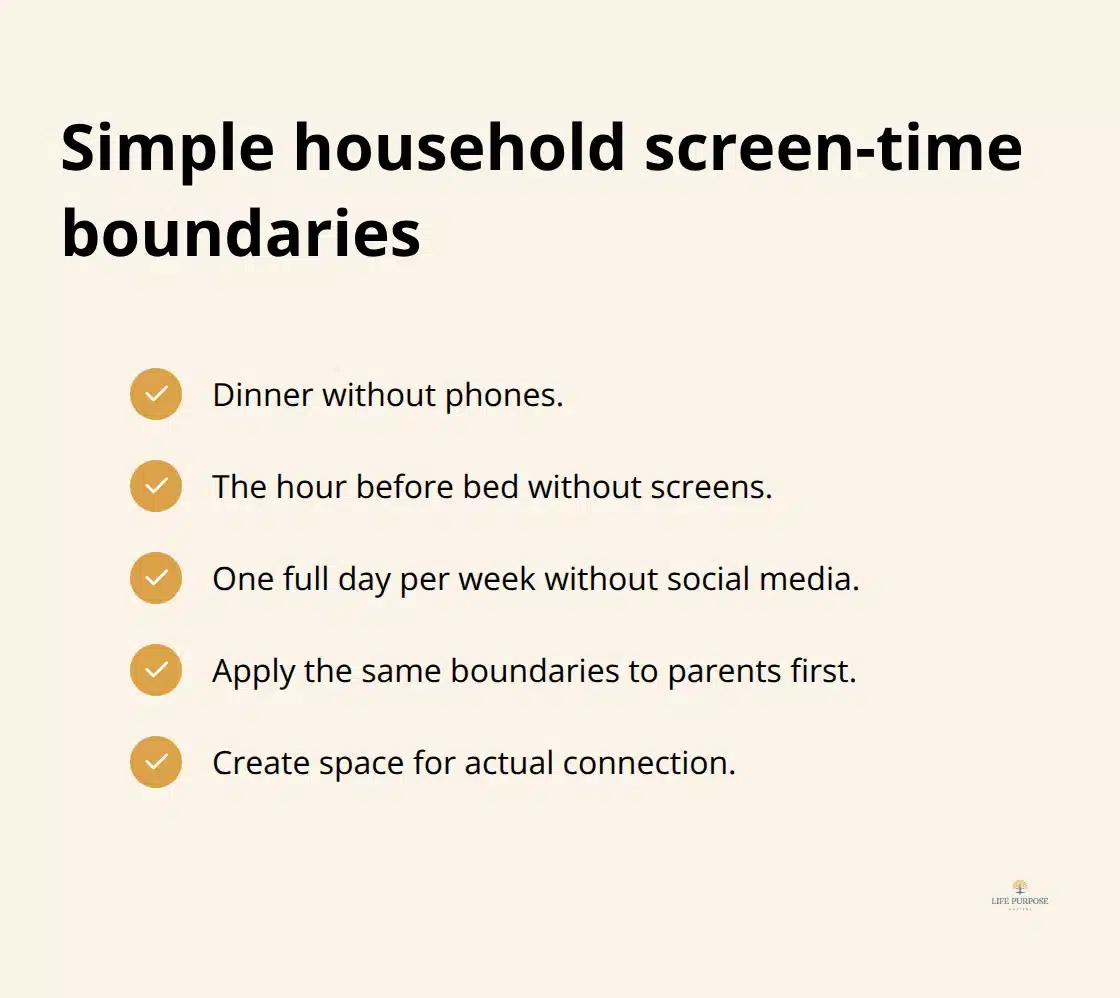
These aren’t punishments. They’re creating space for actual connection. When you implement these boundaries for yourself first, your authority on the topic shifts from hypocritical to credible. Your teenagers will resist less because they’re not watching you break the same rules you’re enforcing.
Understand What Your Kids Actually See Online
Many parents restrict their children’s access without understanding what they’re restricting. That’s backwards. Join the platforms your kids use. Not to spy, but to see the content landscape they navigate. Create an account on TikTok. Follow the accounts they follow. Spend two weeks observing the feed. This isn’t invasive surveillance. It’s education. You’ll quickly notice how the algorithm amplifies certain content, how trends spread, and where the pressure points are.
Then have actual conversations about what you’re seeing. Ask your teenager about a video they watched. Discuss why certain creators get millions of views. Ask what they think about the comments. This approach treats your child as someone with discernment rather than someone who needs protection from information. The conversation itself becomes the tool. According to Barna research, parents are concerned about their children’s spiritual development, and that concern deepens when digital influence shapes their worldview without parental engagement. You can’t guide what you don’t understand.
Replace Scrolling With Real Activities
The temptation is to simply remove screens. That creates a vacuum your kids will fill with something else. Instead, deliberately replace screen time with activities that require presence and creativity. Physical collaborative activities work better than you’d expect: board games, escape rooms, building projects, outdoor exploration, even forming a rock band or starting a podcast together. These activities build real skills, create memories, and most importantly, they require actual engagement from your child.
One practical approach works particularly well: create a visual map with your teenager showing where their information comes from. Have them diagram their news sources, social media feeds, and content creators they follow. This isn’t punishment. It’s literacy. It helps them see how their information diet is constructed and whether it’s balanced or trapped in algorithmic echo chambers. When they visualise it, they often self-correct without you saying a word.
Set Boundaries That Feel Reasonable
Set specific device boundaries that feel reasonable rather than draconian. A teenager who gets their phone back at 8 p.m. instead of 7 p.m. feels heard. A teenager whose phone is permanently confiscated feels cornered. The goal is cooperation, not compliance. Clear, consistent boundaries work better than arbitrary restrictions that change based on your mood. These practical limits create the foundation for the deeper spiritual work ahead, helping your kids develop a faith that actually shapes their choices, not just their screen time.
Where Faith Becomes Daily Life
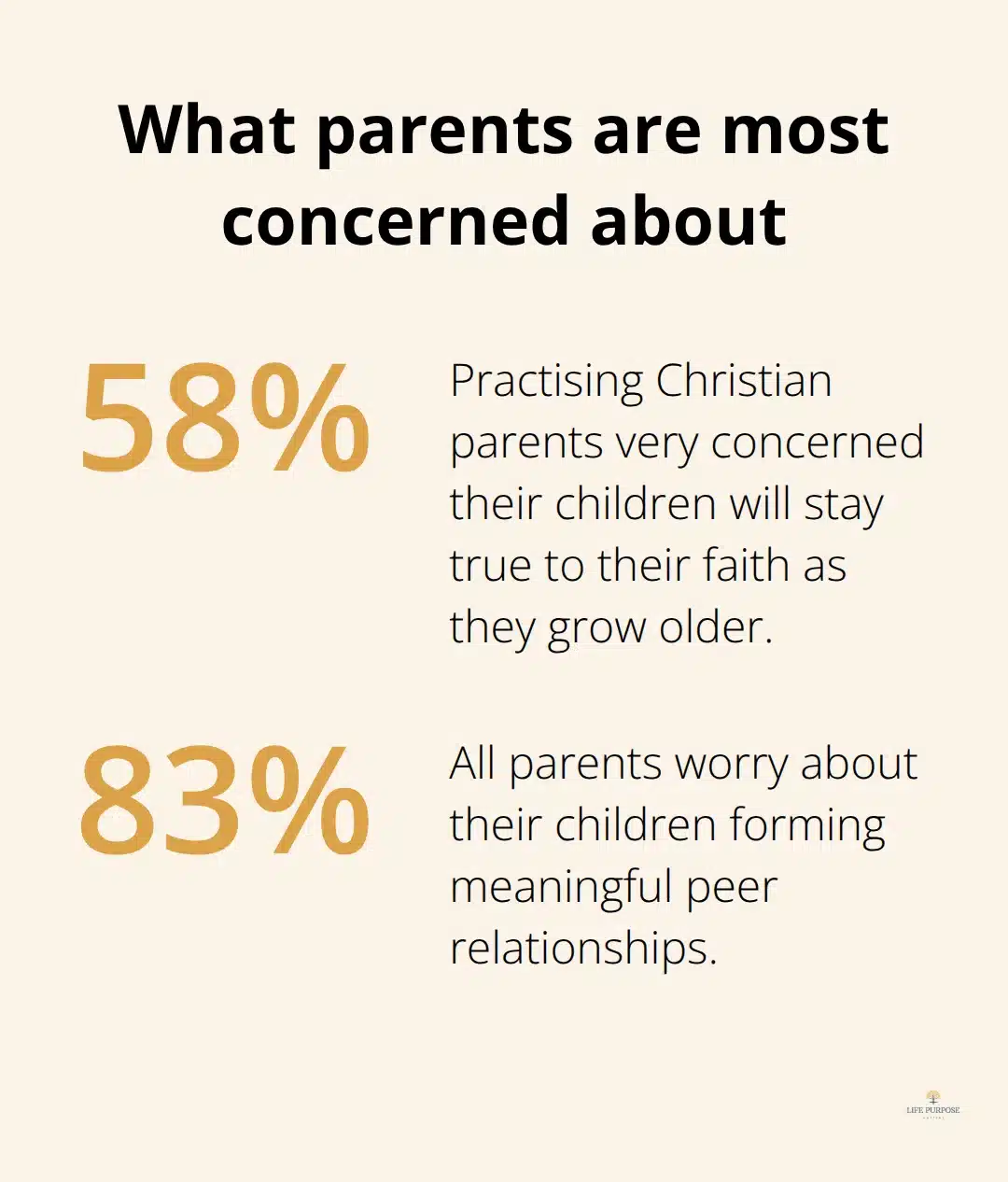
The gap between what you believe and how you live determines whether your kids inherit real faith or just family tradition. Barna research shows that 58 per cent of practising Christian parents are very concerned their children will stay true to their faith as they grow older, yet most families spend less than five minutes per week discussing faith outside of church. That’s not a time management problem. That’s a priority problem.
Faith isn’t something that happens on Sunday mornings. It happens when your teenager watches you respond to frustration with patience, when you admit you were wrong at dinner, when you pray out loud about real problems instead of pretending everything is fine. The families raising kids who actually keep their faith into adulthood aren’t the ones with perfect theology or strict rules. They’re the ones who treat faith like oxygen, not like a vitamin you remember to take on Sundays.
Start With One Spiritual Habit, Not Five
Parents often try to implement daily Bible reading, family prayer, church attendance, service projects, and faith conversations simultaneously, then burn out in three weeks. Pick one. If you choose morning prayer, make it five minutes with your family before school. Nothing elaborate. One person shares something they’re worried about. One person shares something they’re grateful for. You pray. That’s it. Consistency matters infinitely more than complexity. After this becomes automatic, add something else.
Many families find that praying together before meals naturally extends into deeper conversations. Others discover that a ten-minute Bible reading at dinner, using a resource designed for mixed ages, opens questions your kids wouldn’t ask otherwise. The key is making faith visible in mundane moments. When you’re stuck in traffic, and your child hears you pray instead of curse, that teaches more than any sermon. When your teenager sees you give money to someone in need, and you explain it’s what your faith compels you to do, they understand values through action, not lecture.
Build a Real Christian Community Around Your Family
Church attendance alone isn’t enough. Your child needs relationships with other Christian kids and adults who model faith consistently. Youth groups, church camps, and faith-based mentorship create peer networks where your child’s faith feels normal, not countercultural. Peer relationships and family relationships linked to vibrant faith at home directly predict children’s spiritual development.
This means you need to be intentional about which church community you join and how actively your family participates. Some churches have robust youth programmes with trained leaders who understand modern challenges. Others offer mentorship networks connecting teenagers with Christian adults outside the family. These aren’t optional add-ons. They’re essential infrastructure for raising kids whose faith survives adolescence and beyond. When your teenager has a Christian friend group and trusted adult mentors (beyond just you), their faith becomes reinforced by community, not dependent on your constant effort.
Make Faith the Foundation for Everything Else
The spiritual habits you build and the community you join create the soil where your child’s faith actually takes root. Without these practices, your teenager faces peer pressure and worldview challenges alone. With them, your child stands within a network of people who share the same values and can help them navigate the confusion that inevitably comes. The next challenge-managing the specific pressures your kids face from peers and social media-becomes manageable only when faith is already woven into daily life.
When Your Kids Question Everything You Believe
Your teenager comes home from school and casually mentions that their friend doesn’t believe in God, or worse, that half their class thinks Christianity is outdated. Your stomach tightens. You want to shut down the conversation, but you know that won’t work. Peer influence shapes adolescent brains more powerfully than parental authority does, and social media amplifies every alternative worldview your child encounters. According to Barna research, 83 per cent of all parents worry about their children forming meaningful peer relationships, yet most Christian parents have no strategy for helping kids navigate friendships with people who believe differently. The stakes feel impossibly high because they are. Your child’s faith isn’t being tested in a classroom anymore. It’s being tested in group chats, lunch tables, and algorithm-driven feeds where Christianity looks like one opinion among many. This is where most Christian parents freeze-they either clamp down with authoritarian rules that drive conversations underground, or they stay silent and hope faith survives exposure to opposing ideas. Neither works.
The real answer is teaching your child to think, not telling them what to think. When your teenager encounters a friend who doesn’t share their faith, that’s not a crisis. That’s an opportunity to develop actual conviction instead of inherited tradition. Start by asking questions instead of providing answers. When your child mentions a friend’s different worldview, ask: What do you think about what they said? Why do you believe what you believe? What questions does this raise for you? These conversations feel uncomfortable because they require you to admit uncertainty sometimes, but they work. Your teenager learns that faith can withstand questions, that disagreement doesn’t require hostility, and that you trust them to think through complexity. Research from the American Psychological Association shows that teenagers whose parents engage them in discussions about differing beliefs develop stronger personal conviction than teenagers who receive only instruction about what to believe. The conversation itself becomes the formation tool. When your child articulates why they believe something, they own it. When they hear your reasoning without judgment of people who believe differently, they learn to disagree without contempt.
Peer Pressure Requires Peer Solutions
Your rules and lectures won’t outweigh what your teenager’s actual friends think. This isn’t defiance-it’s neurobiology. Adolescent brains are literally rewired to prioritise peer connection over parental approval. The social media layer intensifies this exponentially. A teenager who feels isolated in their faith among peers will abandon it, regardless of how solid their home foundation is. The solution isn’t preventing your child from having non-Christian friends. That’s both impossible and unwise. The solution is ensuring they have Christian peers who normalise faith as something worth keeping. This means your church youth group isn’t optional. It’s essential infrastructure. A teenager who has three Christian friends, attends youth group twice monthly, and participates in faith-based service projects will resist peer pressure far more effectively than a teenager who only experiences faith at home. The peer pressure doesn’t disappear. The peer support balances it.
Ask your church directly about their youth programmes: What percentage of your youth group attends regularly? Do you have small group leaders who know teenagers by name? Are you addressing the specific challenges teenagers face with social media, sexuality, and worldview? If the answers are vague, find a church community that takes this seriously.
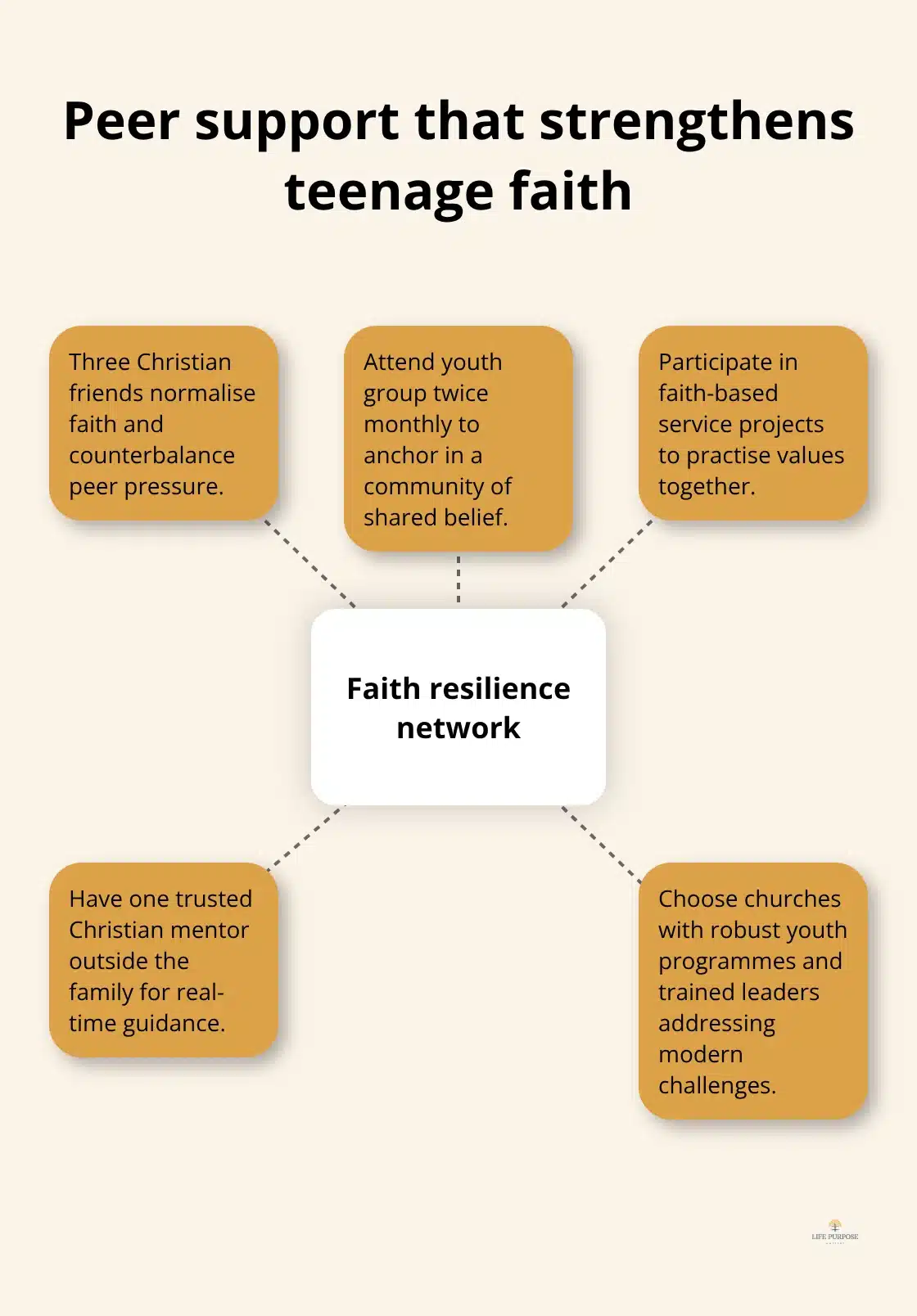
Your child’s faith survival may depend on it. Additionally, consider whether your teenager has one Christian mentor outside the family. Not a youth pastor who knows them in a group setting, but an adult who texts them, asks about their week, and models faith in real time. Teenagers listen to peers and mentors far more than they listen to parents. This isn’t a failure on your part. It’s how adolescent development works.
Grace and Discipline Aren’t Opposites
The families raising teenagers who keep their faith into adulthood don’t use punishment as their primary tool. They use consequences paired with relentless grace. This distinction matters. Punishment says: You did something wrong, so you suffer. Consequences say: You did something wrong, so here’s what happens next, and I still love you completely. When your teenager violates a boundary, the instinct is often to escalate restrictions. Their phone disappears for two weeks. They’re grounded indefinitely. They lose all digital access. These responses feel justified in the moment, but they backfire. A teenager whose phone is confiscated without explanation becomes resentful, not repentant. A teenager whose consequences are explained and applied consistently learns the actual lesson. If your rule is that phones go away at 8 p.m. and your teenager hides their phone at 7:50 p.m., the consequence isn’t losing the phone for a month. It’s losing it for three days, plus a conversation about why the rule exists and what broke down. Your teenager needs to know that violating trust has real consequences, but they also need to know that one mistake doesn’t erase your faith in them.
This requires you to examine your own triggers. Many parents respond to rule-breaking as personal betrayal rather than normal adolescent testing. Your teenager sneaking their phone at night isn’t rejecting your authority. They’re being a teenager. The question is whether you’ll respond in a way that preserves the relationship while enforcing the boundary. Admit when your consequences are too harsh. Say: I overreacted yesterday. The rule stands, but the punishment was too much. I’m sorry. This sounds weak to some parents. It’s actually the most powerful move you can make. Your teenager learns that adults can be wrong, that admitting mistakes is a strength, and that your rules exist to protect them, not to control them. When discipline is paired with genuine grace, teenagers actually internalise the values behind the rules instead of just obeying out of fear.
Final Thoughts
Christian parenting in a modern world demands consistency, not perfection. You’ve worked through specific strategies for managing screens, building spiritual habits, and navigating peer pressure-now the real work begins when you face Tuesday dinner with your teenager again. Start small this week: set one boundary, have one awkward faith conversation, or join one platform your kid uses. These small moves matter far more than grand gestures, and they plant seeds that grow over years, not days.
The families succeeding at this aren’t the ones with flawless theology or perfect execution-they’re the ones who keep trying, admit mistakes, and let their kids witness faith lived out in real time, including the messy parts. Your child’s faith won’t survive on your conviction alone; it survives through community, consistent practice, and conversations that treat your teenager as someone capable of thinking through complexity. Screen boundaries create space for connection, spiritual habits make faith visible, Christian community provides peer support, and grace-filled discipline teaches values without destroying relationships.
The culture pulling at your kids is sophisticated and relentless, but you’re not alone in this struggle. Thousands of Christian parents wrestle with the same questions and discover that faith actually does survive adolescence when nurtured intentionally. We at Life Purpose Matters stand with you on this journey, committed to providing resources and encouragement when you need them most. Your consistency matters, your presence matters, and your willingness to engage with your child’s world while staying grounded in faith matters-that’s enough.