

I once met someone who’d spent fifteen years climbing the corporate ladder, only to realise halfway up that they were leaning against the wrong wall. They had success, money, and respect-but no sense of why any of it mattered.
That’s the gap we at Life Purpose Matters see again and again: people chasing goals without understanding their God-given purpose. Your divine why isn’t something you manufacture or negotiate into existence. It’s already woven into who you are, waiting to be recognised and lived out.
What God-Given Purpose Actually Means
Purpose operates on a different level than goals.
Purpose in Christian faith operates on a completely different plane than the goals most people chase. A goal is something you set, achieve, and then move on from. You finish a project, hit a sales target, or earn a degree. Purpose, by contrast, is the underlying reason those goals matter in the first place. It’s the answer to why you exist and what you’re meant to contribute while you’re here.
According to Ephesians 2:10, God prepared good works in advance for you to walk in them. That’s not a suggestion or an invitation to negotiate. Your purpose isn’t something you invent from scratch or manufacture through motivational thinking. It’s already embedded in how you were created, your talents, your experiences, and the specific position you occupy in the world right now.
Why Ambition Without Purpose Leaves You Empty
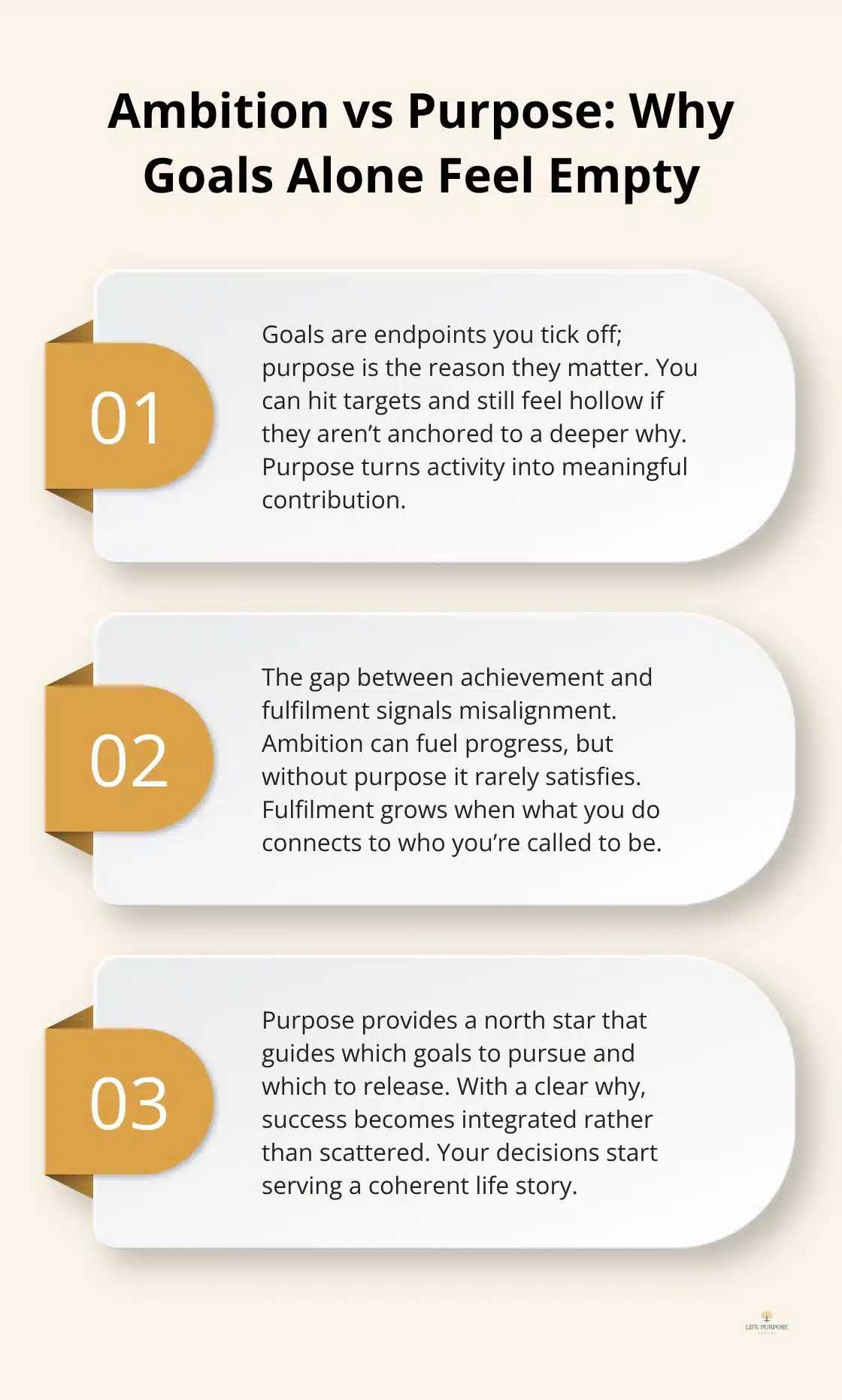
The confusion happens because most people spend their energy on ambitions, promotions, possessions, and status, without ever asking whether those pursuits connect to something deeper. You can accomplish every goal on your list and still feel empty, which is exactly what happened to the person we mentioned earlier. That gap between achievement and fulfilment reveals the real problem: ambition and purpose aren’t the same thing.
Many Christians treat purpose-finding like it’s optional spiritual work, something to explore when life slows down or when they hit rock bottom. But research shows that people with a strong sense of purpose experience measurable benefits in their physical and mental health. That’s not just feel-good spirituality; that’s real impact on how you live.
The Real Barriers to Finding Your Purpose
The barrier isn’t usually a lack of opportunity or talent. It’s that people haven’t learned to listen for what God is actually calling them toward. Fear plays a massive role here-fear of choosing wrong, fear of disappointing others, fear of stepping into something that demands real sacrifice. Many people silence their own convictions because they’re waiting for a lightning bolt moment of clarity that never comes.
Others confuse their purpose with what their parents want, what their culture rewards, or what their peers are doing. The gap between your God-given purpose and the life you’re actually living creates a kind of spiritual friction that exhausts you. You’re moving, working, achieving, but something feels off. That friction is often exactly what you need to pay attention to-it’s pointing you toward something more authentic.
Identifying Your Divine Why
Your Purpose Reveals Itself Through Patterns
Your purpose won’t announce itself through a burning bush or a sudden voice in the night. Instead, it reveals itself through patterns you’ve probably already noticed but haven’t connected. Pay attention to what consistently energises you versus what drains you. If you light up when helping people navigate difficult decisions but feel exhausted after networking events focused on self-promotion, that’s information.
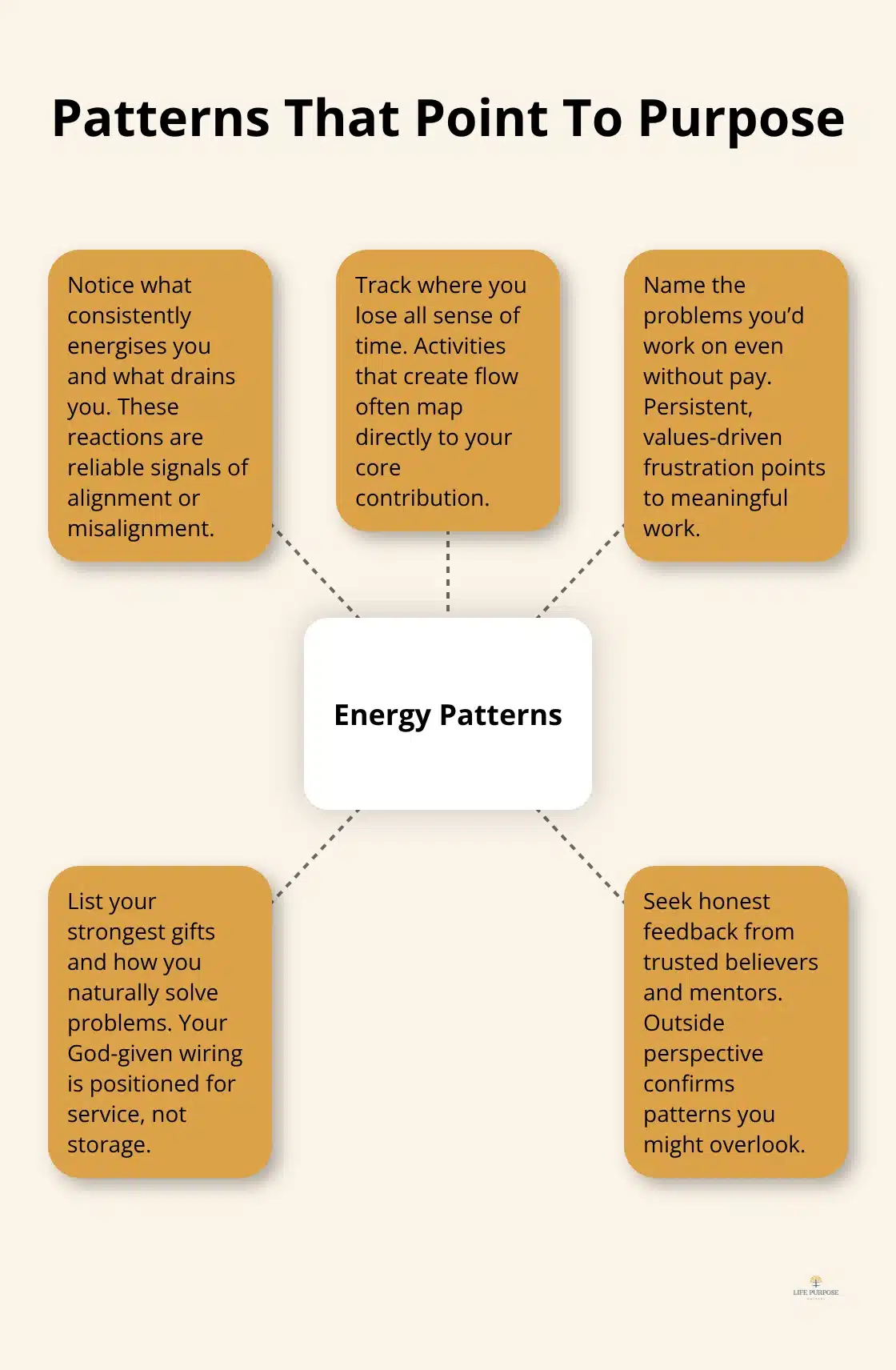
Your energy signature points directly toward your purpose.
What activities make you lose track of time? What problems in the world genuinely frustrate you enough that you’d work on them without payment? These aren’t random preferences-they’re breadcrumbs leading you toward something real.
How Your Gifts Point the Way
The gifts God gave you weren’t accidents. You possess specific talents, skills, and abilities that exist for a reason. If you’re naturally gifted at organising chaos, comforting anxious people, or breaking down complex ideas into simple language, those gifts aren’t meant to sit unused. They’re meant to serve a purpose larger than yourself.
Your unique combination of abilities-the exact mix you possess-exists nowhere else. That’s not a coincidence. Proverbs 19:21 tells us that while we make many plans, God’s purpose prevails. That means your gifts were positioned strategically. The work you do best, the way you naturally solve problems, the unique perspective you bring to situations-these all point toward how you’re meant to contribute.
Start documenting what you’re genuinely good at, not what you think you should be good at. Ask people who know you well what they see in you. Their observations often reveal gifts you’ve taken for granted.
Prayer Transforms Discernment From Theory to Action
Prayer and spiritual discernment are where this becomes actionable rather than theoretical. Many people expect discernment to feel like certainty, but that’s not how it actually works. Real discernment is a process of listening, testing, and adjusting. Set aside specific time for prayer focused on one question: What is God calling me toward? Not what you want, not what looks impressive, but what is actually calling to your soul?
This requires an honest conversation with God about your fears. Fear of failure, fear of inadequacy, fear of disappointing others-these block discernment every time. When you bring them into prayer instead of letting them operate in the background, they lose their grip.
Seek Counsel From Those Who’ve Walked the Path
Biblical wisdom from mature believers matters more than you might think. Proverbs 19:20 emphasises seeking counsel from wise people. Find someone who knows you, who knows Scripture deeply, and who has actually lived out their own purpose. Ask them what they observe about your gifts and where they see God working in your life. A mentor or pastor can see patterns you’re too close to notice.
Start with one concrete step: write down three areas where you consistently make a real difference in people’s lives. For each area, ask yourself if you’d pursue it even if nobody praised you for it. That honest answer separates true purpose from ego-driven ambition. Then bring those three areas into prayer over the next few weeks. Don’t rush for an answer. God’s timing matters more than your timeline.
Moving From Clarity to Action
Once you’ve identified patterns in your energy, documented your gifts, and sought wise counsel, you stand at a threshold. You’ve gathered the information you need. The next step requires you to test what you’ve learned against the reality of your daily life and relationships.
Living Out Your Purpose Daily
The gap between knowing your purpose and actually living it is where most people get stuck. You’ve identified what energises you, documented your gifts, and sought wise counsel. Now comes the harder part: rewiring your daily decisions to align with what you’ve discovered. This means examining your work, your relationships, and your habits with brutal honesty. If your job consistently demands that you compromise your values or ignore what God is calling you toward, staying there becomes a slow erosion of your purpose. That doesn’t always mean quitting tomorrow, but it means creating a timeline to move toward work that reflects who you actually are.
Research from the Harvard Study of Adult Development, which tracked people over 85 years, found that those who felt their work had meaning reported significantly higher life satisfaction and better health outcomes. Your purpose isn’t separate from your paycheck-it needs to inform it.
Audit Your Current Alignment
Start by examining your current role: Does it allow you to use your primary gifts? Does it serve people or causes you genuinely care about? Does it leave you with enough energy to invest in relationships that matter? If you answered no to two or more of these, you’re living in misalignment, and that friction is real.
The same principle applies to your relationships. Spend your relational energy on people who actually support your purpose, not those who constantly pull you toward their agenda. This sounds harsh, but purpose requires protection. You cannot simultaneously pursue what God is calling you toward and maintain relationships built on people-pleasing or obligation. Your spouse, close friends, and mentors should know your purpose and actively support it. If they don’t, that’s information worth acting on.
Move Forward Despite Doubt
Doubt doesn’t disappear once you’ve identified your purpose. It shows up differently. You doubt whether you’re capable enough, whether God really wants this for you, and whether the timing is right. Most people wait for doubt to vanish before taking action, but that’s backwards. You move forward while doubt is still present. Doubt is normal; paralysis is the problem.
Start with one small action aligned with your purpose this week. Not a massive life change, something concrete and doable. If your purpose involves helping others navigate difficult decisions, volunteer to mentor someone specific. If it involves creating or building, start that project you’ve been thinking about. Small actions build evidence that you’re actually capable of living this out, and evidence quiets doubt more effectively than reassurance ever will.
When doubt intensifies, return to prayer and to the counsel of people who know you. Joshua 1:9 tells us to be strong and courageous because God is with us. That’s not about eliminating fear; it’s about moving forward despite it. Obstacles will appear: financial constraints, family pushback, your own self-doubt, and timing that feels wrong. These aren’t signs you’re on the wrong path; they’re normal. The question isn’t whether obstacles exist; it’s whether you’re willing to work through them.
Build Habits That Sustain Your Purpose
Purpose without habits becomes a nice idea you occasionally think about. You need daily practices that keep you oriented toward what matters. Start with a weekly review: every Sunday or Monday, spend fifteen minutes asking yourself whether your decisions from the past week moved you toward your purpose or away from it. That’s it. No elaborate journaling system, no guilt trip if you missed some days. Just an honest assessment.
The second habit is harder: say no to opportunities that don’t align with your purpose, even good opportunities. This is where most people fail. They say yes to everything because they don’t want to disappoint anyone or miss out. But every yes to something misaligned is a no to something that actually matters.
Third, find one person who will ask you about your progress toward your purpose every month. Not a therapist, not a coach necessarily-just someone who cares enough to follow up. Accountability to another human being changes everything. You’re far more likely to act when someone else knows what you committed to.
These three habits-weekly review, strategic no, monthly accountability-cost almost nothing but require consistency. That’s where most people stumble.
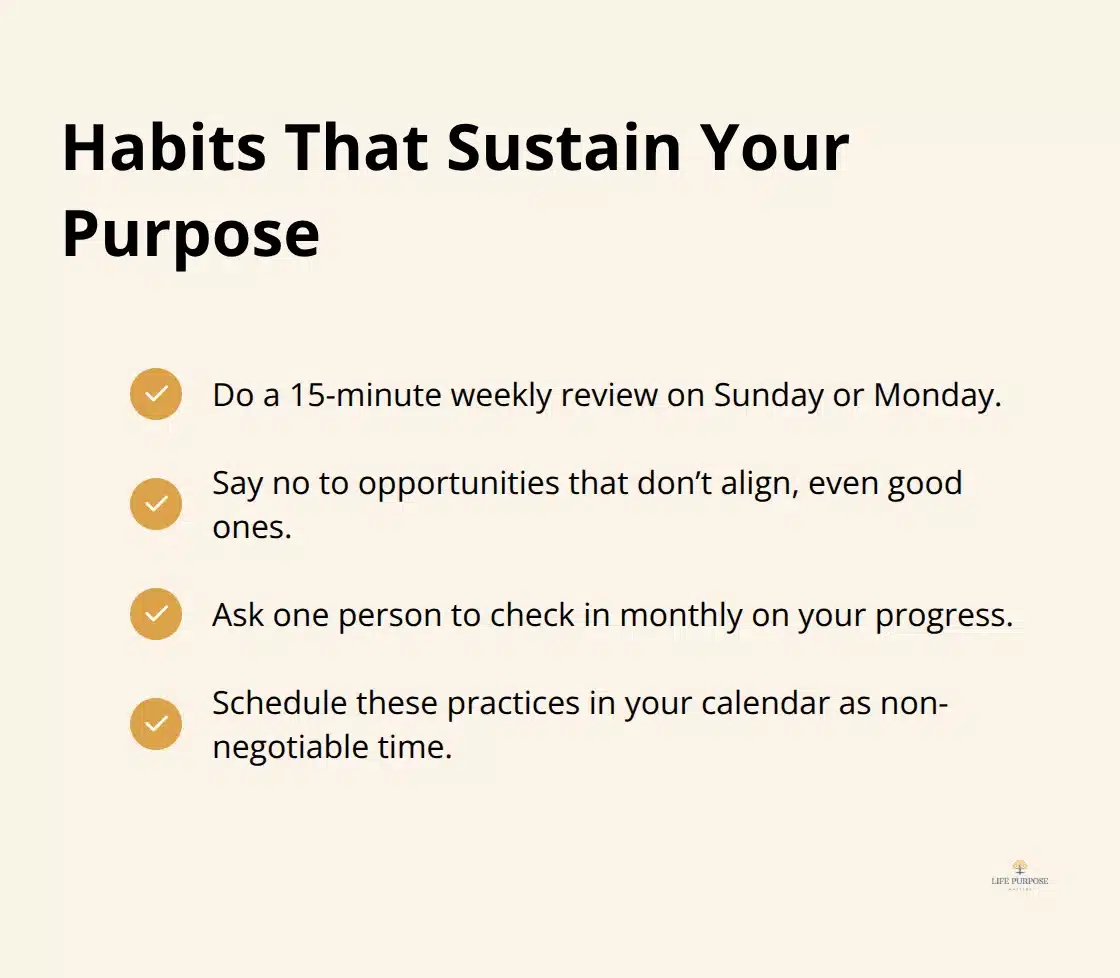
They start strong for three weeks, then life gets busy, and they drift back to autopilot. The drift is invisible at first, but after six months, you realise you’ve made zero progress. Build these habits into your calendar the way you’d schedule a doctor’s appointment. Non-negotiable time. Your purpose is worth that investment.
Final Thoughts
Your God-given purpose transforms from an abstract concept into a lived reality through consistent action over time. Small decisions made repeatedly reshape your entire existence-your work shifts from mere income to meaningful contribution, your relationships deepen as you show up authentically, and the internal friction between who you are and how you live finally resolves. When your daily choices align with your purpose, exhaustion converts into energy, sleep comes easier, and decision-making accelerates because you possess a clear filter for every opportunity.
Start this week with one habit from what we discussed: a weekly review, strategic refusal of misaligned opportunities, or monthly accountability with someone who cares. Build that single practice until it becomes automatic before adding another. Your purpose will continue revealing itself as you move forward, and God’s timing proves better than your timeline every single time.
We at Life Purpose Matters exist to support you on this journey. Visit our site to access resources, tools, and a community designed specifically to help you discover and live out your God-given purpose within a Christian framework. You don’t have to figure this out alone.