

I once watched a friend struggle with guilt over her finances. She felt like she wasn’t doing enough to help others, so she stopped giving altogether. That’s when everything shifted-not because she suddenly had more money, but because she realised generosity doesn’t require perfection.
At Life Purpose Matters, we’ve seen how generous giving practices transform lives in ways that go far beyond the donation itself. When you give intentionally and consistently, something deeper happens to your faith, your relationships, and your sense of purpose.
What Generosity Really Looks Like
Small Acts, Big Impact
Generosity isn’t about grand gestures or emptying your bank account. It’s about showing up consistently, even when your resources feel tight. According to research from UC Berkeley’s Greater Good Science Centre, giving activates feel-good chemicals in your body-endorphins, dopamine, and oxytocin-which means the emotional reward happens whether you donate five dollars or five hundred. The key insight here is that small, regular acts of giving produce the same happiness boost as occasional large ones.
This matters because it means you don’t need to wait until you’re wealthy to start living generously. A study published in Clinical Psychological Science tracked 77 adults and found that those who completed more daily acts of kindness experienced significantly less stress. When people couldn’t complete their intended acts of kindness, negativity increased. Generosity works best as a consistent habit, not something you do once a year when you feel guilty.
Generosity as a Spiritual Practice
The connection between generosity and your faith runs deeper than most people realise. Jesus taught extensively about money and giving-scholars estimate a substantial portion of his teachings addressed these topics directly. Matthew 22:37-40 frames generosity as the natural overflow of loving God and loving your neighbour, making it inseparable from Christian living itself.
When you give regularly, research from Utah State University shows that spouses who engage in higher levels of generosity report greater marital happiness and less relationship resentment. The same principle applies to your broader relationships and community. Providing social support through time, money, effort, or goods produces better physical health indicators, including lower blood pressure and improved sleep quality, according to the Greater Good Science Centre.
The Health Benefits Nobody Talks About
Regular generosity is linked to longer life expectancy, with evidence suggesting that helping others buffers the health impact of stressful life events. These aren’t minor improvements-they’re measurable changes in how your body responds to stress and ageing.
The Stewardship Generosity Report 2026 surveyed over 6,000 UK Christians and discovered that trust in the local church is the strongest predictor of higher generosity. This tells us something important: generosity flourishes in communities where people feel safe, valued, and connected to something larger than themselves. When you understand this connection, you’re ready to explore how to build your own giving practice in ways that align with your values and circumstances.
Making Generosity Fit Your Real Life
Create a Realistic Giving Budget
The gap between wanting to give and actually giving comes down to one thing: a plan that works with your actual finances, not against them. The Stewardship Generosity Report 2026 found that more than 25% of Christians now give from savings rather than just current income, which shows people think strategically about generosity instead of waiting for windfalls. This shift matters because it means you don’t need perfect circumstances to start-you need intention.
Start by looking at your monthly budget honestly. Not the budget you wish you had, but the one you actually live with. Identify one area where you can redirect money toward giving, even if it’s small. Some people move $10 a month into a giving fund.
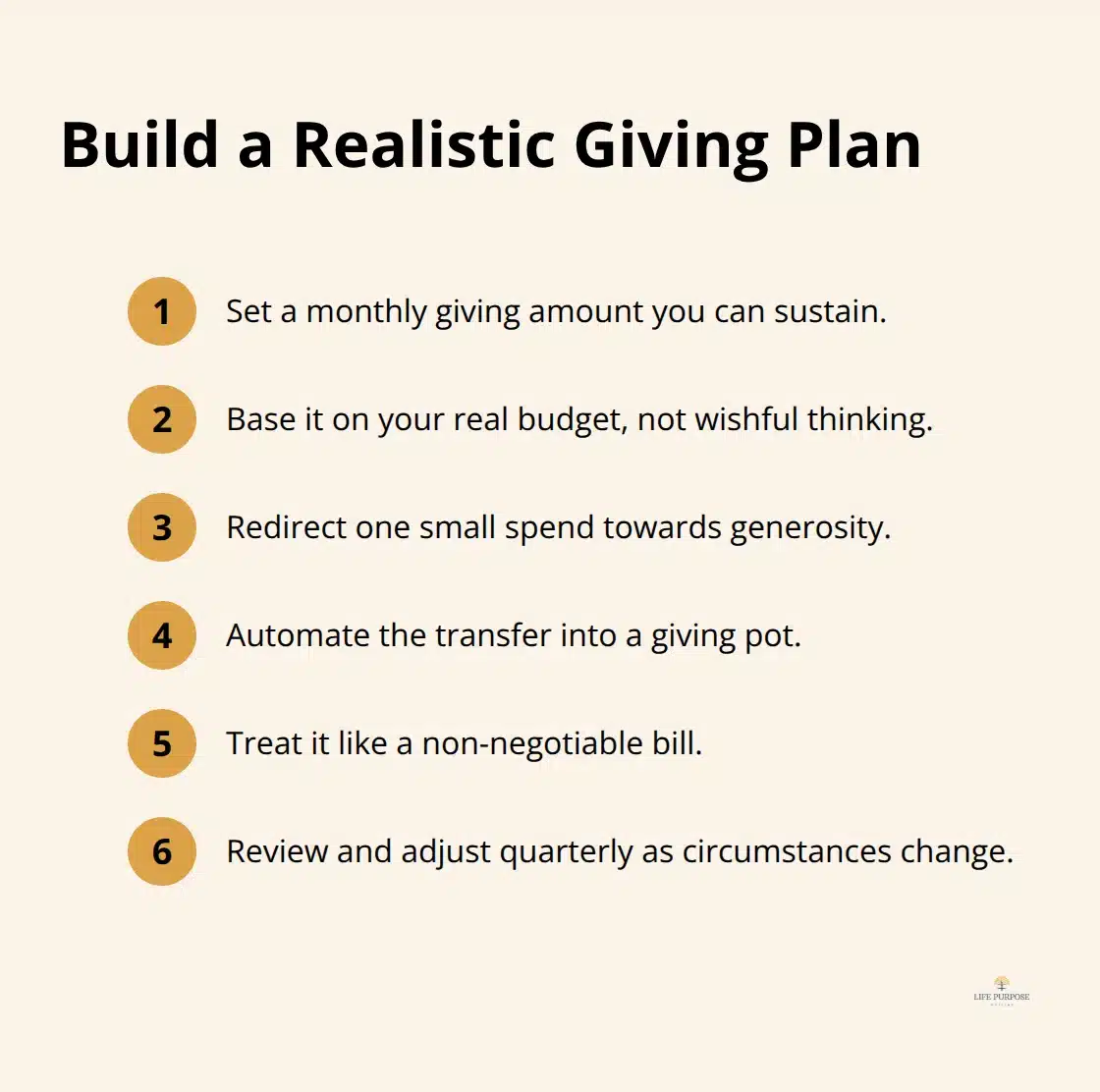
Others commit to giving away one per cent of their income. The amount matters less than the commitment itself.
Research from Harvard Business School found that spending money on others leads to greater happiness regardless of gift size, which means your five-dollar monthly contribution produces the same happiness boost as a larger one-it’s the consistency that counts. Once you have a number, treat it like a non-negotiable expense. Budget for giving the same way you budget for groceries or rent. This reframes giving from something optional into something integral to how you manage money.
Match Your Giving to Causes You Trust
Finding the right cause matters more than most people realise, and research reveals that trust in the local church is the strongest predictor of whether people give consistently. This suggests you should start by exploring organisations you already trust or feel connected to through your faith community.
Look for causes where you can see concrete outcomes. The Smith Family, an Australian charity, demonstrates this well. Donors see exactly how their gifts help disadvantaged children access school supplies and uniforms, creating a tangible impact rather than abstract help. When you connect your giving to real people and measurable change, giving becomes less about obligation and more about purpose.
Younger Christians show more engagement with giving conversations and remain more open to appeals, which indicates that asking questions about what matters to you isn’t self-indulgent-it’s how you build a sustainable practice.
Break Through the Scarcity Mindset
The biggest barrier people face isn’t lack of money; it’s the belief that they don’t have enough to make a difference. Many people restrict gifts because they perceive their own financial needs as too urgent.
Reframe this by focusing on what you can control. You cannot solve every problem, but you can support one cause consistently. Start there. One organisation, one cause, one community. That focused approach beats scattered giving that leaves you exhausted and guilty. As you narrow your focus and commit to regular giving, you’ll discover that the real transformation happens not in the amount you give, but in how your perspective shifts toward others and your role in their lives.
How Generosity Transforms Lives Beyond the Gift
The Personal Shift That Changes Everything
Sarah spent years feeling disconnected from her faith until she committed to sponsoring a child through a local ministry. Within months, her perspective shifted entirely. She wasn’t just sending money; she watched her generosity produce measurable change in someone’s life. Her stress levels dropped, her relationships improved, and she found herself thinking less about her own financial worries.
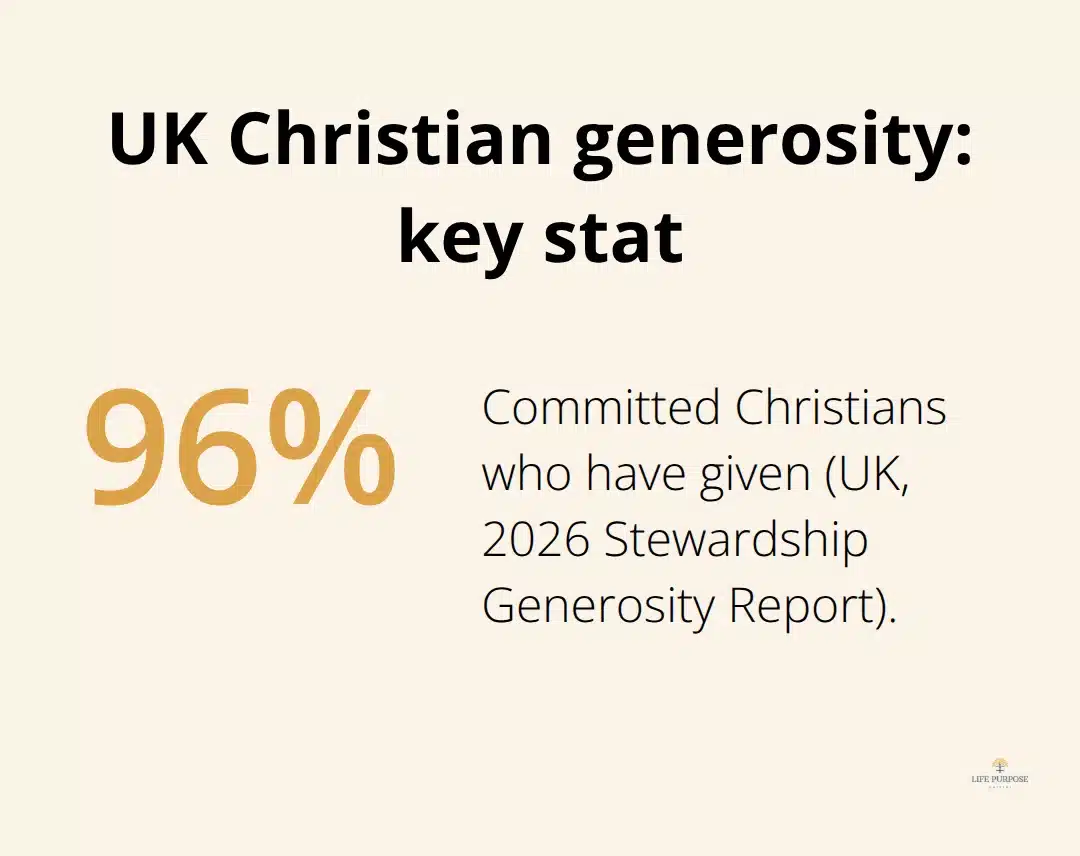
This isn’t a rare story. The Stewardship Generosity Report 2026 surveyed UK Christians and found that 96% of Committed Christians have given. The connection matters here: generosity didn’t make Sarah wealthy, but it made her life feel richer in ways that money cannot buy.
The Science Behind the Transformation
Research from Rush Alzheimer’s Centre shows that regular giving can lead to greater self-esteem, life satisfaction and sense of purpose. Sarah’s experience mirrors what researchers consistently find when studying the benefits of generosity. Individuals who give regularly experience lower stress levels, better sleep quality, and even longer life expectancy.
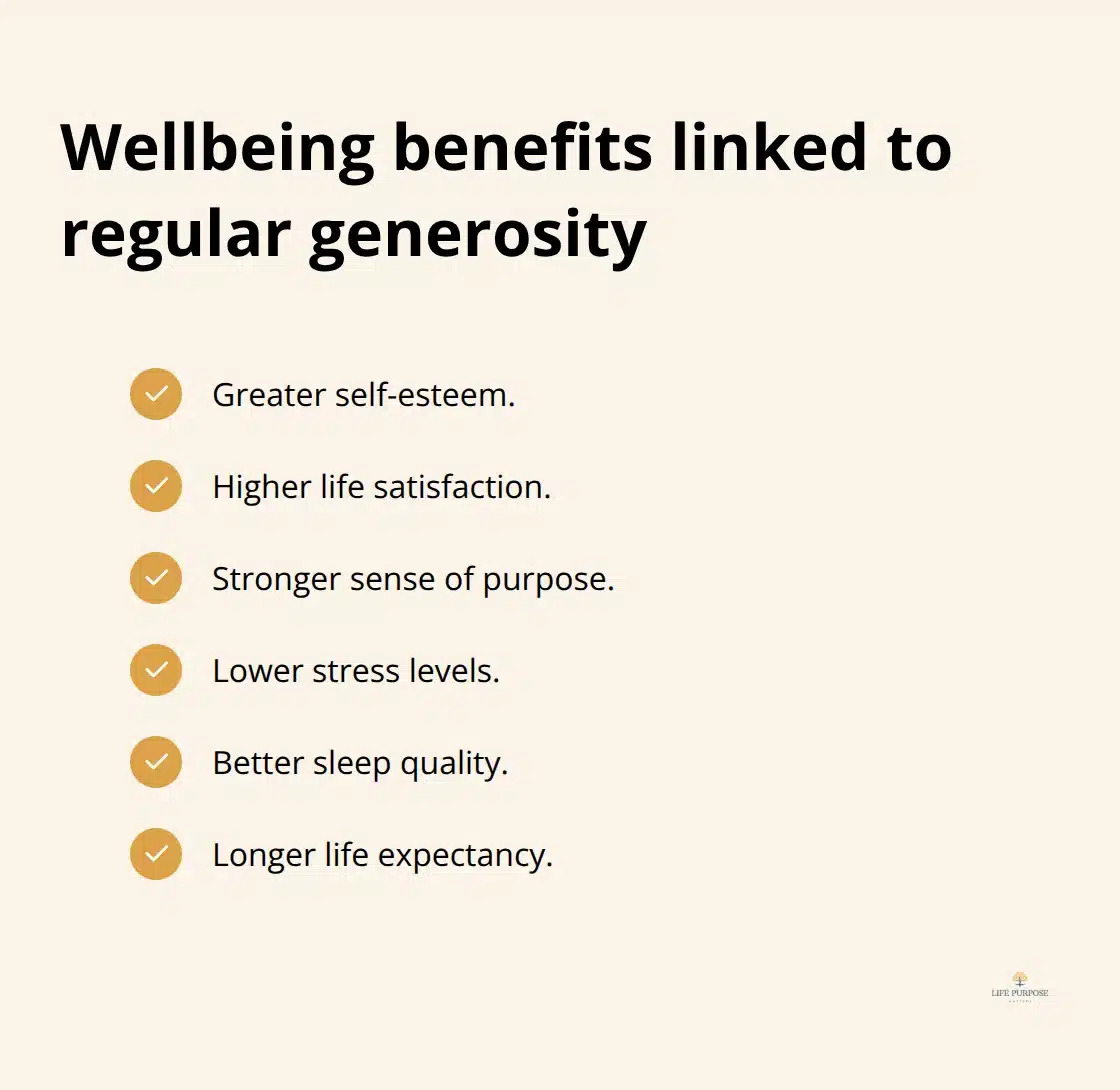
When you give, your body releases endorphins and oxytocin-the chemicals associated with happiness and connection. More importantly, giving creates a feedback loop. You see your action produce real results, which reinforces your sense of purpose, which motivates you to give again. This cycle compounds over time, transforming how you see yourself and your role in the world.
Communities That Embrace Generosity
Communities experience this same transformation when generosity becomes embedded in their culture. The Smith Family in Australia demonstrates this principle concretely. Their donors don’t simply write cheques; they sponsor children, which means they receive updates about how their gifts directly impact school attendance, supply access, and social belonging. Donors report that seeing tangible outcomes makes giving feel purposeful rather than obligatory.
Younger Christians show particular engagement with this model because they want to understand exactly where their money goes and what changes it creates. When you align your giving with causes where you can witness real transformation, generosity stops feeling like duty and starts feeling like partnership.
Faith Commitment Expands Generosity
The Stewardship Generosity Report 2026 revealed that among Committed and Practising Christians, generosity remains both strong and steady. This suggests that deepening your spiritual practice naturally expands your capacity to give. Your purpose isn’t separate from your generosity; they’re interconnected.
When you recognise that giving reflects your values and your faith, you’re not just supporting causes you care about. You’re living out what you believe. You’re participating in something larger than yourself, which is what humans fundamentally need to feel alive and purposeful.
Final Thoughts
Generous giving practices reshape how you see yourself, your faith, and your place in the world. The research confirms what you’ll experience firsthand: people who give regularly experience measurable improvements in physical health, emotional well-being, and sense of purpose. Your stress levels drop, your relationships improve, and you sleep better-these benefits compound as you maintain the practice.
Making giving a lifestyle requires intention, not perfect circumstances. Start with a realistic budget, identify one cause that resonates with your values, and commit to regular giving (whether that’s five dollars monthly or fifty). As you continue this practice, your perspective expands, and you become less focused on what you lack and more aware of what you can contribute. When you model generosity, you influence your family and community in ways that extend far beyond your own life.
If you’re ready to deepen your faith journey and explore how generous giving practices connect to your God-given purpose, Life Purpose Matters offers resources and guidance designed specifically for this work. Start today with one small commitment. Your future self will thank you.