

I once sat with a friend who couldn’t sleep at night, consumed by worry about her future. She kept asking: what’s the point of planning for tomorrow when everything feels so temporary? That conversation stuck with me because it captures something so many of us wrestle with. Heaven promises believers an everlasting relationship with God, free from pain, sorrow, and death. It represents not just an endless span of time, but a perfected quality of life where followers dwell in resurrected bodies within God’s presence.
At Life Purpose Matters, we believe that heaven promises believers something radical: a perspective that transforms how we live right now. When you understand what eternity truly means, anxiety about earthly concerns starts to lose its grip. This blog post explores what the Bible reveals about heaven and how that promise reshapes your daily life.
Check out other promises of God at ==>> Sacred Thread Media
What Heaven Actually Looks Like in Scripture
Scripture Paints Heaven as Concrete, Not Abstract
The Bible doesn’t treat heaven as some vague, cloudy afterthought. It offers specific, concrete descriptions that most people miss because they scatter across different books and use ancient language. In the Old Testament, prophets like Isaiah and Ezekiel describe God’s throne room with stunning detail. Isaiah 6 shows seraphs with six wings crying out holiness, while Ezekiel 1 depicts wheels within wheels and creatures full of eyes. These aren’t poetic decorations-they represent attempts to capture something so far beyond human experience that the writers struggled to find words.
The New Testament Reveals Heaven’s Physical Reality
The New Testament takes this further. Revelation 21 describes the New Jerusalem with streets of pure gold, walls of jasper, and gates made of single pearls. Jesus tells His disciples in John 14:2-3 that He prepares actual rooms for them, suggesting heaven isn’t abstract but tangible and personal. Paul in 2 Corinthians 12:2-4 mentions being caught up to the third heaven and hearing inexpressible things, hinting that heaven operates on levels most of us don’t yet understand.
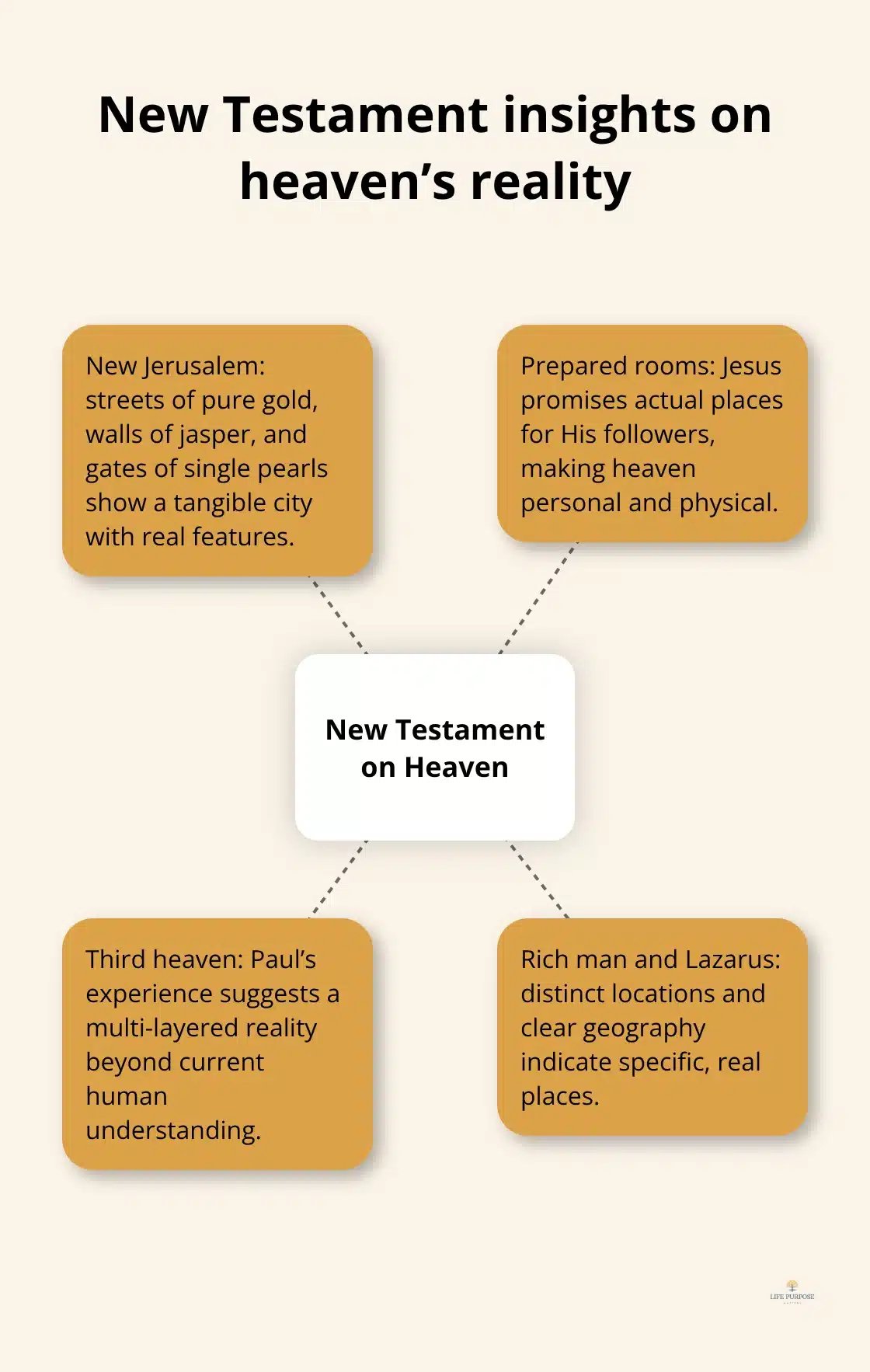
Luke 16:22-25 describes the rich man and Lazarus in specific locations with clear geography, reinforcing that heaven has real features and real places.
Immediate Consciousness After Death Changes Everything
Jesus promised the thief on the cross he would be with Him in paradise that very day, implying immediate conscious existence after death-not soul sleep or reincarnation. This detail matters more than most believers realise. When you grasp that heaven is genuinely physical and relational, it shifts how you live now. You stop treating earthly success as the ultimate goal and start asking whether your daily choices align with eternal reality.
How This Truth Transforms Your Present Life
The early church in Acts 17:6 turned their world upside down partly because they believed in something beyond Rome’s power. Your eternal identity as a believer isn’t a distant fantasy-it’s the foundation that anchors every decision you make today. This understanding of heaven’s reality creates the spiritual foundation we need to explore how eternity reshapes your perspective on purpose and anxiety.
Create a quiet, meaningful faith practice with this ==>> Promises of God Bible Verse Jar.
How Eternity Reshapes What Matters Now
Faith Recalibrates Your Priorities
Understanding eternity doesn’t make your earthly problems vanish, but it recalibrates what deserves your mental and emotional energy. When you genuinely accept that heaven is real and awaits you, your brain starts filtering out noise that once felt urgent. Studies have shown that prayer can reduce stress, lower blood pressure, and even boost the immune system. This isn’t a coincidence. Faith provides a framework that says: this job loss, this health scare, this relationship conflict-they’re real and they hurt, but they’re not your final story.
Pain Loses Its Power to Define You
The Apostle Paul experienced shipwrecks, imprisonment, and constant threats, yet he wrote in 2 Corinthians 4:17 that his momentary troubles achieved an eternal glory that far outweighs them all. He wasn’t minimising suffering; he was placing it within a larger narrative. Your faith shapes how you interpret forever by teaching you that temporary setbacks don’t define your eternal trajectory. This perspective doesn’t eliminate pain, but it prevents pain from becoming your identity. When you wake up tomorrow facing a difficult conversation or financial pressure, you can ask yourself: does this matter in light of eternity? Often, the answer redirects your energy toward what actually builds something lasting.
Align Your Decisions With Your Eternal Identity
Living with purpose while knowing eternity awaits means you make decisions today that align with your eternal identity rather than your temporary circumstances. Most people reverse this-they let their current job title, bank account, or social status determine their choices, then wonder why they feel empty. The opposite approach works better. Start by identifying one area where you’re currently stressed about outcomes you can’t control. Whether it’s your career trajectory, your children’s future, or your financial security, anxiety about these things often stems from treating them as your ultimate responsibility. Eternity teaches you that your primary responsibility is faithfulness, not results. This shifts everything.
Instead of obsessing over whether you’ll climb the corporate ladder, you ask: Am I treating my coworkers with integrity? Instead of panicking about whether your kids will succeed by worldly standards, you ask: Am I modelling faith and character for them? Practical application means you spend thirty minutes weekly reflecting on whether your daily decisions reflect what you claim to believe about eternity. Write down three choices you made this week-at work, at home, in conversations-and honestly assess whether they honoured your eternal perspective or betrayed it.
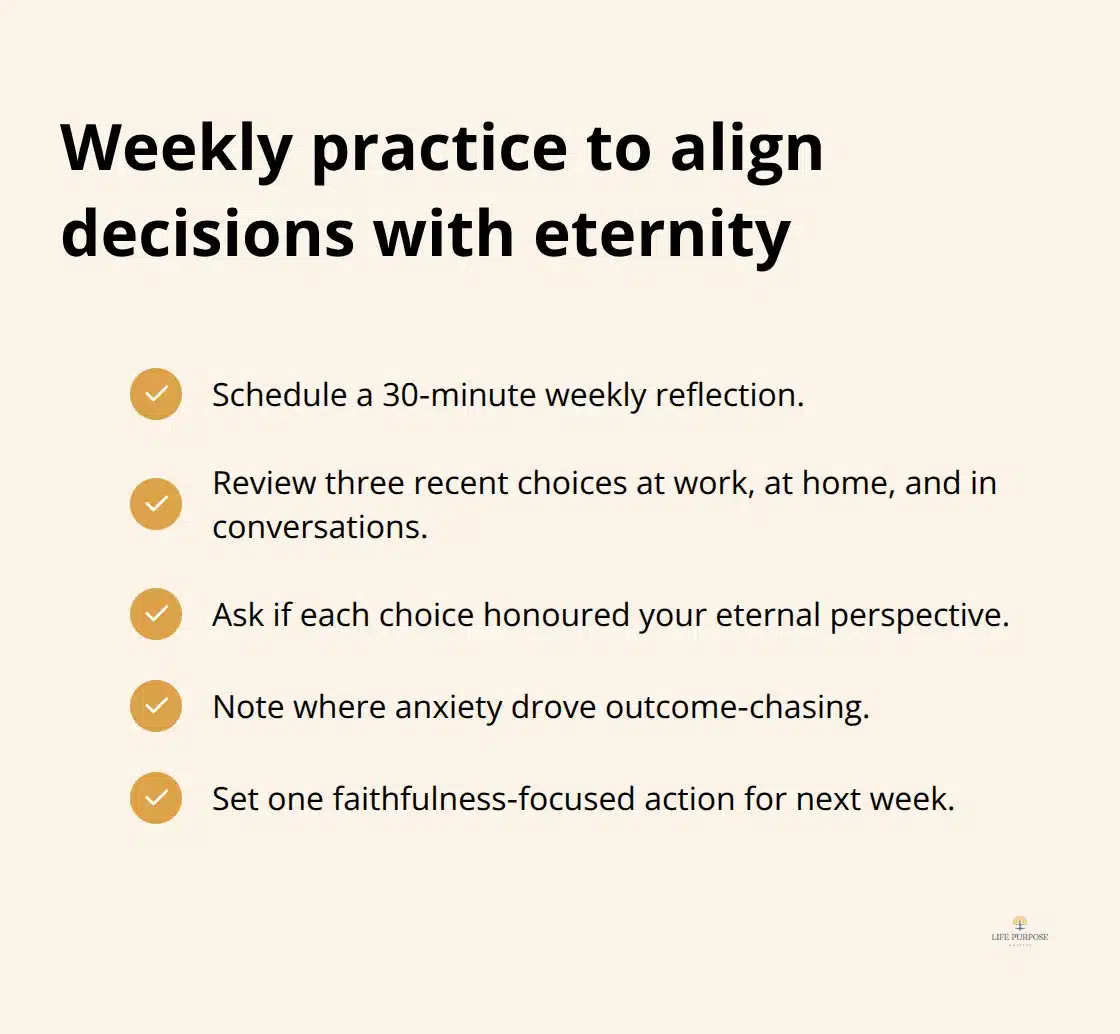
This isn’t about guilt; it’s about awareness.
The Early Church Modelled Radical Purpose
The early church members sold their possessions and shared everything because they believed heaven was real and earth was temporary. They weren’t reckless; they were radically purposeful. Your version might look different, but the principle remains: eternal hope frees you to spend yourself on things that matter forever rather than things that matter only until Tuesday. This shift from earthly anxiety to eternal purpose creates the foundation for understanding how believers actually prepare spiritually for the eternity that awaits them.
Earthly Life vs. Eternal Life
Salvation does far more than forgive your past sins; it fundamentally rewires what you work toward. Most believers treat salvation as a fire escape from hell rather than a total life reorientation. The truth cuts sharper. When you accept Christ, you gain immediate access to what theologians call eternal life, which Jesus defined in John 17:3 as knowing God personally. This isn’t something you receive only after death. Eternal life starts now through a relationship with God that transforms how you see money, relationships, career, and purpose.
The Calculus That Inverts Everything
Earthly life treats temporary things as permanent, while eternal life treats temporary things as temporary. You spend forty years climbing a corporate ladder only to realise at retirement that you missed your children’s childhoods. You accumulate possessions that you cannot take with you. You build a reputation that crumbles the moment you’re gone. Eternal life inverts this calculus entirely. It says your real assets are character development, spiritual growth, and relationships rooted in God’s family.
First Peter 1:4 promises believers an inheritance that is imperishable, unfailing, and kept in heaven. That’s not metaphorical language. It means the investments you make in faith, kindness, and spiritual depth actually compound forever, while your 401k does not. Your eternal perspective isn’t just nice theology; it’s a proven anxiety reducer because it removes the false burden of controlling outcomes you never had power over anyway.
Where Your Attention Actually Flows
Preparation for eternal life isn’t about becoming more religious or adding spiritual practices to an already packed schedule. It’s about ruthlessly examining where your actual attention and resources flow. Track your spending for one week and categorise each purchase as either temporary or eternal. A meal feeds temporary hunger. A book that shapes your character feeds eternal growth. A vacation provides temporary rest.
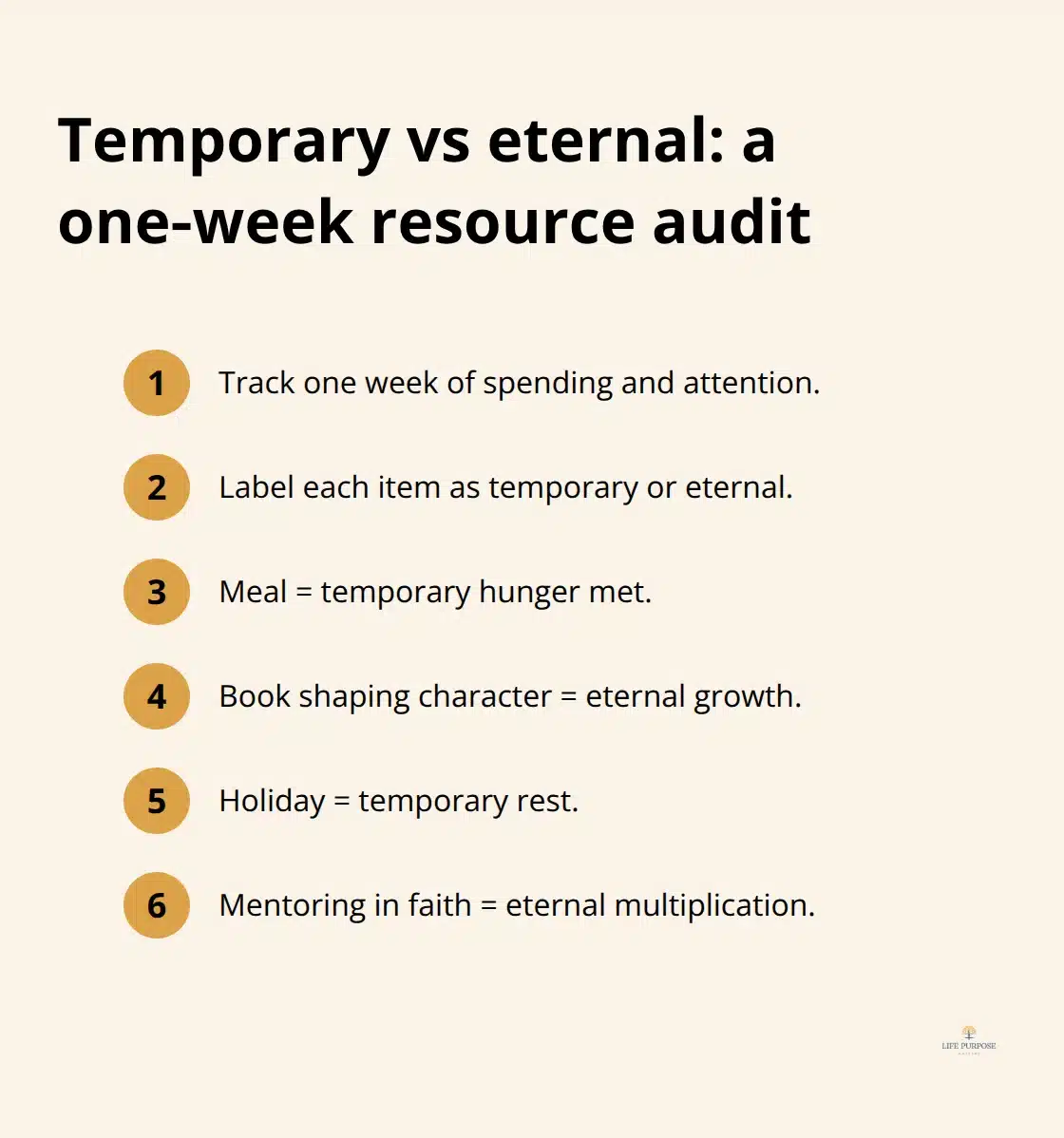
Time mentoring someone in faith provides eternal multiplication. This isn’t legalism; it’s clarity.
When you see the pattern, you naturally start redirecting resources toward what matters forever. The early church in Acts 2:44-45 sold property and possessions to share with those in need. They weren’t poor by accident; they were strategically poor on purpose because they understood that earthly accumulation competed with eternal purpose.
Identify What Has a Grip on Your Heart
Preparation for eternity demands you identify what currently controls your emotions and choices. Jesus said no one can serve two masters because you’ll love one and hate the other. In Matthew 6:24, He specifically mentioned money, but the principle applies to anything that promises security, identity, or worth outside of God. For some people, it’s career advancement. For others, it’s romantic relationships or parental approval. The specific idol matters less than recognising that you have one.
Write down what you would lose sleep over if it disappeared tomorrow. That answer reveals what you’re actually building your life around. Then ask honestly: is this eternal or temporary? Letting go of temporary concerns doesn’t mean abandoning responsibility. You still work hard, pay your bills, and care for your family. The difference is your emotional attachment to outcomes.
Shift From Outcome-Dependent to Principle-Dependent Peace
You work with excellence because integrity is eternal, not because you need the promotion. You provide for your family because love is eternal, not because you need their approval. You invest in friendships because relationships endure forever, not because you need validation today. This shift from outcome-dependent peace to principle-dependent peace is where spiritual preparation actually happens. It’s not mystical; it’s practical psychology meeting theology.
Final Thoughts
When my friend finally stopped worrying about tomorrow and started asking what eternity meant for today, everything shifted. She didn’t suddenly become wealthy or problem-free. She became purposeful, and heaven promises believers exactly that: not an escape from difficulty, but a framework that makes difficulty bearable and even meaningful.
Believing in heaven transforms you because it answers the deepest question humans ask: does my life matter? The answer isn’t theoretical-it lives out in how you treat the person in front of you, how you spend your money, how you respond when plans fall apart. Eternal hope doesn’t eliminate pain, but it prevents pain from becoming your final word. When you genuinely accept that eternity awaits and that your character compounds forever while your circumstances don’t, you stop treating temporary setbacks as permanent defeats.
Your purpose as a believer becomes clear when you stop asking what the world owes you and start asking what eternity requires of you. That purpose isn’t grandiose-it means showing up with integrity at work, listening to someone who feels invisible, choosing kindness when you’re tired, and investing in relationships that matter forever. Visit Life Purpose Matters to explore how you can integrate your faith more fully into your daily life and embrace the eternal perspective that transforms everything.