

“In the name of the Father, and of the Son, and of the Holy Spirit” — you’ve heard the blessing a hundred times. But have you ever actually stopped to wonder how you’re supposed to pray to three persons in one God without feeling like you’re doing it wrong?
At Life Purpose Matters, we’ve found that many people share this confusion. The good news is that prayers for the Trinity don’t require complicated theology-they just require understanding how to connect with each person of the Godhead in your own spiritual practice.
What the Trinity Means for Your Prayers
One God, Three Persons-What This Actually Changes
The Trinity is one God existing as three distinct persons-Father, Son, and Holy Spirit. This isn’t three gods or three parts of one god. It’s one being who is simultaneously three persons, each fully God. Deuteronomy 6:4 establishes this foundation: the Lord our God is one Lord. Yet throughout Scripture, the Father, Son, and Spirit appear as distinct persons who communicate, act, and relate to one another. Genesis 1:26 captures this reality when God says, “Let us make mankind in our image,” using the plural us while remaining singular in being. This matters for prayer because it means you’re not confused or wrong when you address each person separately. You’re actually aligning with how God has revealed himself.
The Distinct Roles That Shape How You Pray
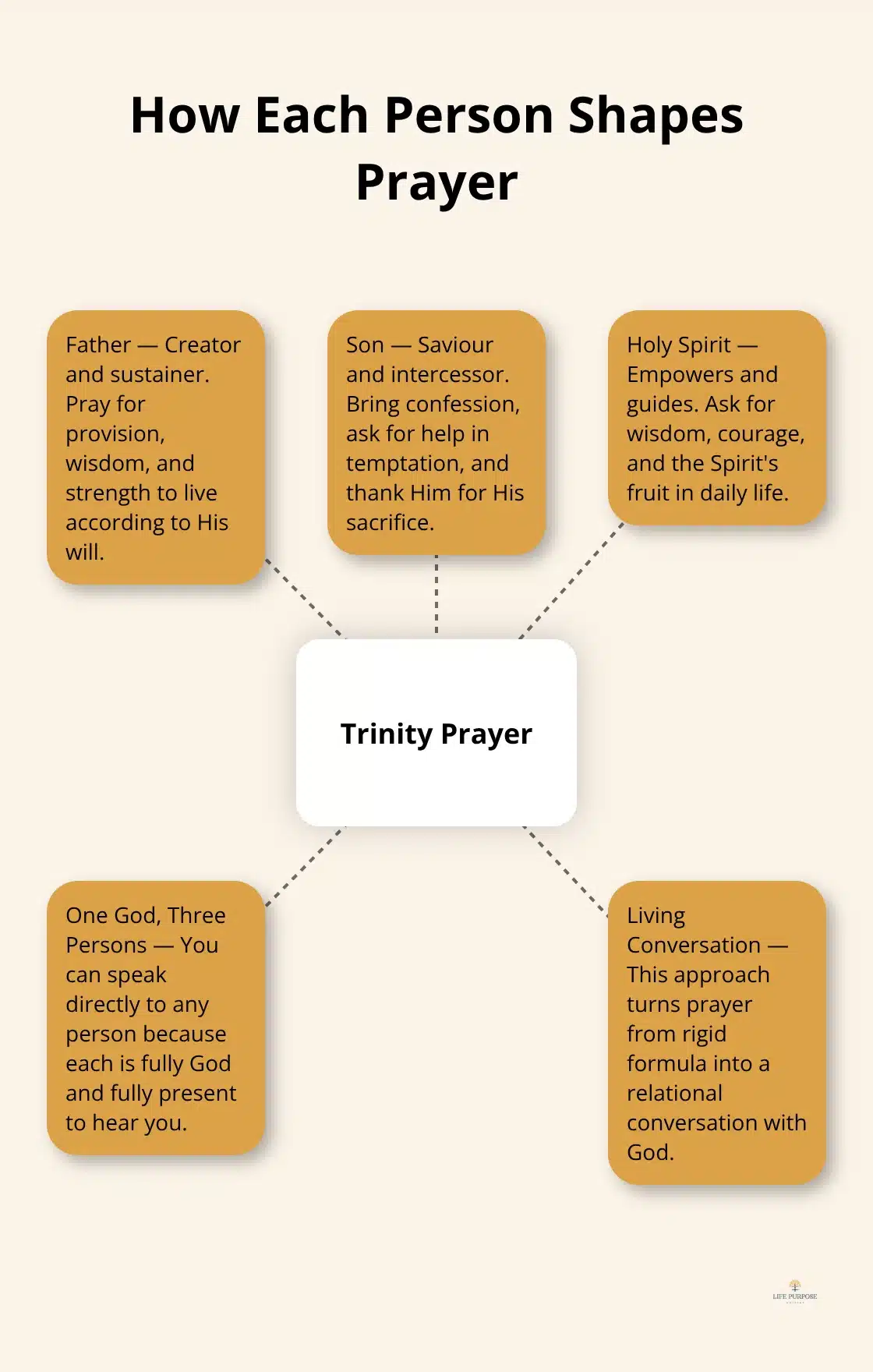
The Father created and sustains all things. Jesus Christ died and rose to save humanity and now intercedes for believers. The Holy Spirit empowers, guides, and produces spiritual transformation in daily life. When you pray, you can speak directly to any of these three persons because each one is fully God and fully present to hear you. This reality transforms prayer from a rigid formula into a living conversation with the God who knows you completely.
Clearing Away the Confusion
Many people hesitate to pray directly to Jesus or the Holy Spirit because they worry it violates monotheism or shows disrespect to God the Father. This misconception stops genuine prayer before it starts. Acts 7:59-60 records Stephen calling out to Jesus directly while being martyred: “Lord Jesus, receive my spirit.” Paul writes in 2 Corinthians 12:8 that he pleaded with the Lord three times about his thorn in the flesh, speaking directly to Jesus. Revelation 22:17 and 22:20 show the Spirit and the church praying to Jesus, indicating that addressing the Son is biblically grounded and normal.
Why Theological Perfection Isn’t Required
Another false belief is that Trinity prayer requires formal, complicated language or perfect theological understanding. The opposite is true. Your prayer life doesn’t depend on mastering doctrine-it depends on genuine connection. Jesus taught his disciples to pray to the Father with simple, direct requests in Matthew 6:9-13. The Holy Spirit intercedes for you with groanings too deep for words, according to Romans 8:26, meaning your incomplete understanding doesn’t disqualify your prayers (in fact, it invites the Spirit’s help).
How to Start Praying to the Trinity Today
Try addressing the Father as your Creator and sustainer, speak to Jesus about salvation and daily obedience, and ask the Holy Spirit for wisdom, courage, and spiritual fruit like love, joy, and peace. This practical approach beats theoretical perfection every time. With these foundational truths in place, you’re ready to explore specific prayers and devotional practices that connect you more deeply with each person of the Trinity.
Praying to Each Person of the Trinity
Speaking to God the Father
When you address the Father in prayer, you speak to the one who created everything and holds it together. Colossians 1:17 tells us that Christ holds all things together, but the Father’s role as sustainer grounds your prayers in gratitude and trust. Pray to the Father for provision, wisdom about your circumstances, and strength to live according to His will. Many people find that starting their prayer time with the Father establishes a foundation-you acknowledge that everything flows from Him.
A practical approach works best: begin by naming something specific the Father has sustained in your life this week, then move into your requests. This shifts prayer from vague asking into genuine conversation with the God who knows your deepest needs.
Addressing Jesus in Prayer
When you speak to Jesus, you address someone who doesn’t just hear your prayers-He intercedes for you at God’s right hand. Hebrews 7:25 emphasises that Christ always lives to intercede for those who come to God through Him. This means when you confess failure to Jesus, ask for His strength in temptation, or thank Him for His sacrifice, you participate in an ongoing dialogue where He actively works on your behalf.
Jesus wants to hear about your daily struggles, your doubts, your victories. Stephen’s prayer in Acts 7:59 shows raw, immediate connection-he called out to Jesus in his moment of death without hesitation. You can do the same in your moments of crisis, joy, or confusion. Direct prayer to the Son transforms your spiritual life in ways that formal patterns often miss.
Praying to the Holy Spirit
The Holy Spirit’s role in prayer differs from the Father and Son-the Spirit empowers your prayers themselves. Romans 8:26 reveals that when you don’t know what to pray, the Spirit intercedes with groanings too deep for words. This means praying to the Spirit for guidance, courage, and the fruit of the Spirit (love, joy, peace, patience, kindness, goodness, faithfulness, gentleness, self-control) isn’t optional-it’s how you cooperate with the Spirit’s work in your transformation.
Ask the Spirit specifically for wisdom in decisions, boldness in sharing your faith, and help recognising His voice in your daily life. The Spirit responds to direct, honest requests from those who seek His presence and power.
Breaking the Pattern Most Christians Follow
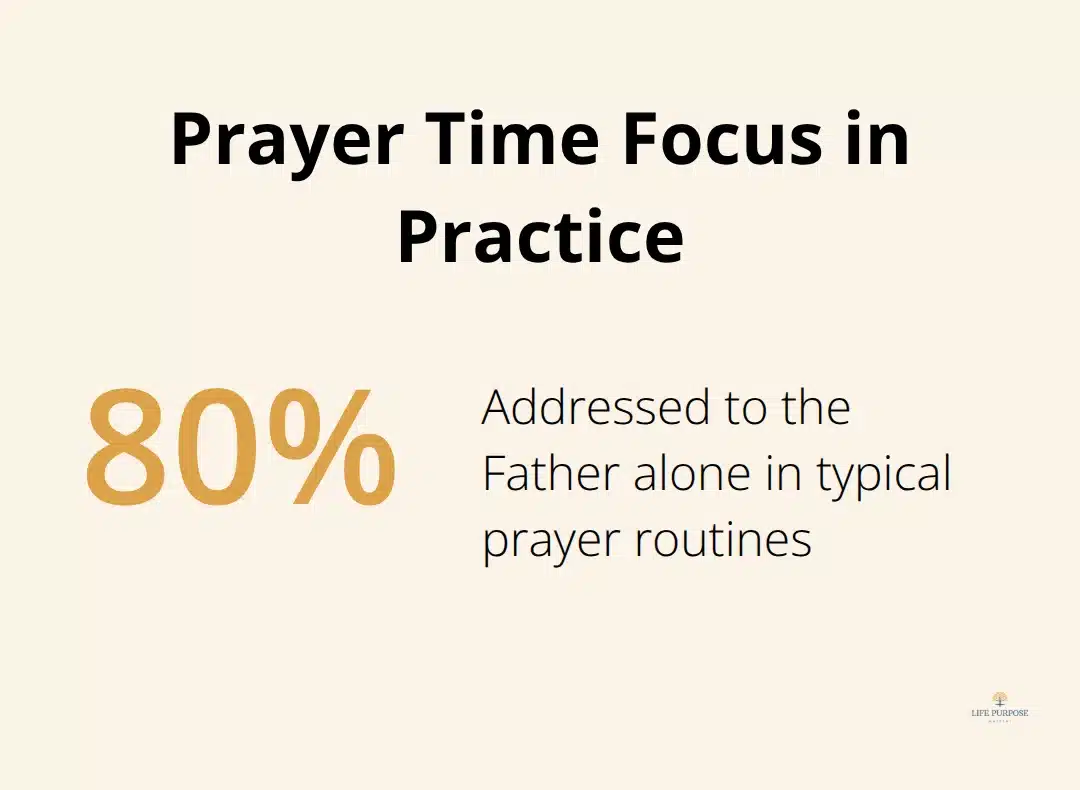
Most Christians spend 80 percent of their prayer time addressing the Father alone, according to prayer research from various Christian traditions. This imbalance happens because formal prayer patterns emphasise the Father. But direct prayer to Jesus and the Spirit is just as biblical and often more energising for your spiritual life.
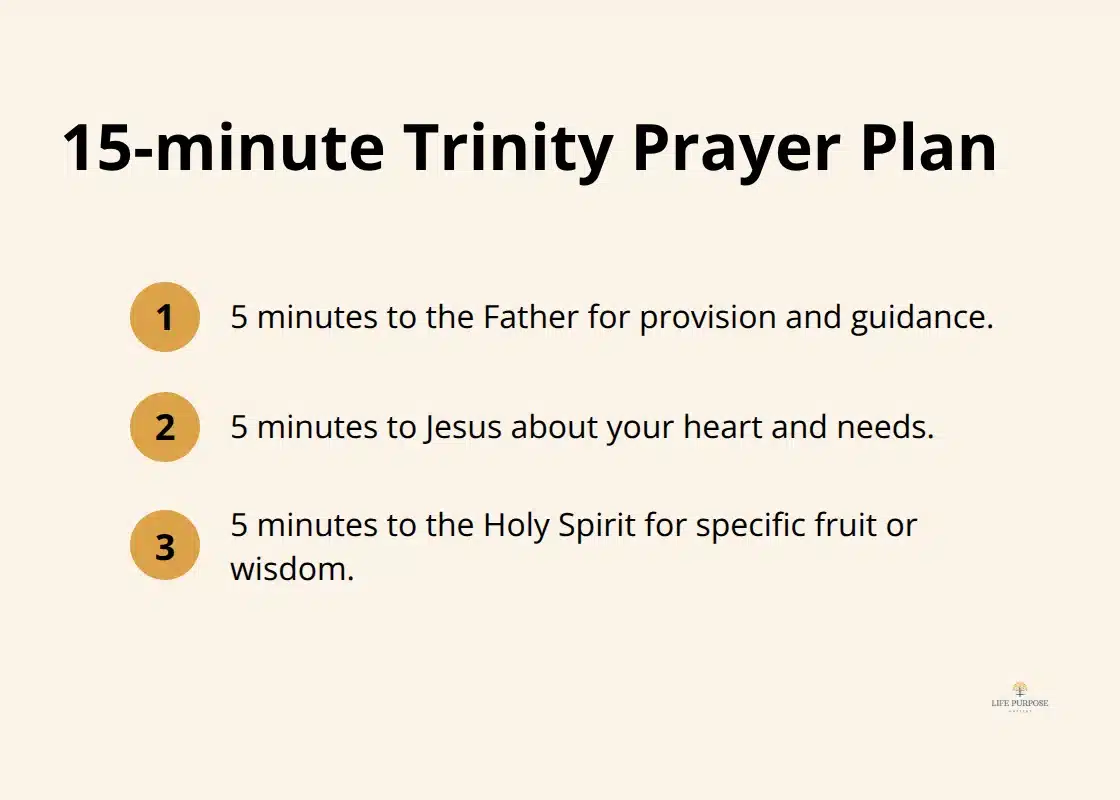
Try this for one week: spend the first five minutes of your prayer time addressing the Father for provision and guidance, the next five minutes speaking directly to Jesus about your heart’s condition and needs, and the final five minutes asking the Holy Spirit for specific fruit or wisdom. You’ll notice how each person of the Trinity brings distinct dimensions to your prayer experience. This shift in practice opens doors to deeper connection with God that many believers never explore.
With these distinct ways of praying to each person established, you’re ready to build a consistent devotional rhythm that honours the Trinity and transforms your daily spiritual life.
Building Your Trinity Prayer Rhythm
Create a Structure That Fits Your Life
The biggest mistake most Christians make is treating Trinity prayer like a Sunday obligation rather than a daily practice that reshapes how you think, act, and relate to God. You need a structure that fits your actual life, not an idealised version of it. Start with a simple framework: spend three to five minutes each morning addressing one person of the Trinity, rotating through the Father, Son, and Spirit across different days of the week. Monday might focus on the Father’s sustaining presence in your work and relationships.
Tuesday shifts to Jesus and your personal struggles with obedience or temptation. Wednesday centres on the Holy Spirit’s power to transform your character.
This rotation prevents prayer from becoming mechanical repetition while ensuring you develop a genuine relationship with each person of the Trinity. The key is consistency over perfection. Commit to your rotation for three weeks, and the practice becomes natural rather than forced.
Anchor Prayer in Scripture
Scripture should anchor every prayer session, not as background decoration but as the actual content of your conversation with God. When you pray to the Father, pull a specific verse about His provision or sustenance and speak it back to Him as thanksgiving. Genesis 1:1 reminds you that God created everything; use that truth to thank Him for the specific blessings in your life today. When addressing Jesus, Hebrews 7:25 reveals His ongoing intercession for you; acknowledge that reality and ask Him to intercede in a specific area where you feel weak or uncertain.
For the Holy Spirit, Galatians 5:22-23 lists the fruit you should pray for directly: love, joy, peace, patience, kindness, goodness, faithfulness, gentleness, and self-control. Rather than praying vaguely for spiritual growth, ask the Spirit to develop patience in a specific relationship or boldness in a particular situation. This Scripture-saturated approach transforms prayer from talking at God into listening to Him through His Word while you speak.
Track Your Progress With a Simple System
Many people find that keeping a simple notebook with three columns-one for each Trinity person-and writing Scripture references alongside their prayers creates accountability and deepens their retention of biblical truth. This tangible record shows you how the Spirit works over weeks and months, revealing patterns in how God answers and transforms your heart.
Final Thoughts
Trinity-centred prayer transforms your faith from abstract theology into lived reality as you consistently address the Father, Son, and Holy Spirit in your daily conversations with God. The Father sustains your work and relationships, Jesus intercedes for your struggles, and the Holy Spirit empowers your character to reflect His fruit. These small shifts accumulate quietly at first-you respond to conflict with more patience, make decisions with greater confidence, and feel genuine gratitude for provision-until your entire spiritual life shifts toward deeper connection with the God who knows you completely.
Your next step requires only one choice this week: try the three-person rotation we discussed and spend a few minutes with each person of the Trinity. Notice what feels different, pay attention to which person you naturally gravitated toward, and observe which one felt unfamiliar (that unfamiliarity often points to where the Spirit wants to deepen your relationship). Prayers for the Trinity work best when you approach them with honest conversation rather than perfect theology.
We at Life Purpose Matters exist to help you integrate your faith more fully into daily life, and exploring your spiritual practices through prayer is exactly that work. Start this week and let your relationship with God go deeper.