

I still remember the first time I sat down to pray and actually felt present instead of just going through the motions. My mind wasn’t wandering to my to-do list, and my heart felt genuinely open. That’s when I realised prayer could be so much more than reciting words.
At Life Purpose Matters, we’ve found that mindful prayer practices transform how people connect with the Holy Spirit. When you bring full awareness and intention to your prayers, something shifts-your relationship with God deepens in ways that feel real and tangible.
What Mindful Prayer Actually Looks Like
Mindful prayer strips away the performance and replaces it with genuine presence. It’s not about finding the perfect words or checking prayer off your spiritual to-do list. Instead, mindful prayer means you show up with your full attention, noticing what happens in your body, your thoughts, and your heart as you communicate with God. This isn’t some new-age concept dressed up in Christian language. The practice has deep roots in Christian tradition, particularly through Lectio Divina, a method developed by medieval monks that invites you to read Scripture slowly and listen for God’s voice across multiple readings.
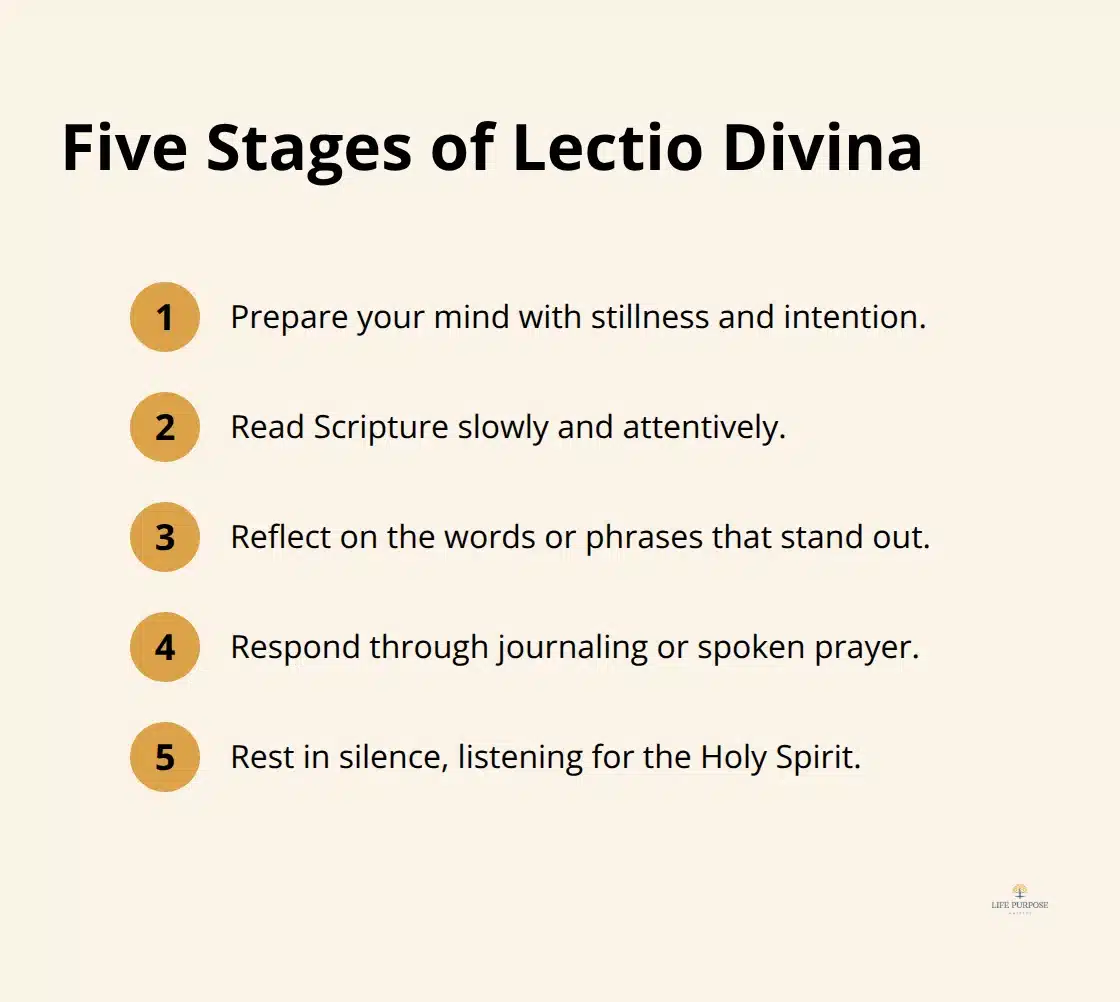
The Five Stages of Lectio Divina
A typical Lectio Divina session moves through distinct stages. You prepare your mind, read Scripture slowly, reflect on what stands out, respond through journaling or prayer, and then rest in silence. The silence matters because that’s where the Holy Spirit often speaks most clearly.
When you practise mindful prayer, you train yourself to hear that voice instead of drowning it out with mental noise.
Intention Creates the Difference
The key difference between mindful prayer and rushed prayer is intention. Rushed prayer treats God like you’re texting a friend between meetings. Mindful prayer treats God like you’re meeting someone you genuinely want to know better, which means you arrive present and alert. The intention piece means you decide before you start what you’re bringing to God. Are you coming with gratitude? Confession? A specific request for guidance? Naming your intention helps your mind stay tethered to the conversation instead of drifting into distraction.
How Presence Changes Everything
Presence in prayer isn’t mystical or complicated. It means when you pray, you actually pray instead of planning dinner or replaying yesterday’s conversation. Research on mindfulness practices shows that people who practise focused attention experience measurable improvements in emotional regulation and stress reduction. When you bring that same focused attention to prayer, your spiritual awareness sharpens.
You notice the tension in your shoulders that signals anxiety you hadn’t acknowledged. You catch the joy bubbling up when you think about God’s faithfulness. You recognise the resistance in your heart when you hold a grudge. These physical and emotional signals are the Holy Spirit’s way of communicating with you.
Creating Consistent Cues for Prayer
Many people find that setting a specific time and place for prayer helps anchor their attention. Dedicate time each morning to focused prayer, lighting a candle or sitting in the same chair to send a signal to your brain that something intentional is about to happen. Your nervous system actually settles faster when you create these consistent cues (a phenomenon neuroscience confirms through studies on environmental conditioning). This foundation of presence and intention prepares you to move into the specific techniques that deepen your connection with the Holy Spirit.
Three Techniques That Actually Work
Breath-Focused Prayer Centres Your Mind
Breath-focused prayer cuts through mental clutter faster than anything else. Sit comfortably and breathe slowly for a full minute before you say anything to God. As you inhale, think “God is present.” As you exhale, release whatever you’re holding onto-worry, resentment, control. Continue this for five to ten breaths. Your nervous system shifts into a calmer state almost immediately because slow breathing activates your parasympathetic nervous system, the part responsible for rest and recovery. After those initial breaths, speak your prayers naturally. Your mind stays anchored because your body is already settled. This technique works especially well in the morning or when anxiety is high.
Lectio Divina Prevents Your Mind From Wandering
Lectio Divina deserves more attention than most Christians give it because the structure actually prevents your mind from wandering. Choose a short Scripture passage, not an entire chapter. Read it aloud slowly, then pause and notice which words or phrases stand out. Read it again, this time asking what God might be saying to you personally about those words. Then respond through writing down insights or praying about what surfaced. Finally, sit in silence for ten minutes without trying to accomplish anything. This isn’t meditation where you empty your mind. This is intentional listening. The silence is where the Holy Spirit communicates most clearly because you’ve stopped talking and started paying attention. A typical session takes thirty minutes. Practise this two or three times weekly rather than daily, because quality matters more than frequency.
Body Awareness Keeps You Honest
Body awareness transforms prayer from something you do in your head into something you experience fully. Notice where you hold tension-shoulders, jaw, chest-and consciously relax those areas as you pray. If sadness surfaces, let tears come instead of pushing them down. If anger emerges, acknowledge it rather than pretending it isn’t there. Your body knows truths your mind sometimes refuses to admit. Physical positioning matters too. Kneeling signals surrender and humility. Standing with palms open signals receptiveness. Sitting upright signals alertness. Choose a position that matches your intention for that prayer session. Some people find that changing positions throughout their prayer helps them access different emotional and spiritual states.
Combining Techniques for Deeper Connection
These three techniques work together to transform your prayer life. Breath-focused prayer centres you. Lectio Divina gives you Scripture to pray. Body awareness keeps you honest about what’s actually happening inside you.
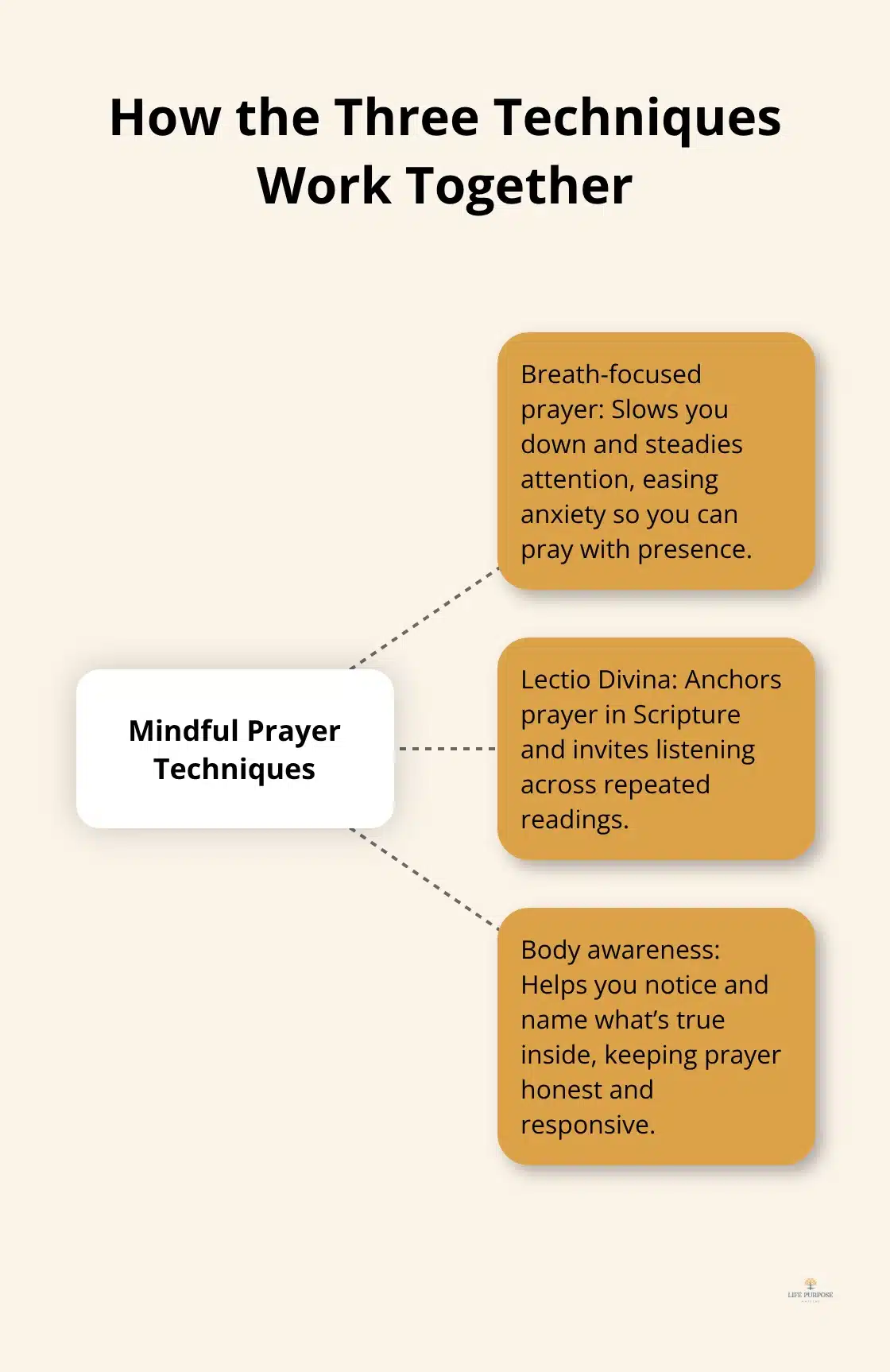
Start with whichever technique feels least intimidating, practise it for two weeks, then add another. Your connection with the Holy Spirit deepens not through complexity but through consistency and genuine presence. Once you establish these foundational practices, the next step involves creating the conditions that allow these techniques to flourish-a dedicated space and a sustainable rhythm that fits your life.
Creating a Prayer Habit That Actually Sticks
Design Your Prayer Space With Intention
The reason most people abandon mindful prayer isn’t that the techniques don’t work. It’s because they try to build the habit without creating the right conditions. You need three things: a physical space that signals prayer time, a realistic frequency that fits your actual life, and strategies for the obstacles you’ll definitely face.
Start with your environment. Your brain responds to location cues, which means praying in the same spot trains your nervous system to shift into a receptive state faster. This doesn’t require a fancy prayer room. A corner of your bedroom, a specific chair in your living room, or even a spot in your car works perfectly. What matters is consistency.
Light a candle, place a journal nearby, and position a water bottle where you can reach it. These small details create a ritual that signals to your mind that something intentional is happening. Research on habit formation from the University of London found that environmental cues reduce the mental energy required to start a behaviour, which means you’ll show up more reliably.
Commit to a Realistic Schedule
Set your prayer time for the same hour each day because your brain loves predictability. Morning works best for most people since your mind stays clearer before the day’s demands pile up. If mornings don’t work, choose a time you can protect consistently.
Three times weekly for thirty minutes beats daily attempts you abandon after two weeks. Quality matters exponentially more than frequency, so commit to what you can sustain for at least ninety days. That’s how long habit researchers say it takes for a new behaviour to feel automatic.
Plan for Predictable Obstacles
The obstacles you face are predictable, so plan for them now. Interruptions happen, so set boundaries with family members about your prayer time and mute your phone during those thirty minutes. Your mind will wander despite your best efforts, so stop fighting that and instead notice when it happens without judgment.
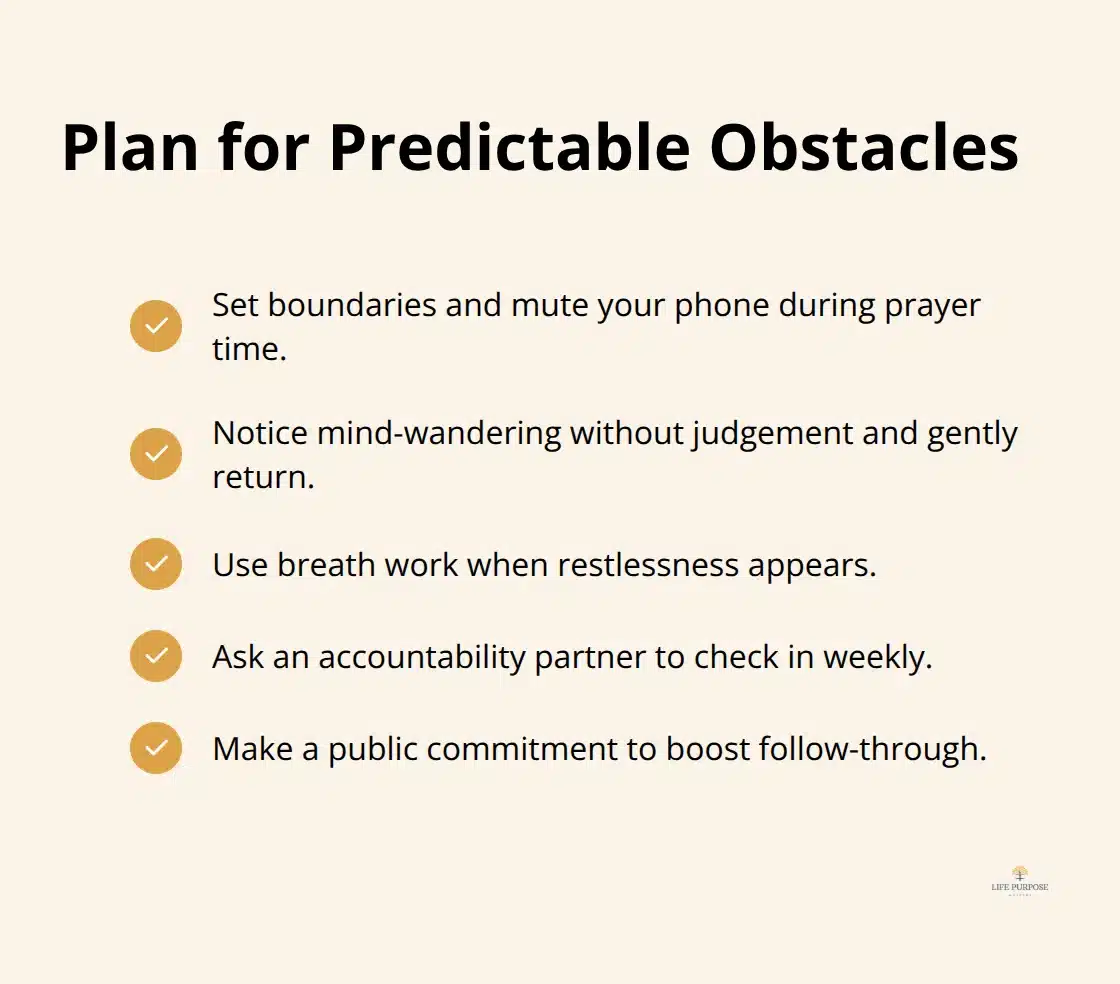
Mental restlessness often signals that your nervous system needs the breath work from earlier chapters more than usual. Fatigue creeps in around week three when the novelty wears off, so that’s exactly when you need an accountability partner. Tell a trusted friend or small group member about your commitment and report back weekly. Studies on goal achievement show that public commitment increases follow-through rates significantly.
Track Progress and Push Through Doubt
Scepticism about whether this actually matters will surface, especially on days when prayer feels dry or mechanical. That’s normal and doesn’t mean your practise is failing. The Holy Spirit works in seasons, sometimes through felt presence and sometimes through faithfulness during the mundane stretches.
Track your prayer sessions on a calendar just to see the pattern emerge over eight weeks. Seeing visual evidence of your consistency rewires the part of your brain that doubts whether this matters. The space is ready, your time is blocked, and you know what obstacles are coming.
Final Thoughts
Mindful prayer practices reshape your spiritual life through honest presence rather than complexity. The breath work settles your nervous system, Lectio Divina anchors you in Scripture, and body awareness keeps you truthful about what happens inside you. These layers work together to help you meet God as you actually are, not as you think you should be.
The transformation unfolds gradually over weeks and months. After four weeks, anxiety loses its grip on you. After eight weeks, you naturally pause to listen instead of rushing through requests. After twelve weeks, prayer becomes the most important conversation in your day, and that shift reflects the Holy Spirit’s work in the space your consistent presence creates.
Protecting what you’ve started matters most. Your prayer space stays consistent, your time stays blocked, and when doubt surfaces (as it will), faithfulness during the dry seasons counts as much as enthusiasm during the exciting ones. Explore Life Purpose Matters for resources designed to support your spiritual journey and help you integrate faith into every area of your life.