

Prayer doesn’t require special words or perfect conditions. At Life Purpose Matters, we’ve created this guide to show you how to pray in ways that fit your life, your beliefs, and your pace.
Whether you’re starting from scratch or returning to a practice you’ve neglected, you’ll find concrete steps, real examples, and a structured plan to build momentum.
What Prayer Actually Is
Prayer is simply talking to God. It’s not a performance, a formula, or something you need to master before you start. Prayer works best when you stop treating it like a test you might fail and start treating it like a conversation with someone who already knows you completely. Christians pray for four core reasons: to express love to God, confess sins, give thanks, and bring concerns to Him. You don’t need formal language or a perfect setting. Speak honestly about what’s on your mind, what hurts, what you’re grateful for, and what you need. God hears every prayer, but not all prayers are answered the way you expect. That’s not a flaw in prayer-it’s part of learning to align your requests with God’s will rather than demanding He align with yours.
Four Ways to Pray
Petition asks God for something you need. Thanksgiving expresses gratitude for what He’s already done. Intercession prays on behalf of someone else. Praise celebrates who God is and what He’s capable of.
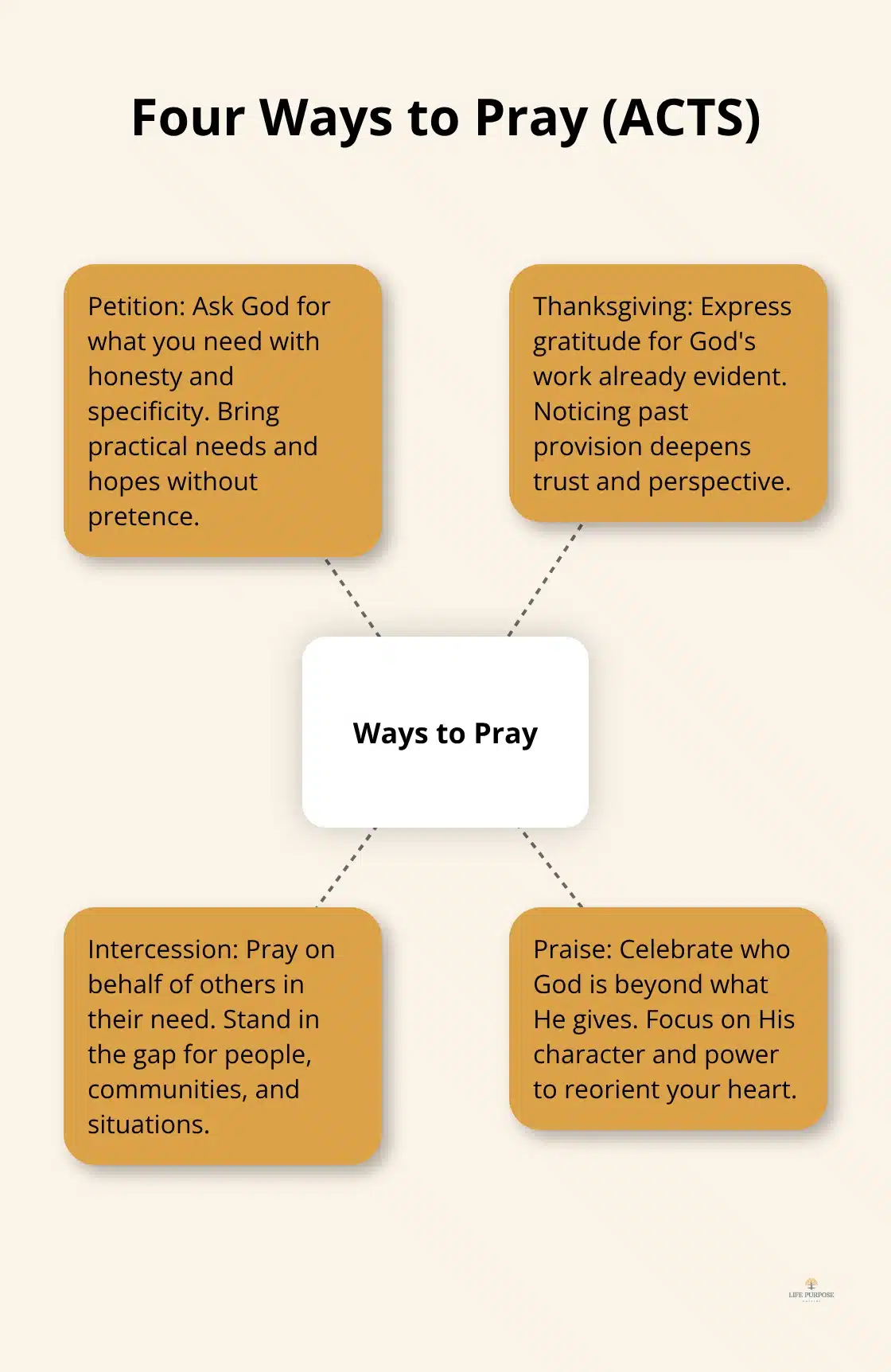
Most beginners focus heavily on petition because it feels natural to ask when you’re stuck, but research on prayer satisfaction shows people experience deeper spiritual growth when they balance requests with gratitude and praise. A practical approach uses the ACTS prayer method: your thumb thanks God for strong things in your life, your index finger represents people who guide you, your middle finger stands for leaders and those in power, your ring finger holds the vulnerable and suffering, and your pinky represents yourself. This structure prevents prayer from becoming a one-sided complaint session and trains your mind to see God’s work across multiple areas of life. You can use this model every time you pray, or rotate through it across different days to keep your practice fresh.
Distraction and Movement
Distraction happens to everyone. Your mind wanders because you’re human, not because you’re doing something wrong. If restlessness derails you, try walking while you pray and notice nature as praise. Movement gives your body something to do while your mind focuses on God. This simple shift transforms what feels like a failure into an active spiritual practice. Many people find that their best prayers happen outdoors or while moving through their day rather than sitting still in silence.
Doubt and Your Access to God
Doubt is another common barrier-wondering if God actually hears you or if your prayers matter. This doubt often stems from feeling like an outsider to God, as if you haven’t earned the right to speak to Him. The truth is that your access to God rests on Jesus’ finished work, not on your feelings or your track record. You approach honestly, thank Him for mercy, and move forward. If guilt makes you hesitant, know that you can have many fresh starts in prayer because Christ’s atonement covers lapses and failures. Each new day offers a clean slate.
Busyness and Life Priorities
A third barrier is busyness. If work or study crowds out prayer, that’s worth examining. Ask whether these commitments truly lead to lasting happiness. Realigning your life with God’s will often means protecting prayer time the same way you’d protect an important meeting. When you treat prayer as non-negotiable rather than optional, you create space for the spiritual growth that sustains you through everything else. This shift in priority opens the door to the practical structures and routines that help prayer become a natural part of your day.
Building Your Prayer Routine
Most people fail at prayer not because they lack faith but because they lack structure. You need a specific time, a specific place, and a format that works for your life. Start with this reality: morning and evening remain the most effective times because they bookend your day and anchor your attention before distractions pile up. If mornings don’t work, choose whatever time you can protect consistently, even if it’s during lunch or after the kids sleep. The time matters less than the commitment. Pick one time and stick with it for at least two weeks before you judge whether it works. Research on habit formation shows that consistency beats perfection, and a short daily prayer far outweighs sporadic marathon sessions. Your brain needs the repetition to rewire itself toward this new practice.
Where You Pray Shapes What Happens
Your physical environment either supports or sabotages your prayer life. Create a dedicated prayer space, even if it’s just a corner of your bedroom with a chair and a small table. Add one or two meaningful items: an open Bible, a candle, a cross, or an icon. These objects signal to your brain that this space is different from the rest of your life. Your nervous system works through environmental cues and repeated location associations. When you sit in the same place repeatedly, your body recognises the cue and settles into the mental state faster. You don’t need a perfect room or a shrine. You need a space where you face fewer interruptions and where you can close a door or step outside.
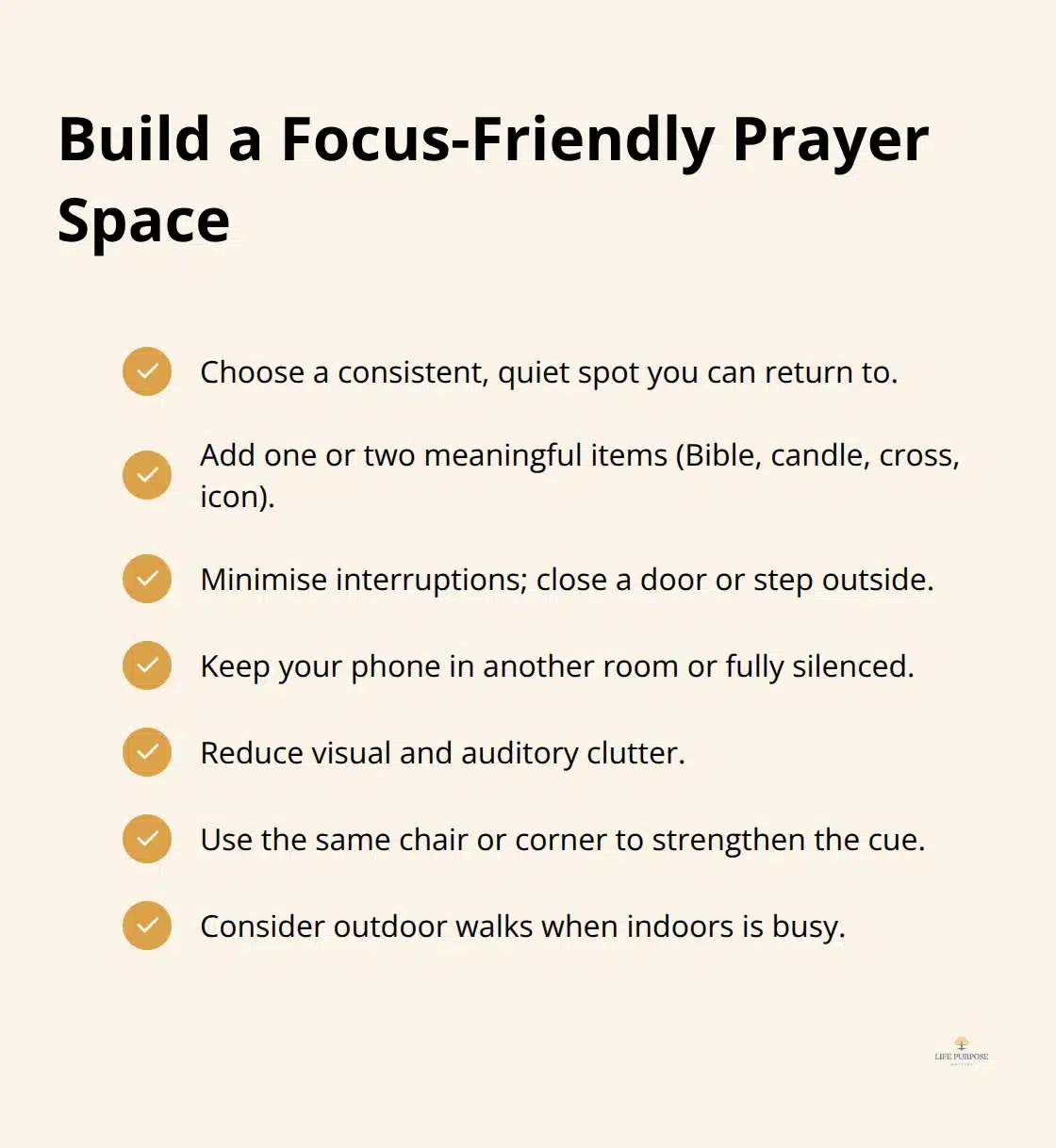
Some of the most effective prayers happen on a walk through your neighbourhood, sitting in a parked car, or in a quiet corner of a coffee shop before it gets crowded. The key is reducing competing stimuli. Your phone should be in another room or silenced completely. Notifications destroy focus, and even the possibility of a message pulls your attention away from the conversation you’re trying to have.
A Simple Framework for Starting
The ACTS structure organises your thoughts without feeling rigid. Spend two minutes on appreciation for what God has done, two minutes naming people who need prayer, one minute on confession or releasing something that weighs on you, and two minutes on your own requests. That’s seven minutes total. You can expand or compress based on your time, but this ratio prevents your prayer from becoming self-centred. Write out your prayers for the first week or two. This forces your brain to slow down and actually think instead of recycling the same vague phrases. Many people find that written prayer accelerates their spiritual growth because writing reveals what you actually believe versus what you think you should believe. After two weeks, you can move to speaking prayers aloud or silently, but the written version builds the neural pathways that make spontaneous prayer feel natural later.
What Comes Next
You now have the tools to establish a consistent prayer routine and overcome the physical and mental obstacles that derail most beginners. The next step moves beyond structure into the actual content of prayer-what you say, how you address God, and how you listen for His response.
Your First Week of Prayer
The structure you’ve built gives you the foundation, but foundation alone doesn’t create momentum. You need a concrete plan for the next seven days that removes guesswork and gives you specific prayers to say when your mind goes blank. This seven-day arc prevents prayer from feeling random and gives your brain a clear progression to follow. Each day has a single theme that builds on the previous one, moving you from gratitude toward action and deeper trust.
The Seven-Day Prayer Arc
Day one focuses on restoration and gratitude for what God has already provided in your life. Day two targets healing for specific hurts or relationships that need repair. Day three shifts toward direction, asking God to reveal His purposes and guidance for you. Day four centres on answered prayers, reviewing what God has already done and building confidence in His responsiveness. Day five emphasises sacrifice and power, surrendering areas where you’re trying to maintain control.
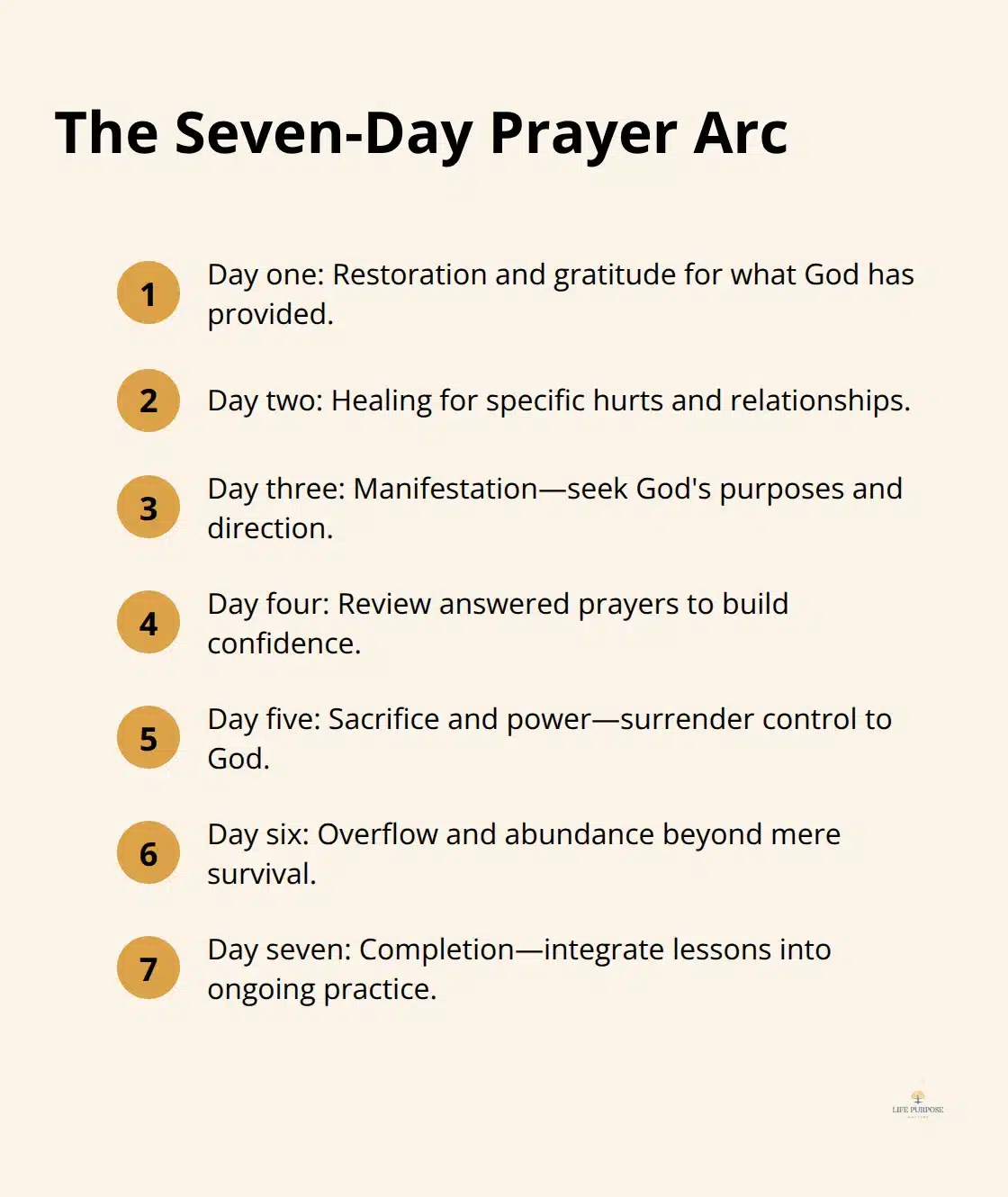
Day six invites overflow and abundance, expanding your vision beyond survival to flourishing. Day seven brings completion, integrating the week’s lessons into your ongoing practice.
Set a specific window each day, ideally the same time, and protect it the same way you would an important appointment. This consistency creates a physical anchor that your body recognises, strengthening the neural pathways associated with prayer.
Days One Through Four: Foundation and Confidence
On day one, pray for three specific people or areas in your household that need restoration. Write their names and one concrete need next to each. Read Genesis 1:31, where God saw His creation and called it very good. Spend two minutes thanking God for what is already good in these relationships or situations. Name the specific hurt or disconnection. Ask God to restore what has been broken and to show you one action you can take this week toward healing.
On day two, use Psalm 147:3, which states that God heals the brokenhearted and binds up their wounds. Identify one wound, physical or emotional, that you carry. Speak it aloud to God without editing or minimising it. Ask Him to bring healing and to guide you toward people or resources that support that healing.
On day three, read Matthew 6:10 and pray that God’s kingdom come and His will be done in your specific life circumstances. Write down three areas where you feel uncertain about God’s direction, then spend time listening rather than talking. Silence matters here. Your job is to notice what comes to mind without judgment.
On day four, look back at answered prayers from your past, even small ones. Write down three specific times God responded to you. Spend your prayer time expressing gratitude for these concrete answers, which rewires your brain to recognise God’s activity rather than focusing only on unmet requests.
Days Five Through Seven: Surrender and Integration
On day five, identify one area where you’re holding tight to control instead of trusting God. This might be finances, a relationship, your career, or your health. Confess this to God and ask for the courage to release it. This act of surrender shifts your posture from demanding answers to opening yourself to His guidance.
On day six, pray boldly for increase, abundance, and flourishing in areas that matter to you. Don’t minimise your requests. God responds to specificity. Ask for financial stability, deeper relationships, meaningful work, spiritual gifts, or whatever reflects genuine desire. This day trains you to expand your vision beyond mere survival.
On day seven, review the week and identify one shift you noticed in yourself. Did your perspective change? Did you feel closer to God? Did you take action you wouldn’t have taken otherwise? Write this observation down and commit to one practice you’ll continue beyond this week.
Final Thoughts
You’ve now moved from viewing prayer as something mysterious or distant to understanding how to pray as a straightforward conversation with God. The seven-day plan you completed wasn’t meant to be a one-time exercise but rather a template that shows you prayer works best when it follows a rhythm, addresses real needs, and builds on itself day after day. Consistency matters far more than perfection, and a five-minute prayer spoken honestly beats an hour of formal words that don’t reflect what you actually believe or feel.
Your prayer life will shift and change across different seasons. Some seasons will feel full of clarity and connection, while other seasons will feel dry or distant (both are normal). When doubt creeps in, return to the basics: find your quiet space, pick your time, and speak what’s true. The barriers you faced this week won’t disappear permanently, but you’ve already practised moving through them and built the structure that supports your practice even when motivation fades.
We at Life Purpose Matters believe that prayer forms the foundation for discovering and living out your God-given purpose. Visit Life Purpose Matters for additional resources, community, and faith-based encouragement as you continue this journey. Your prayer practice deepens, expands, and becomes woven into how you make decisions, relate to others, and understand your place in God’s larger story.