

Silence after an argument can stretch on for minutes that feel like hours — both people hurt, both waiting for the other to speak first, both too tired or too proud to make the first move. It’s one of the most familiar scenes in any long-term relationship, Christian or not.
At Life Purpose Matters, we’ve learned that Christian relationship communication isn’t about avoiding conflict-it’s about facing it with honesty, grace, and faith. When you speak truth in love and listen with genuine care, something shifts. Your connection deepens, and your relationship becomes a reflection of your shared values.
The Foundation of Honest Christian Communication
Speaking Truth in Love Changes Everything
Truth without love is brutality, and love without truth is deception. Ephesians 4:15 calls us to speak truth in love, and this isn’t a gentle suggestion-it’s the core of how Christian couples should communicate. The Gottman Institute found that couples who maintain a five-to-one ratio of positive to negative interactions experience significantly stronger long-term stability. This means you need five kind words, gestures, or moments of genuine connection for every critical remark. Most Christian couples fail here because they confuse honesty with harshness.
When you address a real issue-the money spent without discussion, the hurtful comment made in front of friends, the broken promise-you do it with respect and care for the person you’re addressing. Start with what matters: I need to tell you something because our relationship matters to me and I respect you. That single shift changes everything. Your spouse hears that you care about them, not just about winning the argument.
Active Listening Prevents Endless Misunderstanding
Active listening prevents misunderstanding by creating genuine connection. Instead of planning your response while your spouse talks, you pause and say what you heard: So what I’m understanding is that you felt unheard when I made that decision without asking you first. Is that right? Let them correct you. This simple practice prevents the endless cycle where both people feel misunderstood.
Prayer Shifts You From Winning to Solving
Prayer before and during difficult conversations isn’t mystical-it’s practical. When you pray together about a conflict, you essentially agree that you’re on the same team working toward the same goal: healing and closeness. Prayer shifts you from winning the argument to solving the problem together. Schedule these conversations intentionally. The Gottman Institute recommends weekly or biweekly check-ins where you discuss feelings, needs, and boundaries in a structured way, free from distractions. No phones, no kids interrupting, no background noise. Set a time limit-30 minutes works-and stick to the agreement.
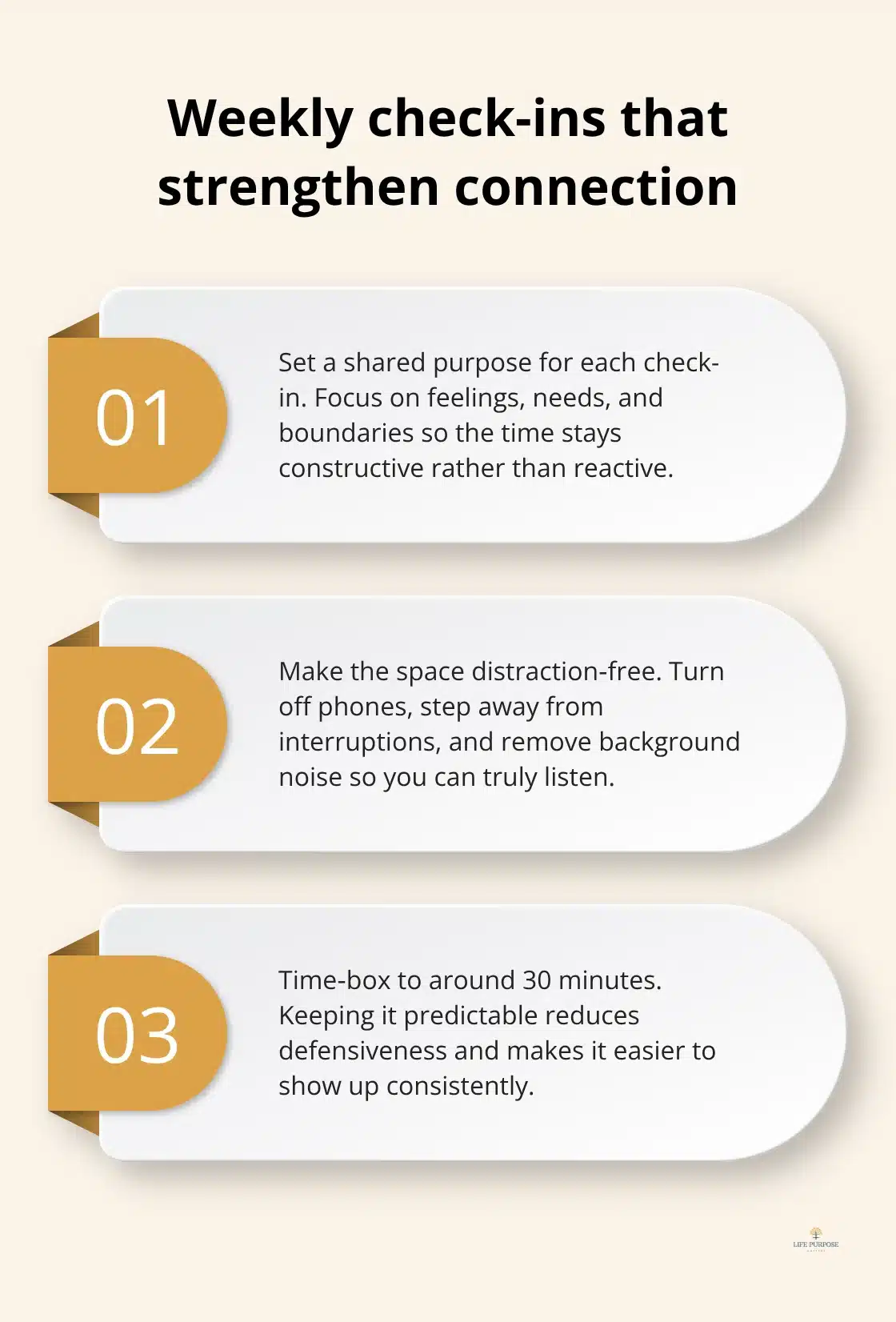
This removes the surprise factor that makes people defensive and creates space where vulnerability feels safer.
These foundational practices prepare you to face the obstacles that actually derail Christian couples. Pride, defensiveness, and unresolved hurt often hide beneath the surface, waiting to sabotage even the most well-intentioned conversations.
What’s Really Blocking Your Honest Conversations
Pride Disguises Itself as Protection
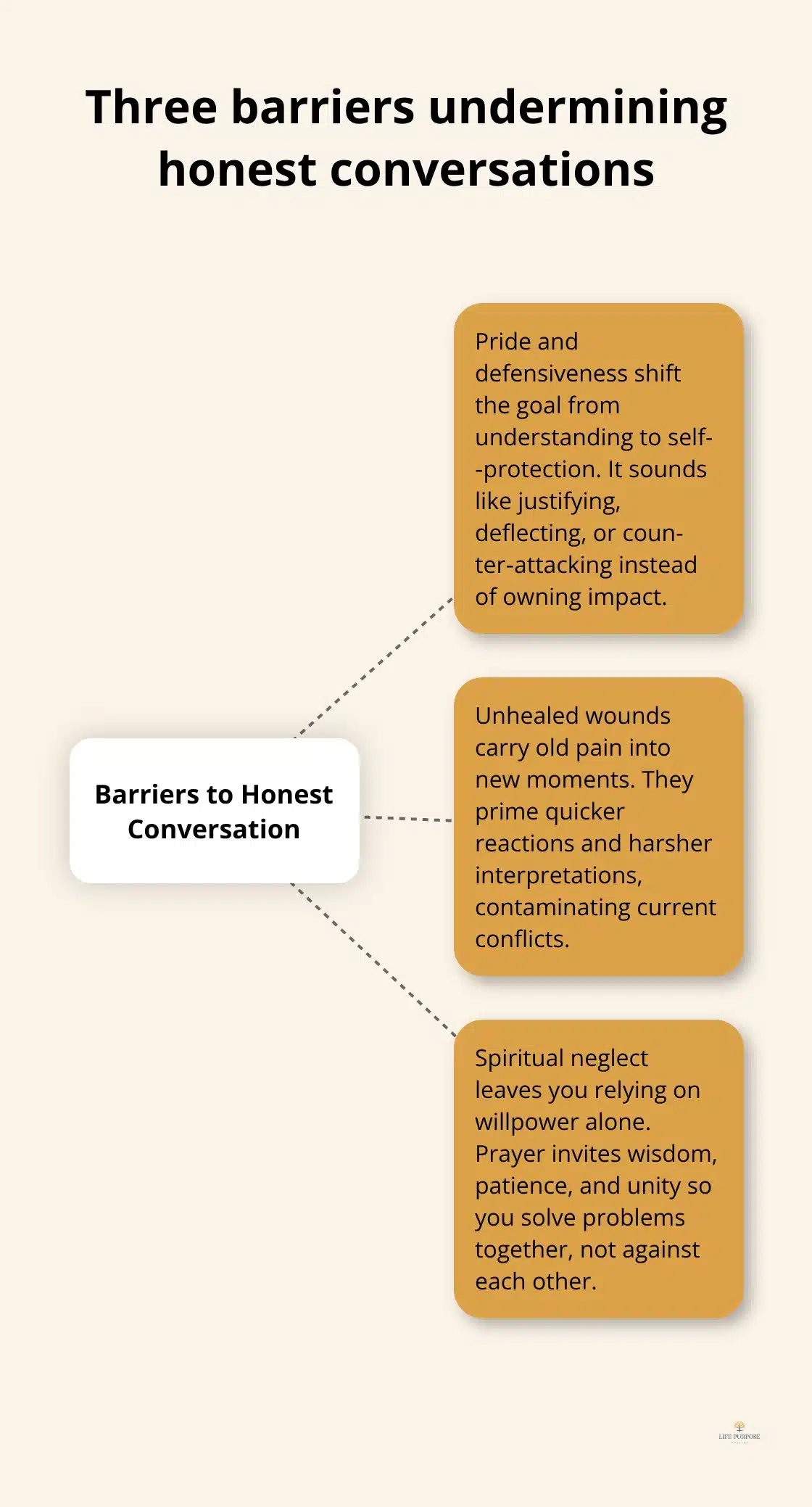
Pride masquerades as protection. When your spouse brings up something you did wrong, your first instinct is to defend yourself, explain your reasoning, or point out what they did wrong first. This defensiveness is actually fear dressed up as strength. According to the Gottman Institute, defensiveness is one of the four horsemen that predicts relationship breakdown. It sounds like this: “I only did that because you…” or “You always make me feel like…” The moment you add that because or that always, you’ve shifted from solving the problem to protecting your ego. What you’re really saying is that your comfort matters more than understanding your spouse.
Stop doing this. When your spouse raises an issue, your job is to understand why it hurt them, not to prove you were justified. Say this instead: “Tell me more about how that affected you.” Then actually listen. Your pride wants to win; your marriage needs you to connect.
Unhealed Wounds Contaminate Every Future Conflict
The second barrier is old hurt that never healed. If your spouse broke a promise three years ago and you never fully addressed it, that wound sits in your chest like a stone. Every future conflict becomes contaminated by that old pain. You snap faster, interpret their words more harshly, and assume the worst. Research shows that ongoing pressure, unresolved stress, or repeated emotional strain can influence muscle tension, hormone levels, and the nervous system over time, making you more reactive and less able to communicate clearly.
You cannot build honest communication on top of unhealed wounds. This requires courage. Sit down and say: “I realise I’m still hurt about what happened with [specific situation], and I haven’t really let it go. I need to talk about it so we can move past it together.” Then describe what happened, how it made you feel, and what you needed from them in that moment. Let them respond. This conversation might feel uncomfortable, but it’s the only way forward.
Spiritual Preparation Changes the Entire Dynamic
The third barrier is approaching difficult conversations without spiritual preparation. Too many Christian couples jump into conflict resolution mode without first asking God for wisdom, patience, and clarity. James 1:5 tells us that if any of you lacks wisdom, you should ask God. Before you bring up the money argument, the parenting disagreement, or the hurt feelings, pray.
Pray alone first. Ask God to soften your heart, calm your defensiveness, and help you see your spouse the way He sees them. Then, if possible, pray together before the conversation. This shifts the entire dynamic from adversarial to collaborative. You’re inviting God into the room instead of treating the conflict as something you two need to battle out alone.
When you pray first, you’re more likely to choose words that build up instead of tear down. You’re less likely to bring up past failures. You’re more likely to listen instead of interrupt. The difference between couples who pray before difficult conversations and those who don’t is measurable in how quickly they resolve issues and how connected they feel afterward.
These three barriers-pride, unhealed hurt, and spiritual neglect-explain why so many Christian couples struggle to communicate honestly. But identifying the problem is only half the battle. The real transformation happens when you move from understanding what blocks you to actually implementing the strategies that break through those barriers.
How to Actually Build Safe Ground for Honest Conversations
The gap between knowing you should communicate honestly and actually doing it is where most Christian couples get stuck. You understand the principles. You know pride blocks you. You recognise that unhealed wounds contaminate everything. But when your spouse brings up the thing that’s been bothering them, or when you need to address something difficult, the mechanics of having that conversation still feel impossible. The solution isn’t more biblical knowledge-it’s concrete structure.
Design the Physical and Mental Conditions for Vulnerability
Safe conversations don’t happen by accident. They happen because you deliberately design the conditions that make vulnerability possible. Start by removing what the Gottman Institute calls the four horsemen from your physical space: defensiveness, contempt, stonewalling, and criticism. This means you choose a time when neither of you is exhausted, hungry, or distracted by work stress. The American Psychological Association emphasises that asking questions that show you are listening can be one of the best ways to make a conversation, and you cannot listen actively when you’re running on fumes.
Schedule the conversation like you’d schedule anything else that matters. Text your spouse: “I’d like to talk about something important on Thursday evening after dinner. Can we set aside 30 minutes?” This accomplishes three things at once. First, it removes the ambush factor that triggers defensiveness. Second, it gives both of you time to prepare mentally and spiritually. Third, it signals that you take the conversation seriously enough to plan for it.
Establish Ground Rules That Protect Understanding
When you sit down, establish one rule before you start: no phones, no interruptions, no bringing up past failures. Scripture in Proverbs 18:13 warns that answering before listening is folly and shame. This means one person speaks while the other listens without planning their response.
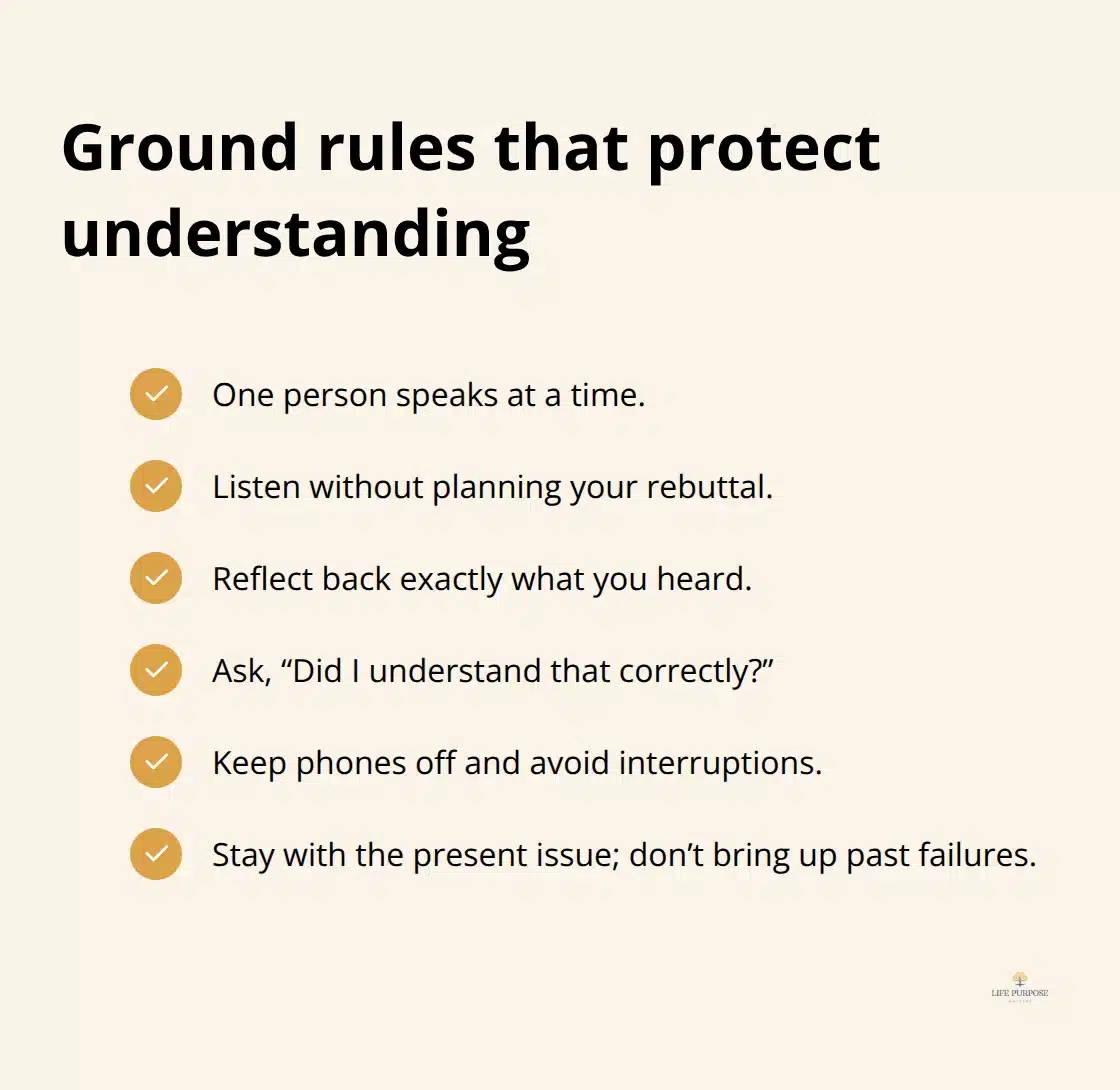
After they finish, you repeat back what you heard-not what you think they meant, not what you think they should have said, but exactly what you heard. Then ask: “Did I understand that correctly?” Let them correct you. This single practice stops the endless loop where both people feel misunderstood because you’re actually confirming understanding instead of assuming it.
Use Scripture as a Mirror, Not a Weapon
Use Scripture not as a weapon to prove your point but as a mirror to examine your own heart first. Before you address what your spouse did wrong, ask yourself what Ephesians 4:29 actually requires from you: Do my words build them up or tear them down? Are they good for edifying, suitable for the occasion? If your words are meant to shame them into changing, they will fail. When you’ve hurt your spouse, acknowledge the hurt, take responsibility, and commit to change. This structure works both directions. When they’ve hurt you, this is what you’re listening for.
Follow Up With Accountability and Repair
After the conversation, don’t just move on. Schedule a follow-up check-in one week later. Ask: “How are we doing with what we talked about? What’s one thing I did well, and what’s one thing I could do better?” This isn’t endless processing. It’s accountability that keeps you both moving toward the change you committed to. When you don’t know how to answer a difficult question, thank them for asking, commit to researching it, and follow up later-that honesty builds credibility far faster than pretending certainty you don’t have. The couples who thrive aren’t the ones who never fight. They’re the ones who have a system for fighting well and then repairing what broke.
Final Thoughts
Honest Christian relationship communication isn’t something you master and then forget about-it’s a practice that deepens your faith journey because it forces you to live out what you claim to believe. Every time you choose respect over defensiveness, listen instead of interrupt, or pray before speaking harshly, you demonstrate that your faith actually shapes how you treat the person you love most. That’s not theoretical Christianity; that’s real faith with skin on it.
The couples who build lasting connections aren’t the ones with perfect communication. They’re the ones who keep showing up, keep trying, and keep inviting God into their conversations, learning that Christ-centred dialogue means treating their spouse the way Jesus treated people: with patience, with truth, and with relentless love even when it’s hard. When you approach your relationship this way, your spouse stops feeling like an opponent and starts feeling like a partner, and your conflicts become opportunities to know each other better instead of battles to win.
If your relationship needs help, start small by picking one practice from what you’ve read here-maybe scheduling a weekly check-in, maybe praying before difficult conversations, or maybe simply repeating back what your spouse said before you respond. One change creates momentum, one honest conversation opens the door for the next one, and one moment of choosing connection over being right changes your entire relationship trajectory. We at Life Purpose Matters believe your relationship is one of the most important expressions of your faith, so visit Life Purpose Matters to explore more resources designed to help you live out your God-given purpose in every area of your life, including your most important relationships.