

Last year, I met someone who couldn’t sleep because of credit card debt. She’d lie awake calculating interest payments instead of resting. Sound familiar?
At Life Purpose Matters, we believe debt elimination strategies don’t have to feel like punishment-they can align with your faith and values. This guide shows you how to break free financially while honouring God and your budget.
What Scripture Actually Says About Debt
Debt Is Not the Sin-Broken Promises Are
The Bible addresses debt around 10 to 12 times, and here’s what most people misunderstand: roughly 90 percent of those verses focus on how you should respond to debt, not whether debt itself is sinful. That distinction matters enormously. Scripture doesn’t declare debt inherently evil, but it does warn against the trap of borrowing without a solid plan to repay. Exodus 22:14 and Leviticus 25:37 establish a clear principle-if you borrow, you repay. Period. If what you borrowed gets damaged or lost, restitution follows. This isn’t about shame; it’s about integrity.
Deuteronomy 15:6 and Deuteronomy 28:12 flip the script entirely: obedience to God’s commands can position you to lend rather than borrow, shifting you from a position of constraint to one of generosity. The borrower is slave to the lender, and that’s not metaphorical language meant to scare you. It’s practical wisdom. Debt strips your freedom and dictates where your money goes each month.
How Debt Postpones Your Calling
Debt often postpones the God-given purposes you’re meant to pursue. When you’re stressed about minimum payments and interest compounding monthly, your mental bandwidth shrinks. You can’t think clearly about your calling or your family’s needs because anxiety occupies that space. The Bible warns against presuming on the future without seeking God’s will, and debt often represents exactly that-spending money you don’t yet have on things you don’t yet own. James 4:13 to 15 addresses this directly: don’t plan your financial future as if God isn’t part of the equation.
The Spiritual Cost of Financial Bondage
Carrying debt affects your sleep, your relationships, and your ability to hear God’s voice in your life. Debt also creates a practical barrier to generosity. If your income is already committed to creditors, you can’t respond when someone needs help or when your church needs support. Financial bondage becomes spiritual bondage because your resources aren’t yours to steward-they belong to whoever holds your debt.
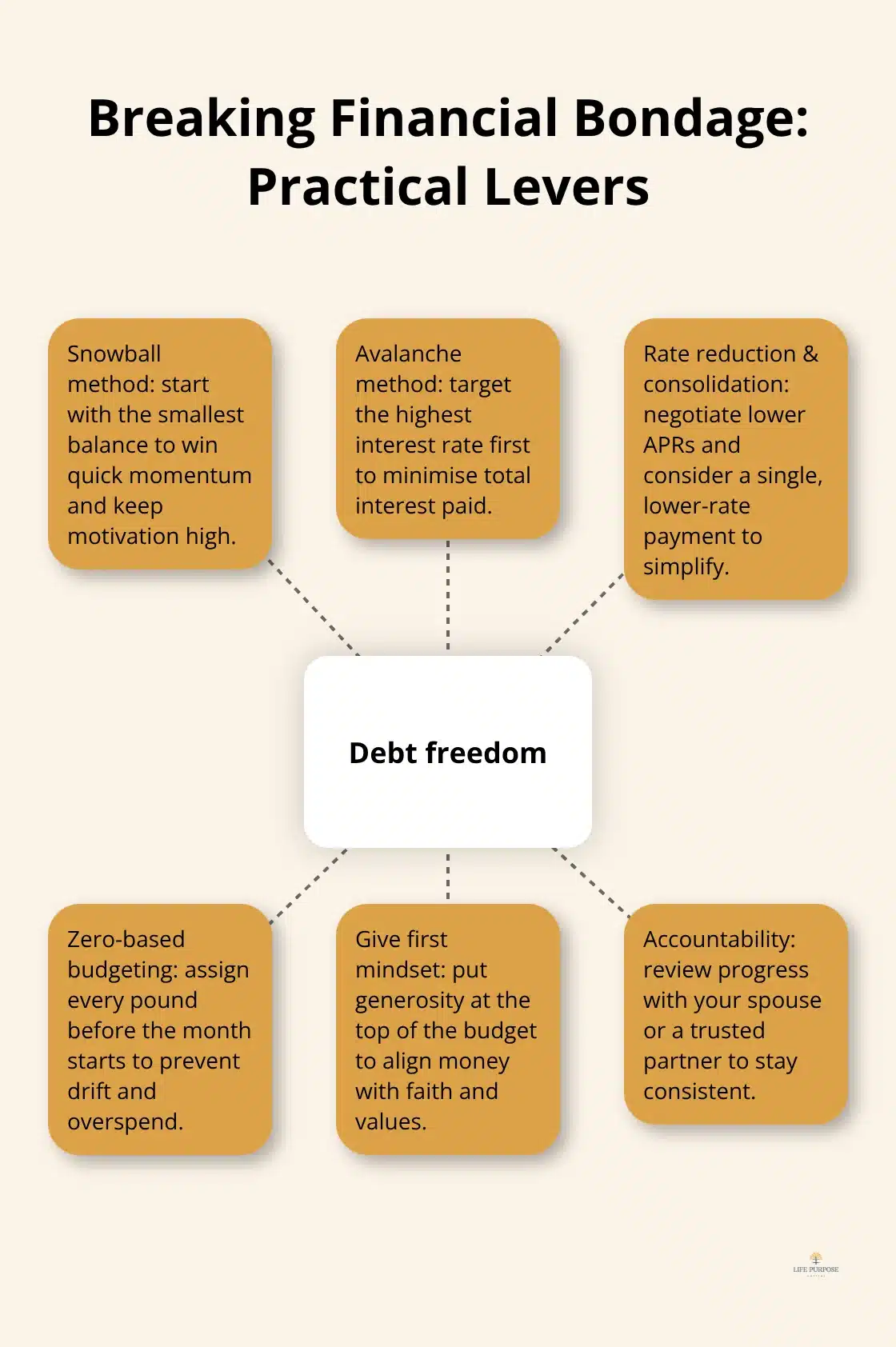
This reality explains why debt elimination isn’t just a budget problem; it’s a freedom problem that demands both practical action and spiritual realignment. Understanding what Scripture says about debt sets the foundation for the elimination methods that actually work.
Practical Debt Elimination Methods
The Snowball Method Builds Momentum Fast
The snowball method targets your smallest debt balance first, regardless of interest rate. You pay minimums on everything else, then attack that smallest balance with any extra money you find. Dave Ramsey popularised this approach, and it works because humans need visible progress. When you eliminate a debt completely within weeks or months, your brain releases dopamine, and motivation carries you forward to the next one. Research shows this psychological win matters more than the math in many cases. You see a debt disappear entirely, and that momentum propels you through the remaining balances. The snowball method works best if you’ve struggled with motivation in the past or if your debts are relatively modest in size.
The Avalanche Method Saves the Most Money
The avalanche method takes the opposite approach by targeting your highest-interest debt first, which mathematically saves you the most money over time. According to Investopedia, this method minimises total interest paid across all debts, sometimes saving thousands of dollars. However, the avalanche requires patience because your highest-interest debt might carry a large balance that takes months to eliminate. That delayed gratification breaks many people’s commitment before they reach the finish line. Choose the avalanche only if you have strong discipline and can sustain effort for six months or longer without seeing a debt completely eliminated.
Negotiate Lower Rates and Explore Consolidation
Creditors will often negotiate lower interest rates if you ask directly, especially if you’ve maintained decent payment history. The Consumer Financial Protection Bureau reports this reality clearly. Call your credit card company, explain your situation honestly, and request a rate reduction-worst case, they say no, but many creditors reduce rates by 2 to 5 percentage points just for asking.
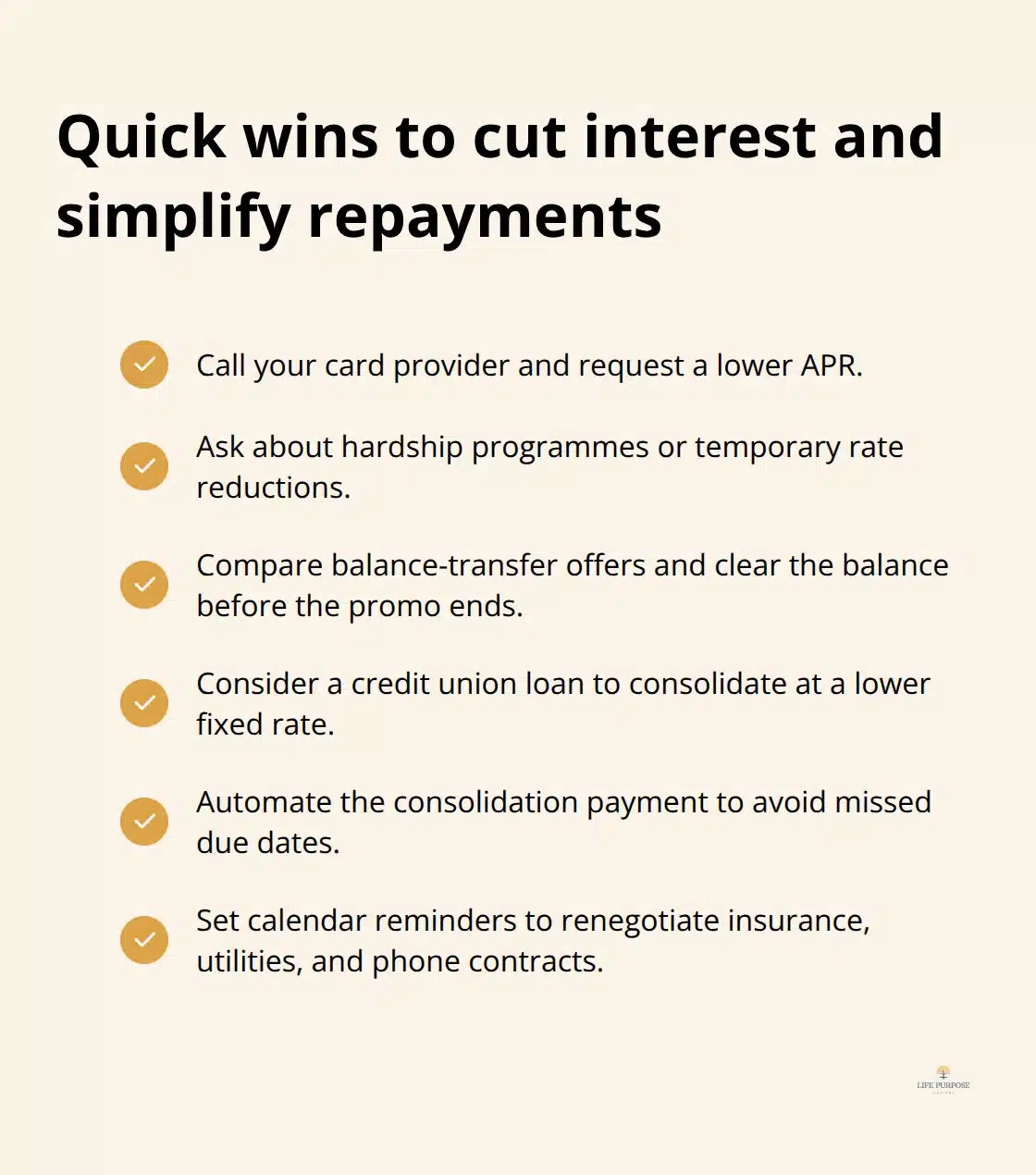
Debt consolidation works by combining multiple debts into a single loan with one payment and ideally a lower interest rate. A balance-transfer credit card with a 0 percent introductory period can work if you have good credit and can pay off the balance before the promotional rate expires (typically within 6 to 21 months). Personal loans from banks or credit unions often carry lower rates than credit cards, making them viable for consolidation. However, consolidation while still charging creates a dangerous cycle that extends your payoff timeline indefinitely. Automate your monthly consolidation payment to prevent missed payments and late fees that destroy your progress.
These methods provide the tactical foundation for debt elimination, but they only succeed when paired with a budget that reflects your values and protects your future commitments.
How to Budget When God Comes First
Start With Giving, Not Debt
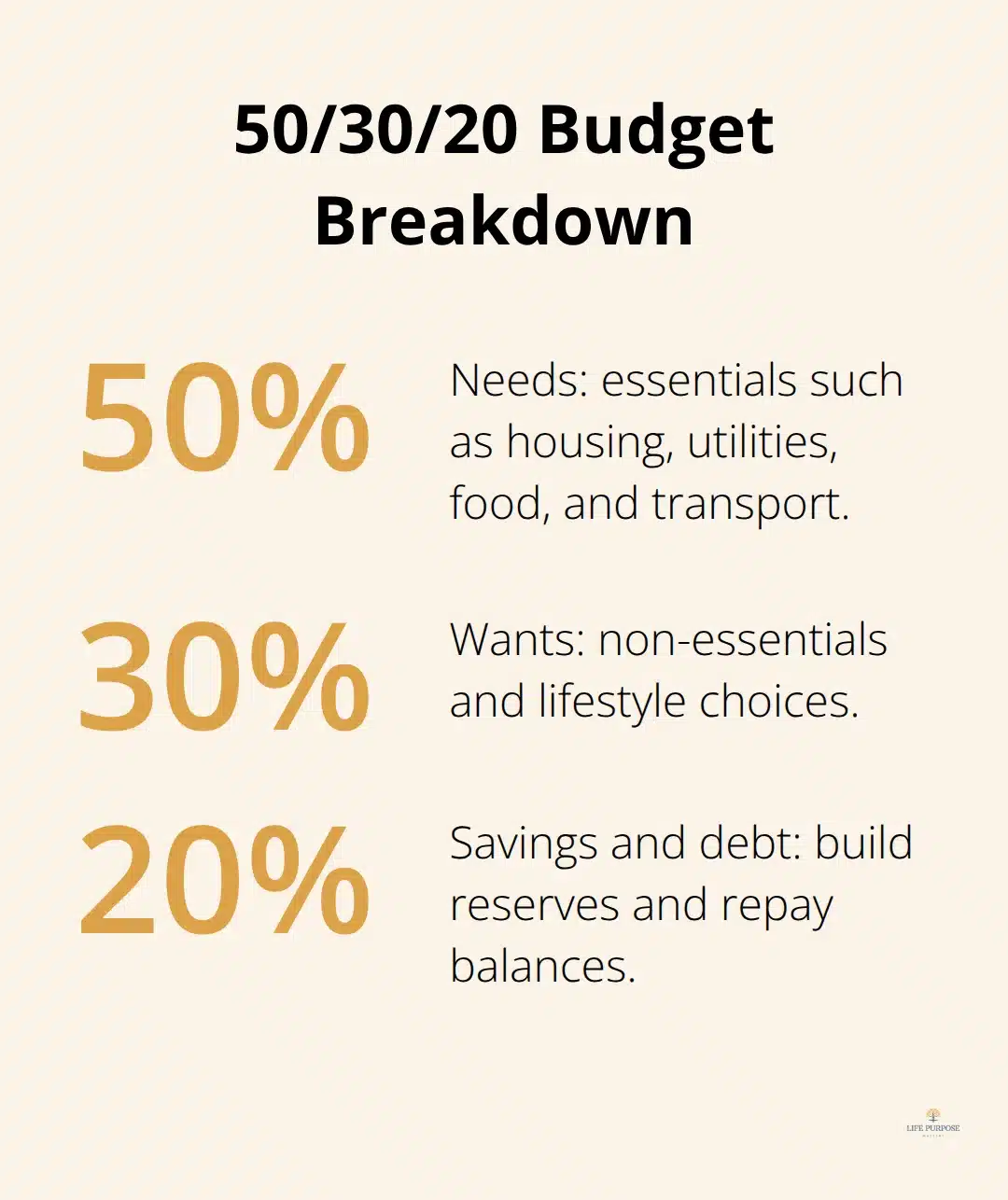
Building a budget that actually works means starting with a radically different priority than most financial advice teaches. Instead of listing your debts first, your giving comes first. Proverbs 3:9-10 frames this clearly: honour God with your wealth, and your barns will overflow. This isn’t magical thinking-it’s a psychological reset. When you allocate funds to giving before debt payments or savings, you stop viewing your income as yours to manage and start viewing it as God’s to steward. The 50/30/20 framework popularised by Elizabeth Warren in All Your Worth provides structure: fifty percent of after-tax income covers needs, thirty percent covers wants, and twenty percent covers savings and debt. However, a God-honouring adjustment works better: allocate a percentage to giving first (typically five to ten percent), then rebuild the percentages around what remains.
Your giving commitment, even if small, anchors your entire budget to something beyond yourself.
Cut Discretionary Spending and Renegotiate Bills
After you establish giving, attack your budget with brutal honesty about discretionary spending. Research shows households can typically cut discretionary spending without lifestyle collapse. Stop there and track those cuts for one month-most people discover they don’t miss what they eliminated. Next, renegotiate recurring bills that hide in the background. Call your insurance company, utility provider, and phone carrier with a simple question: what’s your lowest available rate? Insurance costs account for around 20 percent of mortgage costs, so asking about discounts matters. These conversations take thirty minutes total and free up cash immediately for debt payments without requiring willpower or sacrifice.
Implement Zero-Based Budgeting and Automate Payments
The zero-based budget method forces every dollar into a category before the month starts, which prevents the drift that kills most budgets. Every dollar has a purpose: giving, essentials, debt, savings, or a small discretionary allowance. Tools like YNAB (You Need A Budget), EveryDollar, or even a simple spreadsheet work equally well-the tool matters less than the discipline of assigning each dollar. Set your debt payment as a non-negotiable line item equal to your giving commitment, not something that happens only if money remains. Automate both your giving and debt payments on payday so they happen before you see the money in your account. Automation prevents the temptation to redirect funds and ensures you honour your commitments consistently.
Align Goals With Your Spouse and Build Emergency Reserves
If you’re married, align these goals with your spouse through honest monthly budget meetings where you discuss spending without blame. Research shows couples who review budgets together experience less financial conflict and accelerate debt payoff timelines significantly. Build a modest emergency fund of one thousand dollars before aggressively targeting debt beyond minimum payments, according to guidance from the Consumer Financial Protection Bureau and the National Foundation for Credit Counselling. This prevents new debt when unexpected expenses hit. When you eliminate one debt completely, pause and acknowledge the progress before rolling that payment amount into the next target. Your budget isn’t punishment; it’s the structure that transforms chaotic spending into purposeful stewardship aligned with what matters most.
Final Thoughts
Debt elimination strategies work best when they’re rooted in something deeper than spreadsheets and payment plans. You’ve now seen how Scripture frames debt not as moral failure but as a practical constraint on your freedom, and how the snowball and avalanche methods provide the tactical tools to break that constraint. The real power emerges when you combine these methods with a budget that puts God first, not as an afterthought. Financial obedience sounds abstract until you experience it-when you stop sleeping poorly because of credit card anxiety, when you can respond to someone in need without checking your available credit, when your spouse stops arguing about money because you’re aligned on priorities, that’s when obedience becomes tangible.
Freedom isn’t the absence of a budget; it’s the presence of choice. Debt steals choice, and a God-honouring budget restores it. Your next financial decision matters more than you think. Before you borrow, ask whether you have a solid plan to repay; before you spend, ask whether it aligns with your values; before you ignore a creditor, ask whether you’re honouring your commitment.
You don’t need perfection to start this journey. You need honesty about where you are and commitment to where you’re going. If you’re married, have that conversation with your spouse this week; if you’re single, find an accountability partner who shares your faith; if you’re stuck, reach out to a credit counsellor through the National Foundation for Credit Counselling or explore faith-based financial guidance that integrates your spiritual values with practical money management.