

Lola thought she had faith figured out after years of church attendance. Then life hit hard with job loss and family illness, revealing how shallow her spiritual roots actually were. Many believers mistakenly equate religious activity with genuine spiritual maturity. Growing in Christian spiritual maturity is a lifelong process of developing a deeper relationship with God, becoming more like Jesus, and being transformed by the Holy Spirit. It involves striving for qualities like faith, knowledge, self-control, and love, while being more dependent on God and less on oneself. Key aspects include surrendering one’s will to God, living a life of freedom from sin, and demonstrating characteristics such as humility, forgiveness, and generosity.
At Life Purpose Matters, we regularly encounter this confusion among individuals seeking a deeper faith; regular attendance in church, while it helps, does not equate to spiritual growth. We believe that true spiritual growth shows itself through specific, measurable changes in how we respond to life’s challenges and relate to others.
What Does Real Spiritual Maturity Look Like
Growing in Christian spiritual maturity is important for strengthening your relationship with God, enhancing your ability to serve others, and building resilience against trials. A mature believer becomes more like Christ, exhibiting qualities such as love, patience, and self-control, which helps them avoid sin and foster unity within the church. This growth is a lifelong process that ultimately equips believers to glorify God and participate in His mission on Earth.
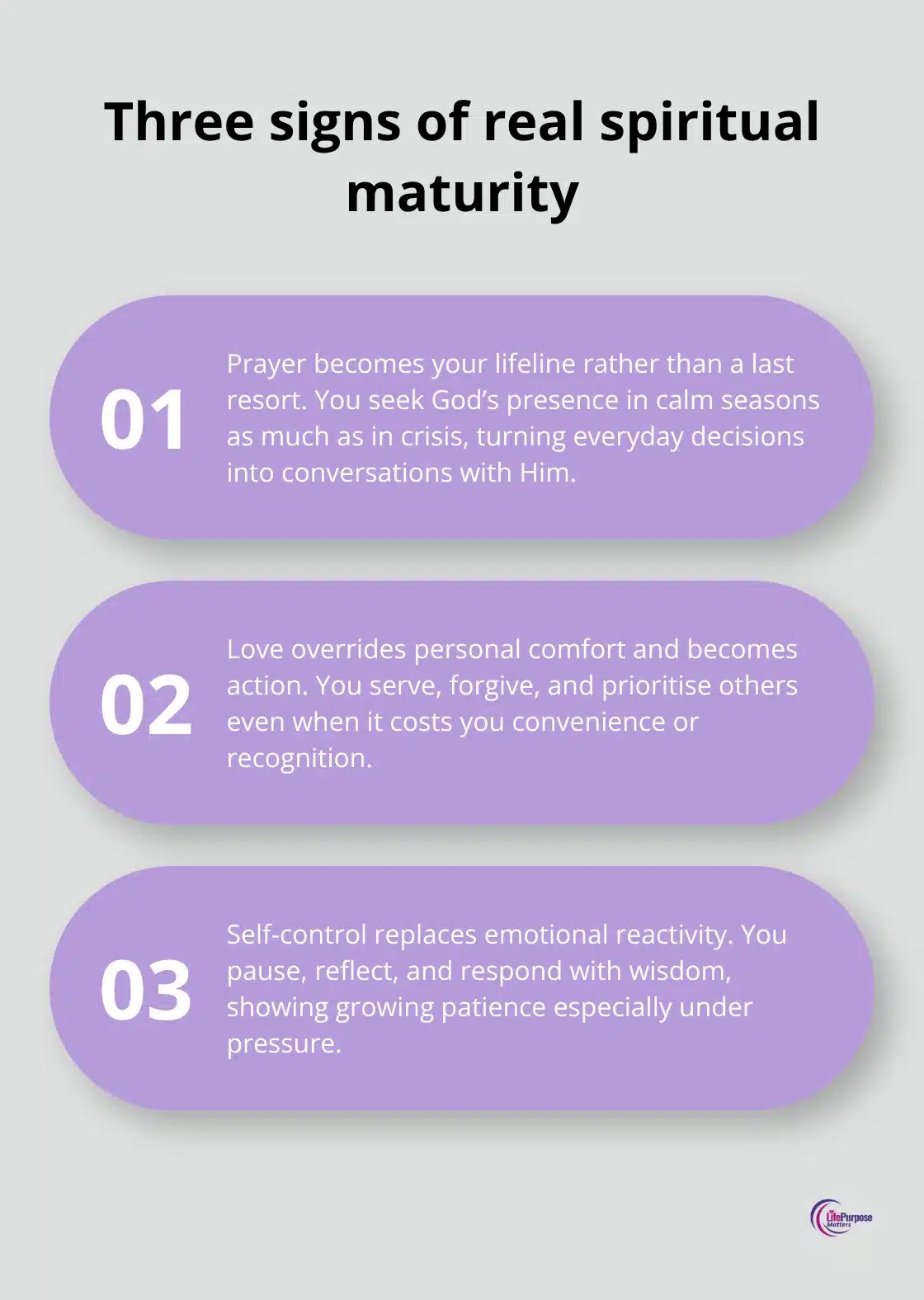
Spiritual maturity reveals itself through three unmistakable patterns that separate genuine believers from those who merely go through religious motions. While extensive research has been conducted on spiritual practices and their benefits, your prayer life transforms from a shopping list of requests to intimate conversations with God, while Bible study shifts from obligation to hunger for wisdom.
Prayer Becomes Your Lifeline
Mature believers pray differently from spiritual beginners. Instead of treating God like a cosmic vending machine, they seek His presence even when life runs smoothly. Research shows that consistent spiritual practices, including regular prayer, contribute to better mental health outcomes during stressful periods. You start to ask God for guidance before you make decisions rather than ask for help after you make mistakes.
Love Overrides Personal Comfort
Spiritual maturity shows when you choose compassion over convenience. Mature Christians serve difficult people without expecting gratitude, forgive before they receive apologies, and prioritise others’ needs above personal preferences. The Barna Group found that spiritually mature individuals volunteer 2.5 times more hours weekly than average churchgoers. Your love becomes action-based rather than feeling-dependent.
Self-Control Replaces Emotional Reactions
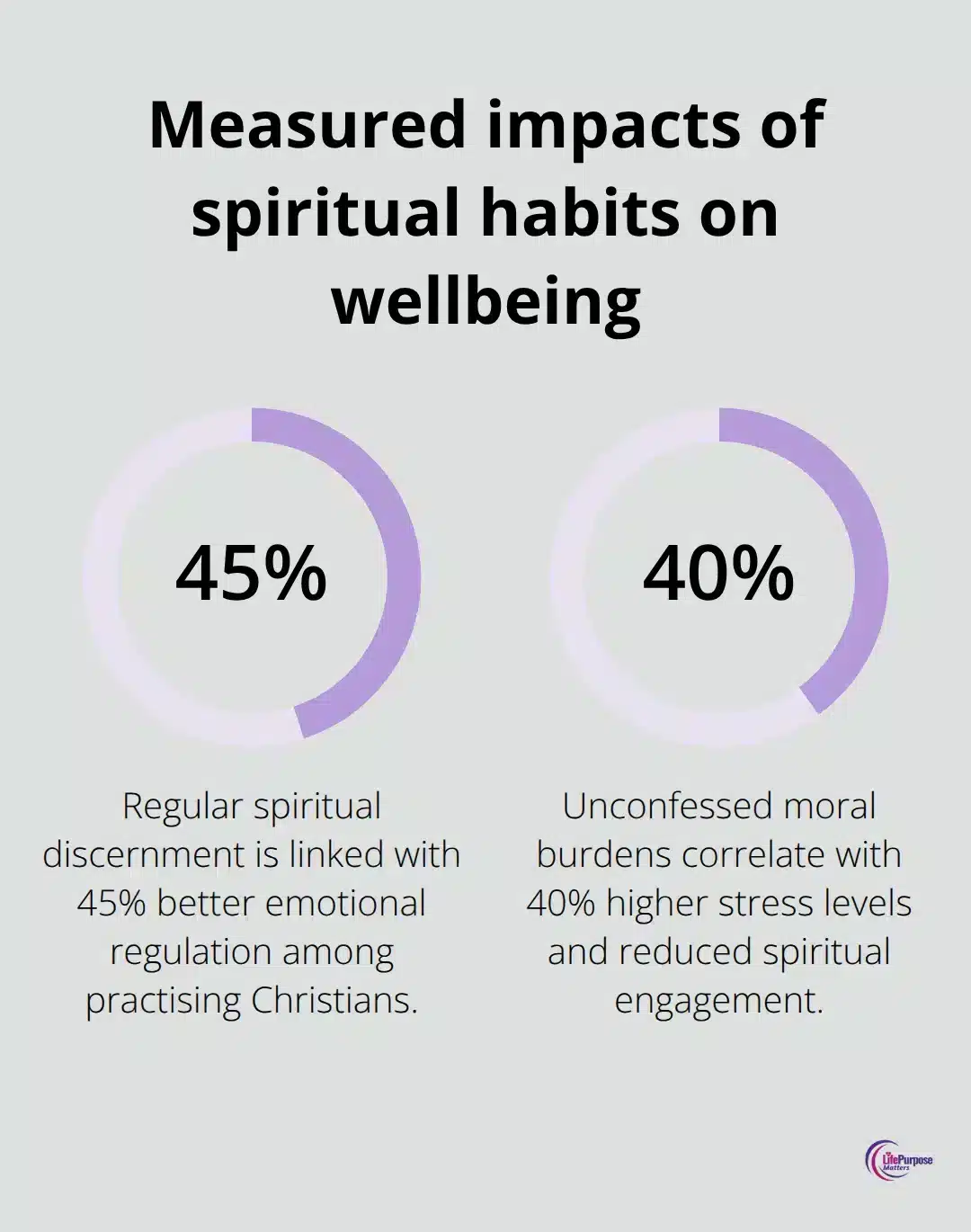
Mature believers respond thoughtfully instead of react impulsively. When someone criticises you unfairly, you pause before you speak. During financial stress, you trust God’s provision rather than panic. Research from Fuller Seminary reveals that Christians who practise regular spiritual discernment show 45% better emotional regulation than those without consistent practices (particularly in conflict situations). Your patience grows stronger during trials rather than weaker.
These signs of maturity don’t develop overnight, and many factors can slow or block this growth entirely.
What Blocks Your Spiritual Progress
Modern life creates unprecedented barriers to spiritual growth that previous generations never faced. The average American checks their phone 352 times daily, which fragments attention that once focused naturally on prayer and reflection.
Technology Steals Sacred Time
Social media algorithms designed to capture attention compete directly with time spent in Scripture, while constant notifications interrupt moments of quiet communion with God. Netflix reports the average user spends 3.2 hours daily on content consumption (time that could strengthen your relationship with Christ through study and worship). Your smartphone becomes a portable distraction device that pulls you away from spiritual practices whenever silence threatens to create space for God’s voice.
Pride Disguises Itself as Independence
Self-reliance becomes the enemy of spiritual maturity when you stop seeking God’s guidance for major decisions. Pride convinces you that success comes from personal effort rather than divine blessing, which leads to spiritual stagnation. Christians who regularly acknowledge their dependence on God experience greater spiritual satisfaction than those who rely primarily on personal strength. Your career achievements, financial stability, or problem-solving abilities become idols that replace trust in God’s sovereignty.
Unconfessed Sin Creates Distance
Unresolved guilt and broken relationships poison your spiritual growth more effectively than any external distraction. Research from the American Psychological Association demonstrates that people who carry unconfessed moral burdens show 40% higher stress levels and significantly reduced spiritual engagement. When you avoid difficult conversations with family members, harbour resentment toward coworkers, or refuse to address personal failures, these emotional weights drag down your faith journey.
Sin creates barriers between you and God that regular church attendance cannot overcome without genuine repentance and restoration of damaged relationships.
These obstacles don’t have to define your spiritual journey, and specific strategies can help you overcome each barrier. Understanding that your daily struggles with anxiety, persistent negative thoughts, sudden anger, or overwhelming discouragement often have spiritual dimensions beyond surface emotions can transform how you approach these challenges. Additionally, recognising that spiritual dryness often results from treating faith like emotions rather than commitment helps you maintain consistency even during difficult seasons.
How Can You Actually Grow Spiritually
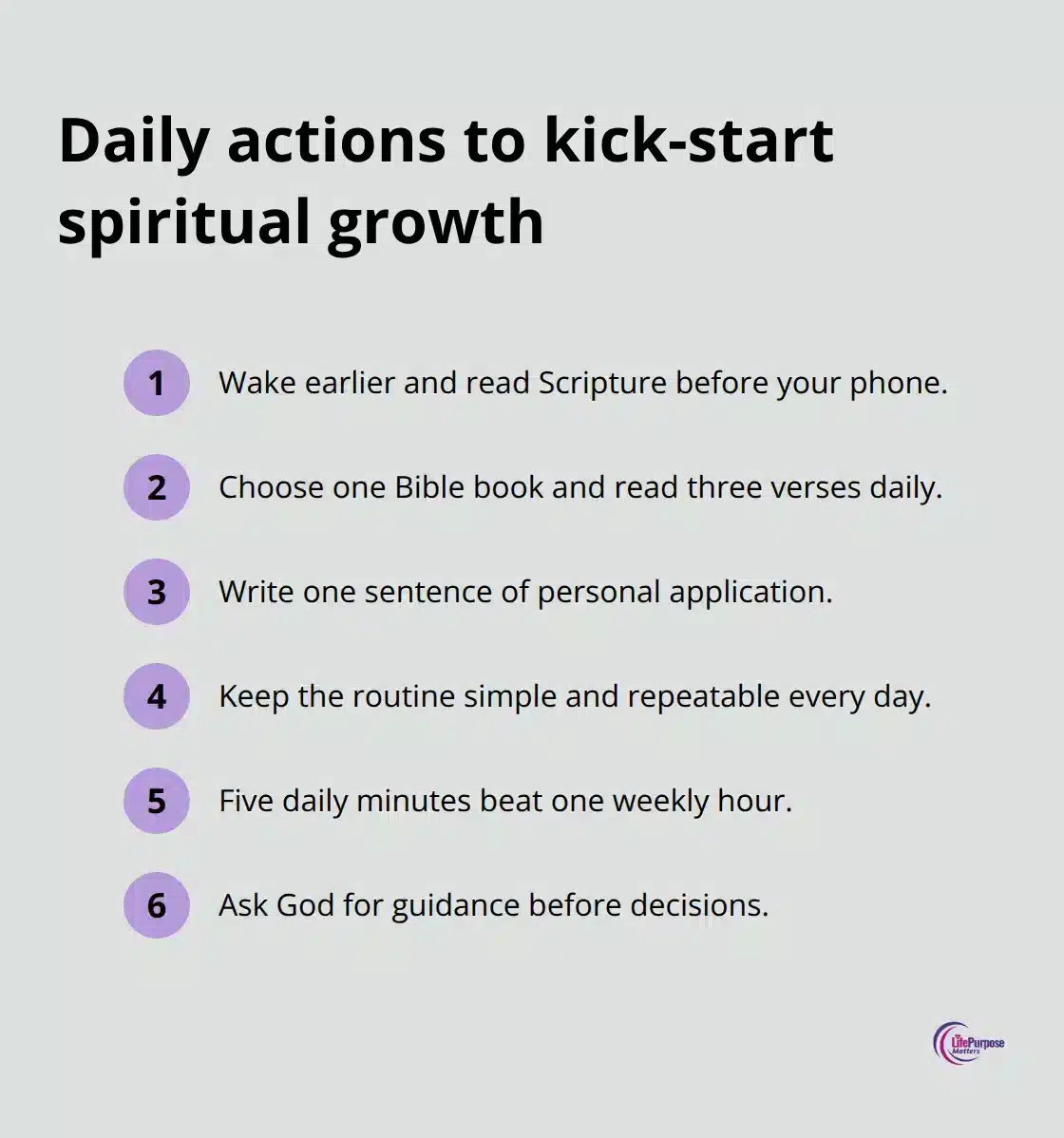
Spiritual stagnation breaks only through intentional action rather than wishful thoughts. Start morning devotions at the same time daily – consistent prayer and Scripture study creates lasting spiritual habits that transform your relationship with God.
Establish Non-Negotiable Daily Practices
Set your alarm 20 minutes earlier tomorrow and open your Bible before you check your phone. Choose one book of Scripture and read three verses daily, then write one sentence about how those verses apply to your current situation. This simple practise transforms random Bible study into personal revelation that guides daily decisions. Consistency matters more than duration (five minutes daily beats one hour weekly).
Create Real Accountability Relationships
Join a small group that meets weekly and commits to honest spiritual conversations beyond surface-level prayer requests. Lighthouse Research found that believers in accountability partnerships grow spiritually 3.2 times faster than those who attempt solo spiritual development. Share your specific struggles with pride, anger, or fear with someone who will ask direct questions about your progress. Choose an accountability partner who demonstrates spiritual maturity rather than someone who simply agrees with everything you say.
Serve Others Through Direct Action
Volunteer at homeless shelters, food banks, or crisis pregnancy centres rather than write cheques to charitable organisations. Physical service exposes areas where your faith remains theoretical rather than practical. Christians who serve others directly experience significant spiritual growth compared to those who only attend worship services. Choose service opportunities that challenge your comfort zone – if you prefer work with children, serve older people instead. This discomfort forces dependence on God’s strength rather than natural abilities, which accelerates spiritual maturity through real-world application of biblical principles.
Final Thoughts
Spiritual maturity never reaches a finish line where you can declare yourself complete. Even Paul, after decades of ministry, wrote that he pressed on toward the goal rather than claimed arrival. Your spiritual growth happens in seasons – sometimes rapid progress, other times slow development that tests your patience.
The believers who experience the deepest transformation understand that spiritual maturity develops through consistent daily choices rather than dramatic spiritual experiences. You grow through ordinary moments when you choose forgiveness over resentment, service over selfishness, and trust over worry. These small decisions compound over years into profound character change that reflects Christ’s nature.
God’s perfect timing rarely matches your expectations for spiritual progress (He develops patience through seasons of waiting, builds faith through uncertainty, and creates compassion through personal struggles). The areas where you feel weakest often become your greatest strengths after God finishes His work in those places. We at Life Purpose Matters support believers as they navigate this lifelong process of Christian growth and purpose discovery through daily surrender and faithful obedience.