

Have you ever wondered how to align your thoughts with Christ’s teachings in practical ways? Aligning your thoughts with Christ’s teachings is crucial for a transformed life, fostering a deeper connection with God, enabling discernment of His will, and bringing about spiritual growth, peace, and purpose. This alignment shifts focus from worldly desires to divine principles, leading to authentic actions, a more meaningful existence, and the capacity to overcome challenges through faith. The good news? Building a Christian mindset isn’t about perfection-it’s about intentional daily choices.
Here at Life Purpose Matters, we believe transformation happens when faith meets action. Let’s explore how small shifts in thinking can create lasting spiritual growth in your everyday life.
What Does Christ-Centred Thinking Actually Look Like
A Christ-centred mindset starts with Romans 12:2, where Paul commands believers to transform through mind renewal. This isn’t wishful thinking or positive psychology with a Christian label. Research from Barna Group shows that people’s faith affects some aspects of their behaviour, but not all of it. The difference lies in how you filter every thought through Scripture rather than cultural norms or personal feelings.
The Biblical Blueprint for Mental Transformation
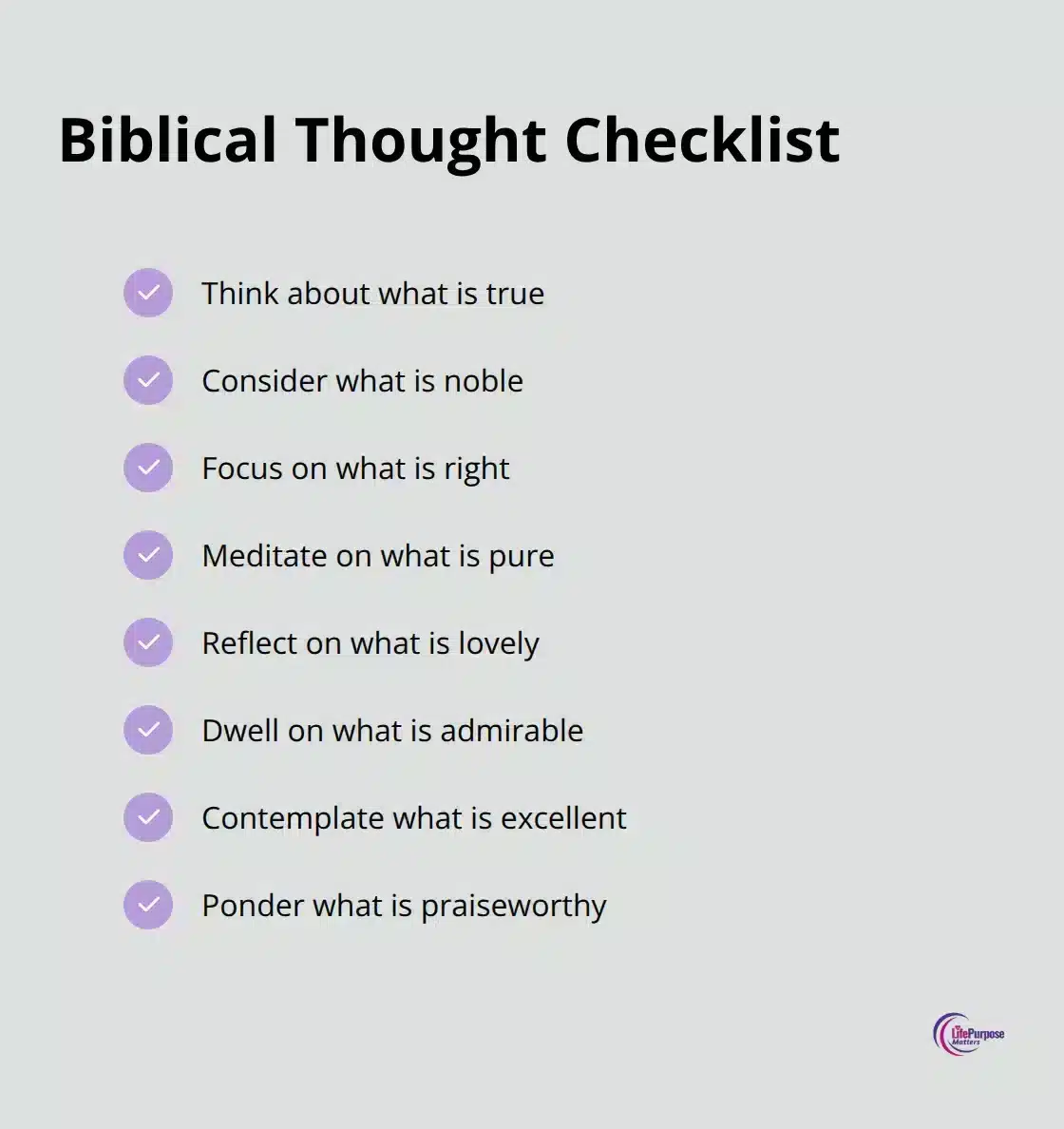
Scripture gives us specific instructions for thought patterns. Philippians 4:8 provides a mental checklist: think about what is true, noble, right, pure, lovely, admirable, excellent, and praiseworthy. This verse functions as a daily filter system for your thoughts. When anxiety hits, 1 Peter 5:7 tells you to cast those worries on God because He cares for you. When negative thoughts spiral, 2 Corinthians 10:5 instructs you to take every thought captive and make it obedient to Christ. These aren’t suggestions but commands that create measurable changes in how you process daily challenges.
How Jesus Demonstrated Perfect Mental Focus
Jesus showed us practical examples of Christ-centred thinking throughout His ministry. During His 40-day fast in the wilderness, He countered each temptation with Scripture (Matthew 4:1-11). This demonstrates how biblical truth defeats mental attacks. When He faced the cross, He prayed in Gethsemane and showed us how to surrender our will to God’s plan even when emotions run high. Before He made major decisions like choosing the twelve disciples, Luke 6:12 tells us He spent the entire night in prayer. His thought life was completely surrendered to the Father’s will.
The Practical Difference This Makes
This mental transformation affects every area of your life. When you face financial stress, you think first about God’s provision rather than panic. When relationships strain, you consider forgiveness and grace before revenge or withdrawal. When career decisions arise, you seek God’s will rather than just personal ambition. This shift from reactive thinking to Scripture-based responses creates the foundation for everything else we’ll explore about daily habits and spiritual practices.
How Do You Build Christ-Centred Habits That Actually Stick
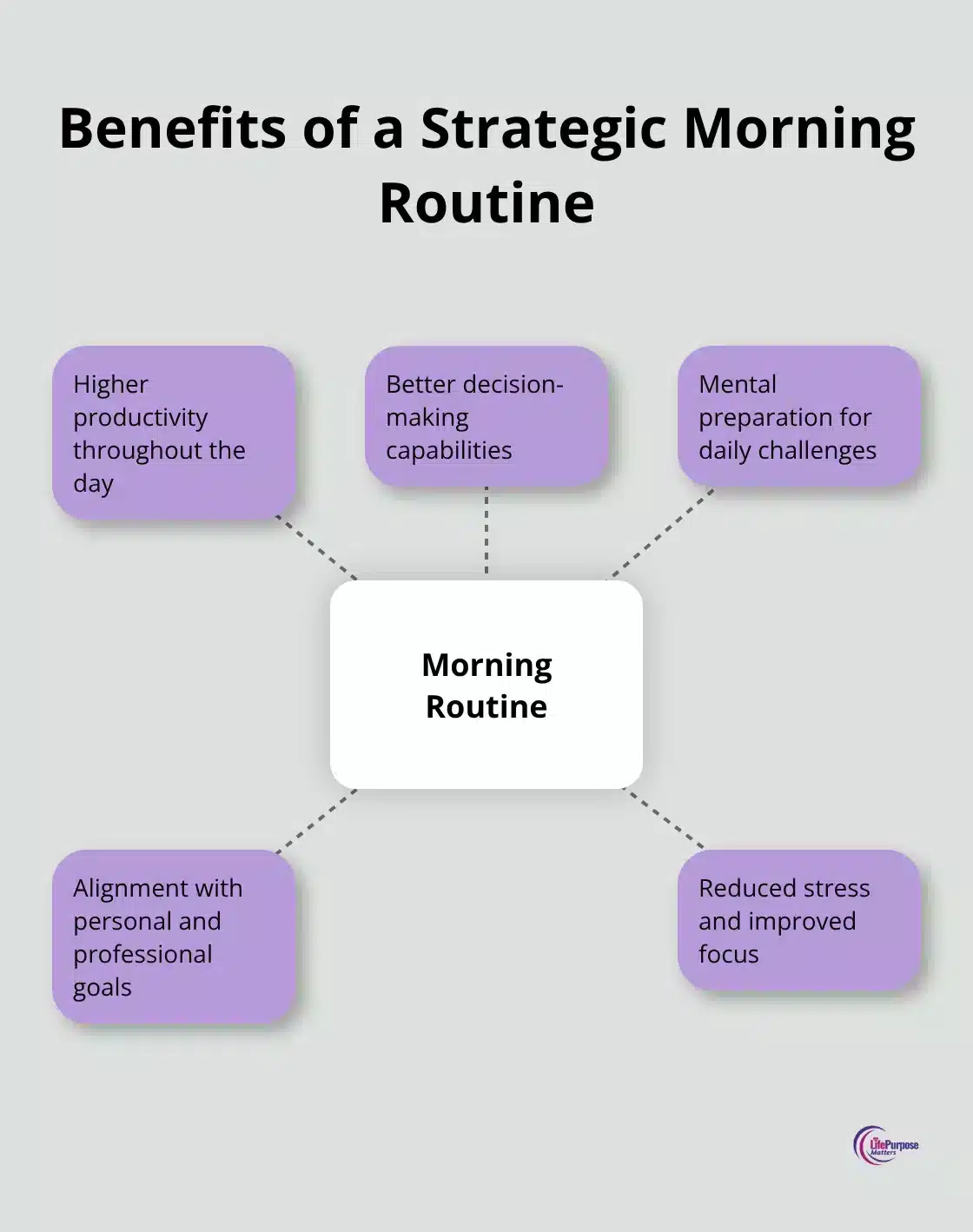
Sustainable Christ-centred habits require specific timing and measurable actions rather than vague spiritual intentions. Morning routines set the mental foundation for your entire day. Research from Harvard Business School shows that entrepreneurs who build their morning routines with exercises, journaling, reading, and strategic planning report higher productivity and better decision-making throughout the day.
Start Your Day with Scripture Before Everything Else
Your morning should begin with Scripture before you check your phone or engage with news. Spend 15-20 minutes reading one chapter of the Bible and write down one verse that speaks to your current situation. Follow this with 10 minutes of prayer that focuses on surrender rather than requests. This creates what psychologists call cognitive priming, where your first thoughts shape how you interpret everything that follows.
Transform Ordinary Moments Into Worship
Practice gratitude at specific trigger points rather than hope it happens naturally. Set three phone alarms at 10 AM, 2 PM, and 6 PM to pause and identify one thing you appreciate about God’s provision in that moment. Studies from UC Berkeley indicate that gratitude may be associated with many benefits for individuals, including better physical and psychological health and increased happiness.
Turn routine activities like commuting, cooking, or walking into worship time through Christian music or spoken prayers. This transforms mundane tasks into opportunities for spiritual connection. When stress hits during work or relationships, immediately quote one memorised verse before you react emotionally. This creates what neuroscientists call neural pathway reinforcement (literally rewiring your brain to default to Scripture-based responses instead of anxiety or anger).
End Each Day with Intentional Reflection
Complete each day with a 10-minute review process that solidifies spiritual growth. Write down three specific ways you saw God work during your day and one area where you need His help tomorrow. This practice increases self-awareness and creates better sleep quality.
Confess any thoughts or actions that didn’t align with Christ-centred thinking, then speak forgiveness over yourself based on 1 John 1:9. Prayer should focus on surrendering tomorrow’s concerns to God rather than trying to solve them yourself. This evening routine creates what sleep researchers call cognitive closure (allowing your mind to rest in God’s sovereignty instead of cycling through worries all night).
These daily practices create the foundation you need, but what happens when negative thoughts and spiritual obstacles threaten to derail your progress?
How Do You Break Mental Strongholds That Block Christ-Centred Living
Mental strongholds form through repeated thought patterns that contradict Scripture, and they require aggressive spiritual warfare to dismantle. The solution isn’t positive thoughts but thought replacement through Scripture memorisation and immediate mental correction.
When anxiety strikes, you have exactly 90 seconds before stress hormones flood your system according to neuroscientist Jill Bolte Taylor.
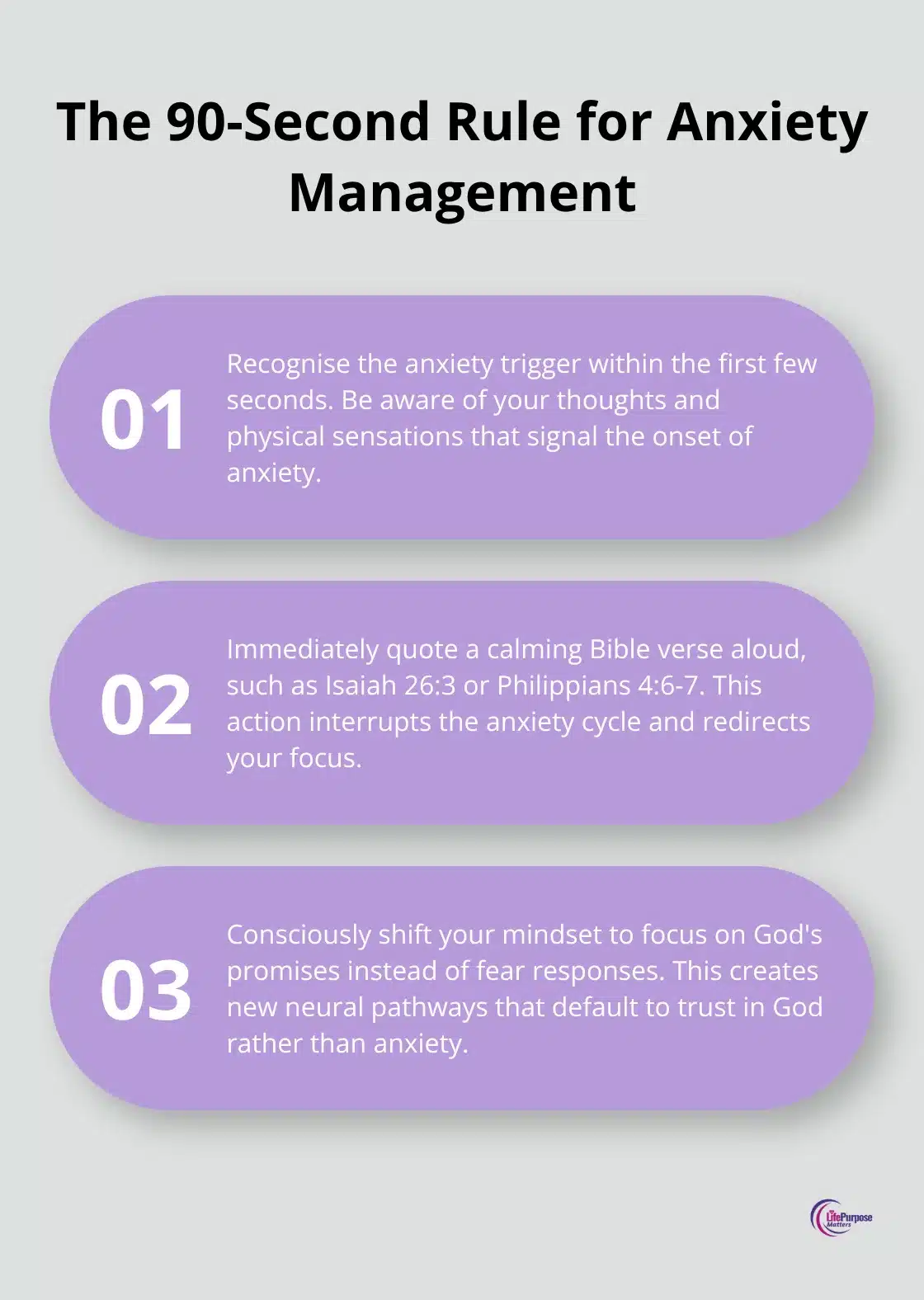
Use this window to quote Isaiah 26:3 or Philippians 4:6-7 aloud. This creates new neural pathways that default to God’s promises instead of fear responses.
Stop Comparison Before It Destroys Your Peace
Social media comparison triggers dopamine responses identical to those found in addiction, which makes it nearly impossible to break through willpower alone. Delete social media apps from your phone for 30 days and replace scroll time with Scripture. When comparison thoughts surface about others’ success, relationships, or spiritual growth, immediately recite 2 Corinthians 10:12 which warns against measurement against others.
Focus on your unique call through Ephesians 2:10 instead of attempts to replicate someone else’s journey. Track your spiritual progress through daily prayer time and Bible consistency rather than external achievements or social validation.
Combat Spiritual Dryness Through Disciplined Action
Spiritual dryness often results from treatment of faith like emotions rather than commitment. Mother Teresa experienced decades of spiritual darkness yet continued to serve God through disciplined action rather than feelings. When you feel spiritually empty, increase Scripture intake to two chapters daily and add 15 minutes of worship music to your routine.
Fast from entertainment for one week and replace it with Christian podcasts or sermons. Spiritual dryness frequently signals that God wants to deepen your faith beyond surface-level experiences (so persist in spiritual disciplines even when they feel mechanical or unrewarding).
Transform Negative Thought Patterns Into Scripture-Based Responses
Identify your most common negative thoughts and prepare specific Bible verses to counter each one. When worry about finances hits, immediately speak Philippians 4:19 about God’s provision. When fear about the future surfaces, quote Jeremiah 29:11 about God’s plans for your welfare.
Write these verses on index cards and carry them with you for the first 30 days until they become automatic responses. This practice rewires your brain to default to truth instead of lies (creating what neuroscientists call cognitive restructuring through biblical principles).
Final Thoughts
A Christian mindset demands consistent daily action rather than sporadic spiritual moments. Start with morning Scripture reading, practice gratitude at scheduled times, and end each day with reflection and surrender. When negative thoughts surface, immediately counter them with memorised Bible verses and replace comparison with focus on your unique call in Ephesians 2:10.
The long-term benefits extend far beyond personal peace. Your renewed thoughts affect every relationship, career decision, and life challenge. You respond to stress with Scripture instead of panic, approach conflicts with grace instead of anger, and make decisions based on God’s will rather than personal ambition (this transformation touches every area of your existence).
Your spiritual journey won’t be perfect, but it will be transformational. Each day you choose Christ-centred thoughts over worldly patterns, you literally rewire your brain to default to God’s truth. We at Life Purpose Matters support your spiritual growth through Christian living resources that help you live out your God-given purpose.