

Barbara felt lost after her divorce, questioning everything she believed about God’s plan for her life. Then her pastor connected her with Margaret, a widow who had walked a similar path decades earlier. Within months, Barbara’s faith transformed from fragile doubt into unshakeable confidence through Margaret’s gentle guidance and biblical wisdom.
Every Christian needs a spiritual mentor for accountability, guidance, and encouragement on their faith journey. Mentors help individuals grow by providing wisdom from experience, offering a model for godly living, and strengthening their walk with God through discipleship.
As Proverbs 27:17 states, “As iron sharpens iron, so one person sharpens another”. At Life Purpose Matters, we see this pattern repeatedly: spiritual mentoring changes lives in ways that solo faith journeys simply cannot match.
Biblical Foundation for Spiritual Mentorship
Scripture doesn’t use the word mentor, but the concept runs like a golden thread through both Testaments. Moses guided Joshua through decades of wilderness leadership preparation before he passed the mantle. Naomi mentored Ruth in faith and family wisdom.
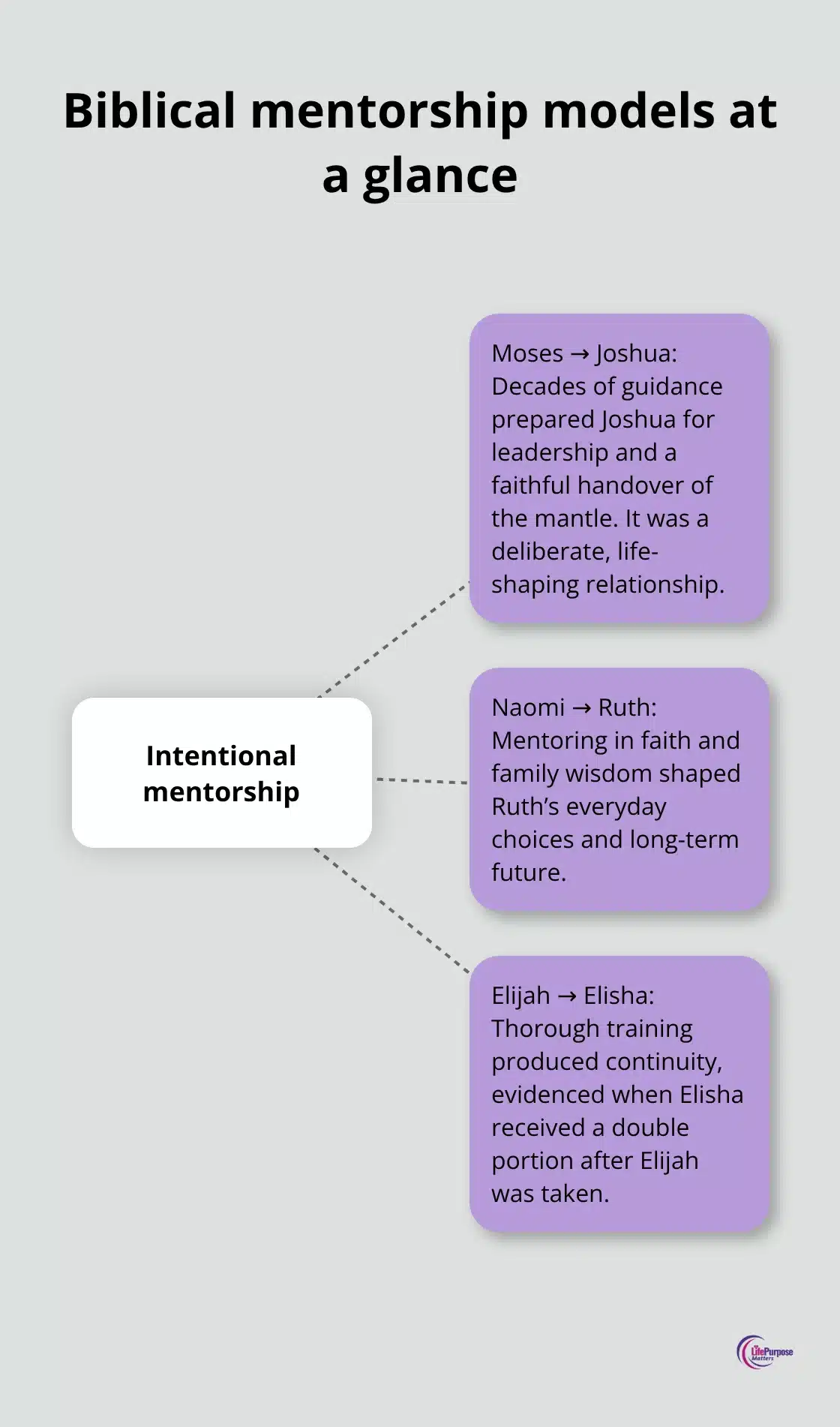
Elijah trained Elisha so thoroughly that when God took Elijah, Elisha received a double portion of his spirit. These weren’t casual relationships – they were intentional, life-changing partnerships that shaped the course of biblical history.
Jesus Perfected the Mentorship Model
Jesus spent three years with twelve men, but His approach went far beyond simple instruction. He lived with them, ate with them, corrected their mistakes, and showed them how faith looks in real life. When Peter denied Him, Jesus didn’t abandon him – He restored him with specific instructions to feed His sheep. Jesus knew that information alone never transforms anyone. People need someone who walks alongside them and shows them how faith works in daily decisions.
Paul Proved Mentorship Multiplies Impact
Paul’s relationship with Timothy demonstrates the power of intentional spiritual mentorship. Paul didn’t just teach Timothy theology – he brought him on missionary journeys, trusted him with difficult church situations, and wrote letters that addressed his specific struggles with timidity and stomach problems. Timothy later became one of the most effective church leaders of his generation.
This pattern repeated throughout Paul’s ministry: he mentored Titus, Barnabas, and countless others who went on to establish thriving Christian communities. Paul understood that one person who receives thorough training and equipment can impact thousands of lives. The apostle’s strategy was simple but revolutionary – invest deeply in a few people who will invest in others.
Modern Research Confirms Biblical Wisdom
Today’s statistics validate what Scripture taught centuries ago. Studies show that many young adults remain embedded in peer-only networks, drawing guidance from individuals with similar levels of life experience. Research also reveals a universal hunger for the kind of guidance that biblical mentorship provides (and that our modern church often lacks).
The transformative power of these biblical relationships points to something profound about how God designed us to grow spiritually.
The Transformative Benefits of Having a Spiritual Mentor
The statistics reveal something striking about mentorship: research shows that young adults prioritise advice from people with similar life experiences, and local churches have developed strategies to achieve high engagement rates with young people. Yet the real transformation happens when experienced believers guide newer Christians through the messy realities of faith. Research from Christian mentorship programmes shows that participants report dramatically improved family dynamics, increased self-confidence about their faith, and clearer identification of their spiritual gifts. Studies that track mentorship outcomes found that personal connections through spiritual guidance help individuals cope with life-threatening situations and find deep support they never expected.
Accelerated Spiritual Growth and Maturity
Your spiritual maturity will advance faster with a mentor than through years of independent Bible reading and church attendance. The Christian Mentor’s Network reports that participants in their one-on-one programmes show measurable character development and spiritual growth within months, not years. Mentors provide targeted feedback on specific struggles, challenge comfortable assumptions, and offer practical wisdom that transforms abstract biblical principles into daily habits.
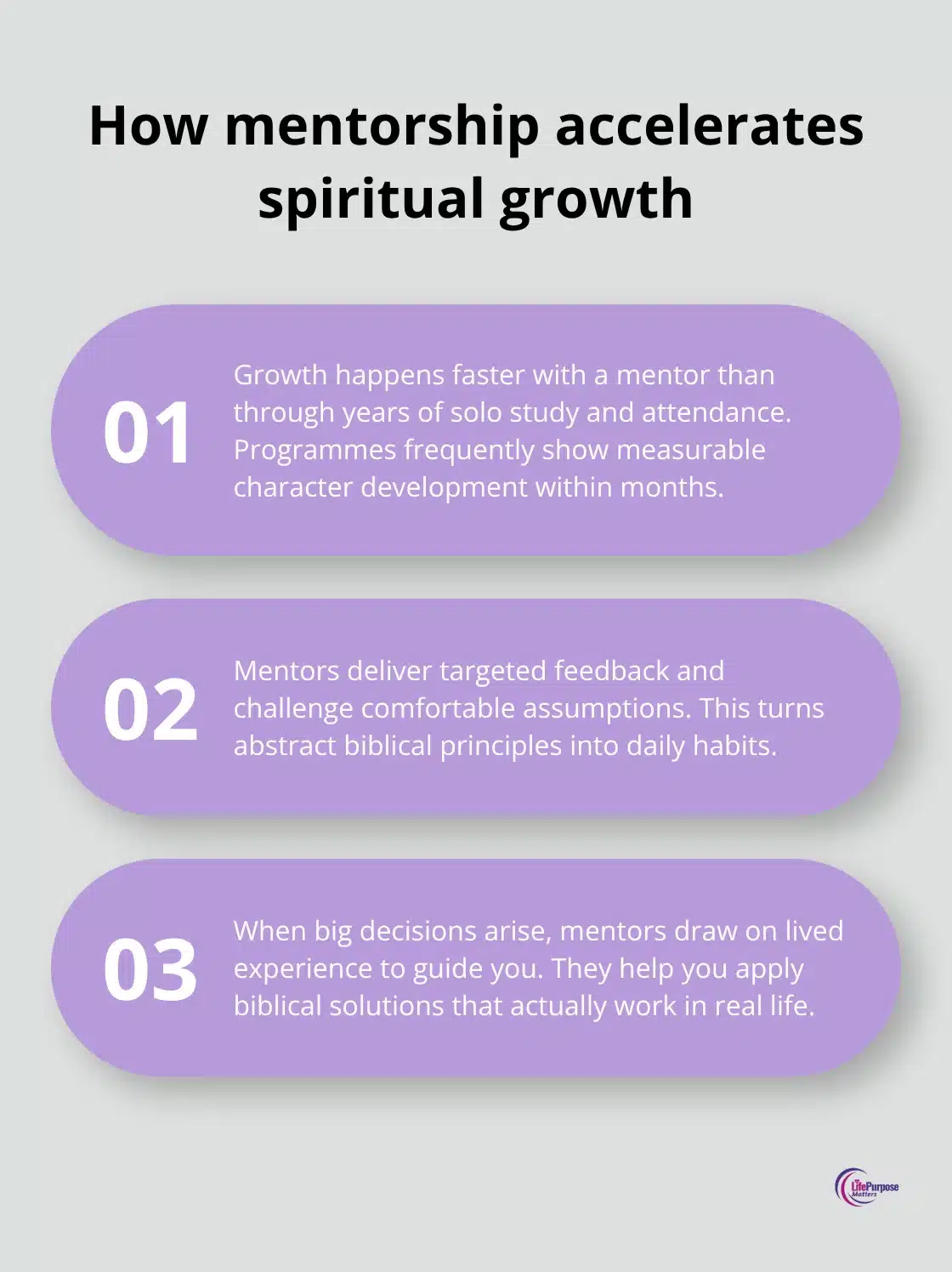
When you face difficult decisions about career changes, relationship conflicts, or parenting challenges, a mentor who has walked similar paths can guide you through biblical solutions that actually work in real life.
Accountability and Guidance Through Life’s Challenges
Spiritual mentors hold you accountable for the commitments you make to God and yourself. They ask the hard questions about your prayer life, your relationships, and your character development (often in ways that feel uncomfortable but produce growth). When life hits you with unexpected trials, mentors provide perspective that prevents spiritual drift and emotional decisions. They help you see God’s hand in difficult circumstances and maintain faith when circumstances suggest otherwise.
Protection from Spiritual Deception and Error
Spiritual deception thrives in isolation, but mentorship provides built-in protection against doctrinal errors and emotional manipulation. Proverbs 11:14 states that safety comes through multiple counsellors, and seasoned mentors recognise warning signs that newer believers miss entirely. They help you evaluate teaching, spot unhealthy church dynamics, and navigate complex moral situations with biblical clarity. Many churches that implement structured mentorship programmes report noticeable improvements in congregation engagement and fewer instances of members who fall into spiritual confusion or leave the faith altogether.
The question then becomes: how do you find a Christian mentor who can provide this level of spiritual guidance and wisdom?
Where to Find Your Ideal Spiritual Mentor
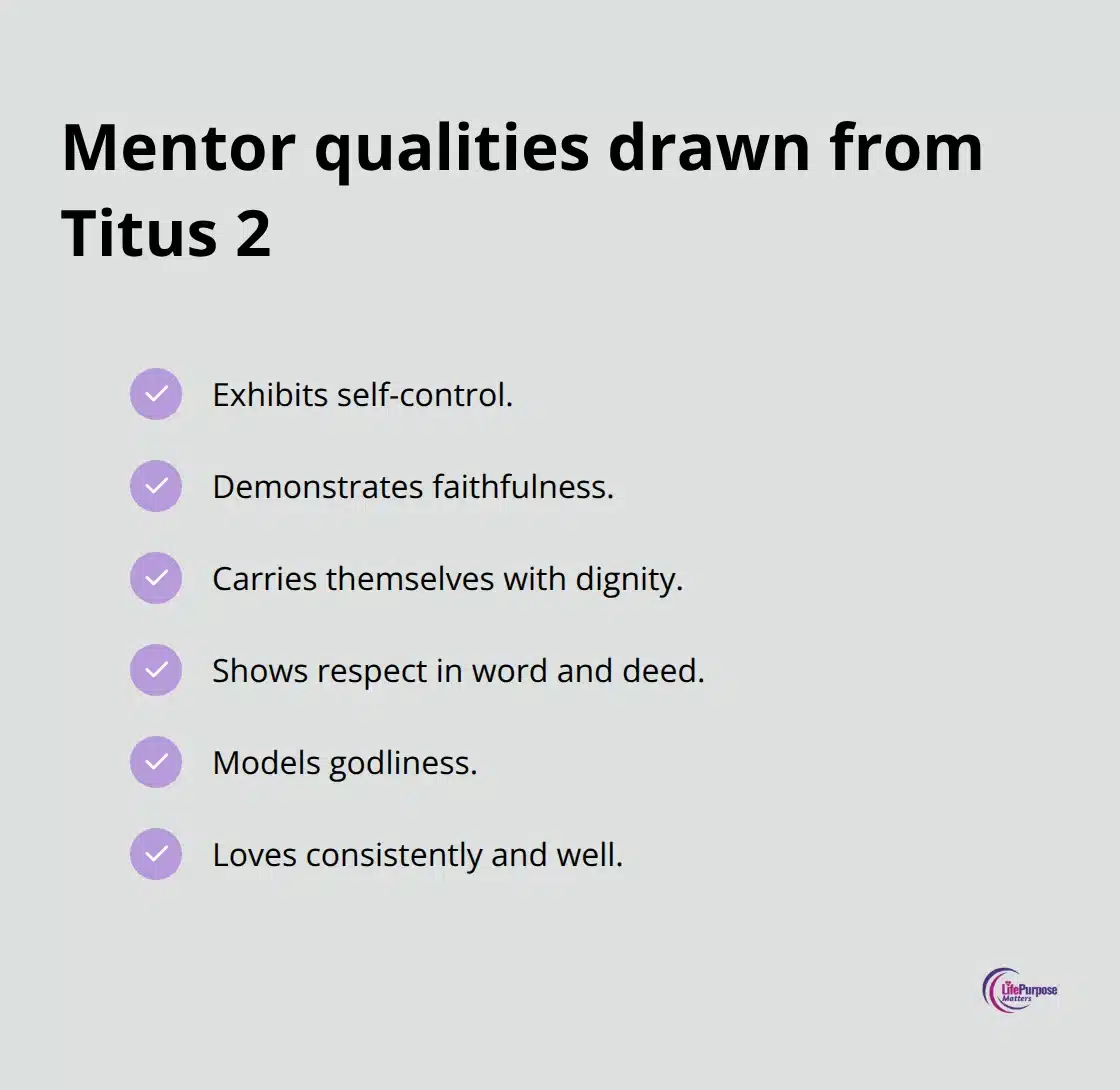
The right spiritual mentor lives within specific communities where mature believers naturally gather. Start with your local church leadership and long-standing members who demonstrate consistent biblical life over decades, not just charismatic personalities or popular speakers. Titus 2:2-3 outlines clear mentor qualities: self-control, faithfulness, dignity, respect, godliness, and love. Look for individuals whose marriages have weathered storms, whose children respect them, and whose financial decisions reflect biblical stewardship principles. These practical markers reveal character far better than spiritual-sounding conversations.
Target Established Christian Communities
Small group leaders, Sunday school teachers, and church deacons often make excellent mentors because they already invest time in spiritual development and possess experience in guidance. Christian professional networks, Bible study groups at workplaces, and established Christian organisations provide access to believers who integrate faith with career success. Avoid mentors primarily through social media or casual church acquaintances. Instead, observe people during church conflicts, community crises, or family difficulties to see how they respond under pressure.
Master the Initial Approach
Schedule a casual coffee meeting and ask specific questions about their spiritual journey, parenting approach, or career decisions that demonstrate biblical principles. Avoid immediate requests for formal mentorship. Instead, express genuine interest in their experience and ask if they would consider monthly meetings for guidance. Most potential mentors appreciate directness over vague requests for friendship (which often confuse the relationship dynamic).
Evaluate the Relationship’s Health
After three to four meetings, assess whether their advice produces positive changes in your spiritual life, relationships, and decision patterns. If growth occurs, formalise the mentorship with clear expectations about meeting frequency and communication boundaries. Seek accountability through a trusted mentor who can help you work toward spiritual growth and serve as a positive role model, as participants who establish structured mentorship relationships show measurable character development within months rather than years.
Final Thoughts
Spiritual mentoring creates ripple effects that extend far beyond individual transformation. When Margaret guided Sarah through her divorce recovery, Sarah later mentored three other women who faced similar struggles. This multiplication pattern appears throughout church history and continues today in communities that prioritise intentional discipleship relationships.
Research confirms what Scripture teaches: mentored believers show accelerated spiritual growth, stronger marriages, clearer identification of spiritual gifts, and increased church participation. These outcomes don’t happen by accident – they result from consistent investment in relationships that prioritise biblical wisdom over casual friendship. Mature believers feel honoured when younger Christians seek their guidance, but they rarely initiate these relationships themselves.
Your first step requires courage and intentionality. Identify someone whose faith you admire and whose life demonstrates biblical principles under pressure (especially during conflicts or crises). Schedule that coffee meeting and ask specific questions about their spiritual journey. We at Life Purpose Matters believe that spiritual growth accelerates when believers intentionally invest in each other’s faith journeys.