

Last week, I watched our church’s youth pastor quietly clean up after a messy craft session while the kids ran off to play. No fanfare, no recognition – just pure service in action. This scene perfectly captures what Christian leadership should look like. Christian leadership should look like leading like Jesus: serving others with humility, integrity, and compassion, focusing on God’s glory over personal ambition, and empowering people to flourish through biblical principles, embodying love, justice, and courage while being accountable and growing in character. It’s about influence through a servant’s heart, not domination, creating stability and building up the community.
At Life Purpose Matters, we believe true Christian leadership flows from a servant’s heart, not a desire for power or recognition. The Bible shows us a radically different leadership model than what the world promotes.
What Does Scripture Teach About Servant Leadership
Jesus Transforms Leadership Through Service
Jesus revolutionised leadership when he washed His disciples’ feet in John 13:14-15. This act showed that true authority flows through service, not power. Jesus didn’t perform symbolic theatre – he gave practical instruction. Leaders must perform the lowest tasks to meet others’ needs.
In Mark 10:45, Jesus declared His mission was to serve, not receive service. This statement established the foundation for all Christian leadership. Matthew 20:26-28 reinforces this truth when Jesus told His disciples that greatness comes from service to others. This directly contradicts worldly leadership models that prioritise position over people.
Old Testament Leaders Who Served First
The Old Testament provides powerful examples of servant leadership in action. Moses demonstrated this when he interceded for rebellious Israelites in Exodus 32:32. He offered his own life for their forgiveness – the ultimate act of servant leadership.
Nehemiah showed servant leadership when he personally worked on Jerusalem’s walls alongside common labourers (Nehemiah 4:21). Despite his governor status, he refused special privileges. David’s psalm in Psalm 78:72 describes leadership with integrity of heart and skilful hands. This shows that effective leadership requires both moral character and practical competence.
Scripture’s Blueprint for Christian Leaders
Philippians 2:3-4 commands leaders to do nothing out of selfish ambition or empty pride, but in humility consider others more important than themselves. First Peter 5:2-3 instructs church leaders to serve willingly without domination over their flock. These verses create a clear blueprint: Christian leaders must serve first, lead second.
These biblical principles don’t just apply to ancient times. They provide the foundation for how Christian leaders should operate in every context today – whether in churches, workplaces, or starting a business as a Christian entrepreneur. The Bible emphasises that serving others remains central to authentic Christian leadership.
What Defines a True Christian Servant Leader
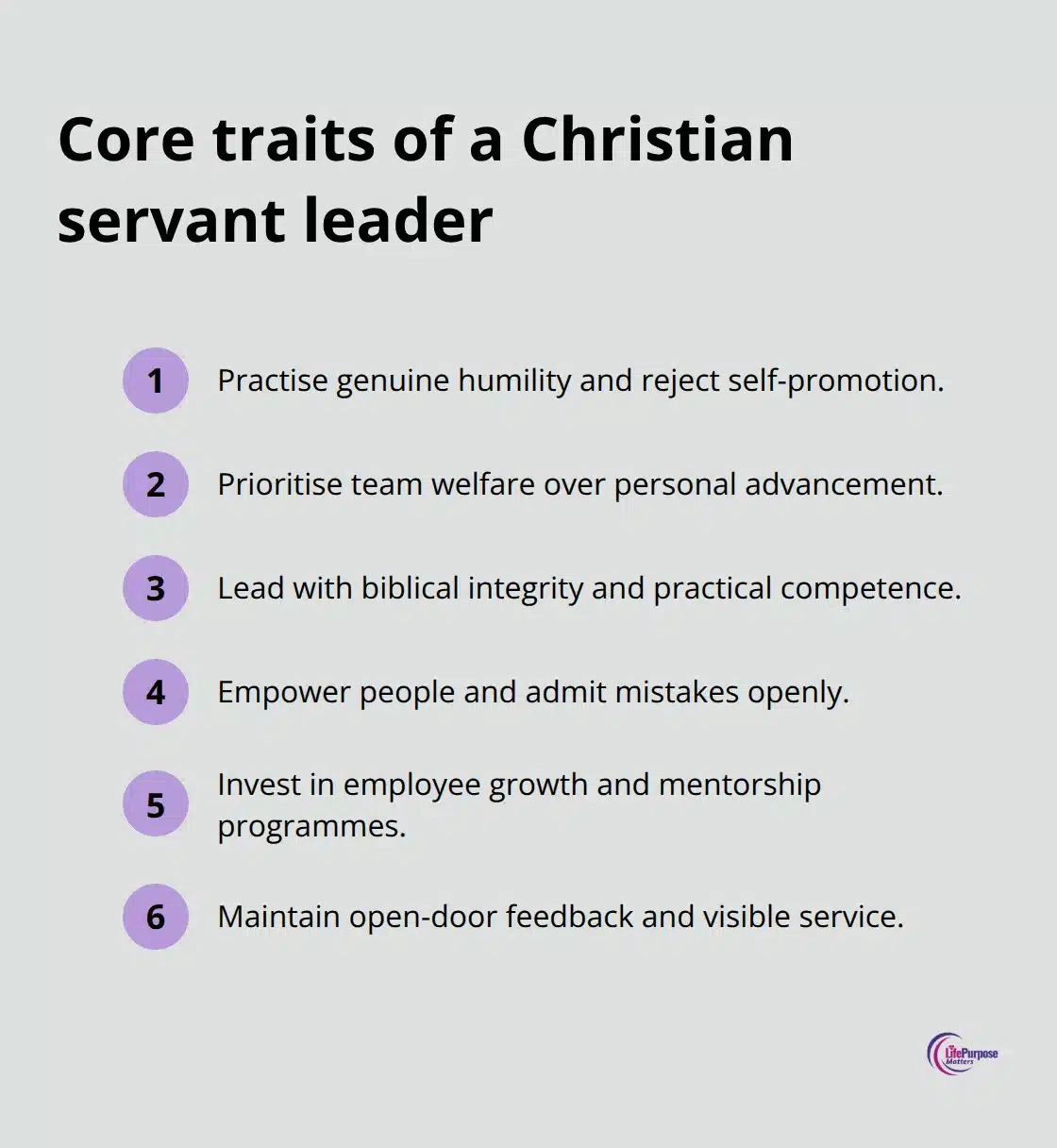
Christian servant leaders possess three non-negotiable characteristics that separate them from conventional leaders. First, they practise genuine humility and reject self-promotion and credit-seeking behaviour. Dan Cathy of Chick-fil-A demonstrates this when he works alongside restaurant employees during busy periods and refuses executive perks that distance him from frontline workers. Second, they consistently prioritise team welfare over personal advancement.
Research from Gonzaga University shows that organisations led by servant leaders experience increased employee retention and productivity compared to traditional leadership models.
Humility That Actually Works
True servant leaders reject the spotlight and redirect praise to their teams. They ask their staff what support they need instead of dictating solutions from above. Horst Schulze, co-founder of The Ritz-Carlton, built his empire when he empowered employees to solve customer problems without management approval. This approach requires leaders to admit mistakes publicly and seek input from subordinates regularly. Effective servant leaders spend significant time developing others rather than advancing their own agendas (a stark contrast to traditional leadership models).
Love in Action Through Daily Decisions
Servant leaders demonstrate compassion through concrete actions, not emotional speeches. They sacrifice personal comfort for team success and make decisions that benefit their people long-term. Anne Beiler of Auntie Anne’s redirected company profits toward employee education programmes and community development projects. These leaders make unpopular decisions that benefit their people long-term, even when shareholders pressure for short-term gains. They invest in employee growth, create mentorship programmes, and maintain open-door policies that encourage honest feedback about leadership effectiveness.
Character That Transforms Organisations
The most effective servant leaders build their foundation on biblical integrity and wisdom. They make decisions based on scriptural principles rather than market trends or popular opinion. David Green of Hobby Lobby exemplifies this approach when he closes stores on Sundays (sacrificing millions in revenue) to honour God and give employees rest. These leaders demonstrate consistency between their private faith and public actions. Their character creates trust that transforms entire organisational cultures and sets the stage for practical application in every area of life. When leaders maintain their physical, emotional, and spiritual health, they become more effective servants who can serve others with greater impact.
How Do You Practise Servant Leadership Daily
Church Service That Makes a Real Difference
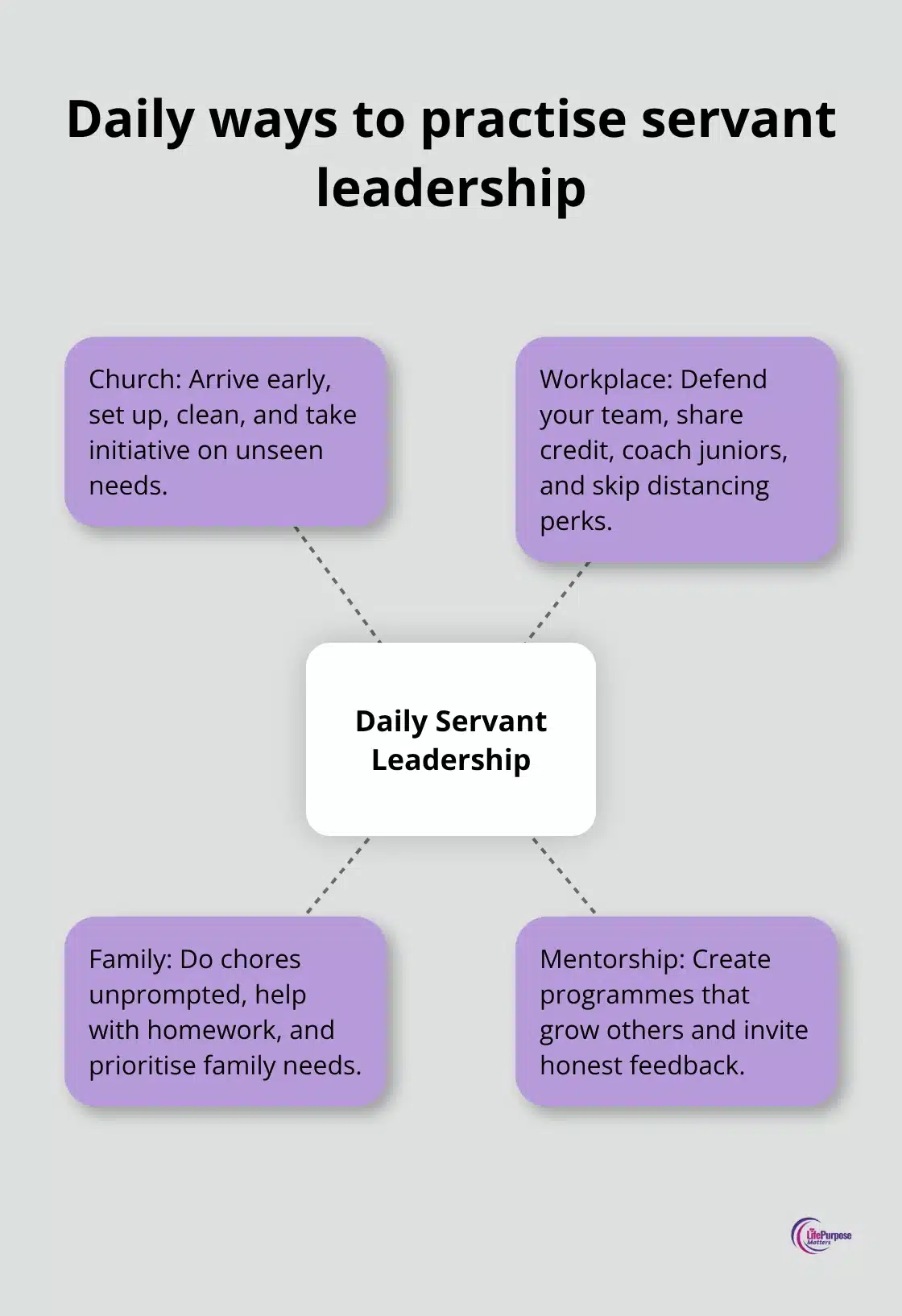
Start with the tasks that others avoid. Arrive early to set up chairs, stay late to clean bathrooms, or volunteer for children’s ministry during holiday chaos. Pastor Rick Warren found that Saddleback Church grew fastest when leaders focused on behind-the-scenes service rather than platform visibility. Take initiative without prompts – notice when the church kitchen needs restocking or when the older members need rides to services.
Mentor new believers through one-on-one discipleship rather than seeking teaching positions that boost your profile. Research from Leadership Network shows that churches with high volunteer retention rates share one common trait: leaders who model service in practical, visible ways that inspire others to follow. Focus on tasks that build others up instead of activities that elevate your own status.
Workplace Leadership That Actually Serves
Transform your office culture when you defend team members during difficult client meetings, stay late to help colleagues meet deadlines, and advocate for employee promotions even when it means you lose valuable team members. Share credit publicly while you take responsibility privately for failures.
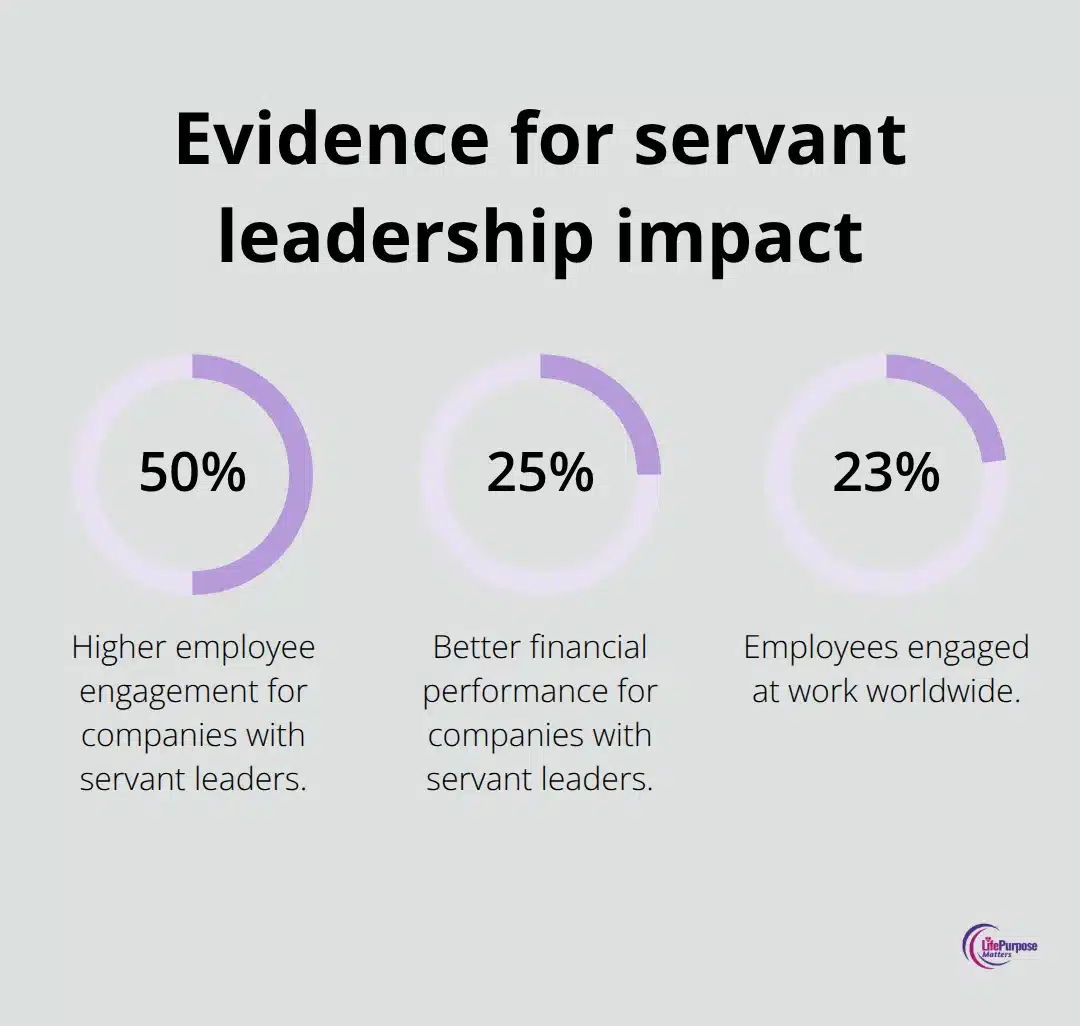
When Gallup research reveals that only 23% of employees worldwide are engaged at work, costing the global economy $8.9 trillion in lost productivity, the need for servant leadership becomes clear. Invest your own time to train junior staff, create mentorship programmes that advance others’ careers, and make decisions that benefit your team’s long-term growth over short-term profits. Skip executive perks that create distance between you and frontline employees.
Family Leadership Through Daily Service
Lead your family when you wash dishes without prompts, help with homework instead of delegating to your spouse, and prioritise family needs over personal hobbies or career advancement. Research shows that servant leadership development connects to emotional intelligence and stronger interpersonal skills in family settings.
Make sacrificial decisions like choosing family vacations over personal purchases or attending every school event despite work pressures. Create family traditions centred on service – volunteer together at food banks, visit nursing homes, or support missionary families financially (these activities teach servant leadership through action, not lectures).
When you maintain your physical, emotional, and spiritual health, you become a more effective servant leader rather than a liability to your community. Your family will learn servant leadership through observation of your daily choices.
Final Thoughts
Servant leadership transforms organisations, families, and communities when leaders choose service over self-promotion. Companies with servant leaders report 50% higher employee engagement and 25% better financial performance than traditional hierarchical models. The data proves this approach works in every context where people need direction and support.
God calls every believer to lead through service, regardless of their position or title. This calling extends beyond church walls into boardrooms, classrooms, and living rooms. Christian leadership becomes authentic when we follow Christ’s example of foot-washing rather than seek recognition for our efforts.
Your next step starts with one simple decision: choose service over status in tomorrow’s first interaction. Whether you lead a team meeting or help with dinner dishes, ask yourself what Jesus would do in your position. We at Life Purpose Matters provide resources to help you integrate faith into daily leadership decisions, and your servant leadership journey begins when you stop waiting for permission to serve.