

I once sat with someone who felt paralysed by guilt over a harsh word spoken in anger, convinced they’d failed at faith entirely. Remembering the Sermon on the Mount, they needed to hear what Jesus actually taught about living well, not the watered-down version they’d absorbed over years of church attendance.
At Life Purpose Matters, we believe a proper Sermon on the Mount summary reveals teachings that cut straight to the heart of how you’re meant to live. These aren’t abstract rules from two thousand years ago; they’re direct guidance for managing anxiety, building real relationships, and aligning your daily choices with what actually matters.
Why This Sermon Still Speaks to Your Life
Jesus delivered the Sermon on the Mount to his disciples and the crowds who followed him up a mountainside in Galilee around 28-30 AD, according to the Gospel of Matthew. The setting matters more than most people realise. He wasn’t speaking in a temple or formal religious setting. He was on a mountain, accessible to ordinary people, which signals that these teachings weren’t meant for priests alone but for anyone serious about following him. The historical moment also shaped the message. Jewish people in first-century Palestine lived under Roman occupation, faced heavy taxation, and experienced deep social divisions between the wealthy and the poor. The Pharisees had built elaborate systems of external rules that made righteousness feel impossible for ordinary workers and the marginalised. Jesus cut through that complexity entirely. He spoke directly to people’s real struggles, not abstract theology.
The Sermon Addresses What Actually Troubles You
What makes this sermon remain relevant isn’t nostalgia or religious tradition. The core issues Jesus tackled-anxiety about money and security, fractured relationships, the temptation to judge others harshly, the pressure to perform and prove your worth-are the exact struggles people face today. Jesus directly addresses both. He teaches people to stop worrying about food and clothing because God provides, and he reframes how you handle broken relationships through radical forgiveness rather than retaliation. The sermon exposes how you actually think and behave beneath the surface. Jesus moves from external actions to internal motives, saying lust in the heart equals adultery and anger toward your brother equals murder.
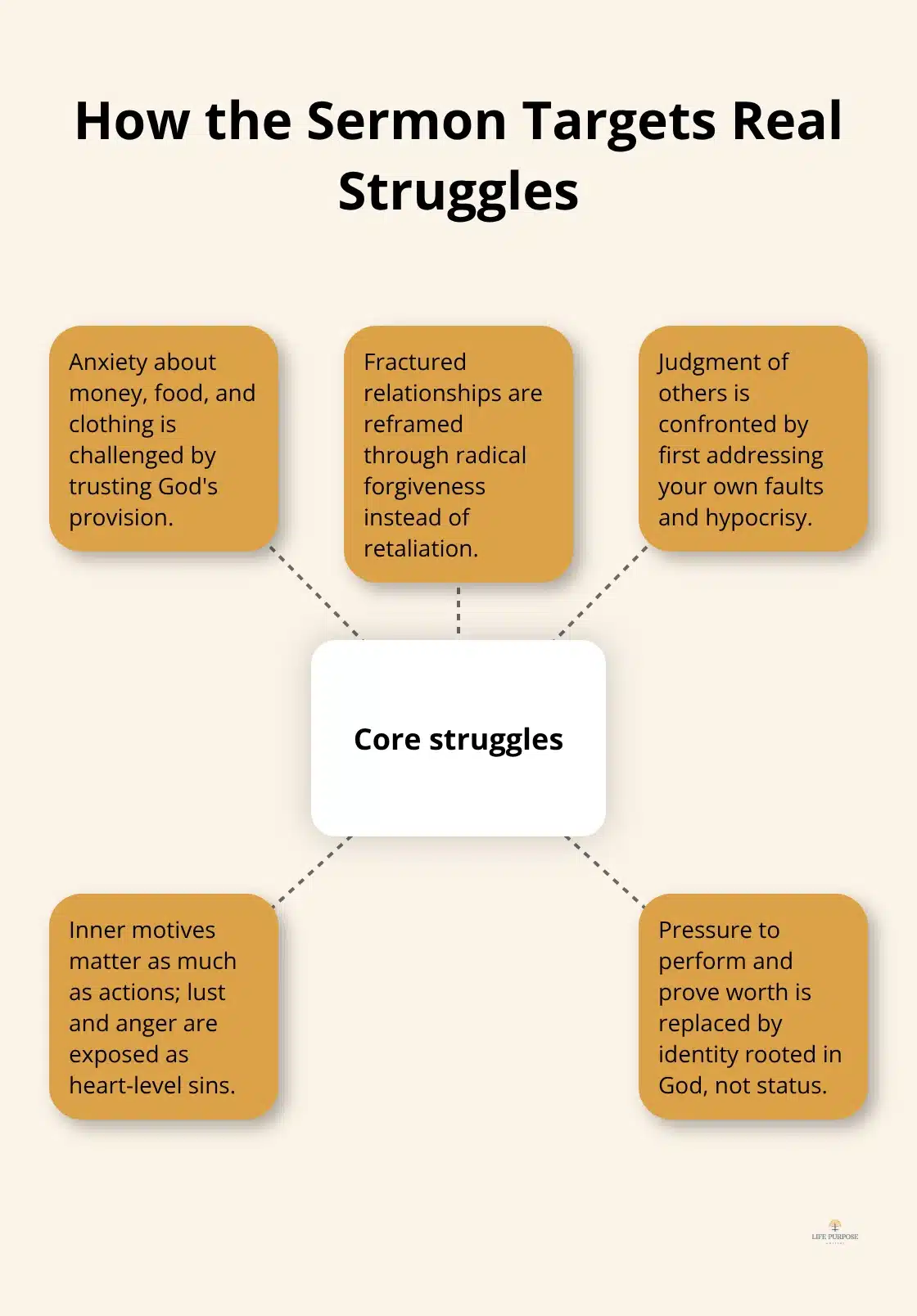
This confrontation with your own interior life remains as uncomfortable and necessary now as it was two thousand years ago.
Living These Principles Changes How You Make Decisions
The Sermon on the Mount functions as a standard for how you prioritise what matters. Jesus teaches that you should store up treasures in heaven rather than accumulate possessions on earth. That single principle transforms how you spend money, what career path you pursue, and how much mental energy you devote to status. He teaches that you become a peacemaker and show mercy to others when you actually know God. He demands that you love your enemies and pray for those who hurt you, which is radically different from the default human response of self-protection and revenge. These aren’t suggestions for advanced spiritual people. They’re foundational to what Jesus considered normal Christian living. The sermon remains relevant precisely because human nature hasn’t changed. You still struggle with worry, you still judge others, you still want to retaliate when hurt, and you still feel tempted to base your identity on what you own or achieve. Jesus addresses the permanent features of human struggle, not temporary cultural issues. The next section explores the specific teachings that form the foundation of this transformative message.
What Jesus Actually Teaches About Blessing and Character
The Beatitudes Reveal God’s Priorities, Not the World’s

Jesus opens the Sermon on the Mount with the Beatitudes, and most people misread them entirely. The Beatitudes aren’t a reward system for good behaviour; they declare that God blesses people the world overlooks. Matthew 5:3-11 lists nine blessings: the poor in spirit receive the kingdom of heaven, those who mourn find comfort, the meek inherit the earth, those hungry for righteousness are satisfied, the merciful receive mercy, the pure in heart see God, peacemakers become God’s children, and the persecuted belong to the kingdom. Notice what’s absent: wealth, status, physical attractiveness, or achievement. Jesus tells his disciples and the crowds that the traits the Roman Empire and Jewish establishment valued meant nothing to God. Humility matters more than ambition.

Mercy matters more than winning arguments. Seeking justice matters more than accumulating possessions.
This distinction transforms how you actually live. If you spend your life chasing the world’s markers of success while neglecting these character traits, you build on sand. Identify one area where you pursue worldly validation instead of cultivating mercy, peacemaking, or genuine righteousness. Stop there and start over.
Your Character Exists to Influence Others
Jesus then describes his followers as salt and light, establishing that your character isn’t meant for private spiritual satisfaction but for impact on the world around you. Salt preserves and flavours; light dispels darkness and reveals what’s hidden. Your job isn’t to withdraw from culture but to influence it through integrity and truth-telling. This means your faith produces visible effects in how you treat people, handle money, and speak truth when it costs you something.
Jesus Fulfils the Law by Exposing the Heart
Jesus addresses the law directly, stating he came to fulfil it, not abolish it-a statement that contradicts the assumption that grace means abandoning moral standards. The law itself was always about interior transformation, not external compliance. The Pharisees had turned the law into a performance checklist, but Jesus exposes the heart beneath the actions. Lust in your heart equals adultery; anger toward your brother equals murder. Swearing false oaths violates the spirit of truthfulness. You cannot compartmentalise your faith. You cannot pray on Sunday and scheme on Monday. Jesus demands alignment between what you profess and how you actually think and behave.
Genuine Worship Happens in Private, Not Public
Jesus teaches that genuine worship happens through private prayer and fasting done without seeking recognition, not through public displays of religiosity. If you fast to be seen, your only reward is human attention. If you pray to manipulate God, you have misunderstood prayer entirely. These teachings cut against the instinct to perform faith for others’ approval. They demand instead that your relationship with God remains your primary focus. This internal reorientation-from external performance to authentic connection with God-sets the stage for how Jesus addresses the practical struggles that consume most people’s daily lives.
Living What You Actually Believe
Trust God’s Provision Over Anxiety
Jesus teaches that anxiety about money, food, and security reveals a fundamental lack of trust in God’s provision. Matthew 6:25-34 directly addresses this: stop worrying about what you’ll eat or wear because your Father knows you need these things. This isn’t naive optimism; it’s a call to reorder your priorities. When you pursue righteousness first, Jesus says, everything else follows.
The practical application means examining what actually consumes your mental energy. If you spend hours stressing about finances while neglecting prayer and spiritual growth, you’ve inverted Jesus’s priorities. Try this: identify one area where anxiety controls your decisions, then deliberately choose one action that demonstrates trust instead of fear. Skip the extra shift to attend a Bible study. Give generously when your instinct screams to hoard.
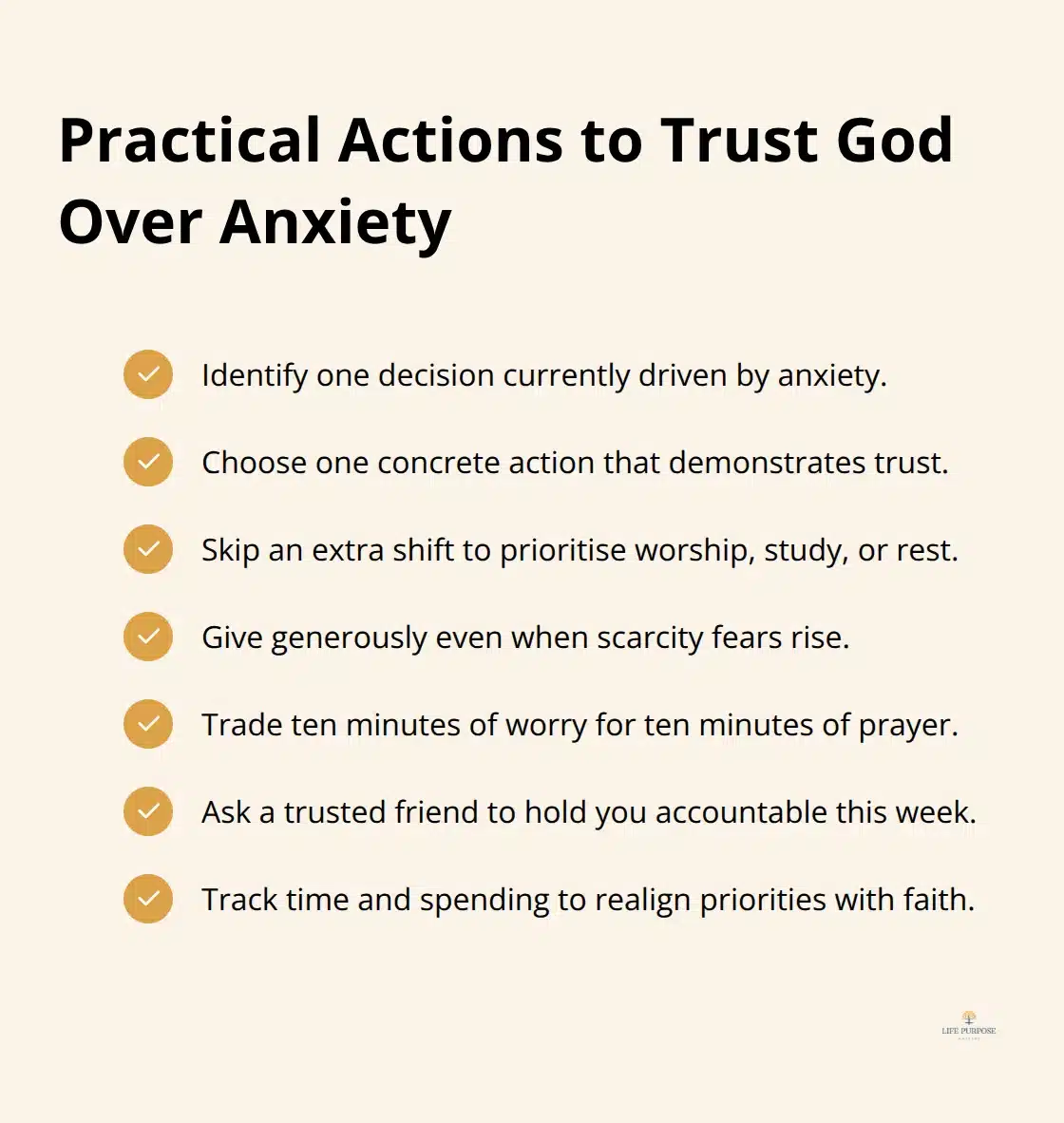
These concrete choices rewire how you respond to uncertainty.
Stop Judging Others While Ignoring Your Own Faults
Jesus then moves to relationships, teaching that you cannot judge others while remaining blind to your own faults. Matthew 7:1-5 exposes the hypocrisy of focusing on someone else’s minor failures while ignoring your own serious ones. This teaching demolishes the common practice of harsh judgment disguised as accountability.
The practical implication is brutal: stop correcting others until you’ve honestly examined yourself. When someone hurts you, your instinct is retaliation or distance. Jesus demands something radically different: forgive as you’ve been forgiven, which means seventy times seven times according to Matthew 18:22. This doesn’t mean tolerating abuse; it means releasing the grip resentment has on you. Start by identifying one relationship where you hold a grudge. Write down what happened, acknowledge your own contribution to the conflict, and initiate reconciliation. The person may reject your attempt, but that outcome isn’t your responsibility. Your responsibility is alignment between what you claim to believe and how you actually treat people.
Make Your Actions Match Your Words
Jesus teaches that your actions must match your words. Matthew 7:24-27 compares someone who hears his words and acts on them to a builder on rock, while someone who hears but ignores them builds on sand. This means your faith produces observable changes in how you spend money, what you prioritise, and how you handle conflict. You cannot claim to follow Jesus while your choices contradict his teachings.
Audit your calendar and spending for one month (track both carefully). Where does your time and money actually go? That reveals your real priorities, not your stated ones. Alignment between belief and action isn’t optional; it’s the entire point.
Final Thoughts
The Sermon on the Mount summary reveals what most people miss: Jesus wasn’t offering self-help advice or spiritual tips for the already-committed. He was describing what normal Christian living actually looks like when you stop performing for others and start aligning your interior life with your external choices. The teachings about anxiety, forgiveness, judgment, and integrity aren’t aspirational ideals for saints-they’re foundational expectations for anyone serious about following him.
What makes this sermon transformative is that it exposes the gap between what you claim to believe and how you actually live. You cannot hear Jesus teach about loving enemies and then spend your week nursing resentment. You cannot accept his teaching about storing treasures in heaven while your decisions revolve around accumulating possessions. You cannot claim to trust God’s provision while anxiety dictates your choices. The sermon forces a reckoning: either you align your life with these teachings, or you acknowledge that something else controls your priorities.
This alignment is where real change happens. When you stop judging others harshly, your relationships deepen; when you forgive instead of retaliate, you release the weight resentment carries; when you prioritise righteousness over status, your decisions become clearer. Pick one teaching that confronts you most directly, then make one concrete change this week. We at Life Purpose Matters help people discover and live out their God-given purpose through resources designed to support your spiritual journey-visit Life Purpose Matters to explore how you can deepen your faith and align your daily life with what actually matters.