

I still remember the Sunday morning I sat in church feeling completely disconnected, going through the motions of faith without actually feeling God’s presence in my daily life. That gap between belief and experience is something many of us face. Feeling completely disconnected and going through the motions of faith at church is a common experience, often referred to as a “season of spiritual dryness” or “desolation”. It is crucial to understand that this feeling does not mean God has left you, that you are not saved, or that you are a bad Christian. Such seasons can happen for many reasons, including fatigue, burnout, unconfessed sin, or a “night of the soul” where God is guiding you to trust him even without emotional feelings.
A spirit-filled life isn’t about perfection or constant emotional highs. It’s about genuinely experiencing God’s presence and guidance in the ordinary moments: your commute, your work, your relationships. Here at Life Purpose Matters, we’ve seen how this kind of authentic spiritual living transforms people’s days from routine to meaningful.
This guide walks you through what a spirit-filled life actually looks like and how to build it, one day at a time.
What Spirit-Filled Living Actually Means
The Holy Spirit’s Active Role in Your Life
The Holy Spirit isn’t some distant force you access once a week at church. The Holy Spirit is the active presence of God working inside you right now, shaping your thoughts, guiding your decisions, and empowering your actions.
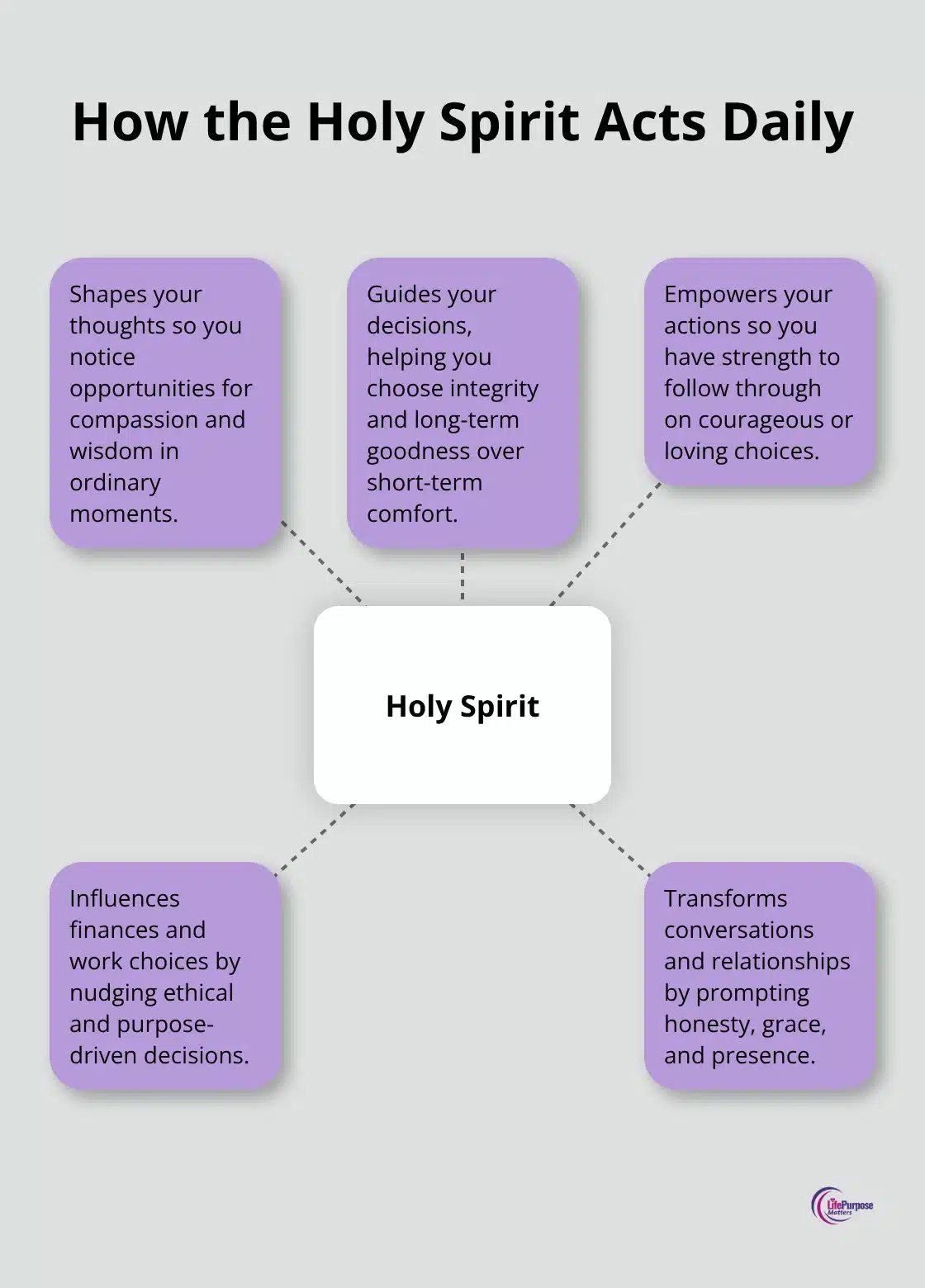
When you operate from that connection rather than from fear, habit, or what others expect, you’re living spirit-filled. Romans 8:9 tells us that if you’re born again, the Holy Spirit already dwells within you-this isn’t something you earn or achieve through perfection. What changes is how much you actually rely on that presence.
A spirit-filled life means you consciously invite the Holy Spirit to lead in your finances, your conversations, your work choices, and how you treat people. It’s the difference between knowing God exists and actually letting Him run your day.
Breaking the Misconception About Spirit-Filled Living
Most people get stuck here: they think spirit-filled living means constant joy or never struggling again. That’s not real. A spirit-filled life includes doubt, frustration, and setbacks-the difference is that you don’t face them alone. When you truly rely on the Holy Spirit, you confess sin quickly instead of hiding it, you ask for wisdom before making decisions, and you trust that God’s guidance is better than your own plans, even when you don’t understand why.
Daily Practice, Not a One-Time Event
Ephesians 5:18 describes the work of the Holy Spirit as divine sovereignty requiring human submission, not a one-time event. This is daily work. It looks like starting your morning by committing your day to Jesus, staying aware of the Holy Spirit’s direction throughout your day, and running back to forgiveness when you stumble rather than spiralling into shame.
The practical result? People who live this way report greater peace during chaos, clearer decision-making, and genuine freedom from repeating the same mistakes. Your relationships improve because you respond from the Spirit’s love rather than react from your wounds. That transformation happens when you stop treating the Holy Spirit as an occasional visitor and start treating Him as the constant guide He actually is, which means the next step is learning exactly how to build that daily connection.
How to Build a Daily Spirit-Filled Practice
Start Your Morning with Concrete Commitment
Your morning sets the tone for everything that follows. This isn’t vague spirituality-it’s concrete action.
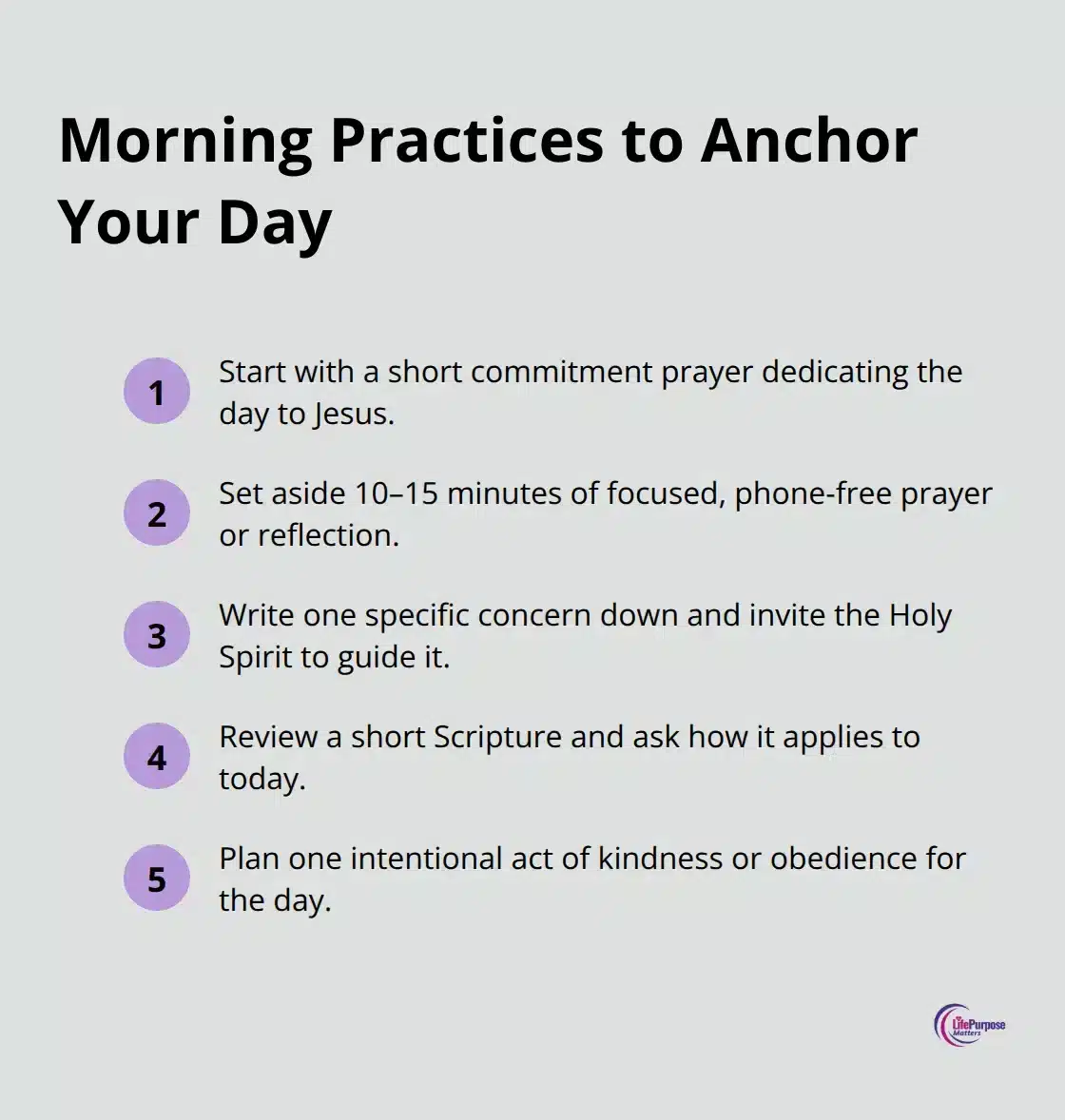
A prayer like “Jesus, I want you at the centre of my life and commit to serve and obey you through your power, anytime, anywhere, at any cost, to do anything” anchors your day in actual surrender rather than wishful thinking. The words matter less than what happens next. Dedicate focused time each morning to express your worries to God and seek His peace.
Practice Spiritual Breathing Throughout Your Day
Throughout your day, practice what’s sometimes called spiritual breathing: exhale to confess specific sins and worries the moment they surface, then inhale by asking the Holy Spirit to guide your next action. This prevents small disconnections from snowballing into spiritual numbness. The key is frequency, not perfection. When you stumble, you will run back to Jesus immediately instead of waiting until Sunday or until you feel “ready.” Ephesians 5:18 emphasises being filled with joy that comes from God, which means this is daily work, not a weekly event.
Apply Scripture Directly to Your Life
Scripture study works best when you apply it directly to your actual circumstances rather than treating it as general knowledge. Read a passage, then ask yourself how it speaks to the specific decision, relationship, or struggle you’re facing today. This transforms the Bible from abstract wisdom into practical guidance that shapes your choices right now. Make Bible study a daily habit and ask God to reveal His truth to you.
Build Your Faith Community
Surrounding yourself with people who take their faith seriously accelerates spiritual growth dramatically. Discipleship strategies enhance the spiritual transformation of members in faith communities. Find someone ahead of you on this journey-not a counsellor or therapist, but an ordinary Christian willing to check in regularly and pray with you. These relationships become anchors when doubt creeps in.
Surrender Control to God’s Direction
Surrendering control means making decisions based on what the Holy Spirit directs rather than what feels safest or most profitable. This looks like choosing honesty in a business deal, even when lying would benefit you, or staying in a difficult conversation when leaving would be easier. The Holy Spirit’s guidance often asks more of you than your comfort zone allows (which is exactly how you know it’s real growth, not just self-help dressed up in religious language). As you build these practices into your rhythm, you’ll face real obstacles that test your commitment-obstacles that most people encounter on this path.
What Actually Blocks Your Connection to the Holy Spirit
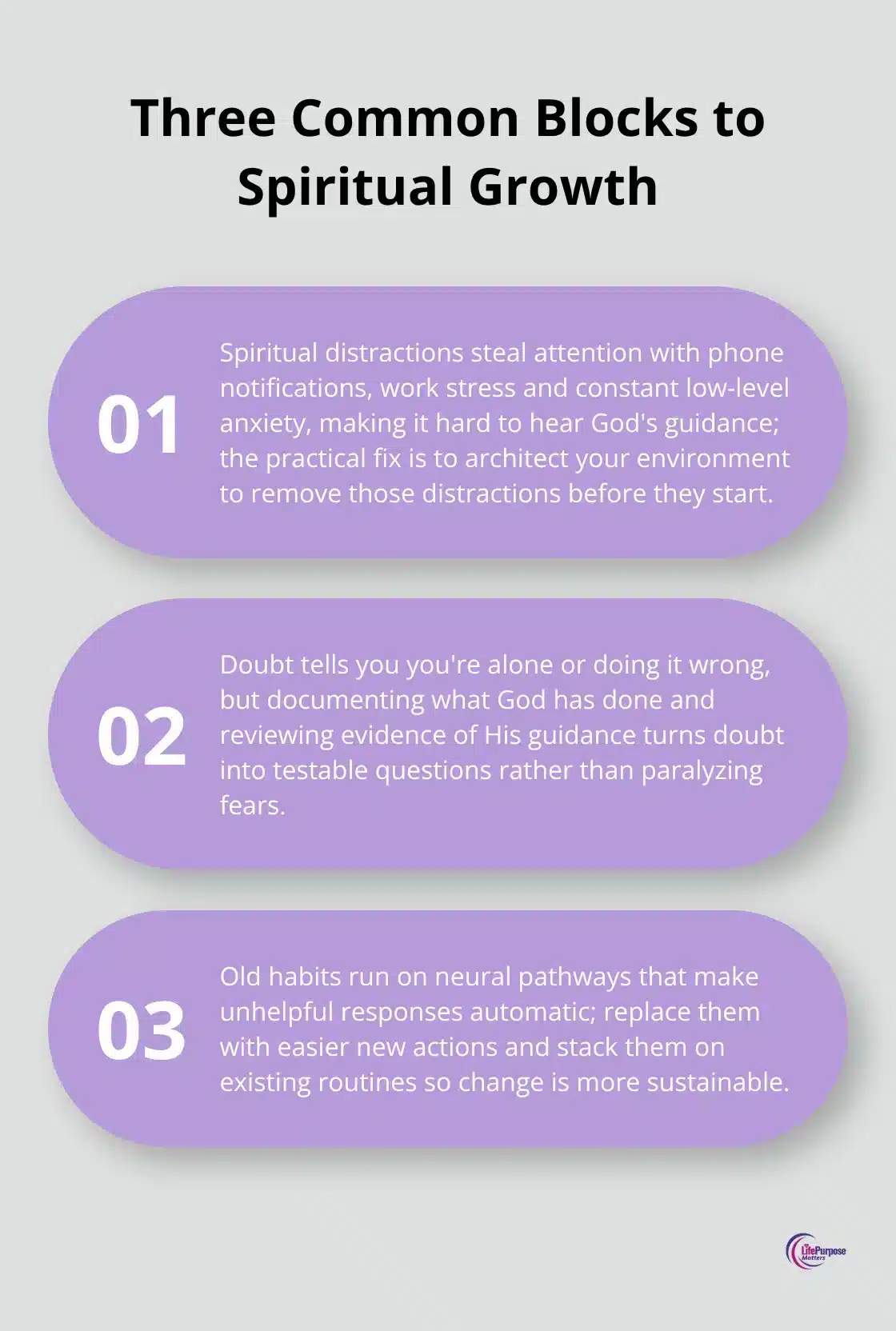
The gap between wanting a spirit-filled life and actually living one rarely comes from a lack of desire. It comes from three specific obstacles that derail most people within weeks of starting: spiritual distractions that pull your attention away from God, doubt that whispers you’re doing this wrong or that God isn’t really listening, and deeply ingrained habits that keep you stuck in old patterns even after you commit to change. These aren’t character flaws-they’re predictable friction points that everyone encounters, and knowing how to address them separates people who sustain spiritual growth from those who quit.
Remove Distractions Before They Sabotage Your Connection
Spiritual distractions are the easiest to underestimate. Your phone notifications, work stress, relationship drama, and the constant low-level anxiety of modern life create genuine noise that makes hearing the Holy Spirit’s guidance nearly impossible. Research on attention span shows that the average attention span has decreased from twelve seconds in 2000 to eight seconds now. That’s the environment you’re trying to build a spiritual connection in. The practical solution isn’t willpower-it’s removing distractions before they happen. Schedule specific times when your phone goes into another room, not just silent mode. Close your email during prayer time. If you work in an open office, take your lunch break outside or in your car, where you can actually think. One person set a phone timer for 6 a.m. to 6:15 a.m. each morning-those fifteen minutes remained non-negotiable phone-free prayer time. After two weeks, the habit stuck because the consistency created real results: clearer thinking, fewer reactive decisions, better conversations with family. Distractions don’t disappear on their own; you must architect your environment to prevent them.
Address Doubt with Evidence, Not Wishful Thinking
Doubt operates differently from distraction. It’s the voice saying God isn’t really guiding you, that this whole thing is wishful thinking, that other people experience God but you’re somehow different. This doubt intensifies when life gets hard, which is exactly backward from what you need. The antidote isn’t forced positivity or pretending doubt doesn’t exist. Doubt actually strengthens faith when you address it directly instead of ignoring it. Write down the specific doubt, not vague worry, but the exact thought. Then examine it against what you’ve actually experienced. Have you seen God’s guidance before? Has prayer changed your circumstances or your perspective? Have people in your faith community experienced what you’re doubting? Documenting these moments creates a record you can return to when doubt resurfaces. One practical step: keep a simple document titled What God Has Done, and add one entry each week. When doubt hits hard, you’re not working from memory or emotion-you’re looking at actual evidence of God’s work in your life. This shifts doubt from an abstract feeling into something testable and manageable.
Replace Old Habits with Easier New Ones
Habits that block spiritual growth are perhaps the most stubborn obstacle because they feel normal. You react with anger instead of pausing to ask the Holy Spirit how to respond. You scroll social media for twenty minutes instead of spending that time in prayer. You avoid the difficult conversation that requires actual faith. These patterns are neurologically embedded-your brain has built neural pathways that make these responses automatic. Breaking them requires more than deciding to change. You need a replacement behaviour that’s easier than the old one. If you habitually scroll when stressed, replace it with a two-minute breathing practice or a walk around the block. If you react with anger, create a pause rule: when anger rises, you wait five minutes before responding. If you avoid hard conversations, schedule them immediately after a time of prayer so the Holy Spirit’s guidance is fresh. Research from Atomic Habits shows that making small changes can transform your habits and deliver amazing results. Stack your new habit onto an existing routine: pray right after your morning coffee, confess sins right after dinner, study Scripture right before bed. These small changes compound because they address the actual mechanics of how your brain works, not just your willpower.
Final Thoughts
A spirit-filled life demands daily practice, not a one-time achievement you maintain on autopilot. The three obstacles we covered-distractions, doubt, and ingrained habits-will resurface repeatedly, and that’s not failure but normal friction. What matters is how quickly you recognise them and return to your practices.
Start with one concrete action tomorrow morning: a commitment prayer, spiritual breathing throughout your day, or removing one specific distraction from your environment. Build that single practice into your routine for two weeks before adding anything else, since small, consistent actions compound into genuine transformation far more reliably than ambitious plans you abandon by week three. The people who experience real change don’t do everything perfectly; they do one thing consistently, stumble, confess, and keep moving forward.
Your next step is immediate and specific: decide right now what one practice you’ll start tomorrow and write it down. Tell someone about your commitment, then do it honestly (not perfectly), because the Holy Spirit requires willingness, not perfection. Explore more resources at Life Purpose Matters to support your faith and help you discover your God-given purpose.