

Last week, my neighbour cornered me at the mailbox with challenging questions about Christianity. I fumbled through my answers, feeling both defensive and frustrated. His questions seemed to come from a place of pain, and my attempts to be tactful only made me sound defensive. Does this sound familiar? It can be incredibly difficult to be put on the spot, especially in a common area like a mailbox. It’s completely understandable to feel frustrated and defensive when faced with tough questions about your faith. Handling these spontaneous and uncomfortable encounters requires setting clear boundaries and recognising that you don’t have to have all the answers immediately. Christian apologetics shouldn’t feel like a battlefield.
At Life Purpose Matters, we believe that defending your faith can actually strengthen relationships rather than strain them by approaching conversations with genuine love and biblical wisdom.
What Does the Bible Actually Say About Defending Faith
First Peter 3:15 commands believers to always be prepared to give a defence of their faith with gentleness and respect. This isn’t a suggestion-it’s a direct order from Scripture. The Greek word apologia means a reasoned defence, not an emotional outburst or aggressive confrontation. Paul demonstrated this approach in Acts 17 when he reasoned with the Athenians. He took time to understand their beliefs before he presented the Gospel. He didn’t attack their idols; he built bridges through thoughtful dialogue.
Scripture Commands Gentle Defence
The biblical model for apologetics focuses on preparation and attitude. Romans 1:20 tells us God’s attributes are clearly seen through creation (this gives us solid ground for discussion). John 20:30-31 explains that Jesus’ miracles were recorded specifically to build faith through evidence. These passages show that God expects us to use both reason and revelation when we share our beliefs. Titus 3:1-7 adds practical guidance: treat others with gentleness while you remember God’s mercy in your own life.
Apologetics Builds Rather Than Destroys
True apologetics aims to win people, not arguments. Paul’s approach in 1 Corinthians 9:22 shows strategic adaptation-he became all things to all people to save some. This means you listen before you speak, ask questions instead of making statements, and use personal testimony effectively.
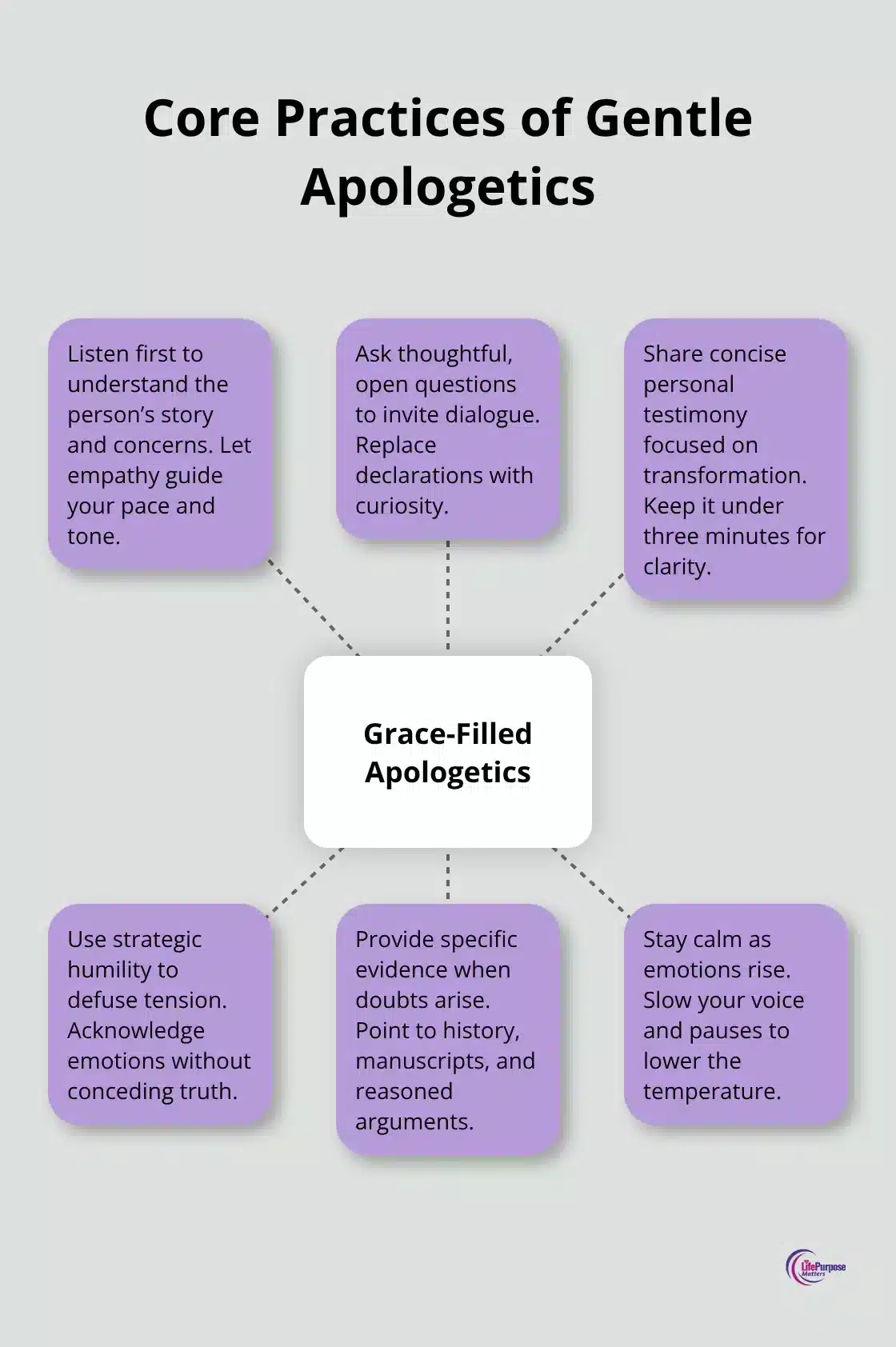
Research shows that many Americans respect Christians who can explain their beliefs without pushiness (this reveals the power of gracious dialogue). The goal isn’t to demolish opposing views but to present truth with such grace that people want to hear more.
The Foundation Matters Most
Strong apologetics requires deep biblical knowledge. You can’t defend what you don’t understand. Isaiah 43:10 declares that there is only one God, which counters pluralistic beliefs directly. Acts 5:3-4 clarifies the identity of the Holy Spirit, which illustrates His deity and personhood. John 6:29 simplifies the requirement for salvation to belief in Christ, which counters works-based ideologies. These core truths form the foundation for every conversation you’ll have about faith.
The next step involves putting these biblical principles into practice through specific conversation strategies that transform defensive encounters into meaningful dialogue.
How Can You Turn Defensive Conversations into Meaningful Dialogue
Master the Art of Strategic Listening
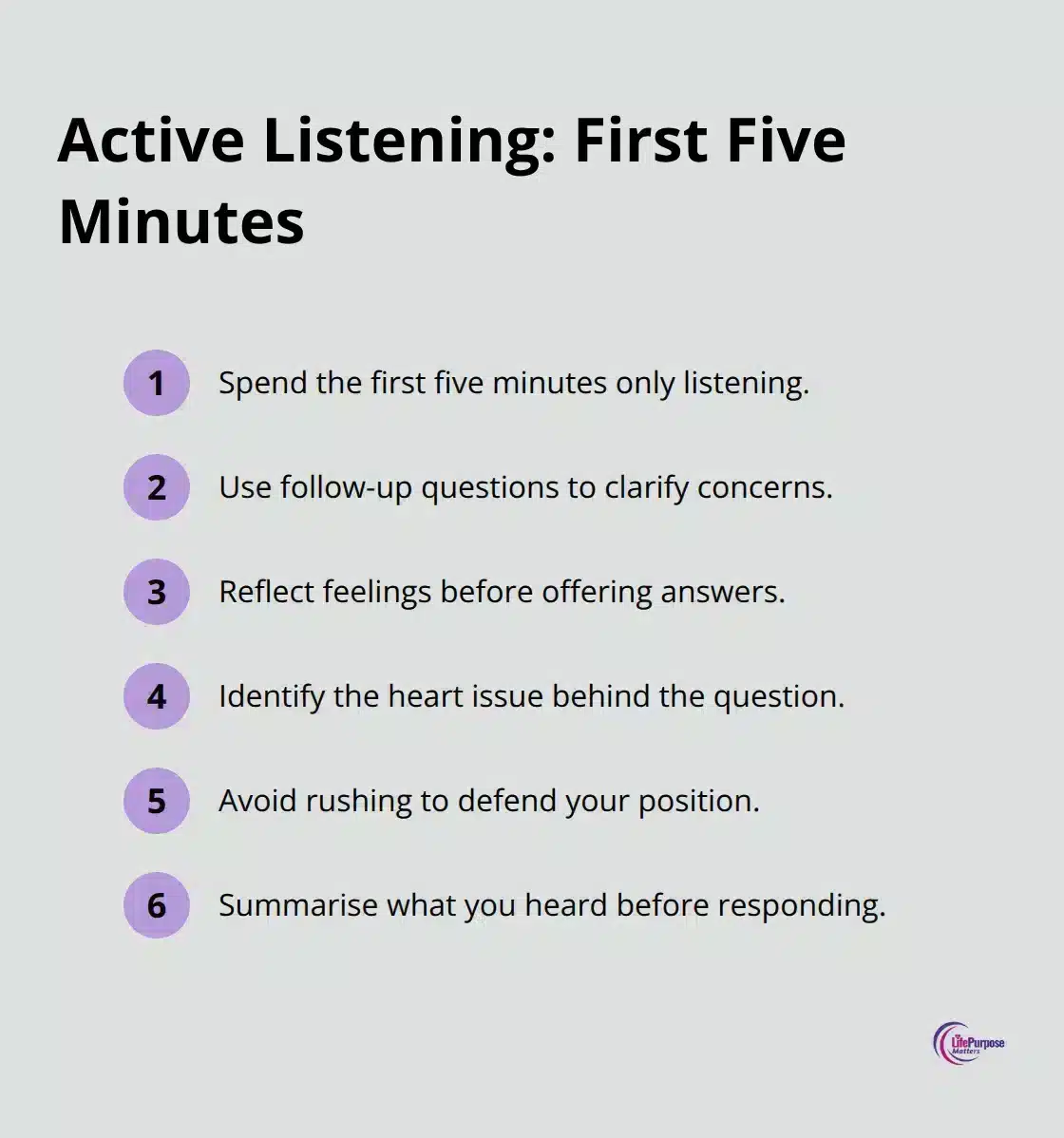
Most Christians jump straight into defence mode when someone challenges their faith. This approach backfires in most conversations, according to research. Instead, spend the first five minutes of any faith conversation listening actively to understand the person’s real concerns. When someone asks why God allows suffering, they might actually be processing personal grief or trauma. Your response changes completely when you understand their heart behind the question.
Active listening involves follow-up questions like “What experiences shaped this perspective?” or “Tell me more about that concern.” This technique builds trust and shows genuine care for the person rather than just winning points.
Transform Statements into Gentle Questions
Questions disarm hostility better than statements ever will. Instead of declaring “The Bible clearly teaches salvation through faith alone,” try asking “What do you think happens after we die?” or “How do you make sense of right and wrong in the world?” Jesus asked questions throughout the Gospels because questions invite dialogue, while statements often shut it down.
Socratic questioning works particularly well with sceptics who appreciate intellectual exploration. Questions like “Have you ever experienced something you couldn’t explain scientifically?” or “What would convince you that God exists?” open doors that direct statements slam shut.
Share Your Story with Strategic Vulnerability
Personal testimony cuts through intellectual arguments like nothing else can. Share specific moments when God intervened in your life, but keep stories under three minutes and focus on transformation rather than circumstances. Personal stories resonate more effectively than theological arguments with non-believers.
Instead of saying “God changed my life,” describe exactly how prayer helped you through a specific crisis or how biblical wisdom guided a difficult decision. Vulnerability creates connection, but strategic vulnerability maintains credibility. Share struggles alongside victories to show authentic faith rather than perfect performance.
These conversation techniques work well in calm settings, but what happens when discussions turn hostile or emotions run high? The next section addresses the toughest apologetics challenges you’ll face.
What Happens When Faith Conversations Turn Hostile
Hostile questions about faith often stem from personal pain rather than intellectual curiosity. When someone aggressively challenges your beliefs about suffering or biblical authority, they might process their own trauma or disappointment with God. Recognise this reality immediately and respond to their heart, not just their arguments. Studies from the Pew Research Centre show that 68% of Americans who left Christianity cite negative experiences with religious people as a primary factor.
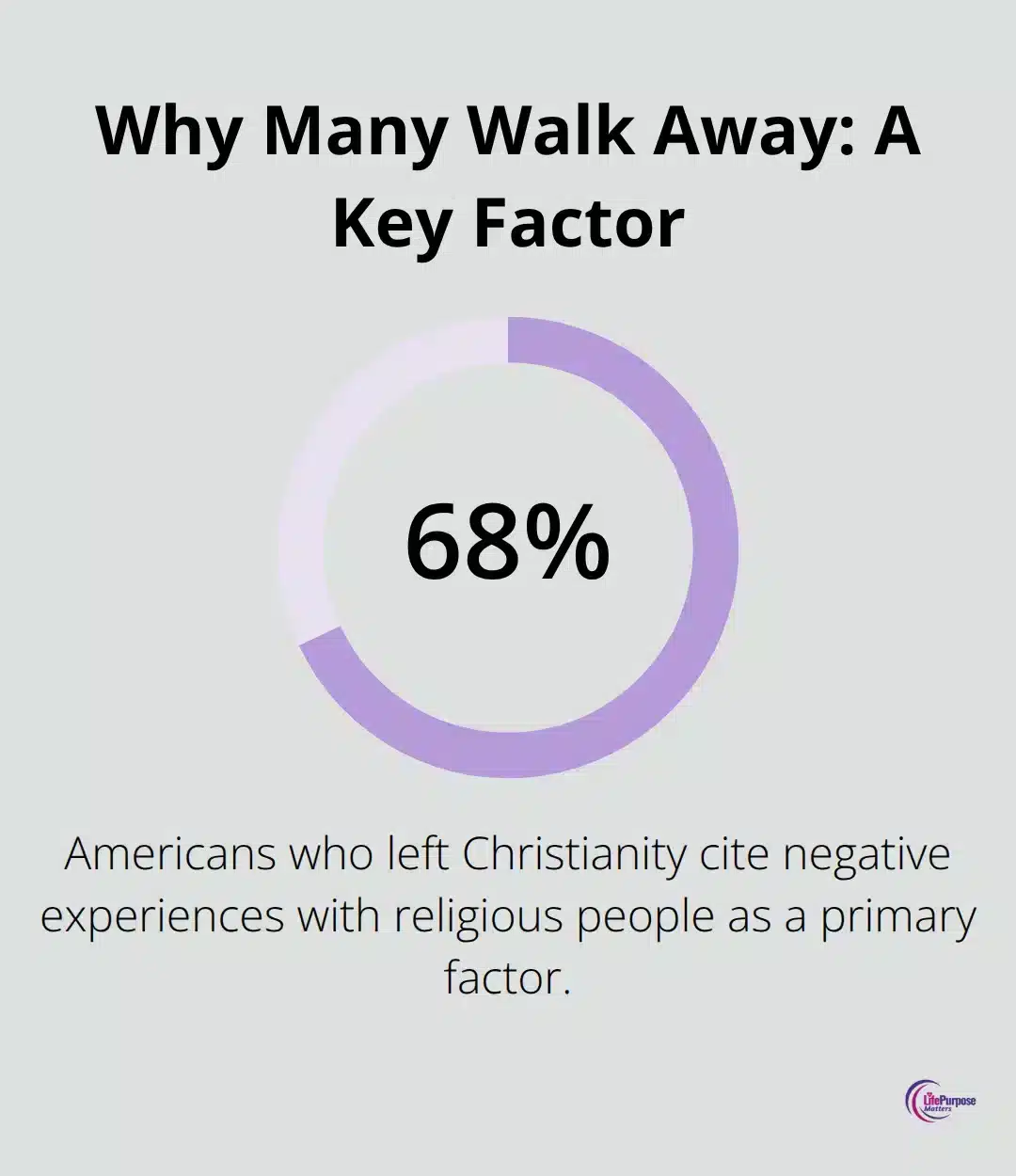
This means your gracious response could be the difference between someone who walks away from faith forever or gives God another chance.
Deflect Aggression with Strategic Humility
The moment someone attacks your faith with statements like “Christianity is just a fairy tale” or “The Bible contradicts itself everywhere,” resist the urge to fire back with counter-arguments. Instead, acknowledge their frustration with phrases like “I can see this topic really matters to you” or “That sounds like it comes from a painful experience.” This approach immediately lowers the temperature of the conversation because you validate their emotions without agreeing with their conclusions. Research from conflict resolution experts shows that assertive listening significantly reduces hostility in heated discussions. Follow up with gentle questions like “What happened that led you to feel this way about faith?” This technique transforms adversaries into conversation partners who feel heard and respected.
Handle Biblical Doubts with Specific Evidence
When people question biblical reliability, give them concrete historical facts rather than circular reasoning. Archaeological discoveries continue to confirm biblical accounts, with over 25,000 New Testament manuscript fragments that support textual accuracy. The Dead Sea Scrolls proved that Isaiah remained unchanged for over 1,000 years (which demonstrates remarkable preservation). Address specific doubts with specific evidence: carbon dating confirms Jericho’s walls fell exactly as Joshua describes, and Roman historians like Tacitus independently confirm Jesus’ crucifixion under Pontius Pilate. Never say “Just have faith” when someone raises legitimate historical questions. Instead, show them that Christianity stands up to rigorous investigation and that doubt often leads to stronger faith when addressed honestly.
Stay Calm When Emotions Escalate
Emotional conversations about faith require self-control and strategic patience. When someone raises their voice or uses inflammatory language, lower your voice and slow your speech pattern. This psychological technique forces the other person to match your energy level rather than escalate further. Take deep breaths between responses and pause for three seconds before you answer difficult questions. These micro-breaks prevent reactive responses that damage relationships and shut down dialogue. Studies show that people remember how you made them feel long after they forget what you said (so your demeanour matters more than your arguments).
Final Thoughts
Christian apologetics transforms from confrontation into connection when you approach conversations with love and grace. These principles work because they mirror Christ’s own method with difficult conversations. You create space for the Holy Spirit to work when you listen first, ask thoughtful questions, and share your story with vulnerability.
Consistent prayer and biblical study build your confidence in faith defence. Spend time each week reading Scripture to understand God’s character and promises better. Pray for wisdom before difficult conversations and for the people who challenge your beliefs (this preparation gives you peace when tough questions arise because you trust God’s truth rather than your own eloquence).
Conversion belongs to God alone, not to your persuasive abilities. Your role involves faithful witness, not forced outcomes. Plant seeds through gracious dialogue and trust the Spirit to bring growth in His timing. We at Life Purpose Matters provide resources to help you grow in confidence as you share your faith through gentle defence that strengthens relationships.