

Lucy checked her phone for the fifteenth time that morning, scrolling through perfectly curated vacation photos while sitting in her cluttered apartment. The familiar knot of dissatisfaction tightened in her chest. At Life Purpose Matters, we understand this modern struggle. Finding true contentment is essential for Christians because it serves as a “rare jewel” that anchors the soul in God’s unchanging character amidst a world characterised by fleeting material pursuits and constant restlessness. It is not merely a passive acceptance of life but an active, spiritual tranquillity born from faith in God’s wise and fatherly disposal of all circumstances.
Christian contentment feels impossible when surrounded by endless noise and comparison. Yet Scripture offers a different path-one that leads to genuine peace regardless of circumstances.
Why Does Modern Life Leave Us So Restless?
Our culture operates on a dangerous assumption: more equals better. This lie drives 95% of Americans to check their phones within an hour of waking up, according to research from Deloitte. The average person now consumes five times more information daily than in 1986, which creates mental overload that makes peace nearly impossible.
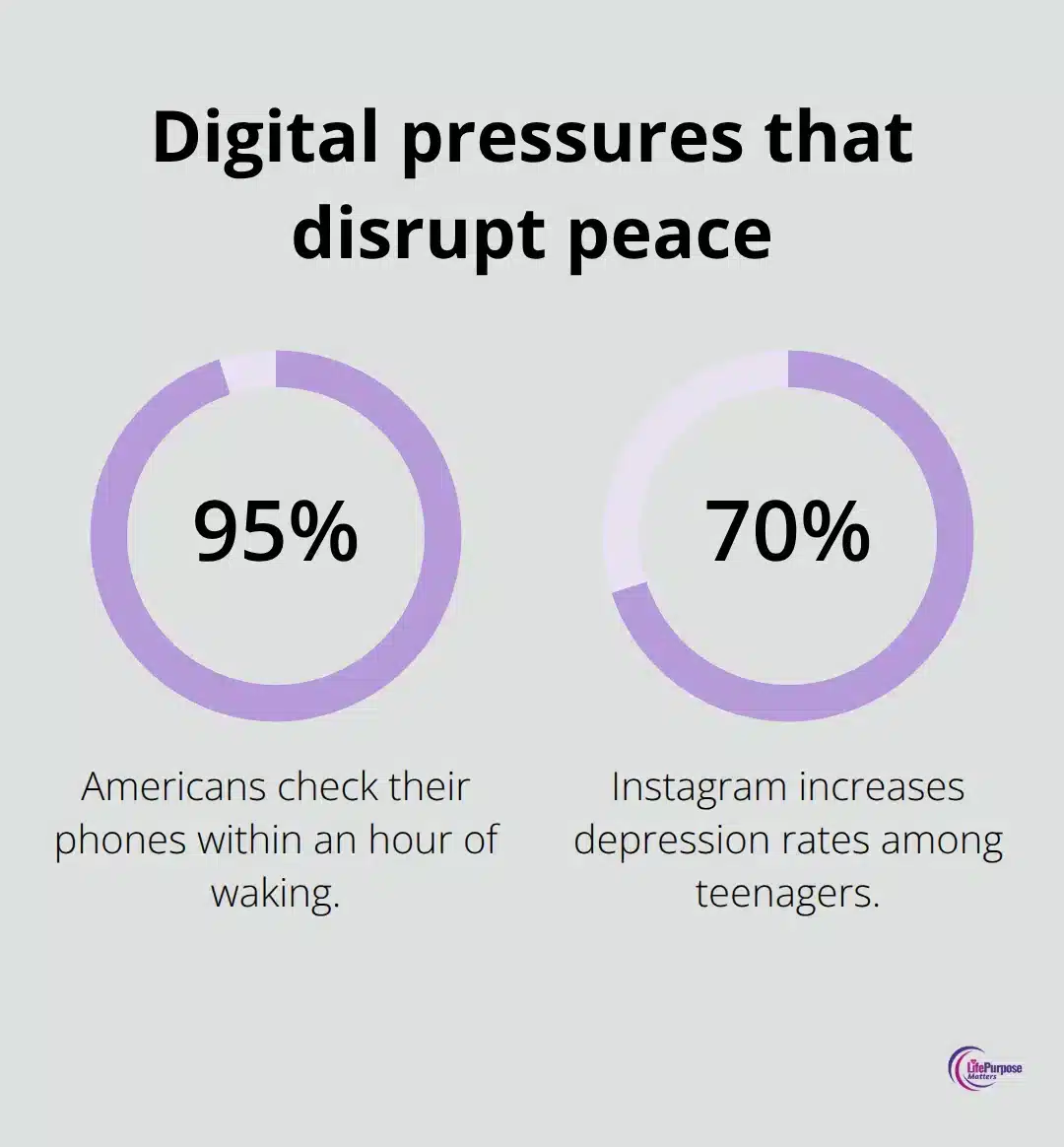
Social media platforms deliberately engineer addiction through variable reward schedules (the same psychological mechanism that gambling uses). Facebook users spend an average of 38 minutes daily as they scroll through content that triggers comparison and envy. Instagram increases depression rates by 70% among teenagers, while LinkedIn fuels professional inadequacy among adults.
The Comparison Economy Destroys Peace
Social media transforms every moment into a competition. The average person sees 1,728 posts per day that showcase others’ highlight reels while they live their own behind-the-scenes reality. This constant comparison creates what psychologists call hedonic adaptation – the more we see, the more we need to feel satisfied. Studies show that people who limit social media to 30 minutes daily experience significant improvements in loneliness and depression within just one week.
Material Pursuit Creates Endless Emptiness
Americans now carry an average debt of $6,194 on credit cards, largely from lifestyle inflation pursuit. The median household spends $1,986 annually on non-essential items while they claim financial stress. Consumer culture promises happiness through acquisition, yet countries with higher GDP often report lower life satisfaction. Denmark consistently ranks as the world’s happiest nation despite a 25% sales tax that limits material consumption. Their concept of hygge emphasizes contentment with simple pleasures rather than accumulation.
Breaking Free Requires Active Resistance
True contentment demands active rebellion against cultural programming. This means you set specific boundaries: check phones only three times daily, unfollow accounts that trigger comparison, and implement a 24-hour wait period before purchases over $100. Research from the University of California shows that people who practise gratitude journaling for just five minutes daily report 25% higher life satisfaction within two months.
Scripture offers a radically different foundation for peace – one that doesn’t depend on external circumstances or cultural approval.
What Does Scripture Actually Say About Contentment
Scripture defines contentment as autarkeia – a Greek term that means self-sufficiency through God’s provision, not human effort. This word appears in 1 Timothy 6:6, where Paul declares that godliness with contentment brings great gain. The biblical definition stands in direct opposition to cultural messages about achievement and accumulation.
Paul wrote Philippians 4:11-13 while chains bound him in a Roman prison, yet he declared he had learned the secret of contentment in any circumstance. His contentment didn’t depend on comfort, freedom, or success – it flowed from his understanding that Christ strengthened him for every situation.
Paul’s Prison Cell Strategy Works Today
Paul’s approach to contentment involved three specific practices that modern Christians can implement immediately. First, he practised present-moment awareness and focused on God’s current provision rather than worried about future needs. Research shows that mindfulness-based therapy is a promising intervention for treating anxiety and mood problems.
Second, Paul reframed circumstances through gratitude and thanked God even during imprisonment. Third, he maintained eternal perspective and viewed temporary hardships as light and momentary troubles (2 Corinthians 4:17).
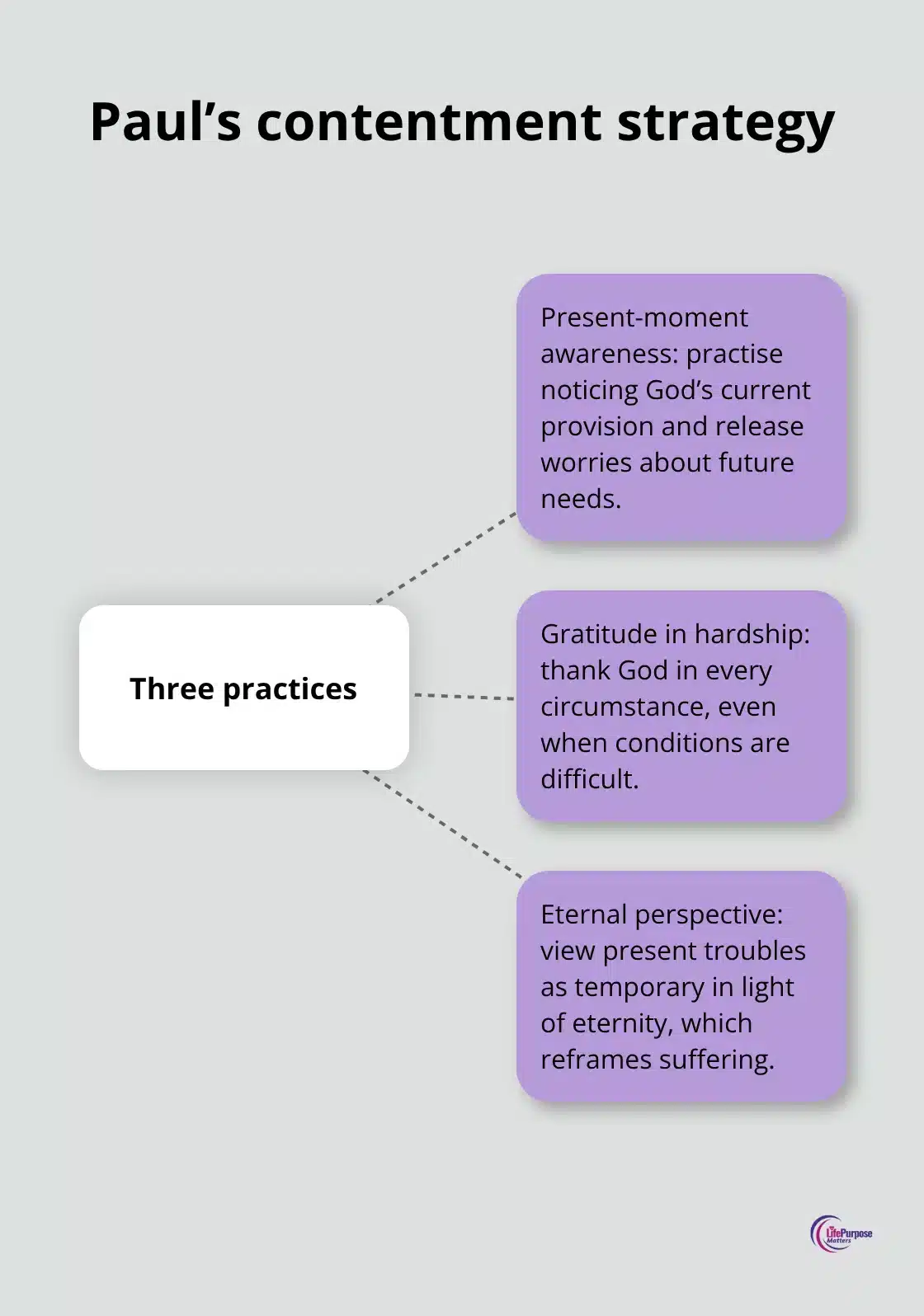
Paul’s method works because it shifts focus from external circumstances to internal spiritual resources. Christians who spend ten minutes daily in prayer specifically to thank God for current provisions report higher life satisfaction according to various studies.
God’s Provision Formula Eliminates Worry
Matthew 6:26-34 presents God’s provision formula: seek first His kingdom, and everything else gets added. This passage contains specific instructions rather than general encouragement. Jesus points to birds that neither sow nor reap yet receive daily food from their heavenly Father.
He commands believers to stop worrying about tomorrow because each day contains sufficient trouble. This approach requires daily surrender of control and active trust in God’s timing. Believers who practise this formula write down three daily provisions from God and release three daily worries through prayer experience measurable stress reduction within two weeks.
These biblical principles create the foundation for practical steps that transform restless hearts into peaceful ones.
How Do You Build Lasting Contentment Daily
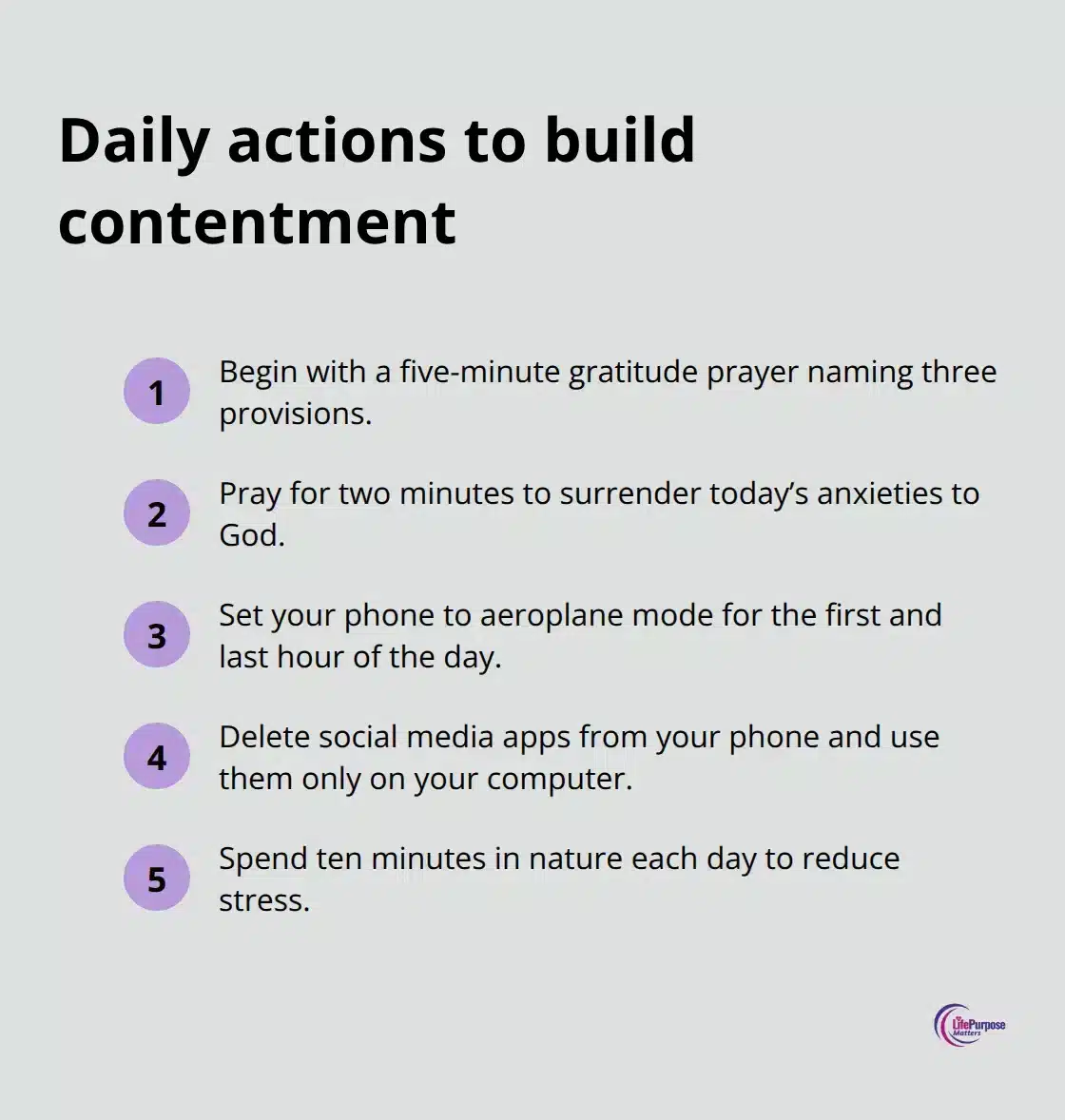
Contentment grows through specific daily actions, not wishful thoughts. Start each morning with a five-minute gratitude prayer where you name three specific provisions from the previous day – your morning coffee, a text from a friend, or simply waking up healthy. Research shows that positive journaling can improve several factors associated with psychological well-being among patients with mild to moderate anxiety.
Follow this with a two-minute prayer where you surrender today’s anxieties to God and ask for His peace to guide your decisions. This combination rewires your brain toward appreciation rather than scarcity thoughts.
Eliminate Information Overload Immediately
Your phone contains more distractions than any human mind can process peacefully. Delete social media apps from your phone and access them only through your computer, which creates natural friction that reduces usage by 40% according to digital wellness studies.
Set your phone to aeroplane mode for the first hour after you wake and the last hour before sleep. Replace mindless scrolls with intentional activities like Scripture study, calls to family members, or ten-minute walks outside. Studies from Stanford University demonstrate that people who spend just ten minutes daily in nature experience significant stress reduction and improved mental clarity.
Choose People Over Possessions
Meaningful relationships create more satisfaction than any purchase ever will. Schedule weekly coffee dates with friends, join a small group at your church, or volunteer at a local charity where you can serve others while building connections.
Research from Harvard’s Grant Study (which followed participants for over 80 years) proves that relationship quality predicts life satisfaction far more accurately than income or career success. Make Sunday dinners a weekly tradition where you invite different people to share a simple meal and genuine conversation.
Create Sacred Rhythms That Anchor Peace
Establish consistent daily rhythms that connect you to God’s presence throughout your day. Read one Psalm each morning before you check your phone, pray for five minutes during lunch breaks, and reflect on God’s faithfulness each evening before bed.
These sacred rhythms provide stability when external circumstances shift unexpectedly. Research shows that regular doses of encouragement grounded in faith can reduce anxiety, lift mood, build resilience, and foster optimism and self-worth.
Final Thoughts
God designed you for peace, not perpetual restlessness. His blueprint for Christian contentment doesn’t require perfect circumstances, unlimited resources, or social media approval. This contentment flows from trust in His provision and satisfaction in His presence rather than pursuit of endless material gain.
Your purpose extends far beyond accumulation of possessions or achievement of cultural definitions of success. When you align your life with God’s design, you experience deep satisfaction that comes from life according to His plan rather than society’s demands. These choices create transformation that brings genuine peace to your restless heart.
We at Life Purpose Matters provide Christian resources to help you discover and live out your God-given purpose. Through our content, we guide those who seek deeper connection with their faith and meaning through Christian teachings. Your restless heart can find the peace it craves when you trust His provision and embrace His purpose for your life.