

Kate stared at her phone at 3 AM, scrolling through medical bills after her husband’s cancer diagnosis. The weight of uncertainty felt unbearable, and her faith wavered like never before. Knowing that we have God does not mean we won’t face life’s challenges. However, in Deuteronomy 31:6, God promises never to leave us nor forsake us. Finding Christian encouragement in dark times involves leaning on God’s unchanging presence and His promises through prayer, Scripture, and community, trusting His higher purpose even when things are unclear, and finding hope in Jesus as the ultimate Light that darkness cannot overcome. Key practices include reading the Bible (such as Psalm 46:1 or Romans 8:28), praying about your feelings, serving others for perspective, and remembering that trials test and strengthen faith, leading to steadfastness and grounding in Scripture, spiritual disciplines, and faith-based terminology.
At Life Purpose Matters, we understand that life’s darkest moments can shake even the strongest believers. Christian encouragement isn’t just about positive thinking-it’s about finding God’s presence when everything feels hopeless.
Biblical Foundations for Hope in Difficult Seasons
Where Scripture Speaks to Our Deepest Pain
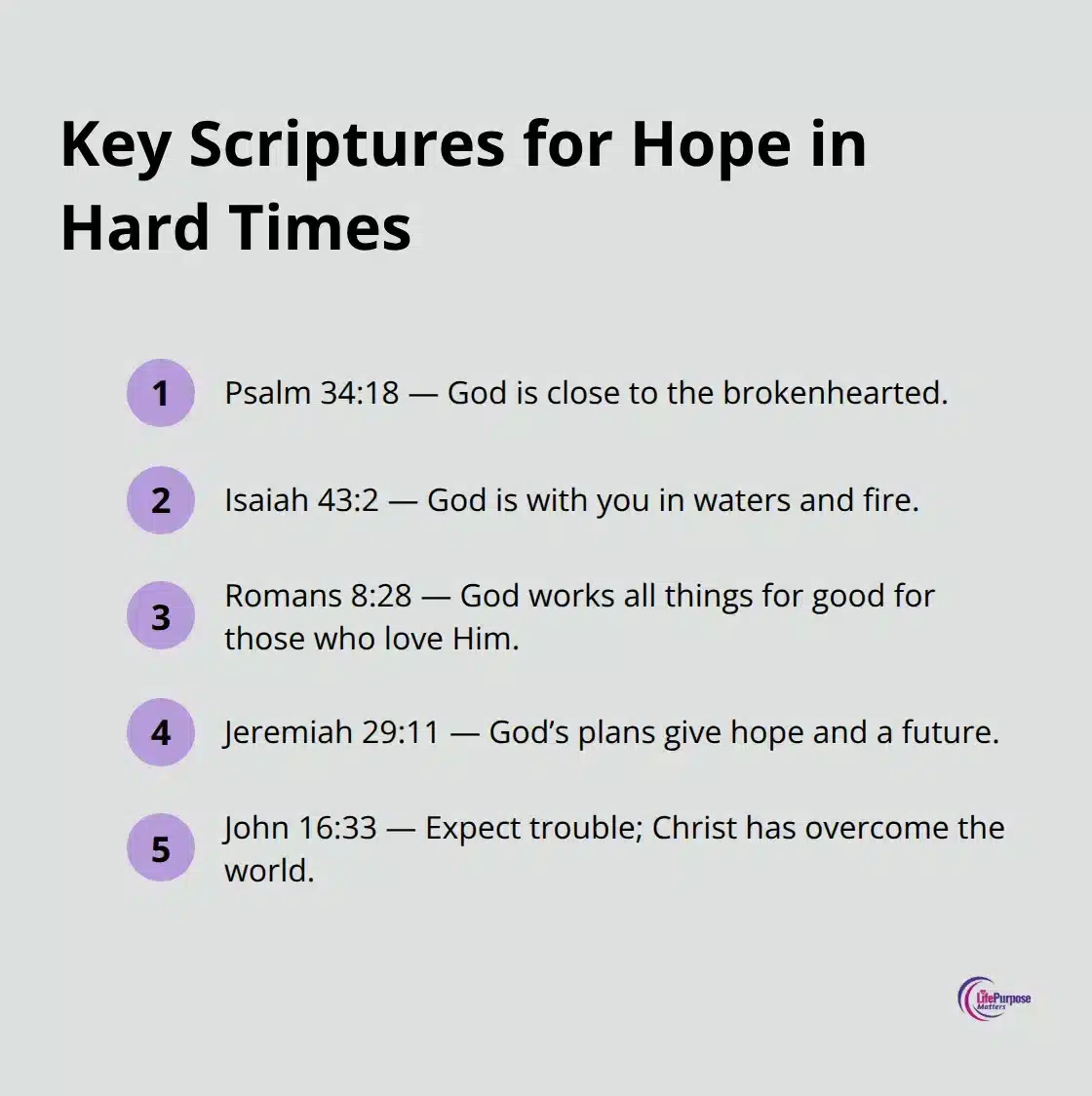
The Bible doesn’t sugarcoat suffering. When Job lost everything-his children, health, and wealth-he questioned God directly, and God didn’t punish him for it. This raw honesty appears throughout Scripture because God knows our pain intimately. Psalm 34:18 states that the Lord is close to the brokenhearted, not distant from them. Isaiah 43:2 promises that when you pass through waters, God will be with you, and flames won’t consume you.
These aren’t empty platitudes but concrete promises from a God who entered human pain through Christ.
Biblical Leaders Who Faced Real Hardship
David wrote his most powerful psalms while he fled for his life in caves. Moses led Israel through 40 years of wilderness travel, faced constant rebellion and doubt. Paul wrote letters of joy from prison cells after beatings, shipwrecks, and rejection. Joyce Meyer emphasises that God never wastes a hurt; these leaders’ testimonies became foundations for millions who face similar struggles. Their stories prove that spiritual giants aren’t those who avoid hardship but those who trust God through it.
God’s Specific Promises for Dark Seasons
Romans 8:28 doesn’t promise everything will be good-it promises God works everything together for good for those who love Him. This distinction matters enormously when you face a real crisis. Jeremiah 29:11 reveals God’s plans are for welfare, not calamity, to give you hope and a future. John 16:33 acknowledges tribulation as certain but declares Christ has overcome the world (and so can you). These promises aren’t wishful thoughts but legal contracts from a faithful God who cannot lie.
These biblical foundations provide the bedrock for practical steps that transform knowledge into daily strength and comfort.
Practical Ways to Find Encouragement Through Faith
Transform Prayer From Ritual to Real Conversation
Prayer becomes most powerful when you shift from ritual to honest conversation. Start each morning by telling God exactly how you feel and what you fear. Research shows that religious and spiritual involvement has positive associations with cardiovascular health and overall well-being. Set specific times for prayer – 5 AM before distractions hit, lunch breaks for midday refocus, and bedtime for gratitude. Keep a prayer journal where you write requests and mark answers. This practice creates tangible evidence of God’s faithfulness when future struggles arrive.
Build Your Support Network With Purpose
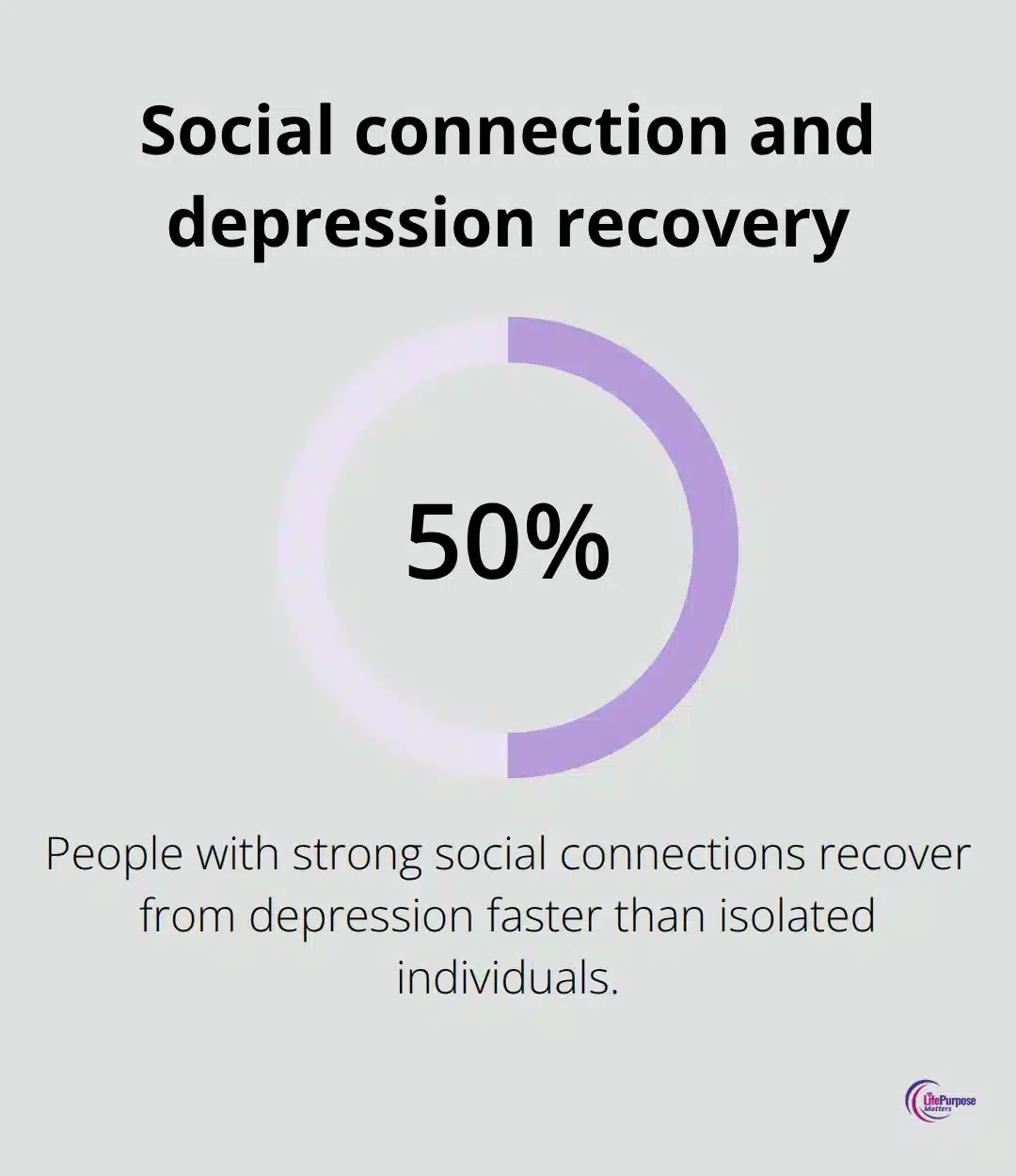
Join a small group at church rather than attend services alone. Research from the American Psychological Association demonstrates that people with strong social connections recover from depression 50% faster than isolated individuals. Look for groups that meet weekly, not monthly-consistency builds trust.
Celebrate Recovery programmes specifically address hurts, habits, and hang-ups through biblical principles. These groups don’t offer quick fixes but create safe spaces for honest struggle. Find people who pray with you, not just for you.
Choose Your Spiritual Input With Intention
Worship music changes brain chemistry by releasing endorphins and reducing cortisol levels. Create playlists for different emotions-songs for grief, hope, and gratitude. Christian authors like Max Lucado and Joyce Meyer write from personal hardship and offer practical wisdom over theoretical concepts. Read one psalm daily instead of trying to complete entire books quickly. Christian meditation apps like YouVersion provide daily verses with reflection questions (these tools work best when used consistently, not sporadically during crisis moments).
These practical steps create the foundation you need to build lasting spiritual resilience that will carry you through whatever challenges lie ahead.
Building Spiritual Resilience for Future Challenges
Establish Daily Spiritual Foundations
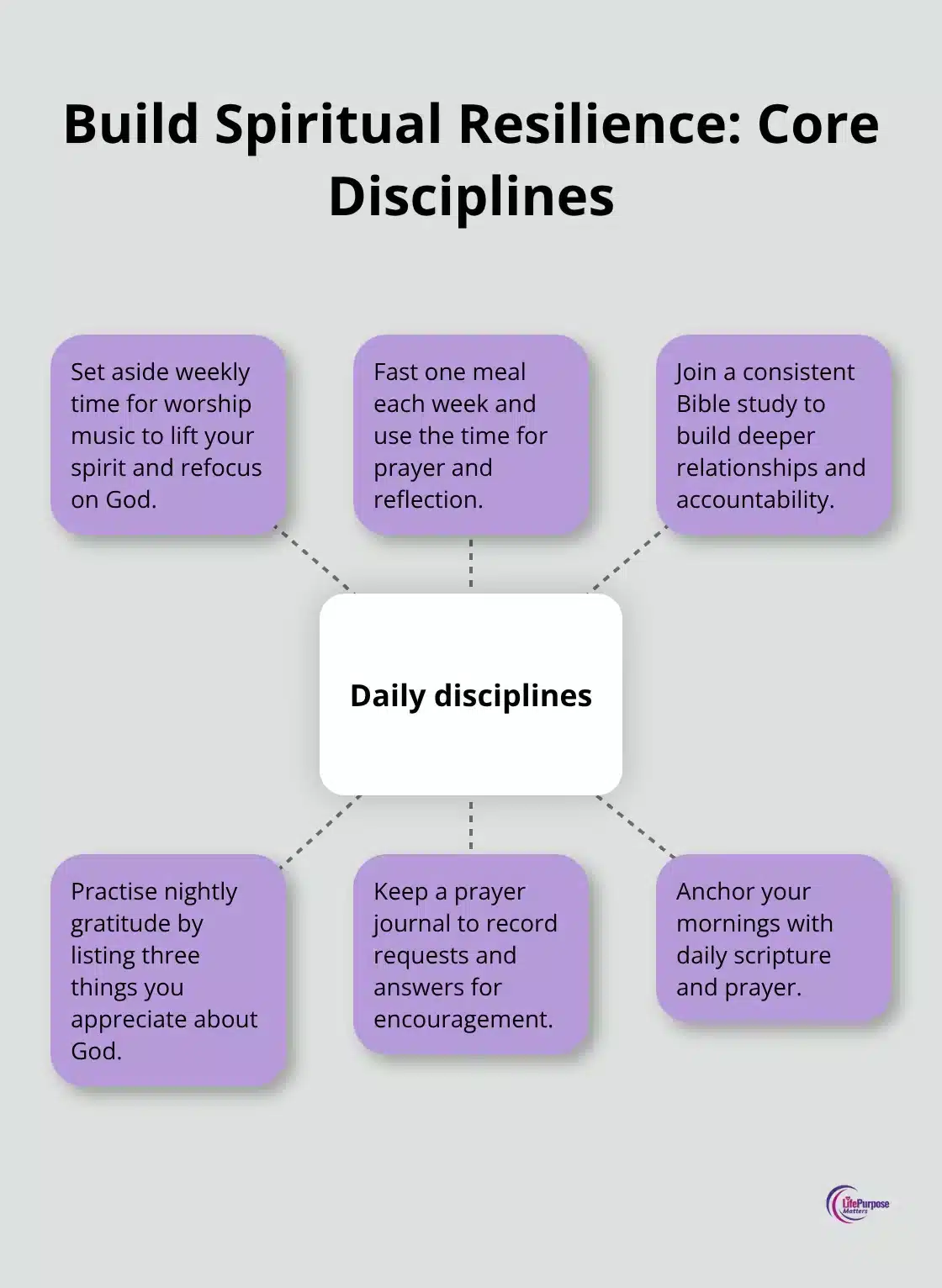
Spiritual resilience develops through deliberate daily choices made long before storms hit. Start each morning with 15 minutes of scripture and prayer before you check your phone or email. Studies show that people who maintain daily spiritual practices improve wellbeing and quality of life through positive religious coping. Choose one specific time daily for prayer, one verse to memorise weekly, and one spiritual book to read monthly. Track these habits in a journal or app because accountability creates consistency.
Make Christ Your Daily Priority
Transform your relationship with Christ from Sunday ritual to daily partnership. Talk to Him while you drive, cook, or walk. Share your fears about upcoming meetings, financial pressures, or family conflicts in real time rather than waiting for formal prayer times. Read one chapter of the Gospels each week to understand how Jesus handled rejection, exhaustion, and opposition. Apply His responses to your current struggles instead of treating scripture as historical information. When you have to make decisions, ask what Jesus would do in your specific situation rather than make choices based solely on logic or emotion.
Trust God’s Timeline over Your Urgency
Stop demanding immediate answers to prayer and start looking for God’s work in unexpected places. Proverbs 3:5-6 instructs us to lean not on our own understanding because human perspective is limited and often wrong. When you want something to happen in three months but it takes three years, choose to believe God’s timing is better than yours (even when it feels frustrating). Write down your prayers with dates, then review them six months later to see how God answered differently than expected. Most breakthrough moments happen after extended waiting periods, not during initial requests. Accept that unanswered prayers often protect you from outcomes that would ultimately harm you.
Create Healthy Spiritual Disciplines
Build routines that strengthen your faith before a crisis hits. Set aside time each week for worship music that lifts your spirit and connects you to God’s presence. Fast one meal weekly and use that time for prayer and reflection instead of food. Join a Bible study group that meets consistently (weekly attendance builds deeper relationships than monthly gatherings). Practise gratitude by writing three things you appreciate about God each evening. These disciplines create spiritual muscle memory that activates automatically when life becomes difficult.
Final Thoughts
When you look back at your hardest moments, you’ll often see God’s fingerprints where you missed them before. Sarah, who faced her husband’s cancer diagnosis, later found that financial stress led them to a church community that became their strongest support system. These experiences become testimonies that strengthen your faith and help others who walk similar paths.
Your struggles aren’t wasted when you share them with people who face comparable challenges. Christian encouragement multiplies when you offer hope based on real experience rather than empty words. The person who sits in your small group and just received devastating news needs to hear how God carried you through your darkest season (your testimony becomes their lifeline).
God uses broken people to heal other broken people because authenticity connects where perfection cannot. When you choose to trust God’s plan despite unanswered questions, you model faith for others who watch your journey. We at Life Purpose Matters believe that everyone has a unique purpose, and Life Purpose Matters offers resources to support individuals on their spiritual journey as they live out their God-given purpose.