

I still remember the night my friend Sarah sat in her car in the car park, tears streaming down her face. Her job had just disappeared, her savings were depleted, and everything felt hopeless. But what struck me most was how she found her way back, not through circumstances changing, but through something deeper.
At Life Purpose Matters, we’ve learned that heavenly hope isn’t about pretending everything will work out perfectly. It’s about anchoring yourself to something far more stable than your current situation. When trials hit hard, this kind of hope becomes your lifeline.
What Scripture Really Teaches About Hope in Hard Times
The Bible doesn’t sugarcoat suffering. Romans 5:1-5 lays out a brutally honest progression: justification by faith brings peace with God, but then comes rejoicing in hope while tribulations produce perseverance, perseverance builds character, and character deepens hope. This isn’t theoretical, it’s a documented pathway through pain. The apostle Paul watched this unfold in real churches facing actual persecution, not imagined trials.
The Foundation That Never Shifts
What makes heavenly hope different from earthly hope is the foundation. Earthly hope depends on circumstances changing: your job returns, your diagnosis improves, your relationship heals. Heavenly hope anchors to God’s character and His promises, which don’t shift when life collapses. When Sarah sat in her car that night, her earthly hopes had evaporated, but the heavenly kind remained intact because it never rested on her paycheque.
Scripture makes this distinction crystal clear. First Peter 4:13 says those who share in Christ’s sufferings can rejoice, knowing they participate in something far larger than their immediate pain. Hebrews 4:15 reminds us that Jesus fully understands our weaknesses and temptations, making Him accessible during our darkest moments rather than distant from them. God serves as our refuge and strength, a very present help in trouble when circumstances feel overwhelming.
Learning From Those Who Refused to Quit
Job lost everything-his wealth, his children, his health-yet Psalm 34:18 describes how the Lord stands near to the brokenhearted and saves those crushed in spirit. Job’s story proves that maintaining hope during trials doesn’t require understanding why the trials exist. Abraham faced impossible circumstances and chose to trust God anyway, becoming known as God’s friend through his faith (James 2:23).
These weren’t people who pretended their pain didn’t matter. They faced crushing realities and found their footing in God’s faithfulness during previous seasons. That’s actionable for you: when doubt creeps in, trace back to moments when God came through. Write them down. Revisit them. James 5:10-11 specifically tells us that prophets endured with patient perseverance, establishing a pattern you can follow. The crown of life awaits those who love God and persevere under trial-not as a distant abstraction but as a concrete reward that transforms how you view your suffering today.
Moving From Understanding to Action
These biblical examples aren’t museum pieces. They show you that heavenly hope operates differently than you might expect. The next step involves moving this understanding into your actual life, where doubt whispers loudest and faith feels hardest to maintain.
Building Your Hope Through Prayer, Community, and God’s Track Record
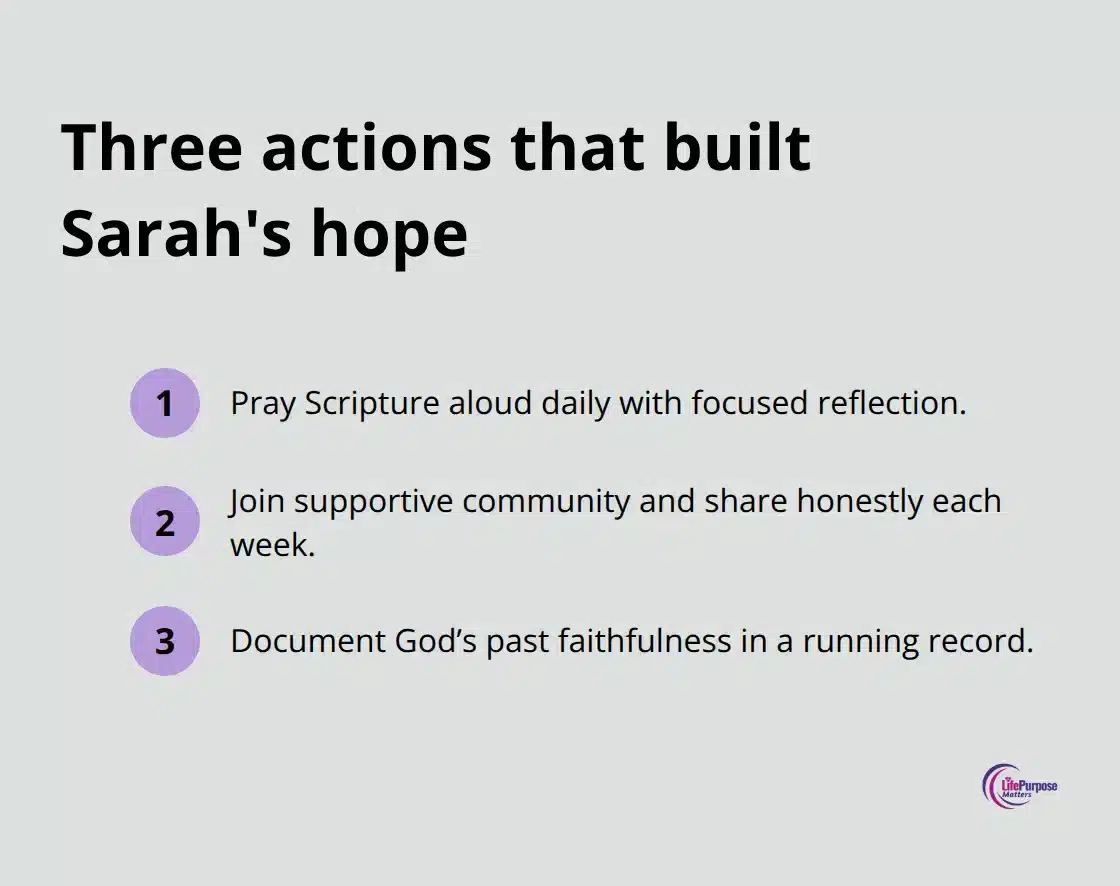
Understanding heavenly hope intellectually differs vastly from living it when your world crumbles. Sarah’s breakthrough came when she stopped waiting for circumstances to shift and instead took three concrete actions that rewired how she approached her crisis.
Saturate Your Mind With Scripture-Based Prayer
The first action involved completely restructuring her prayer life. She stopped praying vague requests and started praying specific scriptures back to God, particularly Romans 5:1-5 and 1 Corinthians 2:9, which promises that no eye has seen what God has prepared for those who love Him. Sarah set a timer for fifteen minutes each morning and read one hopeful passage aloud, then spent ten minutes writing down what that verse meant for her current situation. This wasn’t positive thinking disguised as faith-it was deliberately saturating her mind with God’s promises when despair felt more natural.
Refuse to Suffer Alone
The second shift involved her refusal to suffer alone. She joined a small group at her church where four other people faced job loss or financial strain. Sarah attended weekly, shared her fears without filtering, and heard how others had watched God provide in unexpected ways. One group member mentioned how her family survived eighteen months of unemployment through community meals and job leads from church members. That wasn’t theory-it was a neighbour sitting across from her saying God showed up through actual people. She also started a weekly text thread with two close friends where they each shared one way they’d seen God’s faithfulness that week, no matter how small. This practice combatted the isolation that makes doubt feel inevitable.
Document God’s Past Faithfulness
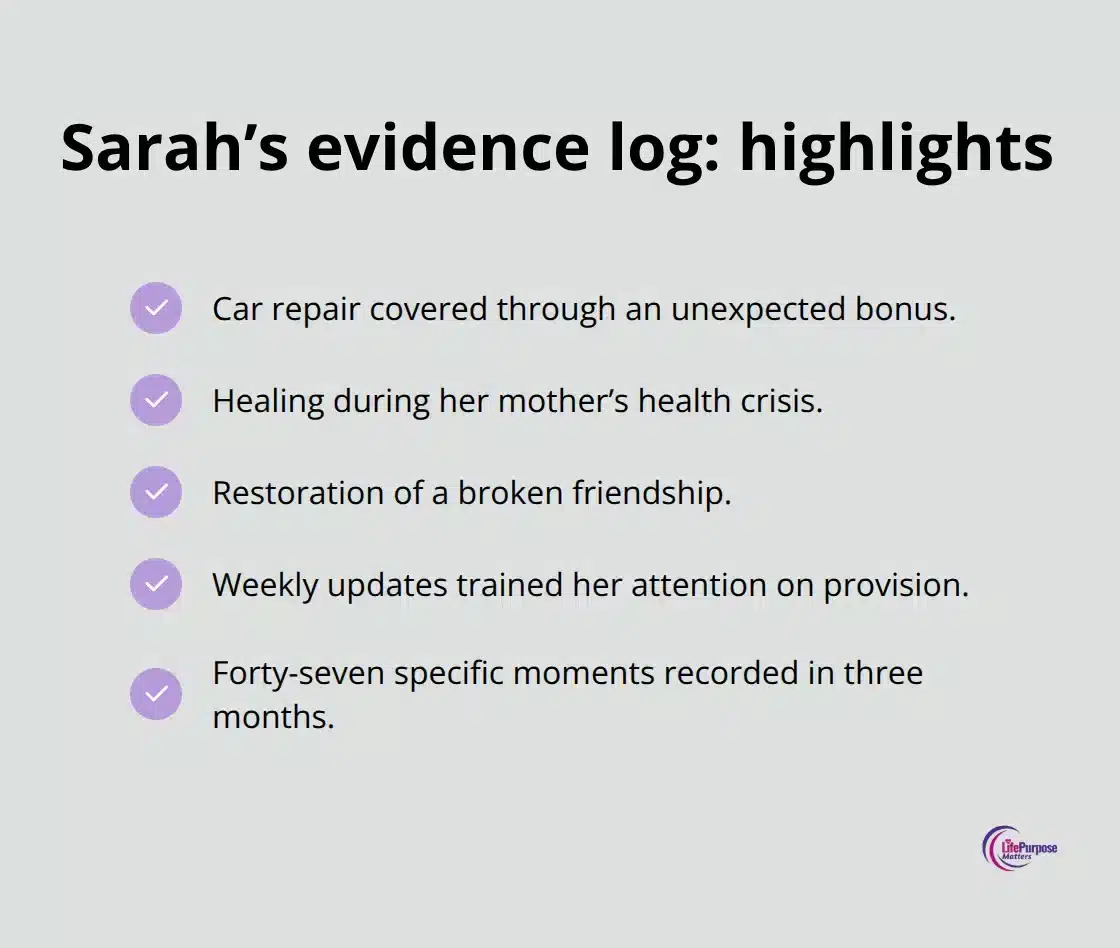
The third action required her to document God’s past faithfulness. She created a simple spreadsheet listing specific times God had provided, protected her, or answered prayer over the past five years. When doubt whispered that God had abandoned her, she scrolled through that list. She’d written down how God provided a car repair through an unexpected bonus, how He brought healing to her mother’s health crisis, how He restored a broken friendship. James 1:2-4 tells believers that trials produce perseverance and perseverance produces maturity, but Sarah needed concrete evidence that God had followed through before. She added to that spreadsheet every single week, training her brain to notice God’s provision rather than fixate on what was missing. Within three months, she had documented forty-seven specific moments.
That’s not magical thinking-that’s deliberate rewiring of your neural pathways toward hope grounded in evidence rather than circumstance.
These three actions transformed how Sarah faced her financial crisis. But the real test came when circumstances still didn’t improve quickly. What happened next revealed whether her hope would hold when patience wore thin.
Overcoming Doubt and Fear When Hope Feels Distant
Recognising When Doubt Creeps Into Your Faith
Sarah’s breakthrough lasted six weeks. Then the job market stalled, her savings dwindled further, and doubt crept back in with brutal efficiency. She found herself questioning whether God actually cared about her situation or if she’d imagined His presence during those early weeks of prayer and community. This is the moment most people abandon hope entirely, convinced that their faith was fragile theatre rather than genuine anchor. The truth is far different: doubt during trials isn’t evidence that your hope was false-it’s evidence that you’re human and that your circumstances remain genuinely difficult. James 1:19-20 offers practical guidance here: when doubt rises, you listen to what God says through Scripture, speak your fears aloud only after careful thought, and resist anger at yourself for struggling. What trips most believers up is treating doubt as disqualifying rather than normal. Doubt means you’re still thinking, still wrestling, still engaged with your faith rather than numb to it.
Using Scripture and Worship to Anchor Your Hope
The antidote isn’t pretending doubt doesn’t exist-it’s anchoring yourself to practices that interrupt the doubt cycle before it hardens into despair. Sarah needed something stronger than willpower. She started a specific practice: every morning when doubt appeared, she wrote down the exact fear on paper. Then she found one Scripture that directly addressed that fear and read it aloud three times.
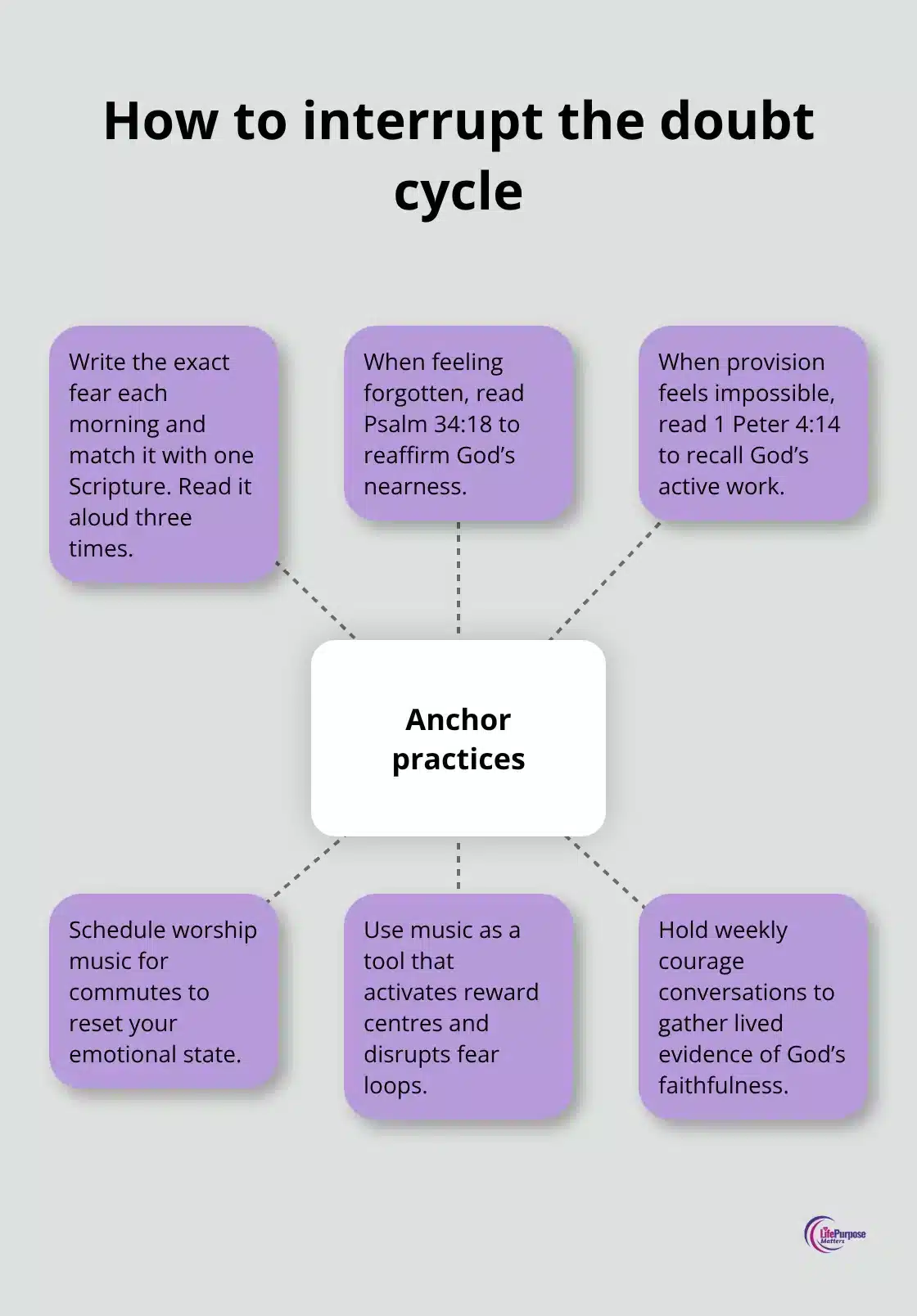
When she feared God had forgotten her, she read Psalm 34:18 aloud. When she questioned whether provision would come, she read 1 Peter 4:14, which states that the Spirit of glory rests on you during trials, proving God actively works even when circumstances feel static.
She added a second layer: she scheduled worship music for her commute, specifically instrumental versions of hymns and contemporary Christian songs. Music activates the same reward centres as food or drugs, making it a legitimate tool for rewiring emotional responses rather than mere sentiment. When her mind spiralled into fear-based thinking, the music interrupted the pattern and created space for hope to resurface.
Finding Courage Through Your Personal Relationship with God
The third layer involved what she called her courage conversations-scheduled fifteen-minute calls with one person from her small group each week where she asked them directly: How have you seen God show up when circumstances weren’t changing? This wasn’t venting or complaining; it was deliberately extracting evidence from people who’d already walked through similar valleys. One group member shared how she’d maintained confidence in God’s plan during a two-year job search, not because the search ended quickly but because she’d chosen to view the season as partnership with God rather than punishment from Him. That reframing-from abandonment to partnership-shifted how Sarah approached each day.
She stopped waiting for hope to feel natural and instead treated hope as a decision she made repeatedly, hourly, through Scripture, music, and community. The decision eventually aligned with her emotions again. What started as intellectual assent to God’s promises transformed into lived experience, where doubt still whispered but no longer controlled her actions or her faith.
Final Thoughts
Sarah’s job search took another eight months, yet her circumstances did not transform into the success story you might expect. What transformed instead was her relationship with difficulty itself. She stopped measuring heavenly hope by whether her situation improved and started measuring it by whether she remained anchored to God’s character when circumstances remained uncertain. That shift changes everything, because it frees you from the exhausting work of controlling outcomes and redirects your energy toward what you actually control-your response to hardship.
Heavenly hope rewires how you interpret trials and reframes them as evidence that God actively shapes your character for purposes larger than your current comfort. Romans 8:38-39 promises that nothing-not job loss, not financial strain, not fear about the future-can separate you from God’s love, and that statement holds true whether your circumstances improve next month or next year. When you anchor yourself to heavenly hope through Scripture, community, and documented faithfulness, you stop waiting for external validation that God cares and instead experience His presence directly through the practices that interrupt doubt and rebuild confidence.
Your purpose emerges through this process of maintaining hope within trials rather than avoiding difficulty altogether. When you refuse to abandon faith during hardship, when you choose to trust God’s promises over your circumstances, and when you build community instead of suffering alone, you become someone who reflects Christ’s character to others and can encourage those facing their own valleys. Visit Life Purpose Matters Shop to explore resources that support your spiritual journey and help you integrate your faith more fully into daily life.