
I once sat across from a friend who said, “I want to believe, but I have so many questions.” That moment stuck with me because doubt isn’t weakness, it’s honesty. At Life Purpose Matters, we believe gentle faith defence questions deserve thoughtful answers, not dismissive ones. Whether you’re wrestling with your own beliefs or helping someone else navigate theirs, this guide offers compassionate ways to explore faith without judgment.
The Three Questions That Keep People Up at Night
Real Struggles, Not Abstract Puzzles
Most people don’t wake up thinking about theodicy or comparative religion. They wake up thinking about their friend who lost a child, their coworker who abandoned faith after college, or their own nagging sense that Christianity doesn’t quite fit the modern world.
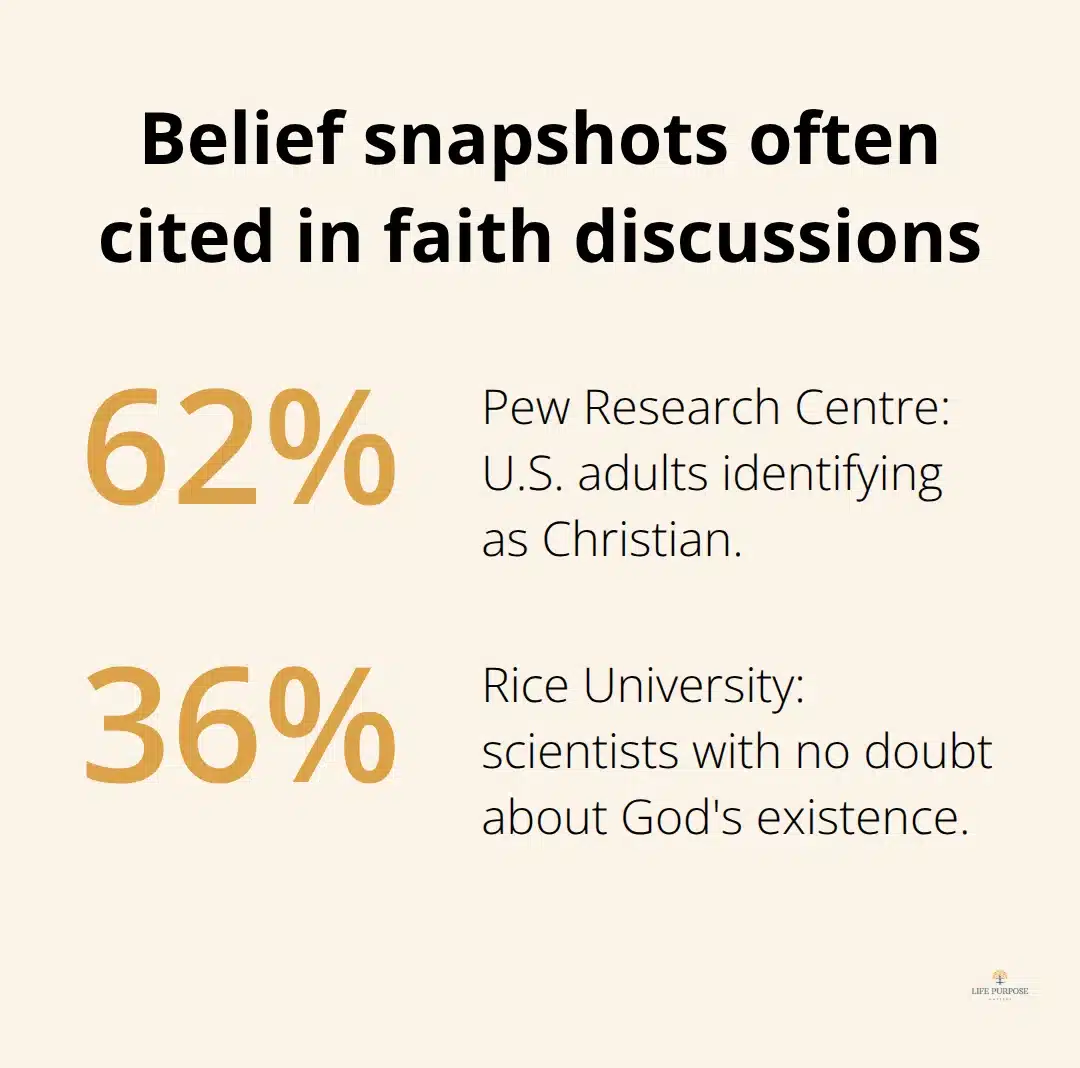
These aren’t abstract theological puzzles-they’re real tensions that shape whether someone stays curious about faith or walks away entirely. The Pew Research Centre found that 62% of U.S. adults identify as Christians, while a significant portion identify as unaffiliated with religion. That’s not because they’re lazy thinkers. It’s because these questions matter, and generic answers feel insulting to anyone asking them seriously.
When Suffering Challenges Everything
When someone asks why God allows suffering, they’re not looking for a philosophical framework. They’re often grieving, angry, or trying to make sense of the injustice they’ve witnessed. The honest answer is that this question has troubled theologians and believers for centuries, and pretending it has a neat solution dishonours both the questioner and the weight of human pain. What you can do instead is acknowledge that suffering reveals something real about our world and that faith doesn’t require you to have it all figured out. Many people find that their relationship with God deepens during suffering because they stop clinging to certainty and start asking genuine questions.
Science and Faith Don’t Have to Conflict
The tension between science and faith dissolves when you recognise that most working scientists hold religious beliefs. According to research from Rice University, nearly 36% of scientists do not doubt God’s existence, contradicting the stereotype that education erodes faith. The conflict isn’t between faith and science themselves but between specific faith claims and specific scientific findings, and those conflicts are often smaller than culture war rhetoric suggests. If someone raises this, ask them what specific claim bothers them rather than defending all of Christianity at once.
Christianity’s Strength Lies in What It Offers
On Christianity versus other religions, the strongest position isn’t that other faiths are entirely wrong but that you’ve found something true and life-giving in Christ that you haven’t found elsewhere. You don’t need to diminish Islam, Buddhism, or Judaism to explain why you’re Christian. That approach feels defensive and comes across as arrogant. Instead, describe what drew you to Jesus-his teachings on forgiveness, his example of sacrifice, the way his resurrection reframes death and meaning. Invite the other person to explore what they find compelling about their own beliefs without turning it into a competition. These conversations open doors far more effectively than arguments ever will, and they set the stage for the deeper work of actually listening to what drives someone’s questions in the first place.
When Doubt Knocks, Open the Door
Doubt Opens Pathways, Not Closes Them
Doubt isn’t the enemy of faith-it’s often the doorway into it. People who ask hard questions are usually the ones most serious about their beliefs. High-quality, nonjudgmental listening actually enhances persuasion in interpersonal conversations by reducing defensiveness, which means your first instinct when a friend questions their faith shouldn’t be to defend Christianity but to ask what’s really bothering them. That shift from defensive to curious changes everything.
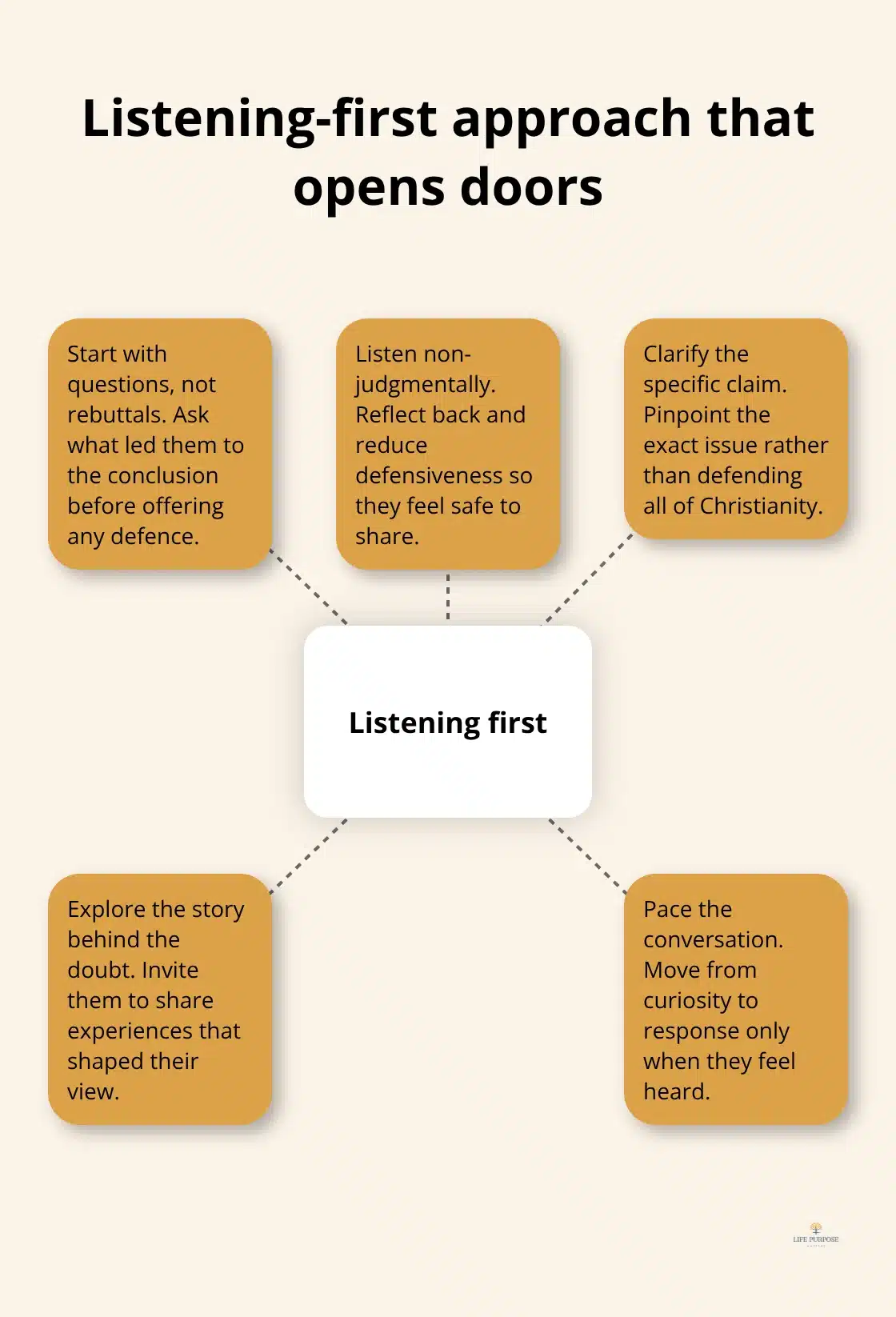
When your friend says they don’t believe anymore, the worst response is launching into apologetics. The best response is to ask what happened. Did they encounter something that contradicted their faith? Did they feel judged by church people? Did they simply grow up and find the old answers hollow? These are completely different problems requiring completely different conversations.
Stop Treating Doubt as a Personal Attack
Treating doubt as a personal attack on your own beliefs shuts down real dialogue fast. Instead, treat it as information about where that person stands spiritually. Your job isn’t to convert anyone-that’s not your responsibility, and pretending it is creates pressure that makes conversations awkward and defensive. Your actual job is to listen first, ask clarifying questions, and be honest about what you know and don’t know. Tim Downs’ framework from Finding Common Ground offers a practical structure: start with background questions about their upbringing and values, move to opinion questions about current events, then imagination questions using hypothetical scenarios, and finally emotion questions about what they actually feel. This progression feels natural and respects the other person’s pace rather than forcing them toward faith conclusions.
Honesty Builds More Credibility
When you genuinely don’t have an answer-and you will encounter these moments-say so. Thank them for the question, commit to researching it, and follow up later. That honesty builds credibility far faster than pretending certainty you don’t have. People sense when you’re faking it, and nothing kills faith conversations faster than feeling manipulated or preached at. What they need is someone who cares enough to sit with their questions rather than someone who has all the answers. This willingness to admit uncertainty actually positions you to help them move forward, because you’ve established that you value truth over winning arguments. The next step involves learning specific questions that guide these conversations toward genuine understanding rather than debate.
How to Actually Listen Before You Defend
The Power of Listening First
The strongest faith defence starts before you say anything at all. Most people defending their faith jump straight to arguments, Bible verses, or theological explanations when someone raises a doubt. That approach fails. Research on persuasion shows that people who feel genuinely heard become far more open to what you say next. Non-judgmental listening reduces defensiveness and increases receptiveness in conversations about contested topics. When your friend says they don’t believe in God anymore or that the Bible seems contradictory, your instinct to immediately counter their claim will backfire. Instead, ask what led them to that conclusion.
Understanding What’s Really Driving Their Questions
Did something specific happen? Did they read something that troubled them? Are they angry at God, or have they simply stopped believing God exists? These distinctions matter enormously because someone wrestling with God’s character needs a different conversation than someone who experienced hurt from church people or someone who intellectually rejects theism.
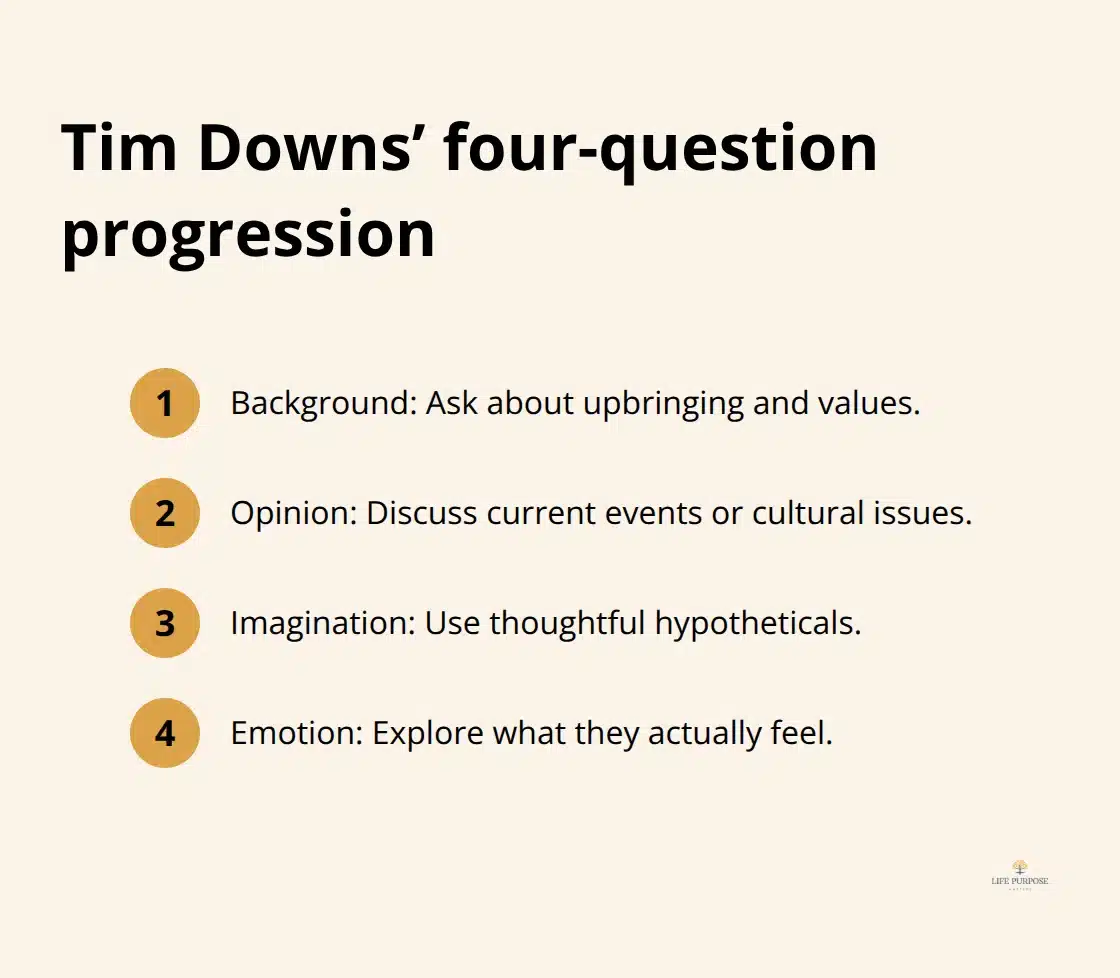
Tim Downs’ four-question framework from Finding Common Ground provides a practical structure you can actually use: start with background questions about their upbringing and what they value, move to opinion questions about current events or cultural issues, then use imagination questions with hypothetical scenarios, and finally ask emotion questions about what they actually feel. This progression feels natural in conversation rather than like an interrogation. The goal isn’t to steer them toward your conclusion but to understand where they actually stand and what’s driving their questions.
Ground Your Response in Real Experience
When you finally respond, anchor your answer in your own experience rather than abstract theology. Someone who doubts God’s goodness because of suffering doesn’t need theodicy lectures; they need to hear how you experienced God’s presence during your own pain or how faith changed your life in concrete ways. A parent who stopped attending church because they felt judged needs you to acknowledge that judgment was real and wrong, not defend the church’s intentions. If someone questions whether the Bible is reliable, you might share what specific passages shaped your own decisions or spiritual growth rather than launching into historical arguments about manuscript evidence. Personal stories carry weight that abstract defences never will. Be specific about what happened, how you felt, and what changed. Vague testimonies sound hollow.
Admit What You Don’t Know
The honesty here matters more than the polish. When you don’t have an answer, say that directly. Tell them you don’t know, but you’re curious about it too, then actually research it and follow up. That follow-up is critical because it signals that their question mattered enough for you to spend time on it. People remember when someone cares enough to come back with genuine thought rather than quick dismissal. This approach shifts faith conversations from debate to dialogue, which is where real spiritual movement happens. You establish credibility not through having all the answers but through valuing truth over winning arguments.
Final Thoughts
The conversations that matter most about faith rarely follow a script. They happen over coffee, in car rides, or late at night when someone finally feels safe enough to ask what they’ve been wondering for months. These gentle faith defence questions aren’t obstacles to overcome-they’re invitations to go deeper together, and they reveal how much someone cares about truth.
Faith grows when you stop treating doubt as an enemy and start treating it as a sign that someone thinks seriously about what matters. The people asking hard questions about suffering, science, or why Christianity matters are often the ones most hungry for genuine answers, and they don’t expect you to have everything figured out. They’re looking for someone willing to sit with them in the uncertainty and explore what’s actually true (without pretending to have all the answers).
Your next conversation about faith doesn’t need to be perfect. It needs to be honest, reflect that you value the other person more than being right, and show that your own faith is strong enough to handle questions without crumbling. If you’re looking for resources to deepen your understanding of Christian living and discover how faith shapes purpose, visit Life Purpose Matters for inspiration and guidance on your spiritual journey.