
![A Beginner's Guide to Spiritual Fasting [2025]](https://lifepurposematters.com/wp-content/uploads/emplibot/spiritual-fasting-hero-1761318516.webp "spiritual-fasting-hero-1761318516")
Bev stared at her phone at 5:47 AM, feeling spiritually empty despite her busy church schedule. She’d heard about spiritual fasting but had no idea where to start. Many Christians face this same uncertainty when considering their first fast. We at Life Purpose Matters created this beginner’s guide to help you approach spiritual fasting with confidence and biblical wisdom.
What Makes Spiritual Fasting Different from Regular Dieting
Spiritual fasting is a voluntary abstinence from food or other pleasures specifically to draw closer to God and strengthen your faith. Unlike dieting for weight loss or health benefits, spiritual fasting redirects your physical hunger into spiritual hunger for God’s presence. Jesus himself fasted for forty days in Matthew 4:1-2, which establishes fasting as a normal Christian practice rather than an extreme religious ritual.
Biblical Foundation Shows Fasting as Expected Practice
Scripture assumes Christians will fast regularly. In Matthew 6:16-18, Jesus says “when you fast,” not “if you fast,” which indicates he expected his followers to incorporate fasting into their spiritual routine. The early church leaders in Acts 13:2 and Acts 14:23 used fasting to seek God’s direction for major decisions. King David fasted when he sought God’s intervention, and the people of Nineveh fasted completely in response to Jonah’s call for repentance. These examples show fasting as a powerful tool for spiritual breakthrough and divine guidance.
Three Main Types of Fasts for Different Spiritual Purposes
The Daniel Fast involves eating only fruits, vegetables, nuts, and water for 21 days (following Daniel 10:3 when he mourned and sought God during distress). The Esther Fast requires complete abstention from food and drink for three days, as Queen Esther did in Esther 4:16 when she sought wisdom and protection. The sunrise-to-sunset fast, referenced in Judges 20:26, works well for beginners who seek daily direction from God.
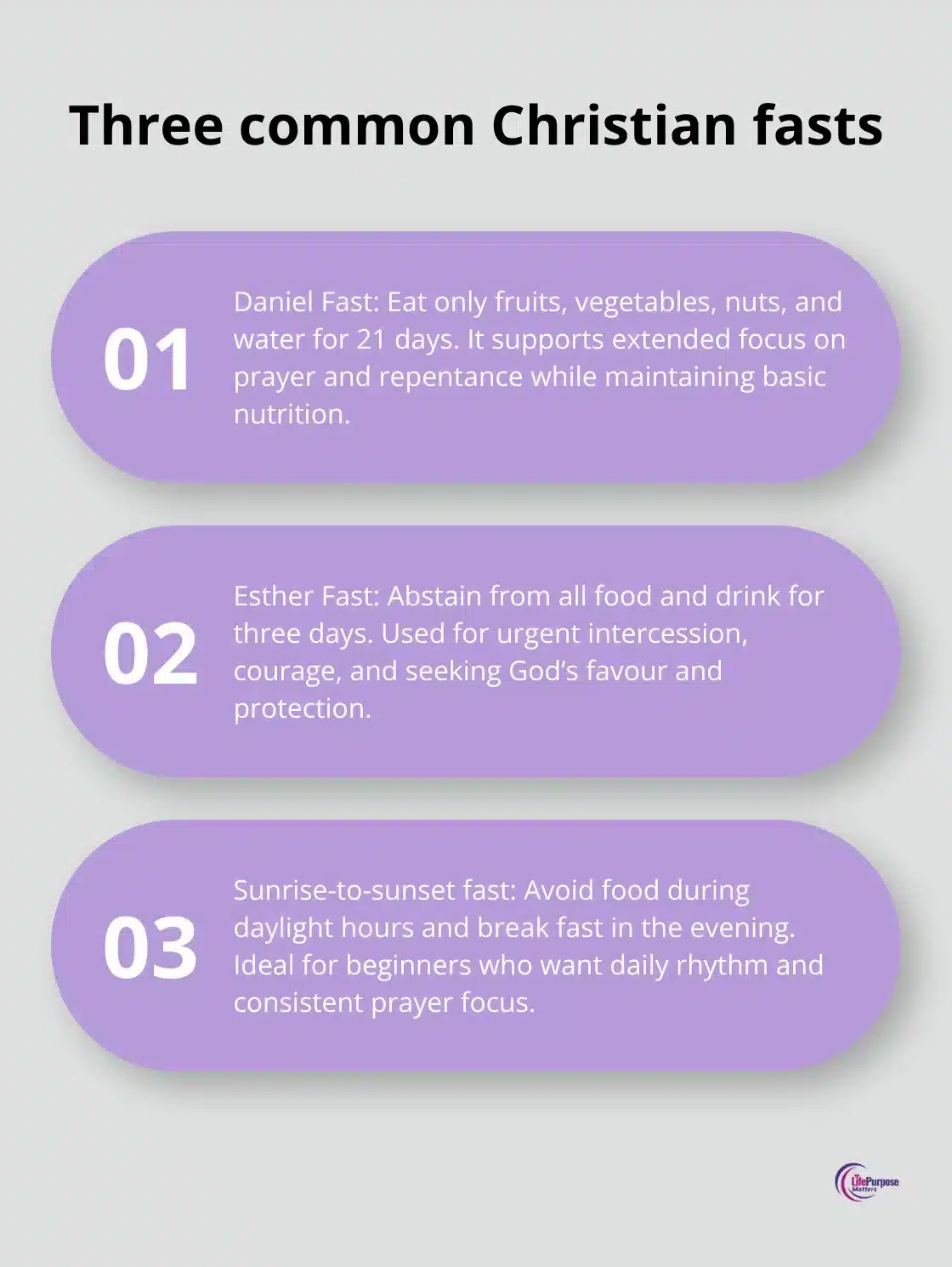
Each type serves different spiritual purposes, from breaking strongholds to seeking divine favour and guidance.
How Spiritual Fasting Transforms Your Prayer Life
Fasting amplifies your prayer life in ways that regular prayer alone cannot achieve. When you deny your body food, you create space for God to fill that hunger with His presence. This practice trains your flesh to obey the Holy Spirit rather than physical cravings. Many Christians report increased clarity when they read scripture during fasts, and they often receive more direct insights from God during these focused times of prayer and study.
Now that you understand what spiritual fasting is and how it differs from dieting, you need to know how to prepare properly for your first spiritual fast.
How to Prepare for Your First Spiritual Fast
Start with a one-meal fast from breakfast to lunch on a day when you have minimal commitments. This approach allows you to test your body’s response without overwhelming yourself. The sunrise-to-sunset fast works best for beginners because it provides structure while remaining manageable. Avoid multi-day fasts immediately, as many first-time fasters who attempt extended periods face significant challenges according to fasting research.
Choose Your Spiritual Focus Before You Begin
Write down three specific prayer requests or spiritual goals before your fast starts. Whether you seek guidance for a major decision, healing for a relationship, or breakthrough from a persistent struggle, clarity prevents your fast from becoming mere hunger. Schedule 15-minute prayer sessions at your normal meal times to redirect physical cravings toward spiritual connection. The Barna Group found that Christians who set written intentions during fasting report 40% higher satisfaction with their spiritual experience compared to those who fast without clear purpose.

Know When Medical Consultation Is Essential
Consult your doctor before you fast if you take daily medications, have diabetes, experience eating disorders, or are pregnant or breastfeeding. People with blood sugar issues should never attempt complete food fasts without medical supervision. Consider technology fasts or social media abstinence instead of food if health conditions prevent traditional fasting (your spiritual growth matters more than adherence to a specific method). God honours sincere hearts regardless of the format you choose.
Prepare Your Body and Schedule
Reduce your food intake gradually in the week leading up to your fast. Double your normal water consumption during this preparation period to help your body adjust. Clear your schedule of demanding activities and social commitments that might distract from your spiritual focus. Stock up on broth, herbal teas, and other approved liquids if you plan a partial fast (these items help manage cravings while maintaining your spiritual discipline).
Once you’ve prepared properly and chosen your fast type, you’ll need practical strategies to maintain your spiritual focus and handle the physical challenges that arise.
Practical Tips for a Successful Spiritual Fast
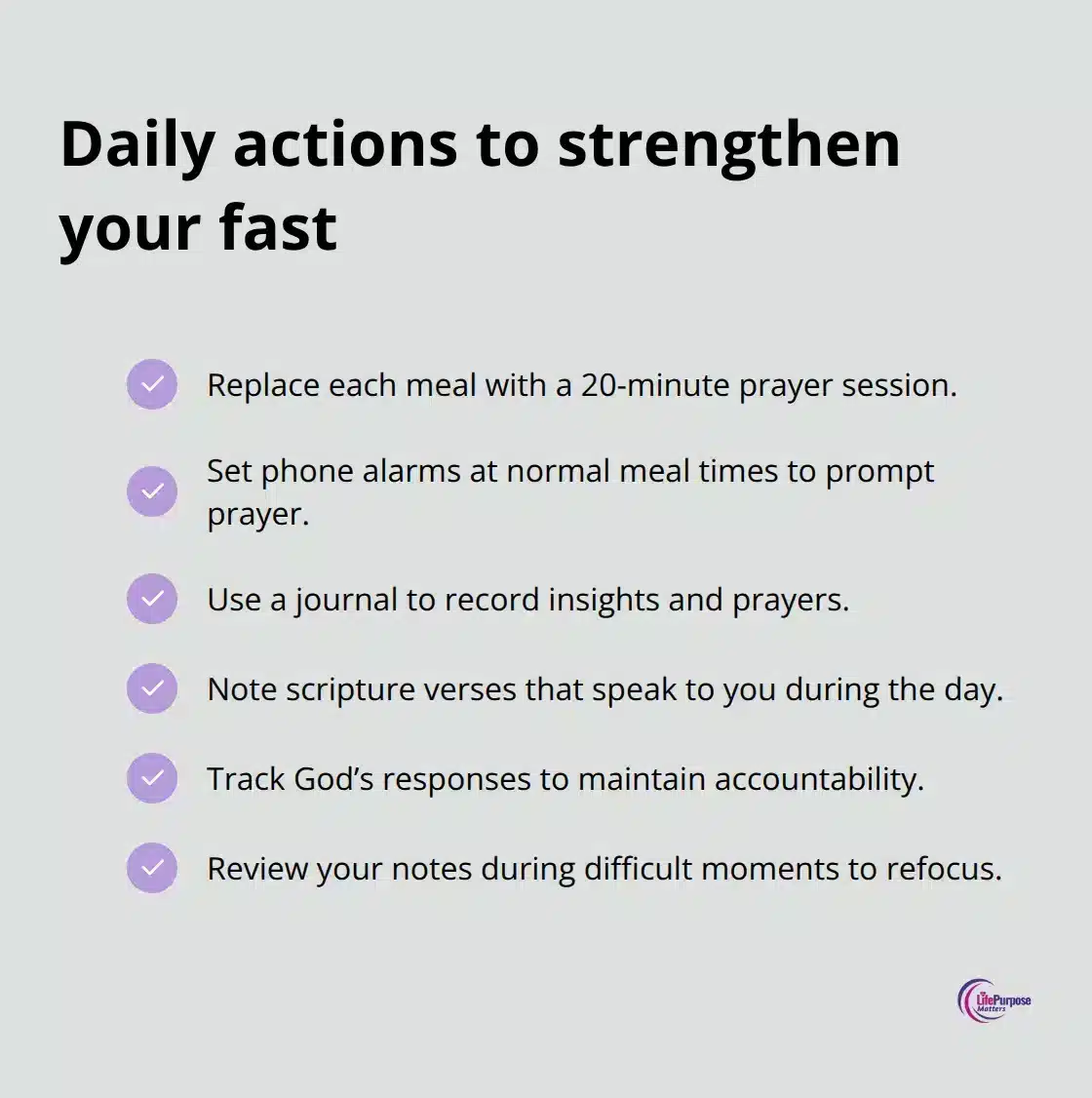
Create a structured prayer schedule that replaces your normal meal times with 20-minute prayer sessions. Set phone alarms for breakfast, lunch, and dinner times to redirect hunger pangs into focused prayer for your specific requests. Use a journal to record insights, prayers, and scripture verses that speak to you throughout the day. This written record helps you track God’s responses and maintains accountability during difficult moments.
Replace Physical Cravings with Scripture Study
When hunger strikes, immediately open your Bible instead of thinking about food. Focus on passages about spiritual nourishment like John 6:35 where Jesus declares himself the bread of life, or Matthew 4:4 where Jesus responds to temptation by saying man does not live by bread alone. Drink herbal tea or broth during approved periods to help manage physical discomfort while you study scripture. Train your mind to associate hunger with spiritual feeding rather than physical satisfaction.
Handle Irritability and Emotional Challenges Directly
Expect irritability, mood swings, and heightened emotions during your first few fasts. These reactions reveal character flaws and dependencies that need God’s attention. When you feel angry or frustrated, immediately confess these feelings to God rather than suppress them. Many first-time fasters experience emotional breakthroughs when they address negative feelings through prayer instead of ignoring them.
Communicate with Your Family About Your Fast
Tell your spouse and children about your emotional sensitivity during this time (they need to understand that your temporary moodiness serves a spiritual purpose and will pass once your fast concludes). Avoid making major decisions while you fast, as your judgement may be affected by physical and emotional changes. Your family’s support makes the difference between a successful fast and one that creates unnecessary stress in your relationships.
Final Thoughts
Your spiritual fasting journey starts with small steps that create profound spiritual growth. Start with one meal per week and build your confidence through consistent practice. The physical discomfort you experience during spiritual fasting transforms into spiritual strength when you redirect hunger toward prayer and scripture study.
Regular fasting develops spiritual discipline that extends beyond food abstinence. You learn to say no to various temptations and distractions that compete for your attention. This practice strengthens your relationship with God and increases your sensitivity to His voice during decision-making moments (especially when you face major life choices).
Establish monthly fasting rhythms that align with your prayer requests and spiritual goals. Track your experiences in a journal to recognise patterns in God’s responses and your personal growth. We at Life Purpose Matters provide ongoing Christian living inspiration to support your spiritual journey beyond fasting through biblical teachings and practical encouragement.