
![Developing Effective Witnessing Skills [Guide]](https://lifepurposematters.com/wp-content/uploads/emplibot/witnessing-skills-hero-1766416402.webp "witnessing-skills-hero-1766416402")
I still remember the awkward silence when my co-worker asked me about my faith. My palms got sweaty, my mind went blank, and I fumbled through a response that probably made things worse. That’s when I realised witnessing skills aren’t something you’re born with-they’re something you develop.
At Life Purpose Matters, we’ve found that the best witnesses aren’t the loudest voices in the room. They’re the ones who listen first, ask genuine questions, and share their story with real conviction. This guide walks you through exactly how to do that.
What Witnessing Actually Means
Witnessing isn’t about memorising a script or cornering someone at a coffee shop with a rehearsed pitch. At its core, witnessing means sharing how your faith has genuinely transformed your life and inviting others to explore that same relationship with Jesus. Effective witnessing starts with your own authentic experience, not borrowed arguments or polished theology. When you witness, you essentially say: this is what happened to me, this is who I’ve become, and this is available to you too. Authentic communication matters in any interaction. Your credibility comes from living what you believe, not from being a theology expert. People sense when you’re genuine versus performing, and that authenticity opens doors for real conversation.
Your Faith Has to Be Real First
Here’s where most people get it wrong: they think witnessing requires perfect theology or flawless answers to every question. It doesn’t. What it requires is a genuine faith that actually changes how you think, speak, and act. If your faith feels distant or theoretical in your own life, that gap will show immediately when you talk to others. People respond to what’s personal and lived, not what’s abstract. Your own spiritual journey-where you were, what shifted, and how you live differently now-becomes your most powerful witnessing tool. That means your first job isn’t learning fancy arguments; it’s staying connected to your faith through prayer, Scripture reading, and genuine growth. When someone asks about your beliefs, they’re really asking if this faith thing is worth their time and risk. Your lived experience answers that question far better than any debate ever could.
The Real Misconceptions Holding You Back
Most people believe witnessing means you need to be pushy, judgmental, or always ready with the right answer. That’s exactly backward. You need to listen more than you talk, ask questions more than you answer, and admit when you don’t know something. Honest admission builds trust; pretending to have all the answers destroys it. Another false belief is that witnessing only happens during formal religious conversations. It happens when your co-worker notices you handled a difficult situation with unusual grace. It happens when someone asks why you’re not stressed about something that would devastate most people. It happens in the small moments when your values show up naturally. The fear of offending people paralyses many believers, but some offence to the Gospel message itself is inevitable-that’s not your failure. What matters is approaching conversations with gentleness and respect, not whether everyone agrees with you. Your job is to be faithful and clear, not to manage how people respond.
Moving Into Practical Skills
These foundational truths set the stage for what actually works in real conversations. The next section walks you through the specific skills that transform your faith from something you believe into something you can share effectively.
The Three Skills That Actually Change How People Listen to You
Listening comes first, not because it sounds nice, but because it is the only way to understand what someone actually needs to hear. Most people jump straight to sharing their story or explaining theology before they know anything about the person across from them. That approach fails. When you listen with genuine attention, you signal that this person matters more than your agenda.
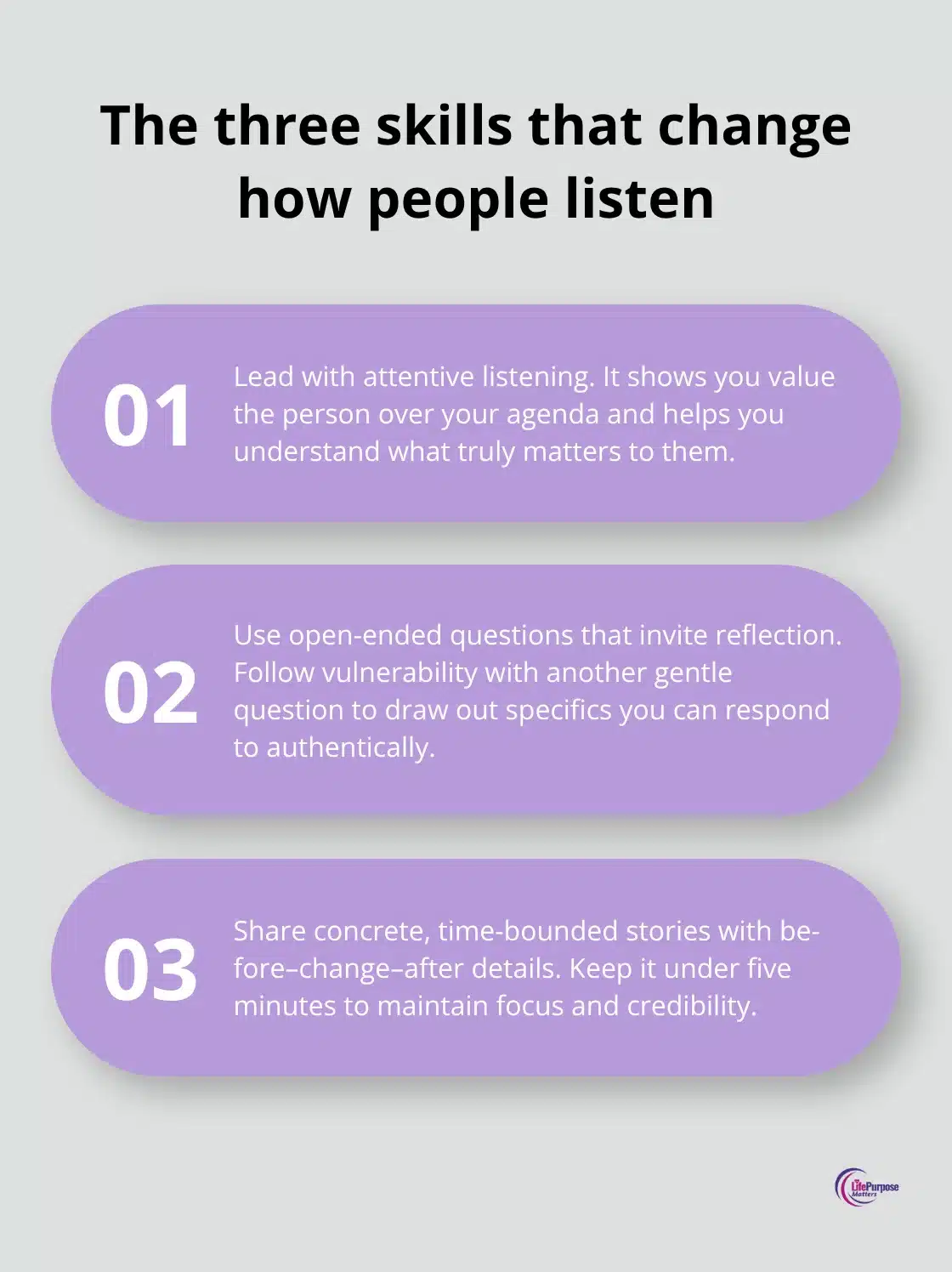
Active listening activates mirror neurons in the listener’s brain, creating a neurological foundation for empathy and connection. In practical terms, this means putting your phone away, making eye contact, and actually hearing what someone says instead of planning your response while they talk.
Notice What People Reveal Through Words and Silence
You pick up critical information when you pay attention to tone, hesitations, and what people leave unsaid. If someone mentions stress about work, that is not just small talk-that is an opening. If they sound defeated when talking about their marriage, that is information. You build a mental picture of where this person actually stands, what weighs on them, and what might matter to them spiritually. This takes time. Most people will not share their real struggles in the first conversation. Some will not until the third or fourth time you genuinely ask how they are doing. The patience you show signals that you care about them as a person, not as a conversion target.
Ask Questions That Make People Think About Themselves
The best witnessing conversations are dialogues where the other person does most of the talking, not monologues where you control the narrative. Open-ended questions work far better than yes-or-no questions. Instead of asking if someone believes in God, ask what they think happens after death or what gives their life meaning. These questions force people to examine their own beliefs, which is infinitely more powerful than you telling them what to believe. When someone shares something vulnerable, follow up with another question instead of immediately offering your perspective. If they say they struggle with anxiety, ask what that looks like for them or what they have tried before. This accomplishes two things: they feel genuinely heard, and you get specific information that lets you respond authentically rather than with generic Christian platitudes. Nearly half of Americans talk with their immediate families about religion at least once or twice a month, and people are far more open to faith conversations when someone asks them genuine questions about their life rather than launching into arguments. People want to be known, not preached at.
Share Your Story With Specific Details, Not Vague Spirituality
When you finally tell your story, make it concrete. Instead of saying you found peace through faith, describe the actual situation where you panicked, what you did differently, and what changed as a result. Instead of saying God changed your heart, explain what you used to do or believe, what shifted that, and how you live differently now. Specific details create credibility. Vague language sounds like everyone else’s testimony and does not stick with people. Your story should have three clear parts: where you were before faith became real to you, what actually changed, and how you live now. Keep it under five minutes. Most people lose focus after that. The World Economic Forum identifies emotional intelligence and effective communication as top workforce skills, and these same skills apply directly to witnessing conversations. You are not performing; you are sharing something that matters to you in a way that invites the other person to consider their own life.
The Power of Admitting What You Don’t Know
Here is where many people stumble: they think they must have all the answers before they can witness effectively. That belief could not be further from the truth. Honest admission builds trust; pretending to have all the answers destroys it. When someone asks you a theological question you cannot answer, say so. Offer to research it and reconnect later. That follow-up conversation strengthens the relationship and shows you take their questions seriously. This transparency actually increases your credibility because people recognise authenticity when they encounter it. You demonstrate that your faith rests on genuine conviction, not on memorised responses or defensive arguments.
The skills you have just explored-listening, asking, sharing, and admitting-form the foundation for real conversations. What comes next is learning how to create the natural moments where these conversations actually happen, and how to navigate the objections and tough questions that inevitably arise.
Practical Strategies for Everyday Witnessing
Where Witnessing Actually Happens
Most witnessing conversations never happen because you planned them. They happen because you create space for them. Your co-worker mentions their kid struggles in school, and instead of offering quick advice, you ask what that struggle looks like and whether faith plays any role in how they handle stress. Your neighbour mentions their marriage feels distant, and you share how your own relationship shifted when you started praying together. Your friend at the gym says they cannot sleep, and you mention what changed for you when anxiety used to control your nights.
These moments exist everywhere, but most people miss them because they wait for the perfect opening or the right words to appear. Stop waiting. The next time someone shares something difficult, that becomes your opening. Ask a follow-up question.
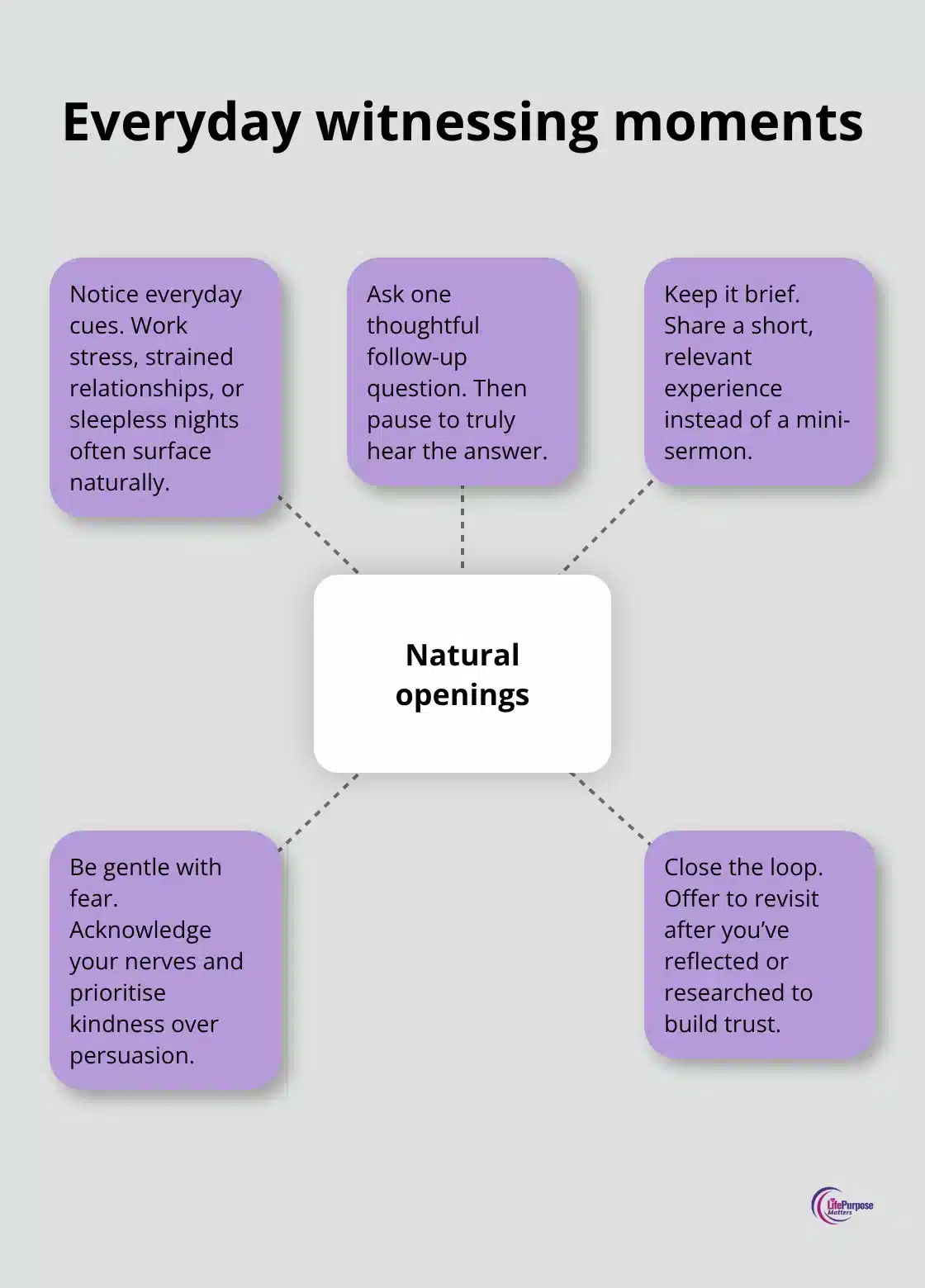
Listen to their answer. Then, if it feels natural, share how your faith addressed something similar. That is witnessing. It takes maybe two minutes and happens inside conversations that were already happening.
The resistance you feel is not about a lack of skill. It is about fear of saying the wrong thing or making someone uncomfortable. That fear is normal and also not your problem to solve. Your job is to be present, listen well, and share authentically when the moment calls for it. The rest belongs to God.
How to Handle Objections Without Losing Your Footing
When objections come, they usually sound like this: How can God let bad things happen? Why should I believe the Bible? What about people who never heard about Jesus? These questions deserve respect, not dismissal. The worst response is pretending you have the answer when you do not. The second worst response is launching into a theological defence that makes you sound like you are reciting a textbook.
The best response is this: That is a really good question, and honestly, I have wrestled with that too. Here is what I believe, but I also think we should talk more about this because it matters. Then share your actual perspective without trying to win a debate. Most people are not looking for a theological knockout punch. They are looking for permission to ask hard questions and have someone take those questions seriously.
When someone asks why they should trust Scripture, do not recite arguments about historical accuracy. Instead, say something like: I used to think the Bible was just ancient stories until I started reading it expecting God to speak to me directly, and that changed everything. That is specific. That is lived. That is a shared experience of credibility.
If someone brings up objections repeatedly, that usually means they are genuinely interested, not hostile. Hostile people leave the conversation. Interested people keep asking. Give them time. Some of the deepest faith conversations happen after three or four exchanges, not in the first interaction.
When You Do Not Have All the Answers
When you do not know an answer, which will happen, say so directly. I do not know how to answer that, but it is important enough that I want to find out. Can we talk about it next week? Then actually follow up. That commitment means more than having all the answers. Honest admission builds trust; pretending to have all the answers destroys it.
Using Scripture Naturally in Conversation
Scripture should flavour your conversations, not dominate them. The moment you start quoting verses without context, you sound like you are reading from a script. Instead, weave Scripture into your story. When you talk about how anxiety used to control you, mention that you started meditating on Philippians 4:6 about bringing your requests to God with thanksgiving, and that shift changed how you approach fear now.
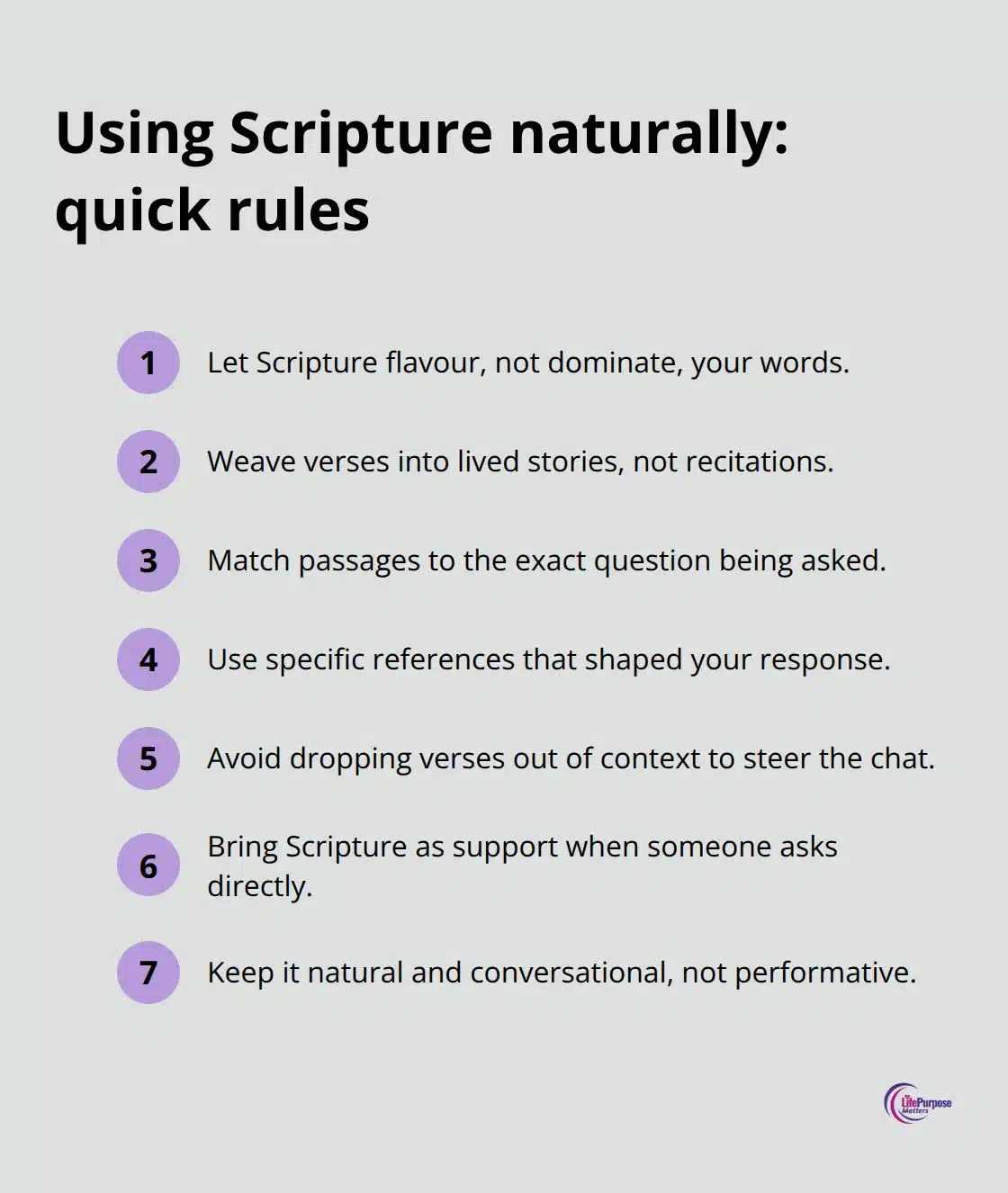
When you discuss forgiveness, mention that you realised you could not move forward in a relationship until you actually believed what Jesus said about forgiveness in Matthew 18. That is Scripture used naturally. It comes from your life, not from a memorised list.
If someone asks a direct theological question, then Scripture becomes appropriate as support. If they ask whether God really cares about their problems, sharing John 3:16 makes sense because it directly addresses their question. But if you are just having coffee and someone mentions their job stress, quoting Proverbs about work feels forced.
The principle here is simple: Scripture works best when it answers the specific question someone is actually asking, not when you use it to prove a point or steer the conversation where you want it to go. People sense the difference between Scripture that genuinely applies to their situation and Scripture that you use as a tool to convince them. One invites reflection. The other feels manipulative.
Final Thoughts
You now possess witnessing skills that work in real conversations. Listening with genuine attention, asking questions that matter, sharing your story with specifics, and admitting when you do not know something-these are not advanced techniques reserved for trained evangelists. They are basic human skills that anyone can develop with practice and intention, and consistency matters far more than perfection.
Your faith journey continues forward. You will encounter objections you have not heard before, stumble over your words, and wonder if you said the right thing-and that is exactly where growth happens. Stay connected to your own faith through prayer and Scripture reading, seek out mentors who model witnessing well, and find community with other believers who take their faith seriously. Visit Life Purpose Matters to explore resources designed to deepen your faith and help you live out your God-given purpose.
You have everything you need to share your faith effectively. Now go have the conversations that matter.