

Jess stared at her coworker’s empty desk, knowing she’d missed another chance to share her faith. The conversation about weekend plans had been perfect, but fear held her tongue again. Personal evangelism feels overwhelming to most believers. At Life Purpose Matters, we believe that every Christian can share the gospel naturally and effectively with simple, practical approaches that build genuine connections.
Understanding Your Role in Personal Evangelism
The Great Commission in Matthew 28:19-20 applies to every believer, not just pastors and missionaries. Jesus commanded all Christians to make disciples, which means personal evangelism is your responsibility, too. Many born-again Christians struggle with sharing their faith, and this reveals a massive gap between biblical command and practical action.
Fear Prevents Most Christians From Witness
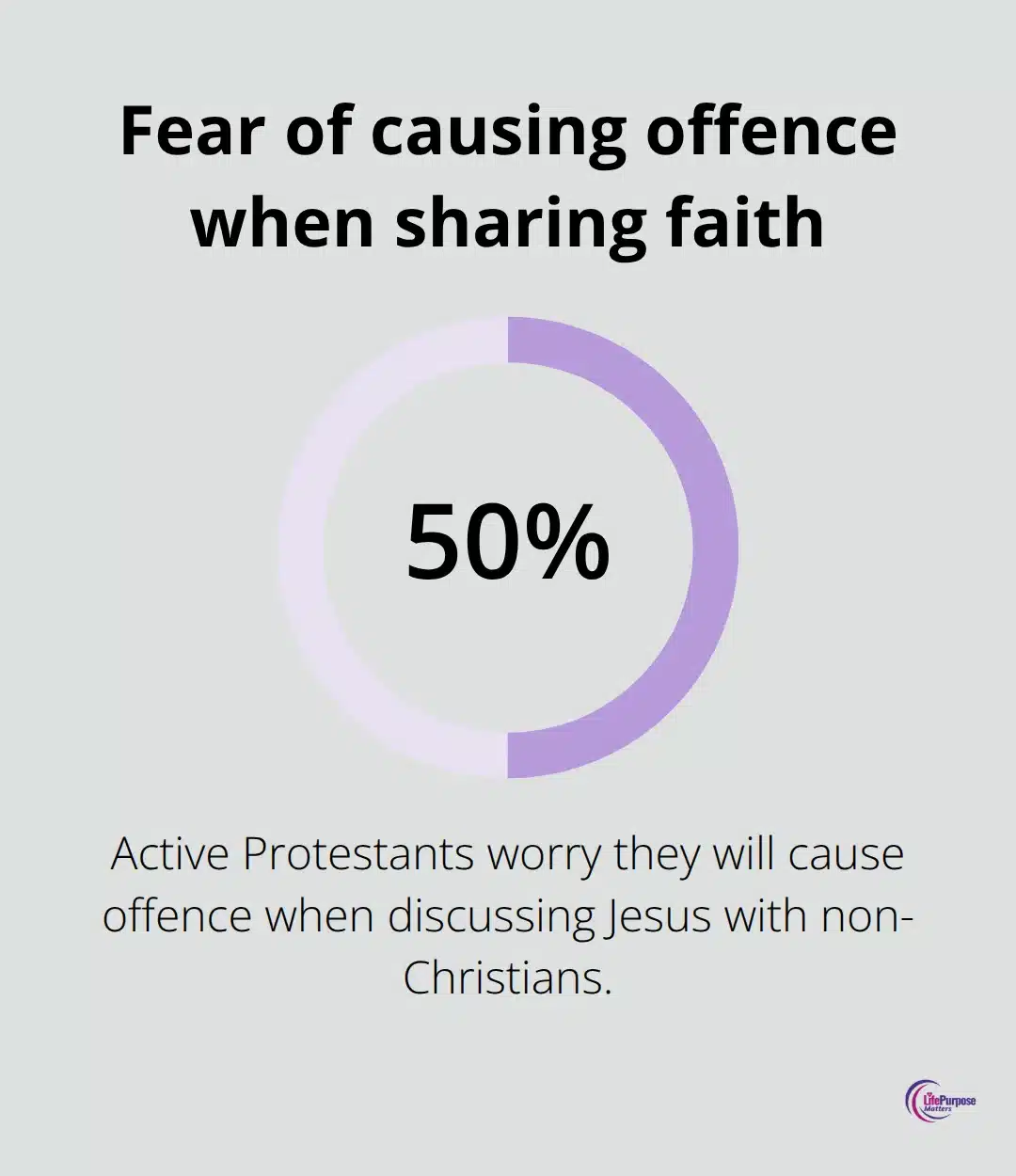
Fear of rejection dominates Christian minds when it comes to evangelism. Research shows that 50% of Active Protestants fear they will offend when talking to non-Christians about Jesus. The apostles in Acts 4:29-30 prayed specifically for boldness in evangelism, which shows that even they struggled with fear. Your fear is normal, but it shouldn’t control your witness.
Start with people you already know well rather than strangers. Practice and share your testimony with trusted friends first. The Holy Spirit empowers your words, not your eloquence or theological expertise.
Daily Life Presents Constant Opportunities
Americans have an average of 16 meaningful conversations per week, according to communication research. Each conversation presents potential gospel opportunities through natural transitions. Listen for mentions of struggles, life changes, or spiritual search. Ask follow-up questions like “How do you handle that?” or “What gives you hope during tough times?” Your workplace, neighbourhood, gym, and grocery store contain people God has strategically placed in your path (divine appointments happen more often than we realise). The key is intentional awareness combined with genuine care for others’ well-being.
Simple Preparation Makes All the Difference
Most Christians avoid evangelism because they feel unprepared. However, an effective witness requires basic preparation, not seminary education. Know your personal testimony in three parts: life before Christ, how you met Christ, and life after Christ. Memorise one clear gospel presentation (the Romans Road or the Bridge illustration works well). Practice these tools until they feel natural in conversation. When you prepare your heart and mind, God opens doors for meaningful spiritual conversations that can transform lives forever.
Practical Methods for Sharing Your Faith
Begin With Genuine Questions That Open Hearts
The most effective spiritual conversations start with curiosity, not sermons. Ask questions like “What keeps you going when life gets tough?” or “Have you ever wondered if there’s more to life than what we see?” These questions feel natural in everyday conversations and reveal where people stand spiritually. Research from Barna Group shows that many non-Christians are open to discussing faith when approached through questions rather than lectures. Listen for spiritual language in regular conversations – words like blessed, destiny, or purpose often indicate openness to deeper discussion.
Master Your Three-Minute Testimony
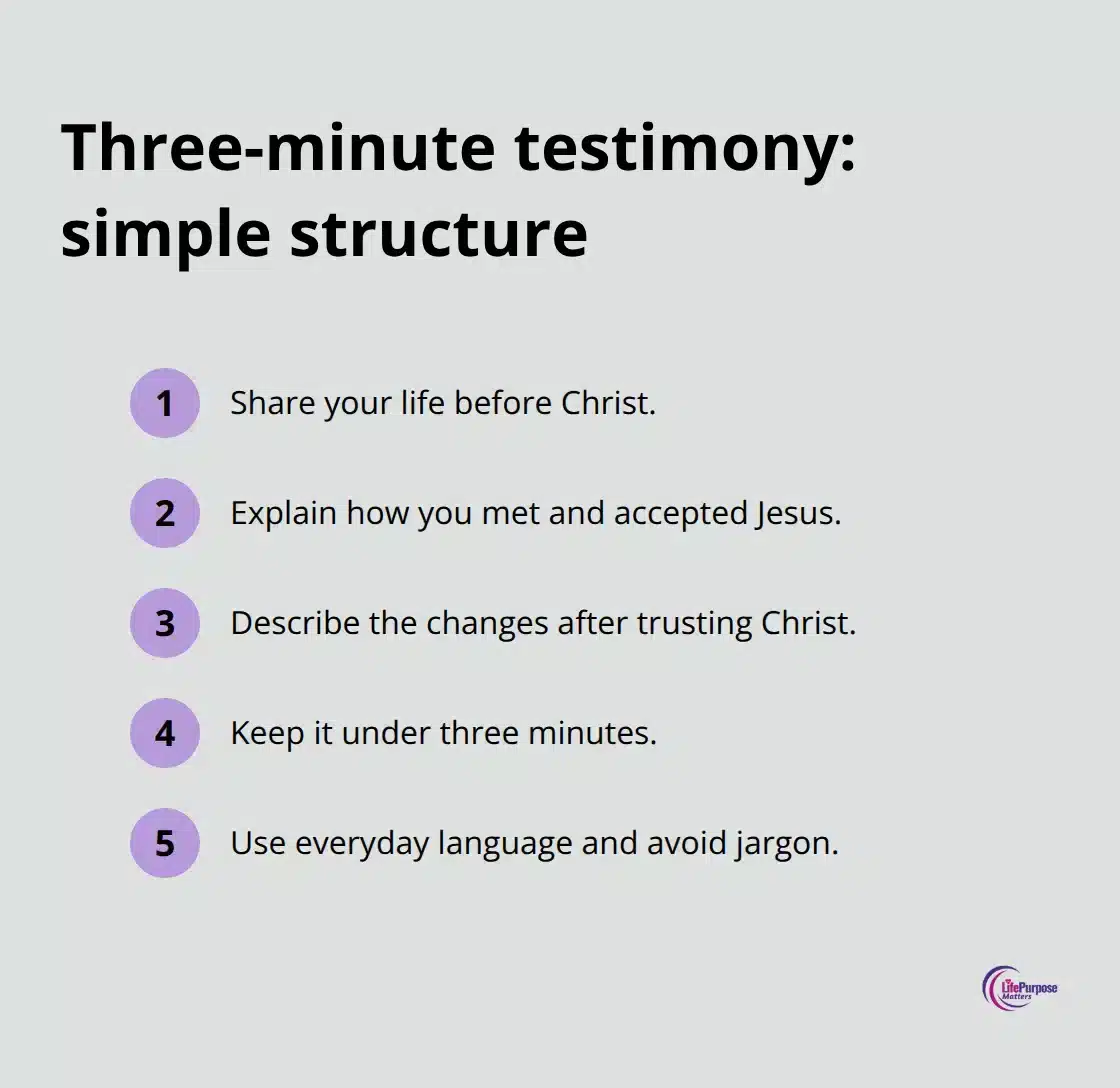
Your personal story carries more power than any theological argument. Structure your testimony in three clear parts: your life struggles before Christ, the specific moment or process when you accepted Jesus, and the tangible changes afterwards. Keep it under three minutes and focus on relatable struggles like loneliness, anxiety, or lack of direction. Avoid Christian jargon and speak in everyday language.
Practice your testimony until it flows naturally, then adapt it to different situations (a workplace version might emphasise peace and purpose, while a family conversation could highlight forgiveness and hope). Embracing your identity in Christ helps strengthen your confidence when sharing these personal experiences.
Use the Bridge Illustration for a Clear Gospel Presentation
Skip complicated theological explanations and use simple visual presentations that anyone can understand. The Bridge illustration effectively shows humanity separated from God by sin, with Jesus as the bridge that connects us back to God. Draw it on paper, napkins, or even in dirt if necessary. This method takes less than five minutes and addresses the core gospel message: our problem (sin), God’s solution (Jesus), and our response (faith). Research shows that visual presentations can significantly improve retention compared to verbal-only communication, which makes this approach more effective than lengthy discussions. Christian apologetics can provide additional tools for addressing questions that arise during these conversations.
These conversation starters and presentation tools work best when you combine them with authentic relationships and consistent prayer for opportunities. Fulfilling God’s purpose includes practising these faith-sharing skills as part of your spiritual growth journey.
Building Relationships for Gospel Impact
Start Where You Are With People You Already Know
Most Christians think evangelism requires new people, but building relationships with those already in your life proves far more effective. Focus your evangelistic efforts on people already in your life rather than strangers you want to convert. Invite coworkers for coffee, ask neighbours about their weekend plans, or offer help with practical needs like moves or childcare. These natural interactions create trust and open doors for spiritual conversations without forced or manipulative feelings.
Actions Speak Louder Than Gospel Presentations
Your behaviour validates or undermines every word you speak about Jesus. Studies from Barna Group reveal that non-Christians form their opinions about Christianity primarily through Christian behaviour observations, not Christian words.
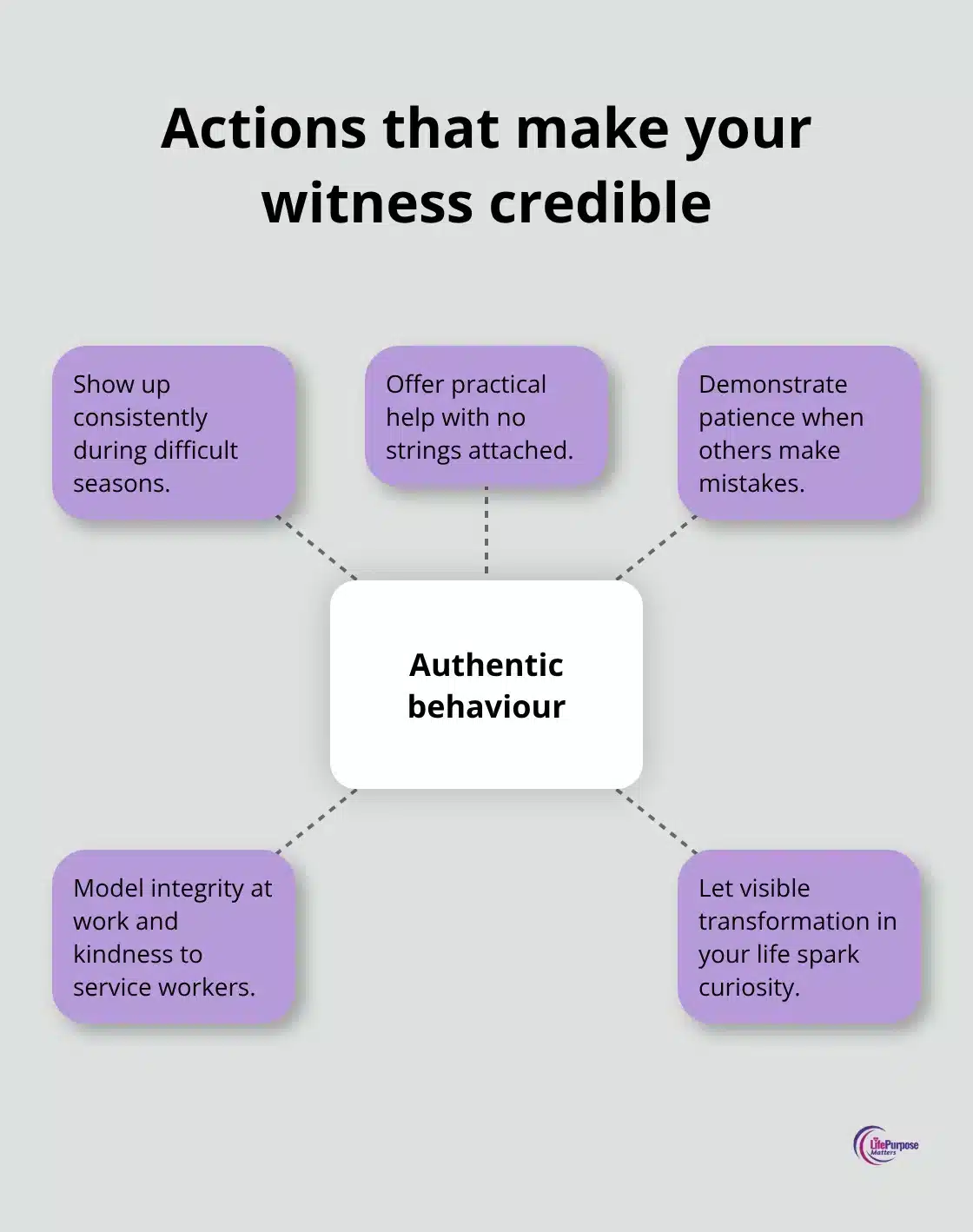
Show up consistently for people during difficult seasons, offer practical help without expectations, and demonstrate patience when others make mistakes. Your integrity at work, kindness to service workers, and stress responses all communicate gospel truths more effectively than any verbal presentation. When people see authentic transformation in your life, they become curious about the source of that change.
New Believers Need Ongoing Support and Discipleship
Converting someone to Christianity marks the start of their spiritual journey, not the end of your responsibility. New believers who receive consistent follow-up and mentorship show greater commitment to their faith journey compared to those left alone. Meet regularly with new believers for coffee or meals, connect them with other mature Christians, and help them find a local church community. Share practical resources like devotional books, Bible plans, and Christian podcasts that match their style and situation (these tools accelerate spiritual growth significantly). Answer their questions honestly, admit when you need to research something, and celebrate their spiritual milestones along the way.
Final Thoughts
Personal evangelism becomes natural when you stop viewing it as a burden and start seeing it as a privilege. God has placed you exactly where you are to reach specific people who need to hear about Jesus. Your unique personality, experiences, and relationships create opportunities that no one else can fulfil.
Start small with one conversation this week. Ask a coworker about their weekend plans or offer to help a neighbour with groceries. These simple acts of kindness open doors for deeper spiritual discussions when the timing feels right (your role is to plant seeds and share your story, not to convince or convert anyone).
The Holy Spirit handles the heart transformation while you handle the relationship building. Some people will reject your message, others will show interest, and a few will accept Christ. We at Life Purpose Matters believe that personal evangelism connects directly to your spiritual journey and God’s purpose for your life.