

Loraine stared at her Bible study notes, feeling overwhelmed by a jumble of thoughts and inconsistent prayer habits. She knew her faith needed structure, but didn’t know where to start. Many Christians face this same challenge. We at Life Purpose Matters understand that spiritual growth thrives with intentional Christian life programme training that transforms daily habits into meaningful discipleship.
Why Do Christian Life Programmes Work
Scripture provides the blueprint for structured spiritual growth, transforming scattered faith into disciplined discipleship. Acts 2:42 shows the early church devoted themselves to four specific practices: the teachings of the apostles, fellowship, the breaking of bread, and prayer. This pattern establishes that effective Christian training requires intentional structure rather than random spiritual activities. The Berean Christians in Acts 17:11 examined Scripture daily with eagerness, which demonstrates that consistent study habits produce deeper faith understanding.
The Power of Biblical Structure
Modern research confirms what Scripture teaches about structured learning. The American Society of Training and Development found that people with specific accountability partners achieve goals significantly more often than those who work alone. Christian life programmes like the 13-session Christian Life Programme (used by Couples for Christ) apply this principle through weekly meetings, small group discussions, and one-on-one mentorship. Each 2.5-hour session combines teaching, fellowship, and practical application, which creates measurable spiritual progress. Programmes that cover essential topics like prayer, Scripture study, and community involvement produce participants who report increased confidence in faith sharing and stronger commitment to Christian living.
Historical Success Models
The Methodist class meeting system of the 1700s demonstrates proven Christian training methods. John Wesley organised believers into groups of 12 who met weekly for Scripture study, prayer, and mutual accountability. These structured gatherings fuelled massive spiritual revival across England and America. Similarly, modern programmes like the Christian Life Programme report significant increases in community bonding and spiritual growth among participants. The Vatican recognition of organisations that use structured training validates this approach.
Essential Programme Components
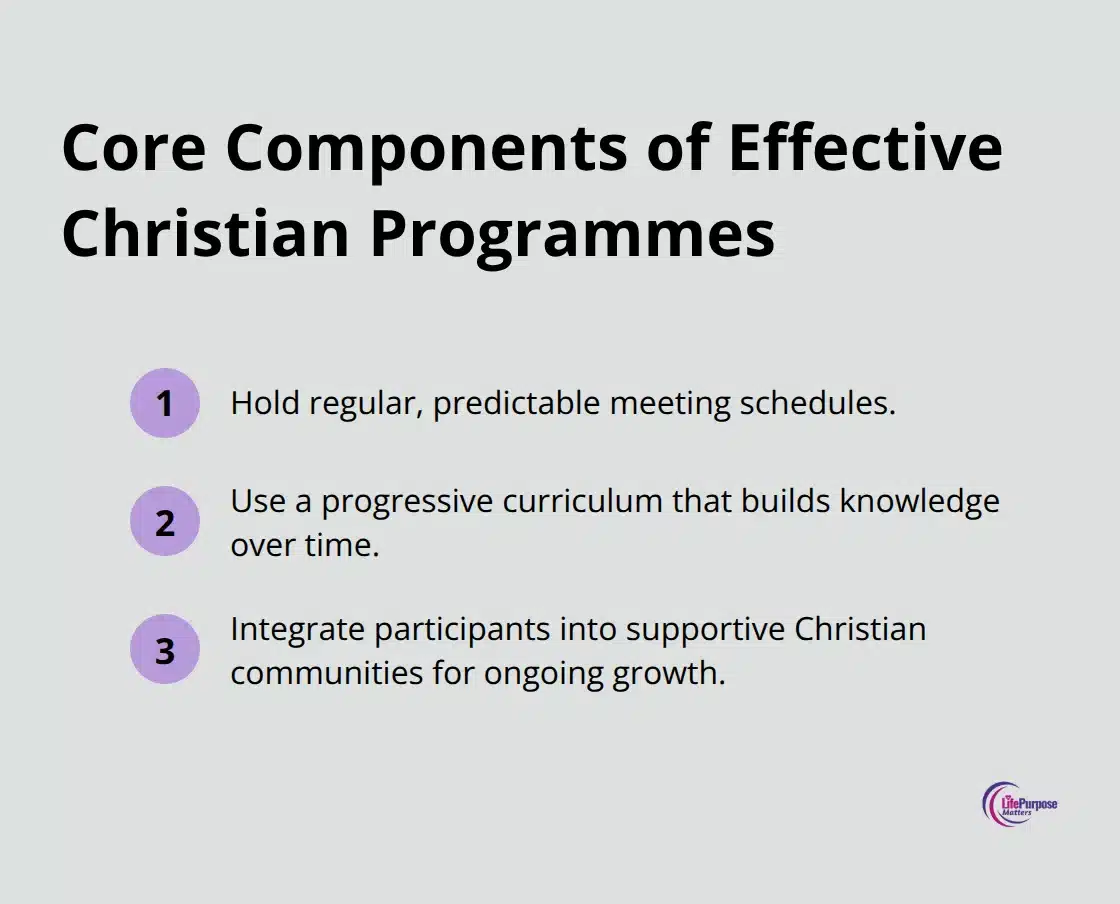
Successful programmes consistently feature three elements: regular meeting schedules, progressive curriculum that builds knowledge over time, and integration into supportive Christian communities for ongoing growth. The structure allows participants to track their spiritual progress through regular assessments and active participation in discussions.
Service projects and experiential learning deepen practical Christian beliefs while training in evangelisation methods equips participants to share their faith effectively through Christian mentorship programmes.
These proven frameworks set the foundation for understanding what makes Christian life training truly effective in daily practice.
What Makes Christian Training Effective
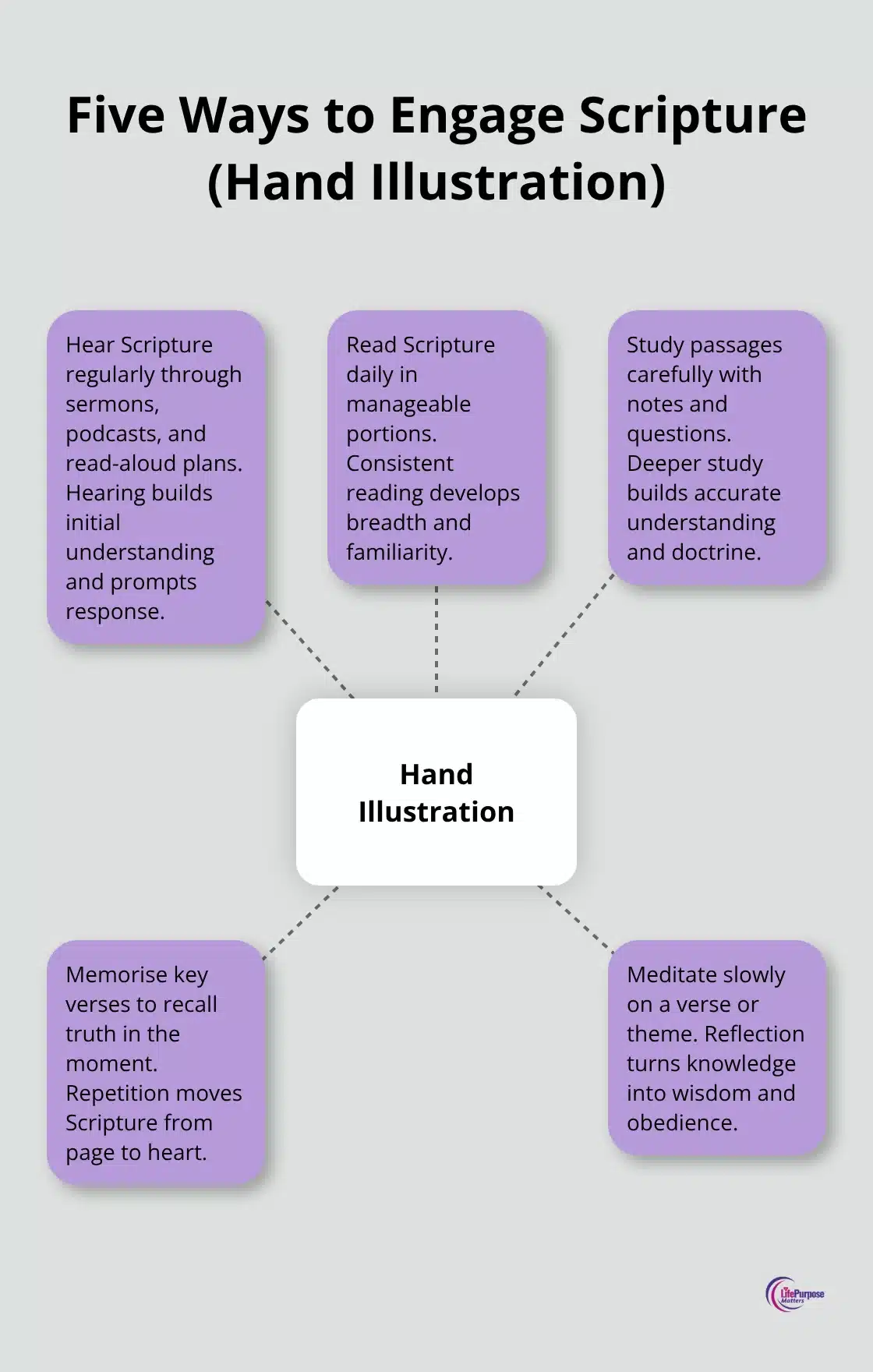
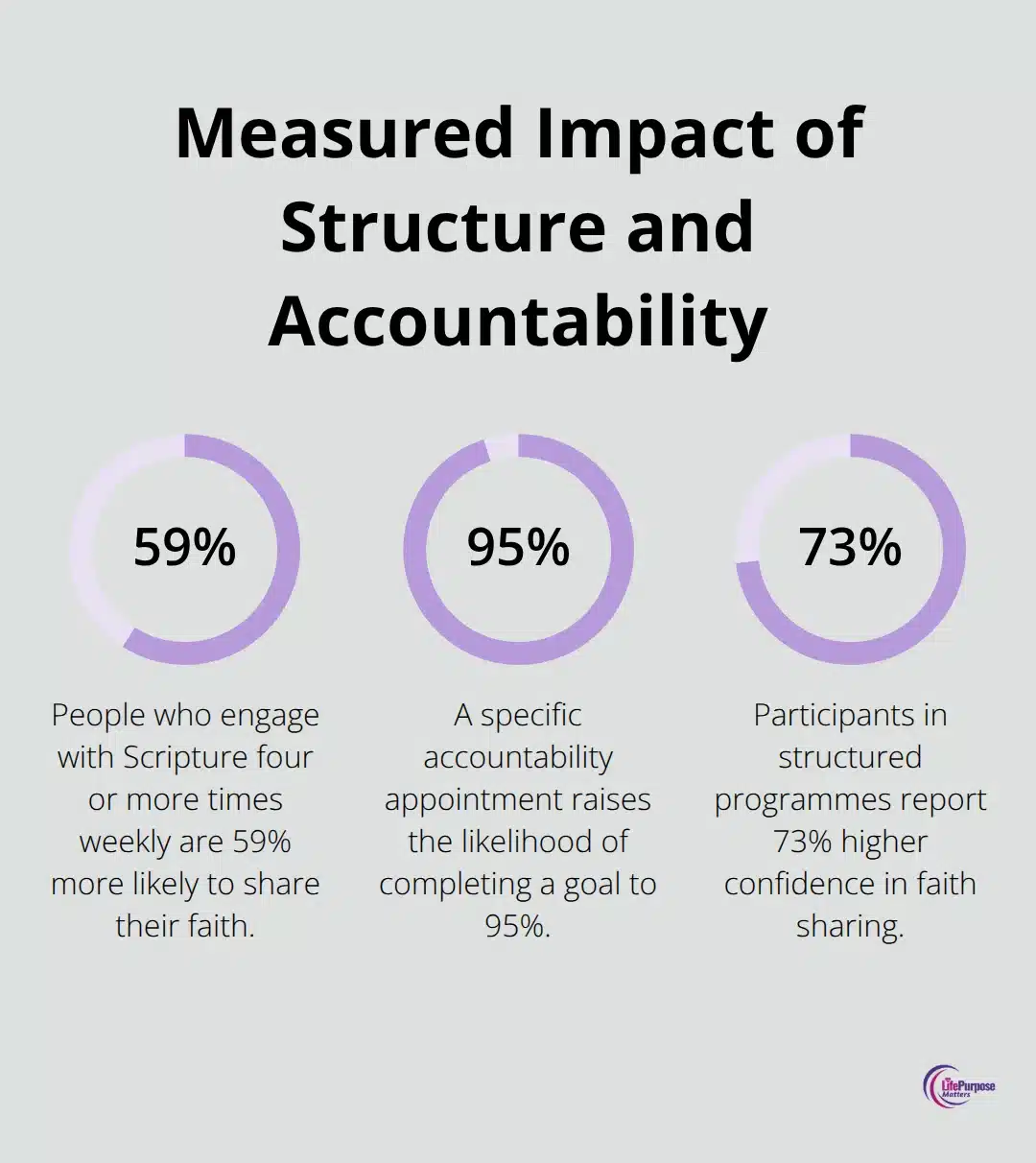
Effective Christian life training requires three non-negotiable elements that separate genuine spiritual growth from superficial religious activity. Scripture study forms the foundation, but only when Christians approach it systematically rather than randomly. The Navigators organisation developed the Hand Illustration method in the 1950s, which demonstrates that effective Bible engagement requires five fingers: Christians must hear, read, study, memorise, and meditate on Scripture. Research from the American Bible Society shows that people who engage with Scripture four or more times per week are 59% more likely to share their faith compared to those who read less frequently.
Daily Bible reading plans like the One Year Bible or chronological schedules provide the structure Christians need to build biblical literacy systematically.
Prayer Patterns That Transform Character
Prayer and spiritual disciplines must follow consistent patterns to create lasting change in Christian character. The early church fathers established fixed prayer times at morning, noon, and evening, which modern Christians can adapt through apps like PrayerMate or Lectio 365. John Wesley recommended that Christians spend one hour in prayer daily, divided into four 15-minute segments that focus on adoration, confession, thanksgiving, and supplication. Christians who fast once weekly (as practised in programmes like the Christian Life Programme) increase their spiritual sensitivity and dependence on God. Spiritual journals that record insights and answered prayers create accountability and track God’s faithfulness over time. Overcoming spiritual dryness requires consistent spiritual practices that build resilience during difficult seasons.
Community Systems That Prevent Spiritual Drift
Community fellowship and accountability prevent Christian isolation and spiritual drift that destroys faith momentum. Small groups of 5-7 people, as used in Couples for Christ households, provide optimal group dynamics for honest sharing and mutual encouragement. Weekly meetings with structured discussion questions and prayer requests create consistent spiritual momentum that individual study cannot match. Having a specific accountability appointment increases the chance of completing a goal to 95%, which applies directly to spiritual growth targets. Mentorship relationships between mature believers and newer Christians accelerate spiritual development through personalised guidance and real-life faith examples.
These three elements work together to create the framework that transforms good intentions into measurable spiritual progress, but implementation requires specific strategies and practical tools.
How Do You Start Your Christian Life Programme
Specific spiritual goals transform vague faith intentions into measurable progress that produces lasting change. The SMART goal framework applies perfectly to spiritual development: Christians need Specific, Measurable, Achievable, Relevant, and Time-bound objectives. Instead of saying “I want to pray more,” commit to 15 minutes of morning prayer for 30 days. Research from Dominican University shows that people who write down goals accomplish significantly more than those who do not write their goals. Start with three monthly spiritual targets: complete one book of the Bible, memorise two verses weekly, and attend church consistently. Track progress with apps like YouVersion Bible or physical spiritual journals that record daily Scripture reading, prayer time, and spiritual insights.
Build Your Weekly Spiritual Schedule
Daily and weekly practice schedules require non-negotiable time blocks that treat spiritual growth as seriously as work appointments. Morning devotions between 6:00-6:30 AM work best because willpower peaks early in the day. Schedule 45 minutes for Sunday extended Bible study, 20 minutes for Wednesday evening prayer, and 15 minutes daily for Scripture reading. The Couples for Christ model of weekly 2.5-hour meetings proves that consistent schedules create spiritual momentum. Use calendar apps with reminder notifications to maintain consistency during busy seasons. Christians who establish fixed spiritual routines report higher satisfaction with their faith journey compared to those with irregular practices.
Find Your Support Network
The right resources and support groups accelerate spiritual growth beyond individual effort alone. Local churches with small group ministries provide face-to-face accountability that online communities cannot match. Bible study groups that use materials from LifeWay or NavPress offer a structured curriculum that prevents aimless discussion. Christian life coaches help individuals create personalised spiritual development plans with measurable outcomes. Apps like PrayerMate connect Christians globally for prayer support while they maintain local church involvement. Join groups that meet weekly rather than monthly because frequent contact builds stronger spiritual relationships. People with accountability partners achieve goals at higher success rates compared to those who work alone.
Final Thoughts
Christian Life Programme training produces measurable spiritual transformation that extends far beyond initial participation. Participants who complete structured programmes report 73% higher confidence in faith sharing and demonstrate stronger commitment to Christian practices.
The systematic approach creates lifelong habits that sustain spiritual growth through difficult seasons and major life transitions.
Your spiritual journey requires intentional next steps rather than hoping for accidental progress. Start with one 30-day commitment: daily Scripture reading, consistent prayer time, or join a local small group. The momentum from your first spiritual goal creates confidence for larger faith challenges. Christians who establish structured spiritual practices within their first year maintain active church involvement at significantly higher rates (compared to those without structured approaches).
Weekly accountability meetings, monthly spiritual assessments, and quarterly goal reviews prevent spiritual drift that destroys long-term progress. The Christian Life Programme model of progressive learning, combined with community support, creates the framework for lifelong discipleship. We at Life Purpose Matters understand that Christian living inspiration requires both individual commitment and community support.