

Irene sat in her car after church, tears streaming down her face. The worship songs that once lifted her spirit now felt hollow. Trauma had built walls between her and God that seemed impossible to break down. For Christians, spiritual healing is a vital, holistic component of trauma recovery, offering a framework of hope, purpose, and community that addresses deep emotional and spiritual wounds. It is important because trauma often disrupts a person’s core identity and relationship with God, requiring a faith-based approach to restore wholeness.
If you are in this space right now, know that you’re not alone in this struggle. At Life Purpose Matters, we understand that spiritual healing requires both faith and practical steps toward recovery.
What Happens When Trauma Shakes Your Faith
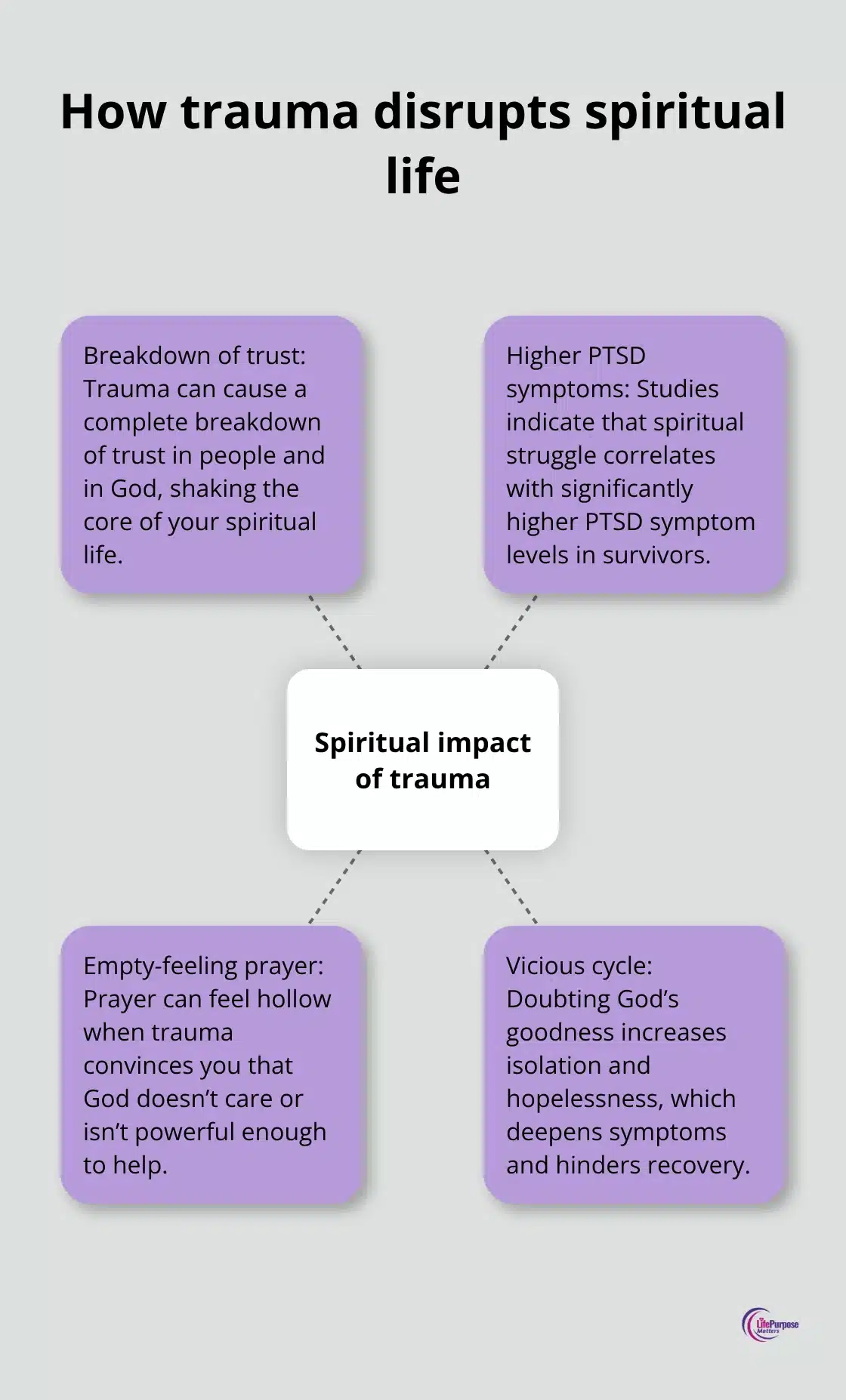
Trauma doesn’t just wound your mind and body-it attacks the very core of your spiritual life. When traumatic events shatter your worldview, they create what psychologists call negative religious cognitions-thoughts like God has abandoned you, that you face punishment, or that your faith was meaningless all along. These aren’t just passing doubts; they’re deep spiritual wounds that can make your symptoms worse and make recovery harder.
The Trust Crisis That Changes Everything
The most devastating spiritual impact of trauma is the complete breakdown of trust, not just in people, but in God himself. Studies show that trauma survivors who struggle spiritually experience significantly higher PTSD symptom levels than those who maintain their faith connection. Your prayers feel empty because trauma convinces you that God either doesn’t care or isn’t powerful enough to help. This spiritual discontent becomes a vicious cycle: the more you doubt God’s goodness, the more isolated and hopeless you feel, which deepens your trauma symptoms and pushes you further from the recovery you desperately need.
When Shame Hijacks Your Relationship with God
Trauma plants toxic seeds of shame that grow into spiritual barriers. You start to believe you deserved what happened, that you’re too damaged for God’s love, or that your trauma somehow disqualifies you from his grace. Veterans who experienced moral injury (situations that violated their core values) often report feeling spiritually worthless and abandoned by God. This shame-based thought process transforms your relationship with God from one of love and acceptance into fear and self-condemnation.
The Path Forward Starts with Recognition
These spiritual wounds don’t heal on their own-they require intentional care and biblical truth to counter the lies trauma tells you. The good news is that Scripture provides a solid foundation for restoration, even when your faith feels shattered beyond repair.
Where Scripture Points When Faith Feels Broken
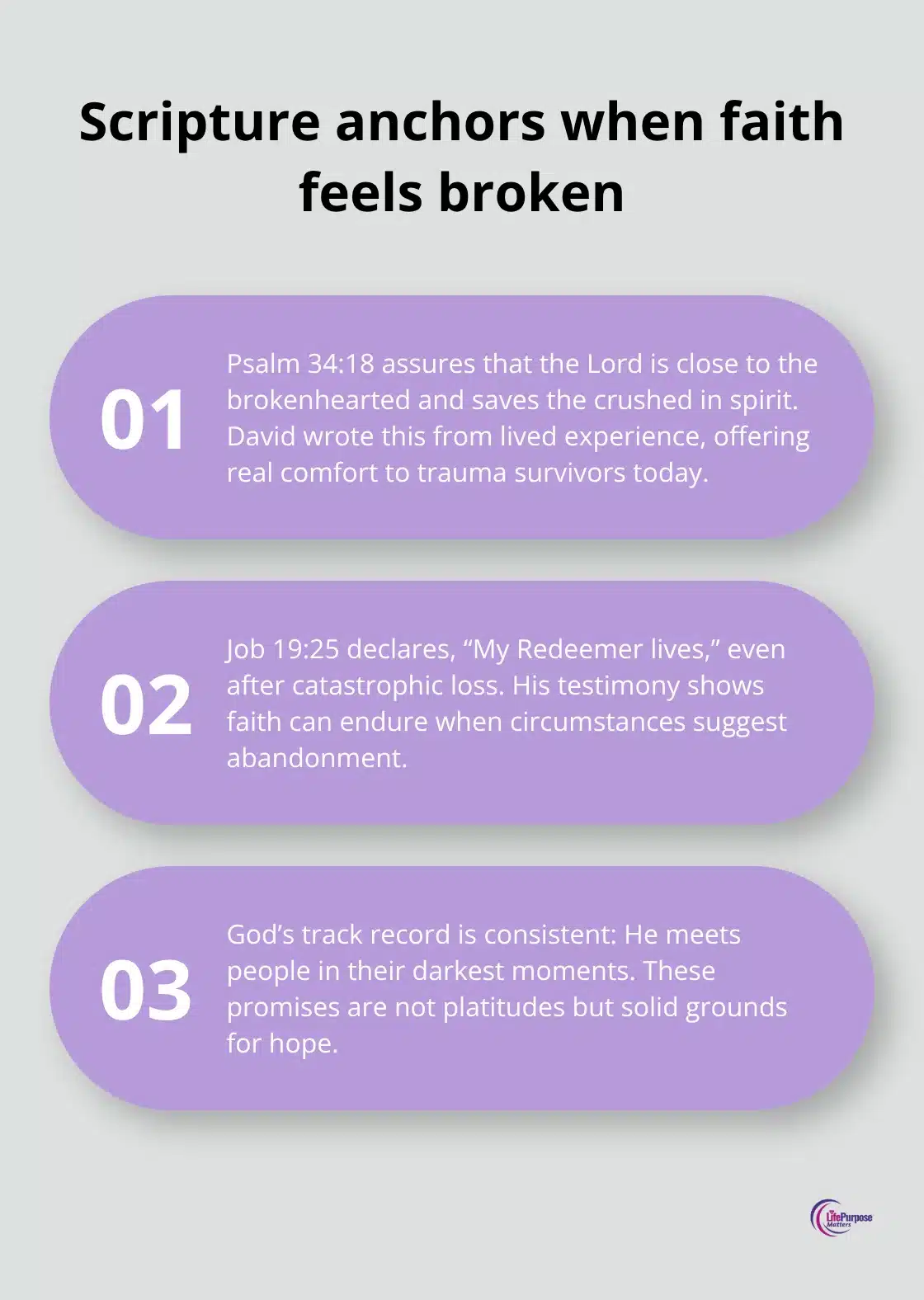
God’s Word speaks directly to trauma survivors through stories of real people who faced unimaginable pain and found restoration. David, who experienced betrayal, warfare, and family trauma, wrote Psalm 34:18 from personal experience: “The Lord is close to the brokenhearted and saves those who are crushed in spirit.” This isn’t empty comfort-it’s a promise backed by God’s consistent track record of meeting people in their darkest moments. Job lost everything in a single day, yet declared in Job 19:25 that his Redeemer lives, proving that faith can survive even when circumstances suggest God has abandoned you.
The God Who Specialises in Impossible Restoration
Scripture reveals a pattern: God transforms trauma into testimony. Joseph endured slavery and false imprisonment before he became Egypt’s second-in-command, telling his brothers in Genesis 50:20 that what they meant for evil, God meant for good. Isaiah 61:3 promises beauty for ashes and the oil of joy for mourning-not someday, but as God’s active commitment to your healing right now.
Your Trauma Cannot Separate You from God’s Love.
Romans 8:38-39 demolishes every lie trauma tells you about being too damaged for God’s love. Paul lists death, life, angels, demons, present troubles, future fears, and powers (essentially every form of trauma) and declares none of these can separate you from God’s love in Christ Jesus. Jeremiah 29:11 reinforces this with God’s declaration of plans for hope and a future, spoken specifically to people in exile and in the midst of trauma. These verses aren’t feel-good platitudes but theological facts that counter trauma’s spiritual lies with divine truth.
Biblical Characters Who Walked Your Path
Scripture doesn’t hide the reality of trauma-it showcases how God works through it. Naomi lost her husband and both sons, yet God restored her family line through Ruth (who also experienced loss and displacement). Hagar faced abandonment and abuse, but encountered God in the wilderness, who saw her pain and provided for her future. These stories matter because they prove God doesn’t waste your suffering or abandon you in it.
These biblical foundations create the groundwork for practical steps that can transform your spiritual recovery from theory into daily reality.
What Daily Practices Actually Heal Spiritual Wounds
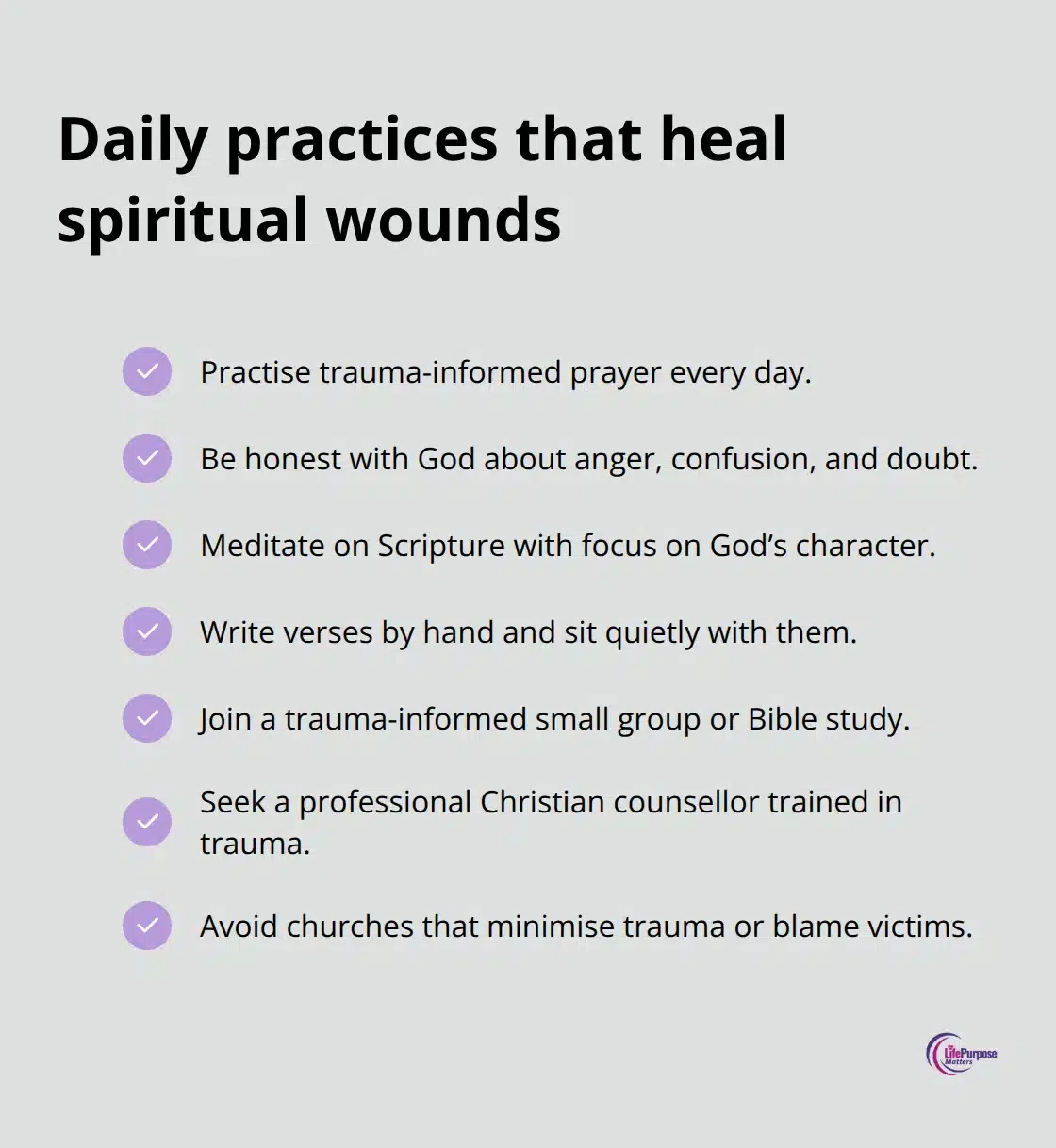
Spiritual wound healing demands specific daily practices that rebuild your connection with God, not vague hopes that time will fix everything. Start with trauma-informed prayer, which acknowledges your pain instead of pretending it doesn’t exist. Research on veterans participating in spiritual practices shows positive effects on cortisol levels, indicating reduced stress responses. Begin each morning with five minutes of honest conversation with God about your trauma-anger, confusion, and doubt, included.
David’s psalms prove that raw honesty with God accelerates healing more than polite prayers ever could.
Scripture Meditation That Counters Trauma’s Lies
Combine prayer with Scripture meditation focused on God’s character rather than your circumstances. Write out verses like Psalm 139:13-16 by hand, then sit quietly and let these truths counter the lies trauma planted in your mind. This practice rewires your brain to recognise God’s voice above trauma’s whispers. Choose verses that speak directly to your specific wounds-abandonment, shame, or fear-and repeat them until they become stronger than the negative thoughts that cycle through your head. Research shows that self-reflection and self-awareness aid in recovery from external trauma and heal psychosomatic wounds.
Build Your Recovery Team Through Christian Community
Isolation kills spiritual recovery, while intentional Christian community accelerates it dramatically. Studies examining trauma survivors’ spiritual struggles show connections between supportive religious communities and improved mental health outcomes. Find a trauma-informed small group or Bible study where you can share your real struggles without judgement. Avoid churches that minimise trauma with shallow positivity or blame victims for lack of faith.
Professional Support That Honours Both Faith and Science
Professional Christian counsellors bridge the gap between clinical expertise and spiritual wisdom. Therapists trained in both trauma treatment and biblical wisdom can address spiritual wounds that secular therapy often misses (while providing the clinical tools that prayer alone cannot). The Integration of Psychology and Theology programmes at schools like Fuller Seminary produce counsellors who understand how trauma affects faith and can guide you through recovery with both Scripture and evidence-based therapeutic methods. Consider specialised groups like GriefShare or Celebrate Recovery, which combine biblical truth with trauma-aware practices and help you live a Christian life grounded in healing.
Final Thoughts
Your spiritual healing journey won’t follow a neat timeline or predictable pattern. Some days your faith will feel rock-solid, while others will bring waves of doubt that seem to wash away your progress. This isn’t failure-it’s the normal rhythm of recovery from trauma.
The biblical characters who overcame trauma didn’t experience instant restoration. Joseph spent years in prison before his purpose became clear. David wrote his most powerful psalms while he ran from enemies (and God used every moment of their pain for redemption). Your story matters just as much as theirs, and God writes redemption into your pain even when you can’t see it yet.
Spiritual healing happens in layers, not lightning strikes. Some wounds will close quickly while others require patient, consistent care. We at Life Purpose Matters believe your trauma doesn’t disqualify you from God’s purpose for your life-it becomes part of how he uses you to help others find their way through darkness.