

Sarah felt exhausted after another week of saying yes to every church committee, family request, and friend’s favour. She loved serving others but wondered why she felt so drained and resentful. Many Christians struggle with this same tension. We want to love others well, yet we often neglect our own well-being in the process.
There is no better or easier way to say this; not setting healthy boundaries as a Christian can result in emotional exhaustion, resentment, being exploited, enabling irresponsible behaviour in others and damaging your relationship with God. It often arises from a misunderstanding of Christian love, service, and self-sacrifice, mistakenly equating boundary-setting with selfishness.
At Life Purpose Matters, we believe Christian boundaries aren’t selfish-they’re biblical. When we set healthy limits, we actually become more effective servants and better reflect God’s love to those around us.
What Does the Bible Say About Boundaries
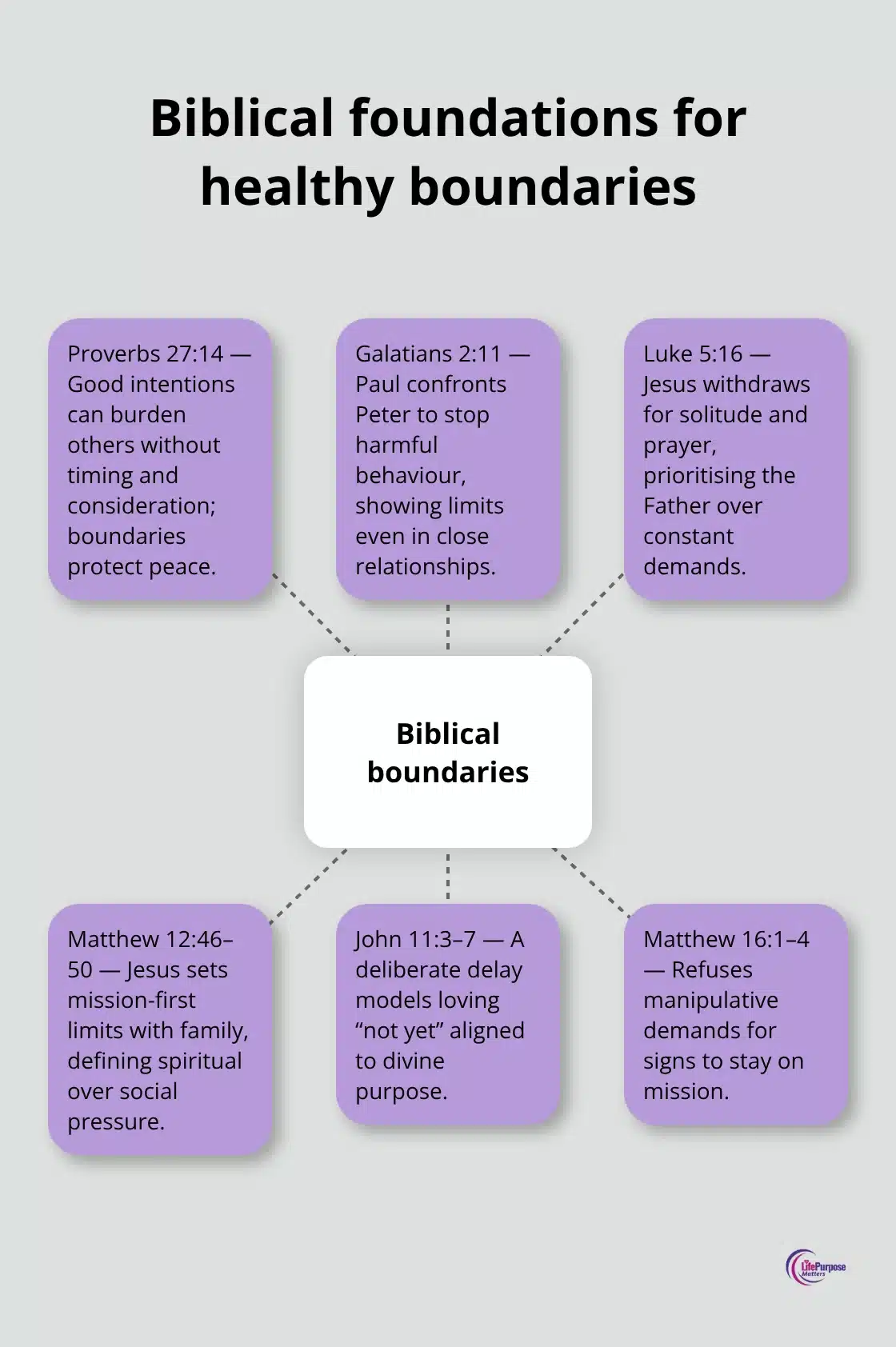
The Bible addresses boundaries directly and provides a solid foundation for healthy limits in relationships and responsibilities. Proverbs 27:14 warns against the person who blesses their neighbour loudly in the early morning, which shows that even good intentions become burdensome without proper timing and consideration. The apostle Paul demonstrates clear boundaries in Galatians 2:11 when he confronts Peter publicly for his hypocrisy and refuses to enable destructive behaviour even in a close relationship. Jesus himself withdrew regularly for solitude and prayer (as Luke 5:16 records), and he prioritised his relationship with the Father over the constant demands of crowds.
Strategic Limits Modelled By Jesus
Jesus provides the clearest example of biblical boundary-setting throughout his ministry. In Matthew 12:46-50, when his family sought to interrupt his teaching, he redirected attention to his spiritual family and demonstrated that even familial obligations must align with divine purpose. When Mary and Martha sent word about Lazarus’s illness in John 11:3-7, Jesus deliberately delayed his response for two days and showed that love sometimes requires us to say no to immediate requests. The Pharisees repeatedly demanded miraculous signs, yet Jesus refused their manipulative requests in Matthew 16:1-4 because he understood that performance on demand would undermine his mission.
God’s Design for Healthy Relationships
God designed relationships to function with mutual respect and appropriate limits. The principle of loving your neighbour as yourself in Matthew 22:39 actually requires healthy self-awareness and self-care. You cannot give what you don’t possess. When we operate without boundaries, we often enable others’ irresponsible behaviour while we deplete ourselves emotionally and spiritually. Paul’s teaching in 2 Timothy 1:7 reminds us that God has given us a spirit of power, love, and sound judgment, all essential components for wise boundaries.
The Early Church Example
The early church in Acts 6:1-7 recognised the need for boundaries when the apostles delegated food distribution to focus on prayer and preaching. This decision shows that even ministry work requires strategic limits to maintain effectiveness. Pastoral care studies indicate that religious leaders experience similar levels of exhaustion and burnout, which makes these biblical examples even more relevant for today’s believers.
These scriptural foundations prepare us to explore practical ways we can implement these biblical principles in our daily lives and relationships.
How Do You Set Boundaries That Honour God
Christian boundaries require specific communication strategies that reflect both firmness and grace. The most effective approach involves clear statements of your limits without extensive justification or apology. Research from the American Psychological Association shows that people respect direct communication more than lengthy explanations. When someone requests your time or energy, respond with statements like “I won’t be able to help with that project” or “I’ve already committed my Saturday to family time.” Avoid phrases that invite negotiation, such as “I’m not sure” or “maybe later”, because they signal uncertainty about your decision.
Start With Your Calendar and Energy Assessment
Protection of your time begins with an honest evaluation of your current commitments and energy levels. Pastors are satisfied with their calling but tend to ignore family, deny stress, and are often “tired” and “drained of all energy and life,” which means most Christians struggle with similar issues. Create a weekly schedule that includes non-negotiable time blocks for prayer, family, rest, and personal responsibilities. When new requests arise, check this schedule before you respond.
Your energy operates like a bank account with limited deposits each day. Sleep deprivation research shows that cognitive abilities, including judgment and decision-making, are reduced when we don’t get adequate rest (which makes boundary-setting even more difficult). Schedule demanding activities during your peak energy hours and protect evening time for restoration.
Handle Guilt and Manipulation With Scripture
Guilt often accompanies boundary-setting because we fear disappointment of others or appearing unloving. However, Jesus demonstrated that saying no can be an act of love when it redirects focus toward God’s purposes. When people use manipulation tactics like “you’re the only one who can do this” or “a real Christian would help,” respond with biblical truth rather than emotional reactions.
Galatians 1:10 reminds us that seeking human approval above God’s will leads to compromised faith. Practice phrases like “I need to pray about this decision” or “I want to be faithful to what God has called me to do right now.” These responses acknowledge both your faith commitment and your need for wisdom in decision-making.
Practice Clear Communication Without Apology
Effective boundary communication requires confidence in your decision and respect for both parties involved. State your position clearly: “I won’t be available for that commitment” rather than “I’m sorry, but I don’t think I can probably make it work.” The difference lies in ownership of your choice versus apologetic uncertainty.
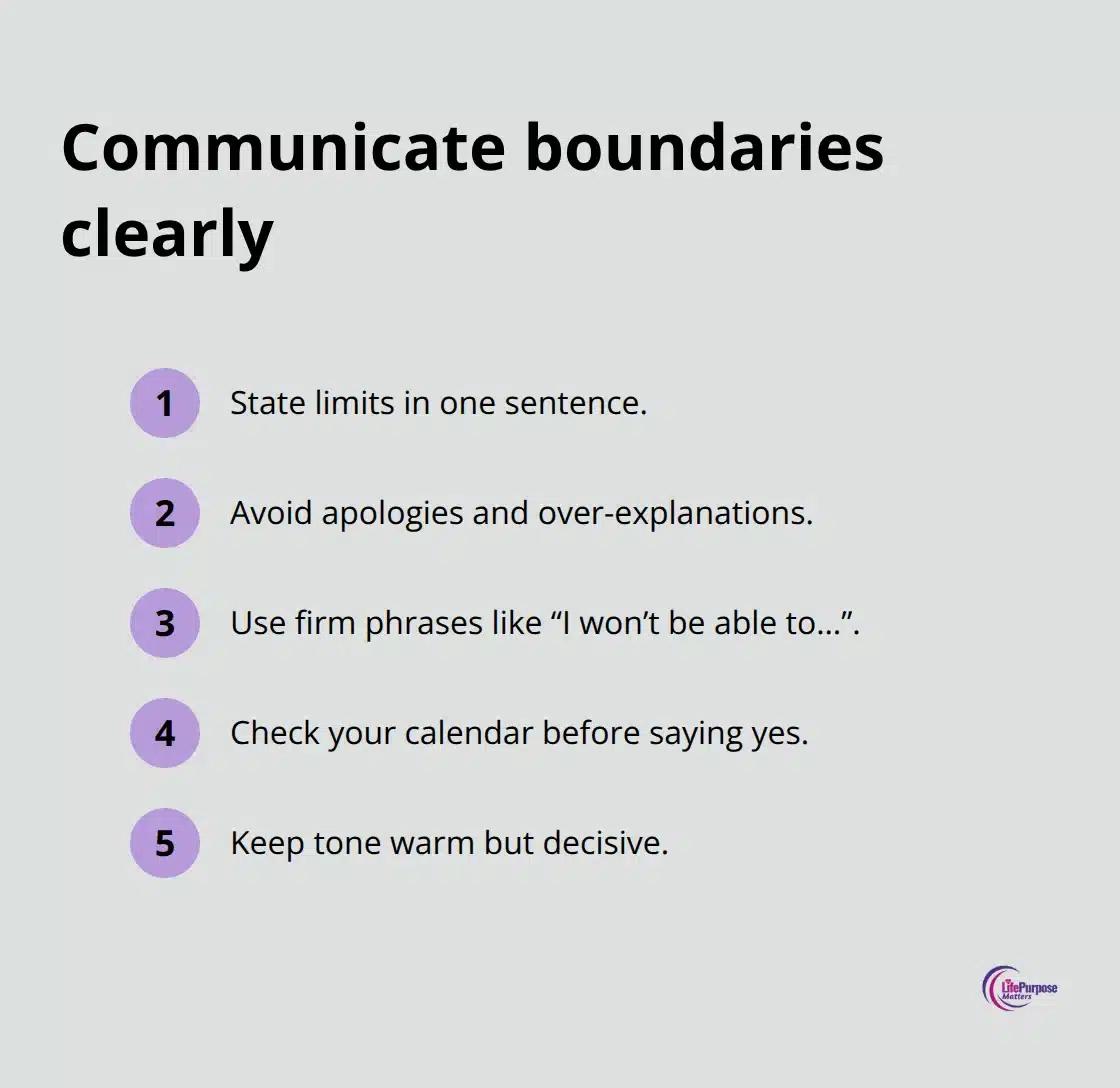
Use the “compliment, boundary, compliment” pattern when appropriate (though not always necessary). This approach might sound like: “I appreciate you thinking of me for this role. I won’t be able to take this on right now. I hope you find someone who can give it the attention it deserves.” This method maintains relationship warmth while establishing firm limits.
Most people who truly care about your well-being will respect boundaries once you communicate them clearly. Those who continue to push against your limits often reveal their own issues with control rather than genuine concern for your welfare. This reality leads us to examine the deeper challenges Christians face when others don’t respect the boundaries we’ve established.
What Makes Setting Boundaries So Hard
People-pleasing behaviour affects a significant portion of the population according to psychological research, but this percentage jumps significantly higher among Christians who misinterpret biblical commands about service and sacrifice. The fear of disappointing others creates a cycle where you say yes to everything, become resentful, then feel guilty about your resentment. This pattern damages both your spiritual health and your relationships because authentic love requires honesty about your limitations.
Track Your Emotional Responses to Requests
Start tracking every request you receive for one week and notice which ones trigger immediate anxiety or dread. These emotional responses signal areas where boundaries are most needed. Write down each request and rate your stress level from 1-10. Patterns will emerge that show you which types of commitments drain your energy most. This data helps you make informed decisions rather than emotional ones when future requests arise.
Recognise Manipulation Tactics in Christian Settings
Religious manipulation often disguises itself as spiritual language that makes refusal seem unloving or unfaithful. Phrases like “God is calling you to serve” or “this is what Jesus would do” weaponise faith against your discernment. Research shows that clergy experience significant trauma from forced termination, often involving manipulative church members who use guilt and spiritual pressure.
When someone questions your faith commitment because you decline a request, they reveal their own spiritual immaturity rather than your lack of dedication. Practice responding with “I appreciate your concern, but I’ve already prayed about this decision” and refuse to engage in theological debates about your boundaries.
Create Sustainable Service Patterns
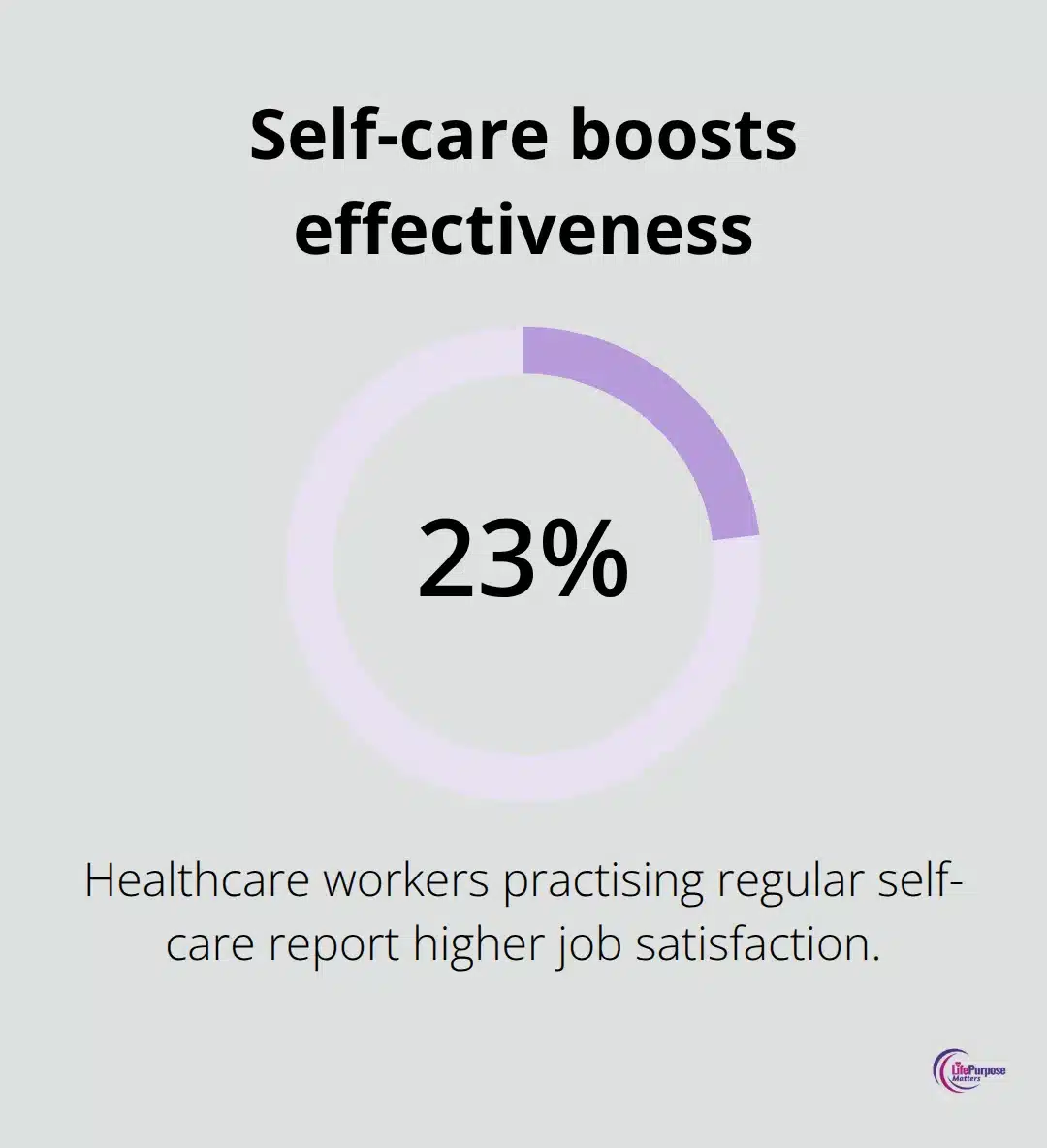
Self-care isn’t selfish when it enables long-term service effectiveness. Studies show that healthcare workers who practice regular self-care demonstrate 23% higher job satisfaction and provide better patient care than those who don’t. Apply this same principle to Christian service (schedule rest periods between major commitments and protect time for spiritual renewal).
Replace the mentality of “I should help everyone” with “I want to help where God has specifically equipped and called me.” This shift transforms boundary-setting from restriction into strategic stewardship of your gifts and energy. Focus on quality service in fewer areas rather than mediocre help everywhere, as unresolved guilt and broken relationships poison your spiritual growth more effectively than any external distraction.
Final Thoughts
Christian boundaries represent faithful stewardship of the gifts, time, and energy God has entrusted to you. When you protect these resources through wise limits, you demonstrate love for both yourself and others and prevent burnout and resentment that poison relationships. Jesus withdrew for prayer and declined certain requests because he understood his mission required focus and intentionality.
You must accept your human limitations rather than pretend you can meet every need around you. Your Christian boundaries reflect this same wisdom when they align your commitments with your calling. Start today and choose one area where you feel overwhelmed, then practice saying no to the next inappropriate request. Write down your non-negotiable commitments and refer to this list when new opportunities arise.
Boundary-setting improves with practice, and each small step builds confidence for larger decisions. At Life Purpose Matters, we provide Christian living inspiration and faith-based encouragement to help you integrate these principles into your daily walk. Your boundaries aren’t barriers to love but pathways to more authentic service that honours both God and the people he’s placed in your life.